Support

Museo de San Isidoro

About

In the heart of the historical center of León lies one of the most significant cultural treasures of Spain — the San Isidoro Museum. Located within the walls of the ancient Royal Collegiate Church, this museum is rightfully considered one of the finest collections of medieval art in all of Europe. It offers visitors a unique opportunity to touch history through masterpieces of architecture, jewelry, and painting.
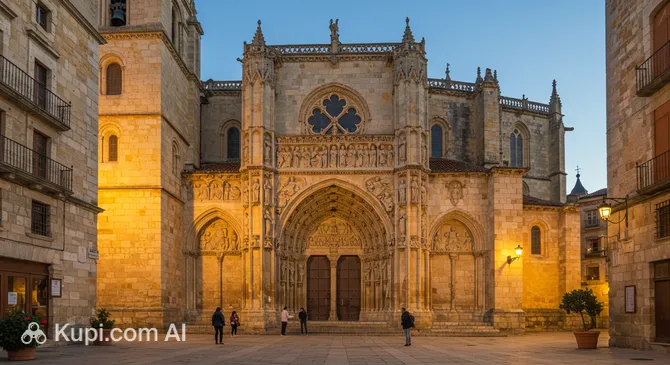
Museum of San Isidoro
Museum of San Isidoro. Иллюстрация. Источник: Kupi.com AI

The museum's primary pride is the famous Royal Pantheon, often called the "Sistine Chapel of Romanesque art." Its vaults are decorated with magnificently preserved 11th-century frescoes that still impress with their vibrant colors and detailed narratives. Additionally, it is here that the legendary Chalice of Doña Urraca is kept — a gemstone-encrusted cup that some researchers identify with the Holy Grail.

The museum's collection spans a vast period: from Viking-era items to the rarest incunabula and medieval codices in the local library. Strolling through the halls of the former monastery and royal palace, guests can see the Arch of Ivories and unique reliquaries that demonstrate the incredible skill of past craftsmen. This is a place where every stone and every exhibit breathes the history of the powerful Kingdom of León.

Contacts

To contact the museum administration and clarify visiting details, you can use the following contact information. It is recommended to check for updates on the official website before your visit.

How to contactContact
AddressPlaza San Isidoro, 4, 24003 León, Spain
Phone+34 987 87 61 61
Websitewww.museosanisidorodeleon.com

What to Do

A walk through the museum's halls turns into an exciting journey through the centuries. First, head to the Royal Pantheon to examine the famous Romanesque paintings in detail. It is important to pay attention to the scenes from the Apocalypse and the daily life of medieval people, depicted with striking skill. The atmosphere of this place invites contemplation, and the absence of photography helps you fully immerse yourself in the study of the frescoes.

Be sure to visit the Tesoro de León (Treasury) hall, where the collection's most valuable artifacts are displayed. The crown jewel is the Chalice of Doña Urraca, but the 10th-century Viking idol and Limoges enamel jewelry are equally interesting. For those who want to learn more, joining a guided tour is recommended. Professional guides lead tours lasting about 2 hours, revealing the secrets of each item and the architectural features of the complex.

In addition to viewing the treasures, you can climb the preserved sections of the medieval walls, which offer an interesting view of the city's surroundings. It is also worth visiting the monastic refectory and the majestic Renaissance staircase created by Juan de Ribero. History enthusiasts will find it interesting to look at the library, where priceless manuscripts and codices, centuries old, are kept behind glass.

Getting There

The museum is located at Plaza San Isidoro, 4, in the very heart of the historical center. Thanks to its central location, it is very easy to reach on foot from almost anywhere in the old town. For example, a walk from the famous Santa María Cathedral or Casa Botines takes only about 5 minutes.

If you are arriving in León by train or bus, the journey from the station is approximately 1.5 kilometers. This distance can be covered on foot in 15–20 minutes while enjoying the city's architecture, or you can take a taxi, which will deliver you to Plaza San Isidoro in just a few minutes.

For those who prefer public transport, the EMTUSA bus network is a good option. Lines 1, 3, and 4 have stops near the complex, such as at Plaza Santo Domingo. If you are traveling by car, keep in mind that the city center is largely pedestrianized, so it is best to leave your car in one of the covered parking lots, for example, near Plaza de Regla.

For travelers arriving at León Airport, located 5 kilometers from the city, taking a taxi is the most convenient option. The trip to the museum will take approximately 10–15 minutes depending on traffic.

Ближайший город: Leon

History & Facts

The foundation of this majestic complex is inextricably linked with the names of the Kings of León — Ferdinand I and his wife Sancha. In the 11th century, they laid the foundation for the future Pantheon, which was to become the eternal resting place for members of the royal dynasty. Since then, the Royal Pantheon has welcomed twelve monarchs under its vaults, becoming one of the most sacred places in the history of Christian Spain.

One of the most intriguing pages in the museum's history is the Chalice of Doña Urraca. This unique vessel, gifted by the Infanta Urraca in the 12th century, was considered a priceless piece of jewelry for centuries. However, modern research has put forward a bold hypothesis that this very chalice could be the Holy Grail used during the Last Supper.

The museum's archive began to take its modern form in 1923, when Abbot Julio Pérez Llamazares systematized a vast number of ancient parchments and codices. Thanks to his work, today we can study more than 800 historical documents that shed light on the Reconquista era and the emergence of León as one of the main centers of medieval Europe.

Over the centuries of its existence, the San Isidoro Museum has been restored several times while preserving the spirit of the Romanesque era. The Pantheon's frescoes, created between 1050 and 1070, are recognized as a pinnacle of Romanesque art and continue to fascinate researchers and tourists with their remarkable preservation and deep symbolism.

Time Needed

To fully appreciate the grandeur of the Royal Pantheon and the wealth of the museum's treasury, it is recommended to allocate 1.5 to 2 hours for your visit. This time will be sufficient for a leisurely tour of the main exhibitions, including the unique library and the monastic premises.

If you decide to use the services of a guide, the tour will take about two hours, as guides provide detailed information on the significance of each important artifact and decode the scenes of the ancient frescoes. For those with limited time, a brief overview is possible in 45–60 minutes, though many fine details may go unnoticed in this case.

Working Hours

The San Isidoro Museum operates according to a set schedule, which should be considered when planning your city walk. Please note that the museum is closed on Mondays.

Opening Hours:

  • Tuesday – Saturday: 10:00 AM to 2:00 PM and 5:00 PM to 8:00 PM;
  • Sunday: 10:00 AM to 2:00 PM.
On Wednesday afternoons (from 4:00 PM to 6:00 PM), there is often an opportunity for free entry, though such visits may require prior registration and the viewing time may be limited to one hour. The museum ticket office usually stops selling tickets 30 minutes before closing.

DayWorking hours
ПонедельникЗакрыто
Вторник10:00 – 14:00, 5:00 – 20:00
Среда10:00 – 14:00, 5:00 – 20:00
Четверг10:00 – 14:00, 5:00 – 20:00
Пятница10:00 – 14:00, 5:00 – 20:00
Суббота10:00 – 14:00, 5:00 – 20:00
Воскресенье10:00 – 14:00

Nearby

The museum's location in the historical core of the city allows tourists to create a rich itinerary without spending much time on travel. Exploring the surrounding streets will help you feel the atmosphere of medieval León more deeply and see monuments from different eras — from Roman walls to Renaissance buildings.

Below are the most interesting sites located within walking distance of the museum:

NameDistance
Basilica of San Isidoro0 km
Ancient City Walls of León0.1 km
Cid Park0.1 km
Arco de la Cárcel0.2 km
El Romántico0.2 km
Casa Botines0.2 km
Roman León Interpretation Centre – Puerta Castillo House0.2 km

Reached the end of the page?

That means the route is fully explored