Support

Monumento a Jules Verne

About

On the waterfront of the port city of Vigo, washed by the waters of the Atlantic, lies one of the region's most original landmarks — the Monument to Jules Verne. This bronze sculpture, installed in 2005, serves as a tribute to the great French writer and his special connection with this corner of Spain.

The composition is truly imaginative: the famous science fiction author is depicted sitting on the massive tentacles of a giant squid. This is a direct reference to the legendary novel "Twenty Thousand Leagues Under the Sea," in which Captain Nemo and his crew visit Vigo Bay in search of sunken treasures. The sculpture seems to float above the ground, highlighting the surreal and visionary nature of the author's works.
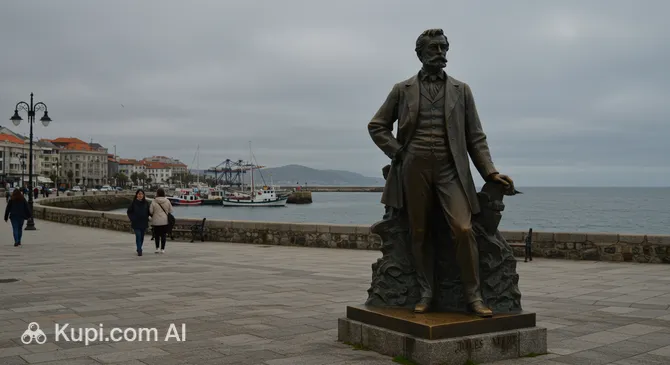
Jules Verne Monument
Jules Verne Monument. Иллюстрация. Источник: Kupi.com AI

Created by sculptor José Molares, the monument quickly became one of the city's main symbols. It is located in a picturesque spot next to the Real Club Náutico (Nautical Club), harmoniously blending into the maritime landscape. For tourists and literature fans, this site has become an essential stop on any itinerary, offering a moment to step into a world of incredible adventure and underwater mysteries.

Contacts

To inquire about visiting the waterfront or cultural events near the monument, you can contact the city's tourism office.

How to contactContact
Address36202 Vigo, Pontevedra, Spain
Phone+34 986 81 01 00
Websitewww.turismodevigo.org

What to Do

The first thing to do at the monument is, of course, to have a themed photoshoot. The unusual shape of the sculpture, with Jules Verne perched atop a mollusk's tentacles, provides a perfect backdrop for unique photos. In the evening, when the city lights come on, the monument looks especially mysterious, taking on a truly cinematic appearance.

Visiting the monument is easy to combine with a leisurely stroll along the Paseo Marítimo waterfront. From here, you can enjoy magnificent views of the harbor and the massive cruise ships entering the port. Along the shore, you will find other interesting art objects, such as the fisherman sculpture "O pescador" or the whimsical stone zoo Zoo de Piedra, turning a simple walk into an engaging quest to find city symbols.

For those who appreciate cultural context, this location is a great reason to re-read the chapters of the novel dedicated to Vigo Bay. There is even a Jules Verne appreciation society in the city, which occasionally holds themed meetings or tours here. The romantic atmosphere of the marina, the cries of seagulls, and the view of swaying yachts create the perfect mood for dreaming of distant travels and treasures hidden beneath the waves.

Getting There

Finding this unusual monument is very simple — it is located on the scenic Rua Montero Rios waterfront in the heart of the city, right next to the marina and the Nautical Club building. If you are arriving on a cruise ship, the walk from the terminal takes no more than 10–15 minutes. From the main square, Praza de España, you can also reach it on foot by heading toward the port.

For those who prefer public transport, city bus lines No. 1 and No. 4 are ideal, with the "Rúa Montero Ríos" stop located right next to the monument. If you are traveling from Vigo-Peinador Airport (VGO), it is most convenient to take a taxi (a 20–25 minute ride) or use the VITRASA bus (line C9A) to the city center.

When planning a trip from other regions, such as Santiago de Compostela, the most convenient option is the ALVIA train to the Vigo-Guixar station. From the station, you can walk to the waterfront in about 20 minutes while enjoying the sea air. For drivers, there is convenient parking right by the Nautical Club, making a visit to the attraction as easy as possible.

Ближайший город: Vigo

History & Facts

The history of this monument is inextricably linked to the great novel "Twenty Thousand Leagues Under the Sea." In one of the book's key episodes, Captain Nemo steers his legendary Nautilus into Vigo Bay. According to the plot, it is here that he finds the treasures of 17 Spanish galleons that sank in 1702 during a famous battle. The writer's imagination transformed a real historical event into a source of inexhaustible wealth for the struggle for justice beneath the waves.

Jules Verne himself was so moved by the history and atmosphere of the area that he visited Vigo after the novel's publication to see the bay that inspired his masterpiece firsthand. In 2005, marking the centenary of the writer's death, the Association of Women Entrepreneurs of the Pontevedra Province decided to immortalize this connection by commissioning the sculpture and gifting it to the city.

The project was designed by the talented sculptor José Molares. He managed to capture not just the writer's likeness, but the very essence of his work—the spirit of adventure and belief in the boundless possibilities of the human mind. Since its unveiling at the Nautical Club, the monument has become a kind of "literary mascot" for the city, attracting science fiction fans from all over the world.

The legend of the gold of Vigo Bay continues to stir the minds of treasure hunters today. Although numerous expeditions over three centuries have failed to produce the desired result, the bronze Jules Verne, seated on the tentacles of a giant squid (a nod to another famous scene from the novel), reminds everyone that the most valuable treasures are often hidden in our imagination.

Time Needed

To simply view the monument, appreciate the details of the bronze casting, and take a few striking photos, you will only need a short amount of time — about 15–30 minutes. The sculpture is quite compact but very detailed, so it is worth getting closer to see the texture of the tentacles and the expression on the writer's face.

However, we recommend setting aside 1–2 hours for visiting this location. This will allow you to take a leisurely walk along the entire Paseo Marítimo, examine other interesting sculptures nearby, and perhaps stop at one of the cozy restaurants overlooking the marina to enjoy the atmosphere of the port city that the classic author wrote about so inspiringly.

Working Hours

The Jules Verne monument is located on an open city waterfront, making it accessible for visits at any time that is convenient for you. The site is open 24 hours a day, seven days a week, including holidays.

You can come here early in the morning to catch the sunrise over the marina, or late in the evening when the architectural lighting gives the bronze figure of the writer and the squid tentacles a special, mystical charm.

Круглосуточно

Nearby

A walk along the Vigo waterfront is just the beginning of your acquaintance with the city's maritime soul. Within walking distance of the monument are many interesting locations, from ancient castles to cozy squares, allowing you to dive deeper into the history and culture of Galicia.

Exploring the surroundings will help you gain a complete picture of how the port city has transformed over the centuries, maintaining its charm and connection to the ocean.

NameDistance
Othilio Bar0.1 km
Co-Cathedral Basilica of Saint Mary of Vigo0.3 km
Afundación Headquarters Vigo0.4 km
Casa de las Artes0.4 km
Island Club0.4 km
Olive Tree of Vigo0.6 km
MARCO (Museum of Contemporary Art)0.6 km

Reached the end of the page?

That means the route is fully explored