Support

MARCO (Museo de Arte Contemporáneo)

About

MARCO, or the Museum of Contemporary Art, is one of the most vibrant cultural spots on the map of Vigo. Located in the very heart of the pedestrian zone on Rúa do Príncipe, this museum invites visitors to immerse themselves in the world of current artistic practices and bold experiments. It is not just a gallery, but a living center where art meets society, provoking dialogue and reflection.

The museum building itself is a landmark. Formerly, it housed the city prison and courthouse, built on the panopticon principle. Today, the austere walls of the past have been transformed into bright, spacious halls filled with creative energy. This contrast between historical architecture and avant-garde content creates a unique atmosphere that is hard to find anywhere else in Spain.
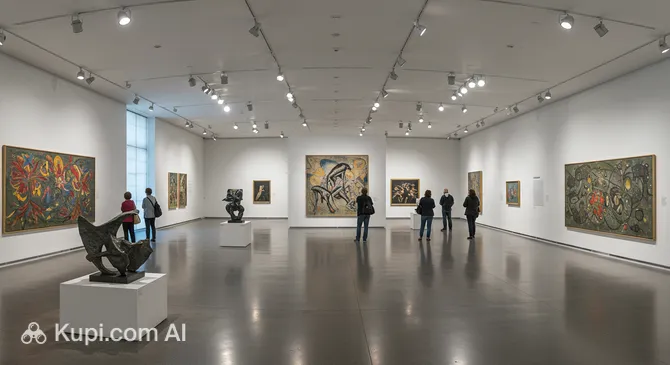
MARCO (Museum of Contemporary Art). Source: Kupi.com Binoculars

Unlike classical museums, MARCO does not have a permanent collection. Its activity focuses on temporary thematic exhibitions covering a wide variety of genres: from painting and sculpture to video art and installations. This makes every visit here unique, as the exposition is constantly updated, offering a fresh perspective on modern culture.

Contacts

To help you plan your visit, we have gathered the main contact information for the museum. We recommend checking the current exhibition schedule on the official website before visiting.

Address Rúa do Príncipe, 54, Santiago de Vigo, 36202 Vigo, Pontevedra, Spain
Phone +34 986 11 39 00
Website marcovigo.com

What to Do

The main reason to visit MARCO is to explore its temporary exhibitions. Here you can see works by both recognized international masters and talented Galician artists. The expositions often touch upon acute social themes, use multimedia technologies and interactive elements, inviting the viewer to become not just an observer, but a participant in the artistic process.

Besides viewing the exhibitions, pay attention to the building's architecture itself. Take a walk through the central rotunda and the galleries radiating from it. This is a unique opportunity to feel the space of a former panopticon, reimagined in the context of creative freedom. Light penetrating through the glass dome creates a special play of shadows in the halls.

The museum also actively functions as an educational center. Visitors can take part in regular workshops, lectures, and film screenings that often accompany current exhibitions. For those who want to delve deeper into art theory, there is a library and documentation center with an extensive collection of books and catalogs on contemporary art.

Getting There

The MARCO museum is located in the very heart of the city, on the popular pedestrian shopping street Rúa do Príncipe. Since this zone is closed to private vehicle traffic, you cannot drive directly to the entrance, but this makes the walk to the museum particularly pleasant.

If you are traveling by public transport, any bus routes passing through the city center will suit you (stops in the Porta do Sol or Urzáiz area are a few minutes' walk away). From the Vigo-Urzáiz train station, you can walk there in about 10–15 minutes by heading down the street.

For those who prefer a taxi, the driver can drop you off at the nearest drop-off point to the museum, for example, on Rúa de Policarpo Sanz or Rúa de Velázquez Moreno, from where it is just a few dozen meters to the MARCO entrance.

History & Facts

The building that houses the MARCO museum today has a very intriguing past that contrasts sharply with its current purpose. Built in 1861, it originally served as the city's Palace of Justice and jail. The architectural design was based on the "panopticon" concept — a radial structure where one could observe all wings of the building from a central hall, ensuring perfect control over the prisoners.

For more than a century, these walls were a symbol of restricted freedom. It was only at the end of the 20th century, when the building ceased to perform its penitentiary functions, that the city authorities decided on its radical transformation. The renovation, carried out by a group of architects, carefully preserved the historical facade and the unique radial layout, filling them with new meaning.

In 2002, the former prison opened its doors as the Museum of Contemporary Art. This transition from a place of confinement to a space of creative freedom and self-expression became a powerful symbol of the city's cultural revival, turning the grim heritage of the past into a bright center of attraction for residents and guests of the region.

Time Needed

MARCO is a dynamic exhibition space without a permanent collection, so the visit time largely depends on the current expositions. On average, most tourists need 1 to 1.5 hours for a leisurely exploration of all the halls and the building's architectural features.

If you plan to attend one of the lectures, workshops, or use the museum library, it is worth setting aside half a day for the visit. The museum's compactness makes it easy to fit into a busy itinerary of walking around the city center without overloading your schedule.

Working Hours

When planning your visit, pay attention to the museum's specific opening hours, which include the traditional Spanish siesta break. From Tuesday to Saturday, MARCO is open from 11:00 to 14:30 and then opens its doors again in the evening from 17:00 to 21:00.

On Sundays, the museum operates only in the first half of the day — from 11:00 to 14:30. It is important to remember that Monday is a day off, when the museum is closed to visitors. Keep this schedule in mind so you don't find yourself facing closed doors.

Nearby

The location of the MARCO museum on the main shopping street makes it an ideal starting point for further exploration of the city. After viewing the exhibitions, you will find yourself in the center of events, where history intertwines with modern life, and cozy cafes neighbor monumental monuments.

Just a few minutes' walk away are key historical sites and picturesque parks that are worth including in your route. Below is a list of the nearest attractions that will help you form a complete picture of this amazing place.

Name Category Distance (km)
Castelo de San Sebastián Historical site 0.5
Vigo Historical site 0.5
Praza da Constitución Historical site 0.5
Monumento aos Galeóns de Rande Historical site 0.5
Cruz dos Caídos Historical site 0.5
Castelo do Castro Tourist attraction 0.6
Oliveira de Vigo Historical site 0.6
Castro de Vigo Tourist attraction 0.7
"AZUL" FLORISTERIA Y TIENDA DE ANIMALES Aquarium 1.8
Big Jump Park Vigo (Pontevedra) Amusement park 2.5

Reached the end of the page?

That means the route is fully explored