Support

Museum of archeology D. Diogo de Sousa

About

The D. Diogo de Sousa Archaeological Museum is an outstanding cultural institution located in the city of Braga. It is rightfully considered one of the most important museums in Portugal, thanks to its rich collection spanning from the Paleolithic to the early Middle Ages. The museum was named after Archbishop Diogo de Sousa, who in the 16th century made an invaluable contribution to the city's development, transforming it into a Renaissance center.
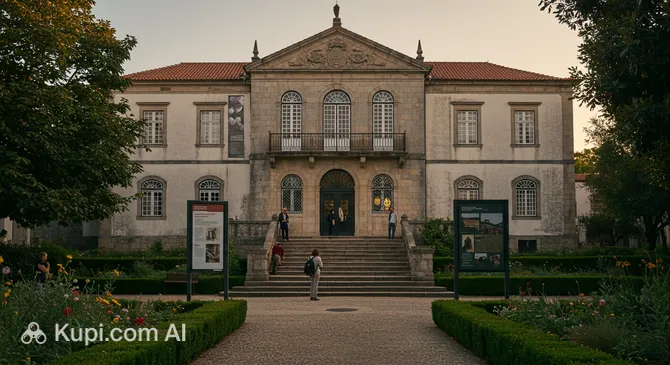
D. Diogo de Sousa Museum of Archaeology
D. Diogo de Sousa Museum of Archaeology. Иллюстрация. Источник: Kupi.com AI

Although the museum itself was founded in 1918, it received a new, modern building in 2007, specifically designed to house the region's archaeological finds. The exhibition is divided into four rooms where visitors can see Bronze Age artifacts, the heritage of the Roman city of Bracara Augusta, and religious art from the Gothic period.

This place is ideal for those who want to understand the origins of European civilization on the Iberian Peninsula. The interactivity and clarity of the exhibitions make the museum a significant point on the tourist map, allowing guests to touch millennia of history within the walls of a modern architectural ensemble.

Contacts

You can contact the administration of the cultural institution or clarify visiting details through official communication channels. It is recommended to visit the museum's website in advance to check the current schedule of temporary exhibitions and educational programs. Below is the main contact information for your convenience.

How to contactContact
AddressR. dos Bombeiros Voluntários s/n, 4700-025 Braga, Portugal
Phone+351 253 273 706
Websitewww.museuddiogodesousa.gov.pt

What to Do

Within the walls of the D. Diogo de Sousa Archaeological Museum in Braga, a fascinating exploration of ancient cultures awaits you. Visitors can pass through four thematic rooms, each dedicated to a specific era. Special attention should be paid to the Roman mosaics and reconstructions of ancient buildings, which allow you to see the grandeur of ancient Bracara Augusta firsthand.

Here you can spend hours examining a collection of everyday Roman objects: from delicate ceramics and glass to complex metalwork. Art lovers will enjoy exploring the medieval section, which features rare examples of Romanesque and Gothic religious art. Regular temporary exhibitions and detailed explanatory stands make every visit informative, helping guests gain a deeper understanding of how one of the region's oldest cities developed and was built.

Getting There

The D. Diogo de Sousa Archaeological Museum is conveniently located in the central part of Braga at Rua dos Bombeiros Voluntários. Most travelers prefer to get here on foot from the historic center, as the building is within walking distance of iconic sites like the Cathedral.

If your journey starts from Porto Airport, a train ride to Braga station takes about an hour. Direct high-speed trains run from Lisbon to the city, with a travel time of 3 to 4 hours. From the train station, you can reach the museum on foot in 15–20 minutes or take a local bus or taxi.

For those who prefer to travel by car, there are parking areas near the museum. However, keep in mind that the site is located near pedestrian routes, so leaving the car and walking through the city's old streets will be the most comfortable way to experience the local architecture and atmosphere.

Ближайший город: Braga

History & Facts

The history of this artifact collection began long before its official opening. Back in the early 16th century, Archbishop Diogo de Sousa, passionate about the study of antiquities, took the first steps to protect the archaeological heritage hidden in the lands of Portugal. However, the Museum of Art History and Archaeology was only founded as a full-fledged institution in 1918.

The museum's main value lies in its collection dedicated to the ancient period. The city of Bracara Augusta was founded by the Romans around 16 BC and quickly grew into a thriving administrative and economic center. The museum's exhibits clearly illustrate this journey — from the first settlements of the Paleolithic era to a powerful Roman polis with its baths, theaters, and developed trade in ceramics and metal.

Diogo de Sousa himself went down in history as the "second founder" of the city, reconstructing the Cathedral and laying the foundations of the modern street layout. In 2007, the museum moved to a new building, built specifically for storing and demonstrating valuable finds, which transformed it into one of the most modern and significant archaeological centers in the region.

Time Needed

For a detailed look at the exhibition, which spans four thematic rooms, a typical visitor will need 1.5 to 2 hours. This is sufficient time to leisurely view the ancient mosaics, the collection of Roman glass, and medieval artifacts, as well as read the information materials.

If you are deeply interested in Ancient Roman history or archaeology, the visit may take about half a day. Thanks to the modern layout of the rooms and the logical tour route, the visit is easy and educational, leaving plenty of time for a further walk through the historic center.

Working Hours

When planning a visit to the D. Diogo de Sousa Archaeological Museum, it is important to remember that Monday is a closing day. At other times, the museum operates on a stable schedule, offering visitors plenty of time to explore the entire collection.

From Tuesday to Sunday, the museum doors are open from 10:00 AM to 5:30 PM. It is recommended to arrive at least an hour before closing to have time to walk through all the thematic rooms and see the most interesting exhibits without rushing.

DayWorking hours
ПонедельникЗакрыто
Вторник10:00 – 17:30
Среда10:00 – 17:30
Четверг10:00 – 17:30
Пятница10:00 – 17:30
Суббота10:00 – 17:30
Воскресенье10:00 – 17:30

Nearby

Exploring the surroundings of the D. Diogo de Sousa Archaeological Museum will allow you to dive deeper into the atmosphere of one of Europe's oldest cities. Most key attractions are within walking distance, making a stroll through this area highly rewarding and interesting.

After visiting the museum, it is worth checking out the following nearby sites:

NameDistance
Roman Baths of Maximinus0.2 km
Atípica0.4 km
Braga Cathedral0.4 km
Holy Cross Church0.4 km
Raio Palace0.5 km
Fountain of the Idol0.5 km
Antù Braga0.5 km

Reached the end of the page?

That means the route is fully explored