Support

Oliveira de Vigo

About

The Olive Tree of Vigo (Oliveira de Vigo) is more than just a natural landmark; it is a living symbol and one of the most heartwarming attractions that Spain takes pride in. This historic tree is located on the picturesque waterfront of the city of Vigo in the Galicia region, right on the famous Paseo de Alfonso XII promenade.

As a significant cultural site, the olive tree embodies the rich maritime heritage and centuries-old history of the city's development as one of the world's largest fishing ports. The tree has become so vital to the local identity that its image adorns the city's official coat of arms, serving as a reminder of the resilience and deep roots of this coastal region.
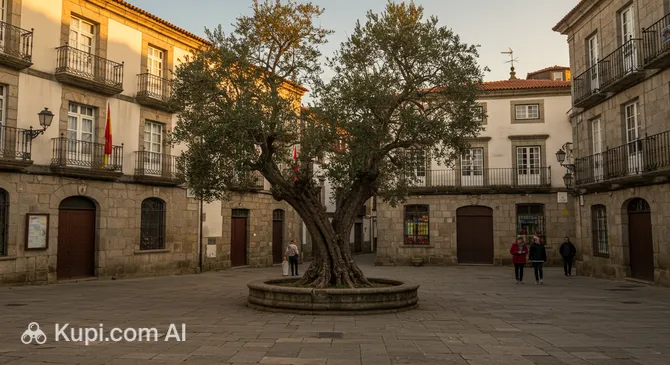
Olive Tree of Vigo
Olive Tree of Vigo. Иллюстрация. Источник: Kupi.com AI

A visit to this spot offers a chance to touch a legend and see a symbol that connects the modern metropolis with its ancient past. Positioned on an elevation, the tree serves as a natural viewpoint, offering stunning panoramas of the bay and the daily life of the port, which has been the heart of Vigo for centuries.

Contacts

The Olive Tree of Vigo is located in one of the most picturesque parts of the city, on an open observation deck. You can easily find it by following the address of the historic promenade.

How to contactContact
AddressP.º de Alfonso XII, 7, 36202 Vigo, Pontevedra, Spain

What to Do

The main pleasure of visiting the Olive Tree of Vigo lies in quiet contemplation. From the platform on Paseo de Alfonso XII, you can enjoy magnificent panoramic views of the Atlantic Ocean bay, where you can watch the movement of ships in the port. It is an ideal spot for photo shoots, especially during sunset when the soft light highlights the tree's silvery foliage and the deep blue of the water.

After admiring the city's symbol, it is definitely worth taking a stroll through the old port quarter. Here, the unique atmosphere of the past has been preserved: narrow streets and ancient architecture tell the story of the city's commercial and fishing heyday. Visitors can explore the architectural heritage of this part of Vigo by wandering into cozy courtyards and small craft shops.

The attraction's high rating — 4.6 stars — confirms that this place is equally loved by both tourists and locals. Join the residents who come here for an evening walk to enjoy the fresh sea breeze and the historical context of a city that grew from a small fishing village into a majestic maritime center.

Getting There

The Olive Tree of Vigo is located in the heart of the city on Paseo de Alfonso XII. This spot is very conveniently situated relative to the historic center (Casco Vello) and the waterfront, so most tourists prefer to get here on foot, enjoying the ancient architecture along the way.

If you are in a more distant district, you can use public transport — Vigo's city bus network is well-developed, and the nearest stops are just a few minutes' walk from the tree. You can also take a taxi from any part of the city, which will bring you right to the start of the pedestrian zone on Paseo de Alfonso XII.

For those traveling by car, it is worth noting that parking in the central part of the city can be challenging. It is best to leave your vehicle in one of the paid underground parking lots nearby and continue on foot to leisurely enjoy the views of the bay.

Ближайший город: Vigo

History & Facts

The history of Vigo dates back to Roman times when the settlement was known as Vicus. For centuries, it remained a modest seaside village until its favorable location in a deep, sheltered bay transformed it into a key maritime port. The olive tree, which became a symbol of the city, serves as a reminder of the region's ancient traditions and its connection to both the land and the sea.

In the 16th century, the city began to grow wealthy rapidly due to trade with the New World. This led to the construction of impressive defensive walls around the city in the 17th century, fragments of which can still be seen in the historic district today. The port area, home to the famous olive tree, has always been the city's energetic center, a meeting place for sailors, merchants, and fishermen.

Interestingly, Vigo established its status as one of the world's largest fishing ports in the late 19th and early 20th centuries. The olive tree, depicted even on the city's coat of arms, serves as a living monument to this long history, having witnessed the city's evolution and rapid industrial growth while remaining a symbol of peace and prosperity for Galicia.

Time Needed

Visiting the Olive Tree of Vigo itself and the adjacent observation deck usually takes no more than 30 minutes. However, given its location in the historic center, we recommend setting aside 2 to 3 hours for your walk.

This will give you enough time not only to take memorable photos at the city's symbol but also to leisurely explore the atmospheric streets of the old quarter, browse local shops, or enjoy a cup of coffee with a view of the Atlantic Ocean. Such a relaxed stroll will allow you to fully immerse yourself in the maritime charm of Galicia.

Working Hours

The Olive Tree of Vigo is located in a public area on the waterfront, making it accessible to visitors 24/7. You can come here early in the morning to catch the sunrise or late in the evening when the city lights up.

As it is an open-air site, there is no entrance fee. However, if you plan to visit nearby museums or information centers, we recommend checking their current operating schedules on the city's official tourism websites in advance.

Nearby

The location of the Olive Tree allows you to easily combine your visit with other iconic spots in the city. A stroll through the surrounding area will reveal many historical monuments and viewpoints with breathtaking views.

NameDistance
Co-Cathedral Basilica of Saint Mary of Vigo0.3 km
Casa de las Artes0.4 km
Castro of Vigo0.5 km
Othilio Bar0.5 km
Afundación Headquarters Vigo0.5 km
Castro Fortress0.6 km
MARCO (Museum of Contemporary Art)0.6 km

Reached the end of the page?

That means the route is fully explored