Support

Plaza de la República

About

Imagine a space where the monumentality of Ancient Rome meets the elegance of the Spanish Renaissance. Plaza de la República is not just a city square, but the heart of the magnificent architectural ensemble of the Laboral University, which is rightfully considered the largest building in the entire country of Spain. Located in the city of Gijón, this location impresses with its scale and the intellectual depth of its architectural design.
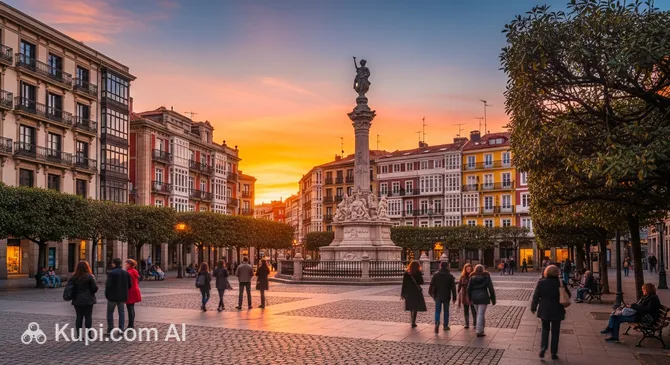
Plaza de la República
Plaza de la República. Иллюстрация. Источник: Kupi.com AI

The central element of the square is a huge enclosed courtyard surrounded by majestic colonnades and buildings with facades clad in raw stone. The entire complex is dominated by a tower over 100 meters high, designed in the form of a triumphal arch, giving the place an imperial scale. The building style is unique: it harmoniously blends elements of classicism, Art Nouveau, and Romanticism, creating a sense of an "ideal city."

Today, Plaza de la República is a vibrant cultural and educational hub. It houses faculties of the University of Oviedo, a conservatory, and an Art Center, filling the historic walls with the energy of student life. For tourists, this place is primarily valuable as a unique monument of 20th-century architecture, unparalleled in the world for its aesthetics and scale.

Contacts

If you are planning a visit and want to check any details, you can use the following contact information:

How to contactContact
AddressC. Calderón de la Barca, 27, Gijon-Este, 33204 Gijón, Asturias, Spain

What to Do

A walk through this place is, above all, a visual journey. Visitors should start by exploring the main inner courtyard, where every element — from the massive columns to the elegant niches — deserves attention. Be sure to find a vantage point to photograph the tower with the Victory sculpture: its height and architectural details, reminiscent of Roman triumphal arches, look truly impressive against the sky.

Art enthusiasts should check out the Center for Art and Industrial Creation, which often hosts temporary exhibitions, or check the schedule for concerts at the local conservatory. The complex's architecture is so multifaceted that you could spend hours studying the similarities between the facades and Finnish Art Nouveau or classical buildings of antiquity. The oval temple in the center of the ensemble is another point of attraction, striking in its harmony.

If you visit during the warm season, you can simply sit in the shade of the colonnades and watch the steady pace of student life. The vast territory of the complex allows you to find secluded spots for relaxation, and its proximity to city boulevards makes it easy to continue your walk toward the port after seeing the square, enjoying the Asturian sea breeze.

Getting There

Finding this architectural landmark is easy: it is located in the Gijón-Este district, about 3 kilometers from the historic city center. The simplest way to get there is by public transport. EMTUSA city buses regularly run in this direction, and stops are located in the immediate vicinity of the university complex.

For those who prefer comfort, a taxi ride from the center will take only about 10–15 minutes. If you enjoy long walks, the path from the old Cimadevilla quarter through modern boulevards takes approximately 30–40 minutes. This is a great opportunity to see how urban planning has evolved over the centuries.

Travelers arriving from other regions via Oviedo Airport (OVD) can conveniently take the RENFE train to Gijón station and then transfer to a local bus. For drivers, parking spaces are provided near the complex, making a visit by personal or rented car very convenient.

Ближайший город: Gijon

History & Facts

The history of this grand project began in 1948 under the direction of the talented architect Luis Moya Blanco. A critic of radical modernism, he sought to create something timeless by drawing on classical traditions. The construction of the complex continued until 1957 and became a major milestone in Asturian history, as the largest construction project of the 20th century in the region.

Originally, the Laboral University was conceived as an educational institution for the children of miners and workers, providing them with access to higher knowledge within walls that evoke the imperial greatness of the past. Unlike many other buildings of that period, the architecture here does not overwhelm but rather interprets ancient heritage through the prism of Romanticism and Baroque.

Interestingly, when designing Plaza de la República, the architect drew inspiration from ancient masterpieces such as the Temple of Venus in Baalbek. Today, despite the change of eras, the complex retains its original educational function, housing university faculties, a conservatory, and modern art centers, linking history and modernity together.

Time Needed

To leisurely explore the main square and soak in the grandeur of the architectural ensemble, 1–2 hours is usually sufficient. This time allows you to walk through the central courtyard, appreciate the tower's height, and take memorable photos of the facades.

However, if your curiosity leads you further and you plan to visit the internal exhibitions at the Art Center or attend an event at the conservatory, it is better to set aside 2–3 hours for the visit. The atmosphere of this place invites thoughtful contemplation, so it's best not to rush.

Working Hours

Since the square is part of an active educational and cultural complex, access to open areas is usually possible during daylight hours. However, the opening hours of interior spaces, the museum, and exhibition halls may vary depending on the season and scheduled events.

To ensure your trip goes perfectly, we strongly recommend checking the current schedule on the complex's official website or at the city's information center before your visit.

Nearby

Exploring the surroundings of Plaza de la República can significantly enrich your trip. The Gijón-Este district and its adjacent areas are filled with green parks, cultural centers, and historic corners that allow you to feel the atmosphere of northern Spain more deeply.

Below are interesting sites located nearby that are worth including in your itinerary:

NameDistance
Parkilandia0.4 km
San Lorenzo Beach0.8 km
Hermanos Castro Park0.9 km
Los Fresnos Shopping Center1 km
Begoña Park1.1 km
Museum of the Asturian People1.2 km
Parchís Square1.3 km

Reached the end of the page?

That means the route is fully explored