Support

Museum of Sacred Art of Bilbao

About

In the heart of the historic Atxuri district lies a true treasury of spiritual heritage — the Bilbao Museum of Sacred Art. This unique cultural space opens the doors to a world of faith, art, and centuries-old history, making it a must-visit if you have come to Bilbao.
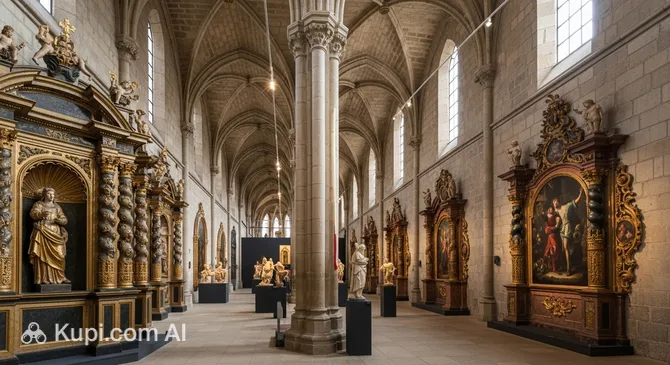
Museum of Sacred Art of Bilbao
Museum of Sacred Art of Bilbao. Иллюстрация. Источник: Kupi.com AI

The museum occupies the building of the former Dominican Convent of La Encarnación, which is an outstanding architectural monument in its own right. Founded in 1961 to preserve the region's religious values, it became accessible to the general public in 1995 after an extensive restoration. Today, it houses an impressive collection representing the artistic achievements of Spain through the lens of religion.

The museum's halls feature more than 2,000 exhibits, of which about 500 make up the permanent exhibition. Here, you can trace the evolution of art from the 12th century to the present day, with some archaeological finds dating back to the 3rd century. This is a place where aesthetics meet spirituality in the peaceful silence of ancient convent walls.

Contacts

To plan your visit or for further details, you can use the following contact information for the museum:

How to contactContact
AddressEncarnacion Plaza, 9B, Ibaiondo, 48006 Bilbao, Bizkaia, Испания
Phone+34 944 32 01 25
Websiteeleizmuseoa.com

What to Do

A journey through the exhibition should begin on the first floor, which features a magnificent jewelry and goldsmithing collection. This area houses precious chalices, crowns, and reliquaries encrusted with gemstones. Of particular note is the extremely rare silver pelican brought from Peru in 1766, which was previously exhibited at Madrid's Prado Museum.

On the second floor, spacious halls dedicated to painting and sculpture await guests. Here, you can see a cycle of 15 canvases from the workshop of Luca Giordano dedicated to the Life of Christ, as well as works by Pierre Mignard and Antonio Carnicero. The museum's pride is the country's largest collection of English alabaster reliefs from the 14th–15th centuries, striking for their fine craftsmanship and detail.

Don't forget to dedicate some time to the building itself. A walk through the quiet inner cloister with its elegant galleries allows you to take a break from the city noise and feel the authentic atmosphere. For a deeper study of the exhibits' history, visitors can use audio guides or visit temporary exhibitions dedicated to contemporary religious art.

Getting There

The museum is located in the historic district of Atxuri (Ibaiondo), which is easily accessible by public transport. The most scenic way to arrive is by tram (lines 1 or 2) directly to the Atxuri or Santimami stop. From Bilbao-Abando station, the tram ride takes only 5 minutes, while a walk along the river takes a pleasant 15–20 minutes.

You can also take Bizkaibus buses (routes A3247 or 76), which stop near Plaza de la Encarnación. If you are coming from Bilbao Airport (BIO), it is most convenient to take the A3247 bus to the central terminal and then transfer to the tram. A taxi from the city center is also a quick and convenient option.

If you prefer walking, the museum is within walking distance of the famous Casco Viejo district. Please note that parking in this area is very limited, so it is better to leave a private car in one of the parking lots further from the historic center or opt for public transport.

Ближайший город: Bilbao

History & Facts

The history of this site began in 1513–1514 when Dominican nuns founded the first female convent in Bilbao. Over centuries, the walls of the Convent of La Encarnación have seen much: the building has served not only as a cloister but also as a school, barracks, and even a military hospital before finding its current role as a guardian of the arts.

The museum itself was established in September 1961, but its collection was initially housed in the Derio Seminary. The main goal of its founding was to save the religious heritage of the province of Bizkaia from destruction, fire, and theft during turbulent times. For a long time, the collection was only available to researchers, essentially serving as a closed repository.

A new chapter in the institution's life began in 1991 when the city hall, regional authorities, and the diocese joined forces to create a proper exhibition space. As a result, the city provided the ancient convent building, a careful restoration was carried out, and in 1995, the renovated museum ceremoniously opened its doors to all art lovers.

Time Needed

To view all key sections of the exhibition without rushing, including the painting and jewelry halls and the quiet inner courtyard, guests usually need about 1.5–2 hours. This time is quite sufficient to get acquainted with the most valuable masterpieces of the collection and enjoy the convent's architecture.

If you plan to study each exhibit in detail or use an audio guide for a deep dive into history, it is worth allowing a bit more time for your visit — up to 2.5 hours. The museum is not too large, so its visit can easily be combined with lunch in Casco Viejo or a walk to other city attractions.

Working Hours

Please note that the museum follows a traditional Spanish working schedule with a midday break. From Tuesday to Saturday, the halls are open to visitors from 10:30 to 13:30 and from 16:00 to 19:00. On Sundays and public holidays, the museum operates on a reduced schedule — only in the morning, from 10:30 to 13:30.

Monday is a day off when the museum is closed to the public. As the schedule may change depending on the season, we recommend checking the current opening hours on the official website before your visit.

DayWorking hours
понедельникЗакрыто
вторник10:30–13:30, 16:00–19:00
среда10:30–13:30, 16:00–19:00
четверг10:30–13:30, 16:00–19:00
пятница10:30–13:30, 16:00–19:00
суббота10:30–13:30, 16:00–19:00
воскресенье10:30–13:30

Nearby

Exploring the surroundings of the Atxuri district can greatly enrich your travel experience. This is one of the oldest parts of the city, where every alleyway holds a piece of history, and a walk along the banks of the Nervión River offers true aesthetic pleasure.

Below are interesting sites located near the museum that you can include in your itinerary:

NameDistance
Ribera Market0.4 km
Bilbao Arena0.4 km
Santiago Cathedral of Bilbao0.5 km
Eguzkilore Txoko0.6 km
Archaeological Museum of Biscay0.6 km
Basilica of Begoña0.8 km
Etxebarri Park1 km

Reached the end of the page?

That means the route is fully explored