Support

Museo Oriental

About

Located in the heart of the ancient city of Valladolid, the Oriental Museum (Museo Oriental) is rightfully considered one of the most significant collections of Asian art in Spain. It occupies the majestic neoclassical building of the Real Colegio de los Padres Agustinos Filipinos, built according to the designs of the prominent architect Ventura Rodríguez. Today, it is more than just an exhibition space; it is a unique window into the culture of the Far East, created thanks to centuries of activity by Augustinian missionaries.
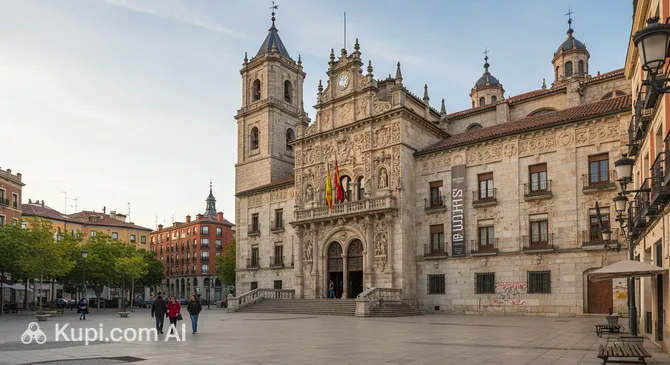
Oriental Museum
Oriental Museum. Иллюстрация. Источник: Kupi.com AI

Inside the museum, visitors will find 18 themed rooms showcasing treasures from China, Japan, and the Philippines. The collection spans a vast historical period—from ancient times (5th century BC) to the early 20th century. Here, you can see everything from fragile porcelain and exquisite calligraphy to stern samurai armor and rare ethnographic artifacts brought from distant islands.

The museum's importance is highlighted by the completeness of its collection, which is considered one of the richest in Europe. Every detail of the exhibition tells a story of cultural exchange and spiritual ties that have connected the Iberian Peninsula with Eastern civilizations for centuries.

Contacts

To confirm current information before your visit or to organize group tours, you can use the museum's official contact details.

How to contactContact
AddressP.º de Filipinos, 7, 47007 Valladolid, Испания
Phone+34 983 30 68 00
Websitewww.museo-oriental.es

What to Do

Visiting the Oriental Museum is a true journey through space and time. Start your route with the rooms dedicated to China, where you can spend hours admiring ancient bronze works, the finest silk, and masterful ivory carvings. Special attention should be paid to the collection of jade and lacquer miniatures, which demonstrate the incredible skill of Eastern craftsmen.

In the Japanese section of the exhibition, formidable katanas, samurai armor, and mysterious Noh theater masks await you. Fans of graphic arts will appreciate the original ukiyo-e prints and vintage photographs from the Edo and Meiji periods. No less interesting is the Philippine section, which tells the story of the life of the tribes of Luzon and Mindanao, as well as the history of the legendary Manila Galleon, which linked the Philippines with Europe.

Interaction with the collection is contemplative and educational. We recommend using an audio guide to discover the hidden meanings behind the Buddhist sculptures or the symbolism of Shinto artifacts. Photography is allowed in the museum (subject to certain rules), so you will have the opportunity to capture the most impressive exhibits for your personal collection of memories.

Getting There

The museum is located at Paseo de Filipinos, 7, making it easily accessible for tourists. If you are already in the center of Valladolid, a pleasant walk from Plaza Mayor will take no more than 20–30 minutes.

For those who prefer public transport, bus lines No. 1, 3, 6, and 11 stop near the museum. If you are arriving from another city, such as Madrid, on the AVE high-speed train, the trip from the Valladolid-Campo Grande station by taxi or bus will take about 10 minutes. The journey from Valladolid Airport by taxi is approximately 15–20 minutes.

For travelers by car, there are parking spaces near the museum complex, allowing you to comfortably plan a visit even as part of a large family or group.

Ближайший город: Valladolid

History & Facts

The history of this remarkable place began back in 1565, when missionaries of the Augustinian order set out for China, Japan, and the Philippines. The convent in the city of Valladolid served as the main base for preparing priests before their long journey to the East. Upon their return, missionaries brought back rare artifacts that were used as teaching aids for new generations, forming the foundation of the future collection.

The building of the Real Colegio de los Padres Agustinos Filipinos itself is an outstanding example of Neoclassicism. It was designed by the famous architect Ventura Rodríguez in 1759. Construction and refinement of the complex continued until the early 20th century, turning it into a monumental architectural landmark of Spain.

The official opening of the museum to the general public took place in 1874. A significant contribution to the expansion of the exhibition was made by the 1925 Vatican Missionary Exhibition, after which many valuable items from Rome were transferred here. The museum acquired its modern appearance after the grand opening of the renovated halls by King Juan Carlos I in 1980 and a subsequent re-exhibition in 2006.

Special mention should be made of the contribution of Father Blas Sierra de la Calle, who has directed the museum since 1979. His years of effort to preserve and popularize Eastern heritage were recognized with a prestigious honor—the Japanese Order of the Rising Sun.

Time Needed

To leisurely explore all 18 themed rooms, an average visitor will typically need 1.5 to 2 hours. This is enough time to appreciate the main masterpieces of Chinese ceramics and Japanese weapon art.

If you are a connoisseur of Eastern culture and plan to study each exhibit in detail using the audio guide or information plaques, we recommend setting aside about 2.5 hours for your visit. The museum holds extensive material that deserves careful and thoughtful study.

Working Hours

The museum is open to visitors daily, though the schedule varies depending on the day of the week. From Monday to Saturday, the doors of the exhibition are open in the afternoon, from 4:00 PM to 7:00 PM. On Sunday, the museum welcomes guests in the morning—from 10:00 AM to 2:00 PM.

Please note that the schedule may change on holidays. We recommend checking the museum's official website before your visit to ensure current opening hours and avoid any possible inconvenience.

DayWorking hours
понедельник16:00–19:00
вторник16:00–19:00
среда16:00–19:00
четверг16:00–19:00
пятница16:00–19:00
суббота16:00–19:00
воскресенье10:00–14:00

Nearby

A stroll around the Oriental Museum will allow you to dive deeper into the city's atmosphere and see many other historical and cultural landmarks. The museum's location in a picturesque part of the city makes it an excellent starting point for a walking route.

NameDistance
Colón Plaza Hotel Restaurant0.2 km
Campo Grande Park0.2 km
Valladolid Tourist Office0.3 km
Casa de Cervantes0.5 km
Municipal Exhibition Hall (SME) of the Museo de la Pasión0.8 km
La Parrilla de San Lorenzo0.8 km
Villa Paramesa0.9 km

Reached the end of the page?

That means the route is fully explored