Support

Casa de Cervantes

About

Immerse yourself in the atmosphere of the golden age of literature by visiting Casa de Cervantes—a unique museum located in the city of Valladolid. It was here, within the walls of this modest yet cozy building, that the greatest writer Spain ever gifted the world, Miguel de Cervantes Saavedra, lived from 1604 to 1606.
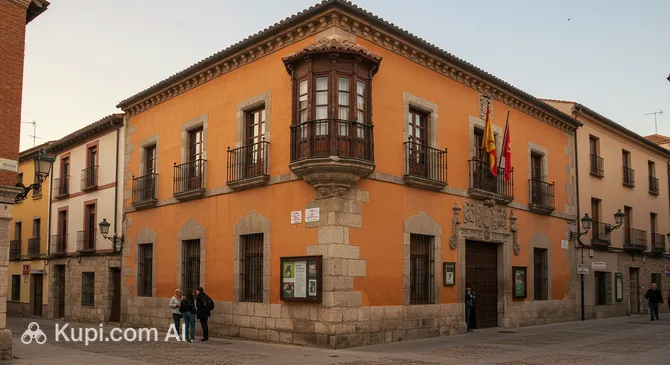
Casa de Cervantes
Casa de Cervantes. Иллюстрация. Источник: Kupi.com AI

This house-museum holds immense historical significance: it is believed that during this period, Cervantes prepared the first part of his immortal novel "Don Quixote" for publication and worked on his collection of "Exemplary Novels." Today, the building is a national treasure that carefully preserves the spirit of the early 17th century, offering visitors a glimpse into the daily life of the man who changed world literature.

Although the building has been restored several times over the centuries, its internal layout and structure have remained virtually untouched. Inside the museum, the period interiors have been recreated, allowing the modern traveler to step back four centuries and feel the very environment where the masterpieces of the Spanish Renaissance were born.

Contacts

To clarify visit details or book a group tour, you can use the museum's official contact information.

How to contactContact
AddressC. Rastro, s/n, 47001 Valladolid, Spain
Phone+34 983 30 88 10
Websitemuseocasacervantes.mcu.es

What to Do

The main reason to visit Casa de Cervantes is the chance to see the world through the eyes of the great writer. You can walk through the living rooms, where an authentic early 17th-century atmosphere has been recreated. The study, dining room, and bedrooms are furnished with pieces from that era, allowing you to observe the daily life of the Cervantes family in detail.

Special attention should be paid to the museum's collection: it houses rare and antique editions of "Don Quixote", unique manuscripts, paintings, and decorative arts. History buffs will appreciate the display of weapons and household items that create a complete sense of being in Spain's Golden Age.

After exploring the interior, be sure to step into the inner garden. This quiet and peaceful space behind stone walls offers a break from the city bustle and a place to reflect on what you've seen. The house's atmosphere is so cinematic that it will appeal not only to literature fans but to anyone who appreciates historical authenticity and the charm of old European homes.

Getting There

Finding this historic landmark in the heart of the city is quite easy. Casa de Cervantes is located on Calle del Rastro, just a few minutes' walk from the picturesque Campo Grande park and the central Plaza Mayor. If you are in the city center, a pleasant stroll through the historic quarters will lead you directly to the museum doors.

For those arriving by train, the walk from the main railway station, Valladolid-Campo Grande, takes about 10–15 minutes. You can also take a taxi; the ride from the station or outer parts of the center usually takes no more than 5–10 minutes.

The city's public transport is also well-developed. Major bus lines pass near the museum, with the closest stops located on adjacent streets like Miguel Íscar. If you are traveling by car, it is recommended to leave it in one of the paid parking lots in the center, as the museum building itself is located in a restricted traffic zone.

Ближайший город: Valladolid

History & Facts

The history of this building is inextricably linked to the Golden Age of the Spanish Crown. In 1601, when King Philip III moved the court to Valladolid, the city experienced a real construction boom. It was during this period, in 1604, that Miguel de Cervantes and his family settled in the house by the Esgueva River while he worked as a humble tax collector.

One of the most dramatic episodes in the house's history occurred in 1605. Right outside the writer's windows, a nobleman named Gaspar de Ezpeleta was mortally wounded. The wounded man was carried into Cervantes' home, where he soon passed away. This event led to a legal investigation during which Cervantes himself had to testify. Thanks to the surviving court archives, historians were able to accurately confirm the great author's residence address.

For a long time after the writer's departure, the house remained residential and gradually fell into disrepair, becoming a shelter for the poor. It wasn't until the late 19th century that Spain's cultural community realized the significance of the site. In 1912, King Alfonso XIII purchased the building to save it from destruction, and later, in 1948, it was officially opened as a national museum.

Today, Casa de Cervantes is more than just a building; it is a symbol of generational continuity. The house's layout has remained virtually unchanged since the 17th century, allowing visitors to see the same setting that inspired the author to create his immortal lines about the ingenious hidalgo.

Time Needed

Casa de Cervantes is an intimate and very cozy museum, so a visit won't take up your entire day. Typically, a standard tour of the living rooms and a look at the small exhibition takes about 1 to 1.5 hours.

This is plenty of time to examine the interior details without rushing, stroll through the quiet inner garden, and immerse yourself in the atmosphere of the era. Thanks to its compactness, the museum fits perfectly into a one-day walking itinerary around the city.

Working Hours

The museum is open to visitors throughout the week, except for Mondays. Please note that on some days there is a mid-day break, which is typical for the Spanish rhythm of life.

Opening Hours:

  • Tuesday: 09:30 – 15:00
  • Wednesday: 09:30 – 15:00, 17:00 – 20:00
  • Thursday: 09:30 – 15:00, 17:00 – 20:00
  • Friday: 09:30 – 15:00
  • Saturday: 09:30 – 15:00
  • Sunday: 10:00 – 15:00
  • Monday: Closed

DayWorking hours
ПонедельникЗакрыто
Вторник9:30 – 15:00
Среда9:30 – 15:00, 5:00 – 20:00
Четверг9:30 – 15:00, 5:00 – 20:00
Пятница9:30 – 15:00
Суббота9:30 – 15:00
Воскресенье10:00 – 15:00

Nearby

The museum's prime location allows tourists to combine a visit to the great writer's home with other iconic sites in the city. A walk through the surrounding area will help you feel the atmosphere of an old Spanish city and get acquainted with its architectural heritage.

NameDistance
Valladolid Tourist Office0.2 km
Municipal Exhibition Hall (SME) of the Museo de la Pasión0.4 km
Colón Plaza Hotel Restaurant0.4 km
Gutiérrez Passage0.4 km
Campo Grande Park0.4 km
Fuente Dorada0.4 km
Plaza de Cantarranas0.5 km

Reached the end of the page?

That means the route is fully explored