Support

Convento de San Marcos

About

In the heart of the ancient city of León stands one of the most magnificent structures that Spain can boast — the majestic San Marcos Monastery. This building is a recognized masterpiece of the Spanish Renaissance Plateresque style, with facades that resemble the finest stonework jewelry. Its walls, decorated with intricate sculptures and medallions, have for centuries welcomed pilgrims traveling the Way of Saint James.
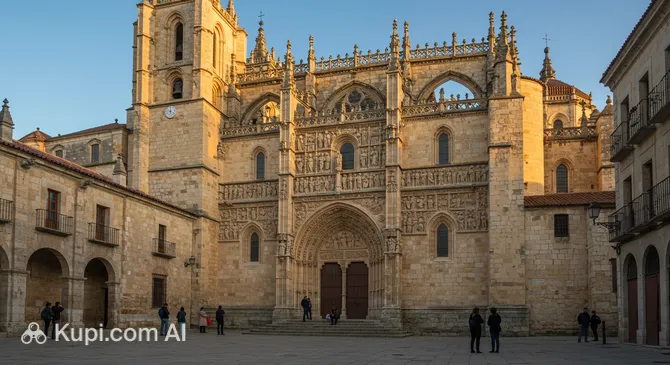
Convent of San Marcos
Convent of San Marcos. Иллюстрация. Источник: Kupi.com AI

Today, this historic site leads a double life. On one hand, it is an active five-star Parador hotel, where travelers can literally spend the night surrounded by history. On the other, it is a vital cultural center featuring a magnificent church in the shape of a Latin cross and a unique sacristy created by the outstanding architect Juan de Badajoz el Mozo.

The significance of this place is highlighted by its connection to knightly orders and the monarchy — images glorifying King Charles I can be found on the facade. Visitors consistently note the special atmosphere of a noble past preserved within the monastery's interiors, which is recognized as one of the most beautiful historic hotels in the world.

Contacts

For up-to-date information regarding visits or to book a stay, you can use the following official resources:

How to contactContact
AddressPlaza San Marcos, 6, 24002 León, Spain
Websitewww.turismocastillayleon.com

What to Do

The first thing to do when visiting is to take the time to study the Plateresque facade. By examining the detailed sculptures of knights, saints, and pilgrims, you can literally "read" the history of this place like an open book. Don't forget to look for the symbols of the Order of Saint James, which appear throughout the decoration.

Inside the complex, be sure to visit the monastery church and admire the carved choir stalls, crafted by the finest masters of their time. If you appreciate peace and elegant architecture, step into the cloister (inner courtyard) — here you can enjoy the play of light on the ancient columns and take stunning photos in an atmosphere of medieval tranquility.

Since the luxury Parador de León is located here today, you can visit the local restaurant to try traditional Leonese cuisine in palatial interiors. Also part of the building is a section of the Museum of León, which displays archaeological finds and works of art that help provide a better understanding of the region's rich heritage.

Getting There

This majestic building is located at Plaza San Marcos, 6, in the historic part of the city, right on the banks of the picturesque Bernesga River. Travelers already in the city center will be pleased to know that a walk from the famous León Cathedral takes only 10–15 minutes through charming pedestrian streets.

If you are arriving in the city by train, the León railway station is approximately 1–2 kilometers from the monastery, making it easily accessible by taxi or even on foot. City buses also run regularly through this area, connecting it with more distant neighborhoods. For those arriving by plane, the city airport is only 7 kilometers away.

The monastery holds special significance for pilgrims following the famous Way of Saint James (Camino de Santiago). The building is located directly on the route, so it is almost impossible to get lost — simply follow the yellow arrows, which will lead you straight to the monumental facade.

Ближайший город: Leon

History & Facts

The history of this site began in the 12th century when Princess Sancha of Castile made a generous donation to build a modest hospital for pilgrims. The original building served its purpose for several centuries until a large-scale reconstruction began in 1515. The work to create the masterpiece we see today spanned two centuries, finally reaching completion in 1716.

For centuries, the Monastery of San Marcos served as the main seat of the Military Order of Saint James in the western part of the Iberian Peninsula. It housed monks who cared for travelers and knights who participated in the Reconquista. Important historical decisions were made within these walls, and solemn meetings of the order's chapter were held here.

The fate of the building after the monastery closed in 1869 was quite varied. Over the years, its grand halls were used as a school, a veterinary college, and even a prison. This eventful history has only added to the site's cultural value, turning it into a living monument to Spanish history.

Today, the former monastery of the Knights of Santiago carefully preserves the memory of its military and spiritual past. Every stone in its foundation and every bas-relief on the facade tells of a time when religion and knightly valor were inextricably linked.

Time Needed

To leisurely admire the magnificent facade, look inside the church, and stroll through the accessible parts of the cloister, most tourists will need about 1–2 hours. This is quite enough time to examine the architectural details and take atmospheric photos against the backdrop of the ancient walls.

If you plan to visit the Museum of León, part of which is located within the monastery complex, or if you wish to have lunch at the Parador hotel restaurant, you should budget 2–3 hours for your visit. Such an immersion will allow you to deeper feel the spirit of history and enjoy the exquisite setting of one of the city's most beautiful buildings.

Working Hours

For tourists wishing to see the church and public areas, the monastery is usually open daily. Standard visiting hours for sightseers typically fall between 10:00 AM and 6:00 PM or 8:00 PM; however, the schedule may change depending on church services or private events at the hotel.

As the site functions as a Parador hotel, the reception area and some halls are accessible 24 hours a day, but visits to the museum rooms and the church are strictly regulated. Before your visit, it is recommended to check the information on the official website or clarify details at the hotel's front desk.

Nearby

The area around the monastery is a hub of history, where every step reveals new and interesting locations. A walk through the neighborhood will allow you to see both the city's ancient Roman heritage and its cozy squares, perfect for relaxing after a day of sightseeing.

NameDistance
San Marcos Roman Bridge0.2 km
Casa Blas0.3 km
Plaza de la Inmaculada0.5 km
Museum of Contemporary Art of Castilla y León0.6 km
Monument to Guzmán el Bueno0.7 km
Ancient City Walls of León0.8 km
Museum of San Isidoro0.9 km

Reached the end of the page?

That means the route is fully explored