Support

Casa-Museo Árabe Yusuf Al-Burch

About

The unique Yusuf Al Burch Arabic House-Museum allows you to immerse yourself in the atmosphere of the medieval East right in the center of the ancient city of Cáceres. This carefully restored 12th-century building is a rare example of residential architecture from the time of Muslim rule in Spain. Visitors call it a "hidden gem," as magnificent interiors recreating the life of a wealthy Arabic merchant are hidden behind its modest facade.

The museum owes its existence to José de la Torre Gentil, who discovered Roman and Arabic artifacts in the ruins of the old house in the 1960s. After fifteen years of painstaking restoration, the building opened to the public, preserving its original vaults, horseshoe arches, and even an ancient water supply system. Inside the house-museum, coolness and peace reign, creating a full sense of traveling back in time.

Special attention is drawn to the architectural elements of the Mudejar style and the cozy interior courtyard with a fountain decorated with lion heads. Thanks to authentic furnishings, a collection of weapons, and ancient musical instruments, Casa-Museo Árabe is considered one of the most atmospheric private museums in the region.
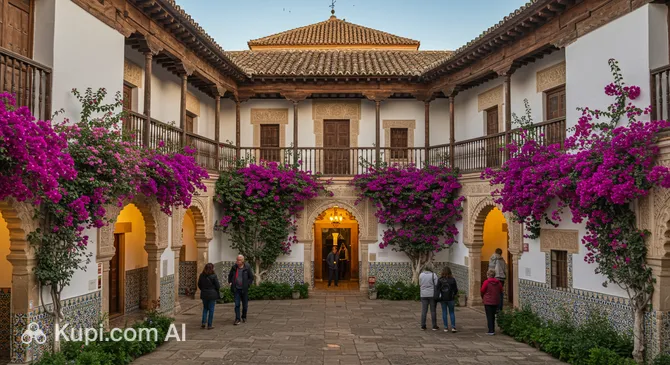
Yusuf Al-Burch Arab House Museum
Yusuf Al-Burch Arab House Museum. Иллюстрация. Источник: Kupi.com AI

Contacts

For your convenience, we have gathered current contact details to help you easily find the Yusuf Al Burch Arabic House-Museum in the labyrinth of ancient streets. Please note that it is advisable to check the museum's official website before your visit.

How to contactContact
AddressCta. del Marqués, 4, Centro-Casco Antiguo, 10003 Cáceres, Испания
Phone+34 644 76 70 69
Websitecasamuseoarabe.com

What to Do

Upon entering the museum, you will be greeted by an elegant foyer, from where a view of the kitchen and an impressive four-meter cistern, carved directly into the rock, opens up through a classic horseshoe arch. Be sure to look into the tea room—it is decorated with an authentic arch from Granada, and the shelves feature rare replicas of vessels and gifts from Iraqi cultural organizations.

History buffs will find it interesting to explore the armory, which houses daggers, scimitars, and archaeological finds discovered during the restoration of the house. In the ballroom, you can see a podium for musicians and ancient instruments that once filled these walls with melodies. Don't forget to head up to the bedroom to see the collection of statues and gifts donated to the museum by the Iraqi embassy.

One of the most impressive areas is the hammam. The steam and heat baths carved into the stone, with a heating system located under the courtyard, allow you to visualize the high level of comfort of that time. Conclude your tour with a rest in the patio by the lion-head fountain, where the coolness of the cellar (maintaining a constant temperature of 14°C) has kept food supplies fresh for centuries.

Getting There

Finding this unique historical monument is easy, as it is located in the very heart of the Cáceres Old Town (Centro-Casco Antiguo). The museum is situated at Cta. del Marqués, 4, just a few steps from San Jorge Square. The most pleasant way to get here is a leisurely walk from the main city square, Plaza Mayor, which will take no more than 5–10 minutes.

If you are arriving in Cáceres by train or intercity bus, the journey from the station to the center by taxi or local bus will take about 10–15 minutes. It is worth noting that the historical center is primarily a pedestrian zone with narrow cobbled streets, so it is better to leave a private car in one of the parking lots on the periphery of the old town.

For the most accurate navigation through the maze of medieval quarters, we recommend using the GPS coordinates: 39.4737, -6.3696. A walk through these areas is a tour in itself, allowing you to feel the spirit of Spain's centuries-old history.

Ближайший город: Caceres

History & Facts

The history of this building dates back to the 12th century, when it was built on ancient Roman foundations. During the era of Muslim rule, the house apparently belonged to a wealthy Arabic merchant. The city's strategic position during that period contributed to the flourishing of Islamic culture, traces of which are still clearly visible in the architecture and internal layout of the house.

The modern chapter in the life of the museum began in the 1960s, when José de la Torre Gentil purchased this dilapidated building for his personal residence. During renovations, he discovered authentic Arabic vaults, a cistern, and even the remains of a hammam beneath layers of plaster and debris. José dedicated more than 15 years of his life to the careful study and painstaking restoration of the site, turning it into the Casa-Museo Árabe.

In search of authentic details, Gentil traveled through the Middle East and collaborated closely with the director of the National Museum of Baghdad. As a result of this work, the museum's grand opening took place in 1976 with the participation of the Iraqi ambassador. Today, the founder's descendants continue his work, preserving this rare testament to Islamic heritage in Cáceres.

The Roman elements discovered during the restoration, which are organically woven into the Arabic masonry, are of particular value. This layering of eras makes the house of Yusuf Al Burch a living encyclopedia of the region's history, where the Roman past meets the sophistication of the Muslim Middle Ages and Mudejar style elements.

Time Needed

Although the museum occupies the space of a regular residential building, exploring it shouldn't be rushed. To fully enjoy the tranquility of the courtyard and examine the interior details, we recommend planning 1 to 1.5 hours for your visit. This time is quite sufficient for a leisurely introduction to each room and to study the collection of weapons and household items.

Thanks to its intimacy and special atmosphere, the museum allows you to quickly immerse yourself in history without overwhelming the visitor with an abundance of information. It is an ideal stop as part of a longer walk through the old town, leaving a pleasant aftertaste and allowing for a bit of rest from the summer heat in the cool halls of the hammam.

Working Hours

The museum is usually open to visitors daily, following a traditional Spanish schedule with an afternoon break. You can plan your visit from 10:30 to 14:00 in the morning and from 16:00 to 19:30 in the afternoon. This schedule allows you to avoid the midday heat and enjoy the coolness of the ancient walls at the most suitable time.

Despite the regular operating hours, the times may vary slightly depending on the season or public holidays. To confirm the current information before your visit, it is recommended to check the museum's official website or verify the details at the city's tourist office.

10:30–14:00, 16:00–19:30

Nearby

Exploring the surroundings of the museum can significantly enrich your experience, as the old town of Cáceres is literally overflowing with historical treasures. Very close to the Yusuf Al Burch house are monumental palaces and ancient towers that create a unique ensemble of medieval architecture.

We have prepared a list of nearby points of interest to include in your walking route through the historical center:

NameDistance
Old Town of Cáceres0.1 km
Bastion of the Wells0.1 km
San Jorge Square0.1 km
Stork Tower Palace0.1 km
El Corral de las Cigüeñas0.1 km
Cáceres Museum0.1 km
Palace of the Golfines de Abajo0.1 km

Reached the end of the page?

That means the route is fully explored