Support

Plaza de San Jorge

About

Imagine a cozy corner tucked between rugged medieval walls, where every stone breathes history. This is exactly the impression made by San Jorge Square (Plaza de San Jorge)—one of the most picturesque and intimate locations hidden within the ancient city of Cáceres. Located in the heart of the monumental district, this square is considered a jewel of the Extremadura region, a place that Spain is rightfully proud of.
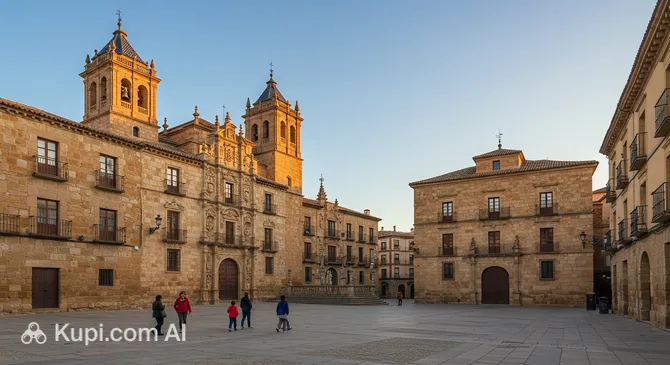
San Jorge Square
San Jorge Square. Иллюстрация. Источник: Kupi.com AI

The centerpiece of the architectural ensemble is the majestic Jesuit Church of San Francisco Javier, built in the Baroque style in the 18th century. Its snow-white towers rise strikingly above the square, creating a unique visual accent. In the very center stands a bronze statue of "Saint George and the Dragon," dedicated to the city's patron saint, giving the place special symbolism.

The setting is complemented by the Gothic Casa Becerra, built back in the 15th century. This historic site is perfect for those who want to immerse themselves in a medieval atmosphere and see how harmoniously different architectural styles blend in one small space.

Contacts

To plan your visit to this iconic landmark, it's helpful to have some basic information at hand. The square is located in the heart of the historic quarter, and easy pedestrian routes lead to it.

How to contactContact
AddressPl. de San Jorge, s/n, Centro-Casco Antiguo, 10003 Cáceres, Испания
Websitewww.ayto-caceres.es

What to Do

A walk through San Jorge Square is a true journey through time. First, take a close look at the statue of Saint George fighting the dragon: it is one of the city's most popular subjects for photography. After climbing the wide staircase to the Church of San Francisco Javier, you can appreciate the scale of the Baroque architecture and take panoramic shots of the old quarters.

The church's interiors are also open to the public. Although regular services are not held here, the interior decor is worth seeing for its austerity and grandeur. It is an excellent opportunity to see historical relics in the silence of cool stone vaults.

Those who enjoy a slower pace will love simply sitting on the steps of the square, watching the play of light on the ancient facades. Since this site is part of a UNESCO World Heritage site, you can spend hours studying the details of neighboring palaces and towers, soaking in the unique atmosphere of Cáceres. The square serves as a wonderful backdrop for feeling the rhythm of life in old Spain without the unnecessary hustle and bustle.

Getting There

The landmark is located in the heart of the Centro-Casco Antiguo district. The route usually starts from the city's main square, the Plaza Mayor. From there, you need to pass through the famous Arco de la Estrella (Star Arch), built in the 15th century, and follow the narrow historic streets into the heart of the city.

Since the old part of Cáceres is almost entirely a pedestrian zone with steep and winding alleys, the best way to get around is on foot. The entire monumental district is very compact, and the walk to the square from the main entrances to the old city takes only a few minutes.

If you arrive in the city by train or bus (for example, the journey from Madrid takes about 4 hours), you can reach the edge of the historic center by taxi or local public transport, and then continue on foot along the cobbled streets to the address Pl. de San Jorge, s/n.

Ближайший город: Caceres

History & Facts

The history of this place dates back centuries. Although Cáceres was founded by the Romans in the 1st century BC, the area around the square took on its unique appearance during the Middle Ages and the period of Moorish rule. After the city was reconquered by King Alfonso IX in the 13th century, active construction of Christian churches and Gothic palaces began.

The Church of San Francisco Javier, which dominates the square, was built by the Jesuits between 1698 and 1755. Construction was carried out in the Baroque style, funded by the influential Figueroa family. Today, its snow-white towers are one of the city's most recognizable symbols, contrasting with the dark stone of neighboring buildings.

Nearby is Casa Becerra, which dates back to the 15th century—the era of the Cáceres nobility's prosperity. In 1986, this entire architectural ensemble, along with the square, was granted UNESCO World Heritage status for the exceptional preservation of its medieval and Renaissance architecture, making San Jorge Square a vital point on Europe's cultural map.

Time Needed

To leisurely explore San Jorge Square, examine the details of the bronze statue, and admire the facades of the Baroque church, it usually takes about 30 to 60 minutes. This is plenty of time for an introductory walk and for taking beautiful photos.

If you plan to go inside the Church of San Francisco Javier or linger in one of the neighboring courtyards to feel the silence of the ancient walls, you should set aside a bit more time. The square is small, but its atmosphere leads many tourists to stay here longer than they originally planned.

Working Hours

As a public urban space, San Jorge Square is open to visitors 24 hours a day, seven days a week. You can come here at any time to enjoy the architecture in the rays of the morning sun or the soft light of evening illumination, when the old city becomes particularly mysterious.

For those wishing to go inside the Church of San Francisco Javier, please note that the building has its own operating schedule. Visitors are advised to check current opening hours on the official municipal website or at the city's tourist information centers.

Круглосуточно

Nearby

The square's location in the epicenter of the monumental quarter makes it an ideal starting point for further exploration of the city. Literally a couple of minutes' walk away are key monuments that will help you form a complete picture of this place's former grandeur.

Exploring the surroundings will enrich your experience: you can see ancient defensive towers, luxurious palaces, and old gates that have been preserved in their original form to this day.

NameDistance
Palace of the Golfines de Abajo0 km
Old Town of Cáceres0.1 km
Plaza Mayor of Cáceres0.1 km
Stork Tower Palace0.1 km
Atrio0.1 km
El Corral de las Cigüeñas0.1 km
Cáceres Museum0.1 km

Reached the end of the page?

That means the route is fully explored