Support

Puente De La Constitución De 1812

About

The majestic Constitution of 1812 Bridge, also known as “La Pepa,” is a true triumph of modern engineering. This cable-stayed bridge spans the bay, connecting the ancient city of Cádiz with the mainland in the Puerto Real area. As one of the highest and longest structures of its kind, it has become a new symbol gracing modern Spain.
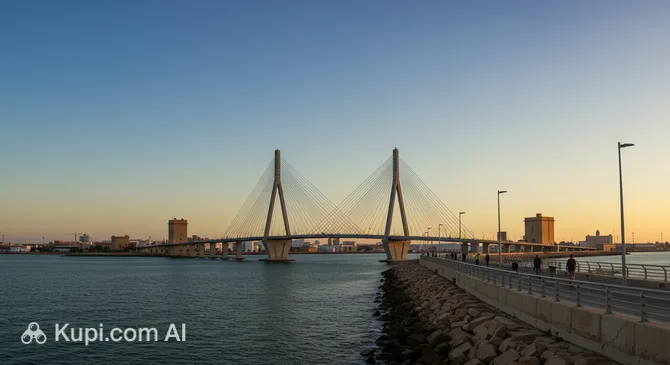
Constitution of 1812 Bridge
Constitution of 1812 Bridge. Иллюстрация. Источник: Kupi.com AI

The construction is impressive in its scale: the total length of the bridge including viaducts is nearly 5 kilometers. Its main span of 540 meters is the longest in the country and the third-largest among cable-stayed bridges in all of Europe. Thanks to its elegant curvature and massive pylons soaring 180 meters into the sky, the bridge looks surprisingly light and blends harmoniously into the maritime landscape.

For travelers, it is more than just a transport artery; it is a unique observation deck. The bridge serves as a vital link, providing the third and most modern access to the island part of the city, offering guests a breathtaking entrance into one of Europe's oldest ports.

Contacts

To plan your route across this grand structure, it's helpful to know its exact location. Although the site is an open engineering facility, you can find it on maps using official geodata for navigation.

Below are the main contact details and links to help you find your way and map out a convenient path.

How to contactContact
AddressCádiz, Spain

What to Do

Crossing this bridge gives an unforgettable feeling of flight. Positioned nearly 70 meters above the mirror-like surface of the bay, you can enjoy panoramic views of the endless sea, the white-washed city quarters, and the industrial landscapes of the mainland. The drive is especially spectacular at sunset, when the sun's rays gild the cable stays.

Visually, the bridge delights with its architecture: its curve mimics the movement of a wave, and the giant white pylons dominate the horizon. At night, the structure is transformed by artistic lighting, turning into a glowing light installation over the dark waters of the bay.

If you aren't driving, take the modern Bay of Cádiz tram or a public bus. The transport's wide panoramic windows will allow you to see the complex web of steel cables in detail and feel the power of this grandiose structure as you glide smoothly over the waves.

Getting There

The bridge is a key part of the southern highway (autovía del Sur), which connects Cádiz with the mainland. If you are traveling by car, the most convenient routes are via the CA-33 or AP-4 highways. The drive from Seville takes about an hour and a half and offers an unforgettable entrance into the city from the Puerto Real side.

For those who prefer public transport, MFE line buses and the modern Bay of Cádiz tram regularly run across the strait. You can also take a taxi from the city center to cross the bay in comfort and enjoy the panoramas without being distracted by the road.

Ближайший город: Cadiz

History & Facts

The history of this ambitious project began back in 1982, when the idea of a second bridge first arose to relieve the old Carranza Bridge. The official decision was made much later, and construction, led by the distinguished engineer Javier Manterola, started in 2007. For the city of Cádiz, this project became one of the most significant engineering challenges in modern history.

The Constitution of 1812 Bridge received its name in honor of the 200th anniversary of the first Spanish constitution, which was adopted right here. Although the goal was to complete the work by the 2012 anniversary, technical complexities and the scale of the structure pushed back the opening date. The grand opening for traffic took place on September 24, 2015.

Commonly known among locals as “La Pepa,” the bridge is striking in its scale: its total length with approach roads is about 5 kilometers. The engineering solution created the longest span in Spain (540 meters), placing the structure among the greatest bridges in the world.

Time Needed

To simply cross the bridge by car and catch a glimpse of its scale, you will need just 20–30 minutes. This is enough time to feel the height of the structure and see the bay from a bird's-eye view.

However, if you plan to make a stop on the mainland or in the city for commemorative photos against the backdrop of the giant pylons, it's better to set aside about 1 hour. This will allow you to leisurely enjoy the bridge's aesthetics from the side and appreciate its unique curved shape, reminiscent of a sea wave.

Working Hours

Since the site is an essential part of the national road network, it is available for passage 24 hours a day, seven days a week. You can cross the bay at any time convenient for you, whether it's early morning or the middle of the night.

There are no specific time restrictions for visiting; however, to get up-to-date information on possible roadworks or traffic changes, it is recommended to check the region's official road portals.

Nearby

After walking or driving across the bridge, be sure to take some time to explore the nearby neighborhoods. The areas around the bay and the old town offer many unique spots, from ancient Roman ruins to picturesque beaches, which will help you feel the region's atmosphere more deeply.

Many interesting locations are just a few minutes' drive away, allowing you to combine a visit to this modern engineering marvel with an immersion into the rich history of Andalusia.

NameDistance
Bahía de Cádiz Shopping Center1.1 km
Santa María del Mar Beach2 km
Chiquipark Cádiz2.1 km
Puerta de Tierra2.1 km
Santa María del Mar Beach2.1 km
Puppet Museum2.1 km
Poko Loco2.1 km

Reached the end of the page?

That means the route is fully explored