Support

Palacio polentinos

About

While strolling through the historic quarters, it is impossible to miss the building considered a gem of 16th-century civil architecture. Polentinos Palace is a magnificent example of the Plateresque style, located in the city of Ávila, Spain. Included in the UNESCO World Heritage list, it impresses with its monumentality and the elegance of its decor.
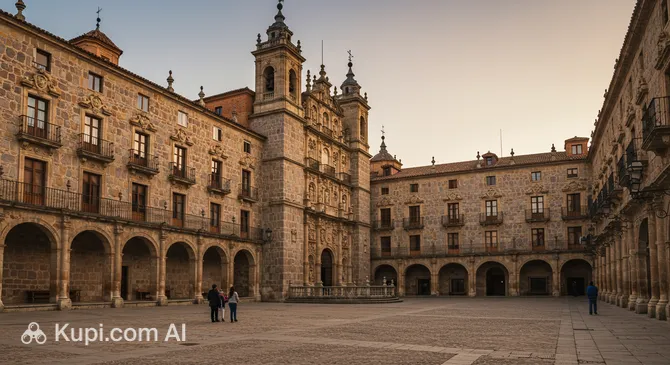
Palacio de Polentinos
Palacio de Polentinos. Иллюстрация. Источник: Kupi.com AI

The main pride of the palace is its facade, which features one of the most richly decorated portals in the city. It is adorned with coats of arms, mythical griffins, and military trophies that emphasize the status of its owners. Inside, a two-story square patio awaits guests, featuring monolithic columns and an exquisite balustrade, creating an atmosphere of harmony and tranquility.

Today, the walls of this historical monument house the General Military Archive of Ávila and the Quartermaster Museum. This site harmoniously combines the functions of a research center and a tourist attraction, allowing every visitor to touch upon the centuries-old history of the Spanish aristocracy and military logistics.

Contacts

To find the most up-to-date information regarding special events or temporary exhibitions at the Polentinos Palace, it is recommended to consult official resources. Planning your visit in advance will help you save time and better experience the Military Archive’s exhibits.

How to contactContact
AddressC. Vallespín, 19, 05001 Ávila, Испания
Phone+34 920 35 25 21
Websitepatrimoniocultural.defensa.gob.es

What to Do

The first thing to do when visiting is to carefully examine the main entrance. The complex stone carvings, including medallions and grotesques, deserve a long look. Afterward, be sure to step into the inner courtyard (patio). Its two-tier gallery with Doric columns and decorative friezes is a perfect example of how Renaissance ideas were embodied in stone.

Inside the building, the Hall of Honor deserves special attention. Look up at the ceiling—you will see an ancient artesonado with wooden beams and carved brackets, preserved from the 16th century. In the Quartermaster Museum, you can view unique exhibits that tell the story of the life and service of military suppliers, adding an educational element to your visit.

As entrance to the palace is free, it is an excellent opportunity to enhance your cultural program at no extra cost. It is recommended to combine your visit with a walk along the famous Walls of Ávila, which are in the immediate vicinity, to compare the city's rugged defensive power with the refinement of the palace interiors.

Getting There

Finding this architectural masterpiece in Ávila is easy, as it is located in the heart of the historic quarter. If you are already within the medieval walls, a walk from the main square (Plaza Mayor) will take no more than 5–10 minutes. The primary landmark is C. Vallespín street.

For those traveling from Madrid, the most convenient option is the train—the journey takes about 1.5 hours, after which you can take a local bus or taxi to reach the central gates. If you prefer to drive, follow the A-50 highway, but keep in mind that it is better to look for parking outside the old city walls and continue on foot through the picturesque streets.

Ближайший город: Avila

History & Facts

The construction of this majestic building in Ávila began in the first third of the 16th century for the noble Contreras family. The project is attributed to masters from the school of the prominent architect Vasco de la Sarza. For centuries, the palace remained a private residence until the 18th century when, through marriage, it came into the possession of the Counts of Polentinos, whose name it still bears today.

A new chapter in the building's history opened at the end of the 19th century when it was acquired by the city administration. For a long time, it housed the Academy of the Quartermaster Corps of the Army, which left its mark on the use of the premises. Military precision and austerity were harmoniously combined with the Renaissance luxury of the interiors.

Since 1993, the palace has served as the General Military Archive, and later a themed museum was opened within its walls. Despite numerous renovations carried out in the 19th and 20th centuries, the building has retained its original spirit and is a Property of Cultural Interest (BIC) protected by UNESCO.

Time Needed

To leisurely admire the architectural details of the facade and stroll through the inner courtyard, you will typically need about 1–1.5 hours. This is plenty of time to appreciate the scale of Renaissance architecture and take some atmospheric photos.

If you plan to study the exhibits of the Quartermaster Museum in detail or delve into archival materials, you should set aside up to 2 hours for your visit. The palace offers a calm environment conducive to a thoughtful introduction to history, so you won't feel like rushing.

Working Hours

Polentinos Palace is open to visitors on weekdays from 10:00 AM to 2:00 PM and in the evening from 5:00 PM to 8:00 PM. On Friday, Saturday, and Sunday, morning opening hours may shift slightly—from 10:30 AM to 2:30 PM. Entry to the building to view the architecture and the museum is traditionally free.

Please note that the schedule may change depending on public holidays or official events held at the military archive. Before visiting, it is recommended to confirm the information on the official website or at the city's tourist office.

DayWorking hours
понедельник10:00–14:00, 17:00–20:00
вторник10:00–14:00, 17:00–20:00
среда10:00–14:00, 17:00–20:00
четверг10:00–14:00, 17:00–20:00
пятница10:30–14:30, 17:00–20:00
суббота10:30–14:30, 17:00–20:00
воскресенье10:30–14:30, 17:00–20:00

Nearby

A stroll around the Polentinos Palace allows you to see many of the iconic sites that Ávila is famous for in a short amount of time. The historic city center is so compact that literally every turn opens up a view of ancient towers or cozy squares.

Exploring the neighboring streets should definitely be combined with a visit to the famous fortress gates and monasteries that create the unique character of this Castilian city. The table below lists sites located within walking distance.

NameDistance
Museum of Saint Teresa of Ávila0.1 km
Convent and Birthplace of Saint Teresa of Ávila0.1 km
Mercado Chico Square0.2 km
Puerta del Carmen0.2 km
Los Candiles0.3 km
Adaja Gate0.4 km
Avila Cathedral0.4 km

Reached the end of the page?

That means the route is fully explored