Support

Royal Monastery of Santo Tomás

About

Tucked away from the bustling tourist trails of Avila, the Royal Monastery of Santo Tomás is a true gem of Late Gothic architecture. Built in the late 15th century under the patronage of the Catholic Monarchs, this complex is an outstanding example of the Isabelline style, where the austerity of stone blends whimsically with elegant carvings and Plateresque elements.
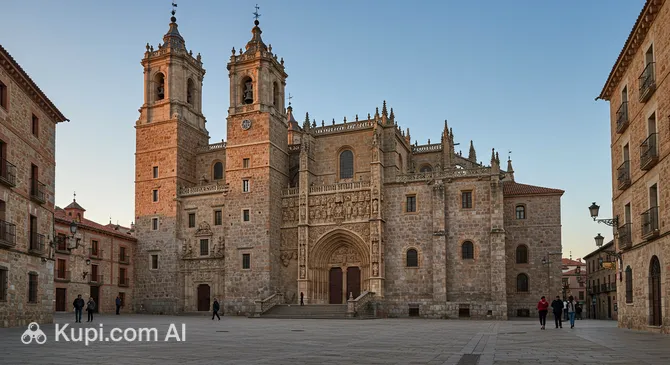
Royal Monastery of Santo Tomás
Royal Monastery of Santo Tomás. Иллюстрация. Источник: Kupi.com AI

This unique landmark in Spain is known for its unusual layout, featuring three interconnected cloisters, each with its own character: from the ascetic Cloister of the Novices to the grand Cloister of the Kings, adorned with famous stone "pearls." The monastery is recognized as a UNESCO World Heritage site, confirming its exceptional historical and artistic value.

Today, the Monastery of Santo Tomás is not only an active Dominican friary and a magnificent church but also a cultural hub. Its walls house fascinating collections of the Museum of Oriental Art and the Museum of Natural Sciences, making a visit educational for travelers of all ages. Here, the history of the Trastámara dynasty is closely intertwined with spiritual traditions and the legacy of great Spanish missionaries.

Contacts

To clarify visiting information or organize group tours, you can use the official contact details of the institution.

How to contactContact
AddressPl. Granada, 1, 05003 Ávila, Spain
Phone+34 920 35 22 37
Websitewww.monasteriosantotomas.com

What to Do

A visit to the Monastery of Santo Tomás is primarily a journey through three magnificent cloisters. Start with the most modest, the Cloister of the Novices, to feel the spirit of monastic seclusion, then move on to the Cloister of Silence, where the second floor impresses with its rich decorative arches. The highlight is the Cloister of the Kings, where Renaissance luxury sits alongside the pearl-shaped ornamentation characteristic of Avila.

In the church itself, be sure to note the main altarpiece by Pedro Berruguete and the delicate rib vaults. A special place is held by the tomb of Prince Juan — a white marble masterpiece executed with incredible detail. Also, don't miss the chance to go up to the choir to see the carved walnut stalls, which are considered some of the finest examples of Gothic carving in Spain.

Fans of unusual exhibitions should visit the Museum of Oriental Art, located in the Cloister of the Kings. It features unique items from China, Japan, and Vietnam brought back by Dominican monks from distant missions. End your visit with a walk around the monastery grounds, enjoying the silence and the majestic facades decorated with royal coats of arms and sculptures by Gil de Siloé.

Getting There

The monastery is located at Plaza de Granada, 1, which is situated outside the city's famous medieval walls. If you are already exploring the old center, the walk to the monastery will take no more than 10–15 minutes. It is best to head south from the central districts via Calle de la Sinagoga or Avenida de Madrid — the route is intuitive, but you can always check with a navigator.

For travelers arriving from Madrid by car, the journey is about 140 km via the A-50 highway. The trip takes approximately an hour and a half, and parking can usually be found near the monastery complex itself. There are also regular intercity buses from the capital to Avila's bus station, from which you can reach the destination by taxi in a few minutes or on foot in about 20 minutes.

Within Avila, the public transport network is well-developed. City bus lines 1 through 5 have stops within walking distance of Santo Tomás. Choosing a walking route from the UNESCO sites in the old town will allow you to enjoy the quiet atmosphere of the residential quarters and views of other historical churches located "outside the walls."

Ближайший город: Avila

History & Facts

Did you know that construction of this majestic complex began in 1482 by the personal decree of the Catholic Monarchs — Ferdinand of Aragon and Isabella of Castile? The monastery was dedicated to Saint Thomas Aquinas and built under the close supervision of the famous inquisitor Tomás de Torquemada. The completion of the work in 1493 marked the height of Isabelline Gothic in the region.

This site held deep personal significance for the royal family. The monastery served as their summer residence, for which a special palace was built around one of the courtyards. However, the building's history is also touched by sorrow: it houses the sepulcher of Prince Juan, the only son of Ferdinand and Isabella, whose early death in 1497 changed the course of Spanish history. His magnificent tomb by Domenico Fancelli is considered one of the church's main treasures.

For centuries, the monastery was not only a religious but also an intellectual center. From the 16th to the 19th century, it was home to the University of Santo Tomás. Despite difficult times — the Napoleonic invasion, fires, and periods of abandonment after the confiscation of church lands — the complex managed to preserve its grandeur. In 1931, it was declared a national monument, and in 1985, it was added to the UNESCO World Heritage list as an integral part of Avila's historical heritage.

Time Needed

To fully appreciate the beauty of Isabelline architecture and visit all three unique cloisters, allow 1.5 to 2.5 hours for your visit. This will be enough time to see the church and the royal quarters, as well as to carefully explore the exhibits of the two museums located on the grounds.

If you are an art history enthusiast or plan to take detailed photos of the stone carvings and interiors, it’s best to arrive with plenty of time in the first half of the day. The monastery’s peaceful atmosphere invites slow contemplation, so you shouldn't try to see it "on the run" between other city attractions.

Working Hours

The Royal Monastery of Santo Tomás welcomes visitors daily. Please note that there is a break in the middle of the day, typical for the operating schedules of Spanish cultural sites.

Opening Hours:
Monday – Sunday: 10:30 AM – 2:00 PM and 3:30 PM – 7:30 PM.

Tip: It is recommended to arrive at least an hour before the end of the morning or evening session to have enough time to see all three cloisters and the museums. Opening hours may change slightly on public holidays, so it's worth checking the latest information on-site.

10:30 – 14:00, 3:30 – 19:30

Nearby

Avila is a city literally steeped in history, and the Royal Monastery of Santo Tomás is just one of the region's gems. A walk through the surrounding area will allow you to see the mighty fortress walls and cozy squares that have preserved the medieval spirit.

Exploring the outer churches and the main city gates will help you form a complete picture of how the Castilian nobility and clergy lived many centuries ago. Below is a list of interesting locations within walking distance of the monastery.

NameDistance
Fandango0.5 km
Convent of Saint Joseph (Discalced Carmelites)0.6 km
Church of San Pedro0.6 km
Alcázar Gate0.8 km
Museum of Ávila0.8 km
Bococo Restaurant0.8 km
San Antonio Park0.8 km

Reached the end of the page?

That means the route is fully explored