Support

Adaja Gate

About

Among the majestic fortifications for which Spain is famous, the Adaja Gate holds a special place. This is one of the nine historical arches in the famous city wall surrounding the old center of Ávila. The structure is a classic example of medieval defensive architecture, preserved in remarkable condition to this day.
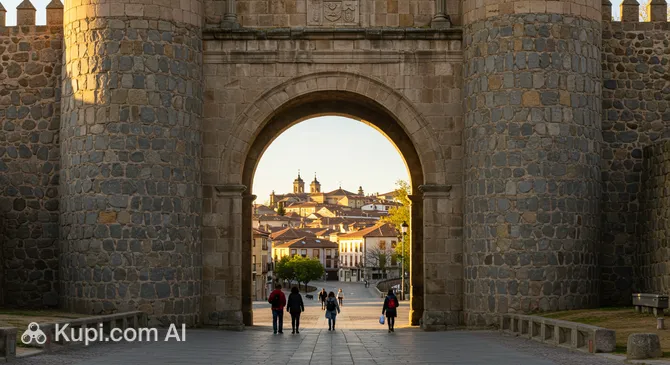
Adaja Gate
Adaja Gate. Иллюстрация. Источник: Kupi.com AI

The gate is built into a grand wall that reaches a height of 12 meters and a thickness of 3 meters. It opens a passage into the historic heart of Ávila, allowing tourists to touch stones salvaged from ancient buildings as far back as the Reconquista era. The name of the gate is linked to the nearby Adaja River, the right bank of which it has reliably protected for centuries.

Today, this site is recognized as one of the best examples of fortification in Europe. The Adaja Gate attracts travelers not only with its might but also with magnificent views of the surrounding landscape. This place is perfect for starting your discovery of the "fortress city" and feeling the atmosphere of its knightly past.

Contacts

To clarify visiting details or obtain up-to-date information on the fortress fortifications, you can use the official contact details.

How to contactContact
AddressC. Conde Don Ramón, 55, 05001 Ávila, Spain
Phone+34 666 69 32 76
Websitemuralladeavila.com

What to Do

The main impression this location offers is the opportunity to take a walk along the top of the city walls. Having climbed the fortifications, you can walk along the crenellated parapets, inspecting the preserved towers and other historical gates. From this height, panoramic views of old Ávila with its red-tiled roofs and the picturesque river valley open up, making the walk truly breathtaking.

Photography enthusiasts should come here at dawn or during sunset. At these times, the walls are illuminated with soft golden light, emphasizing the rugged beauty of the ancient granite. It is the perfect moment to capture the powerful arches and towers without the usual hustle and bustle. Additionally, the Jewish Quarter is located in the immediate vicinity of the gate, with its cozy cobblestone streets where it is pleasant to get lost after exploring the walls.

In the warmer months, especially from May to September, cultural events and even night tours are often held here. A stroll under the stars along the illuminated walls allows you to look at the city's history from a completely different angle. It is also worth combining a visit to the gate with a tour of neighboring palaces, such as the Palacio de los Dávila, to fully immerse yourself in the atmosphere of the birthplace of Saint Teresa.

Getting There

The most convenient way to start your journey to this historical location is from Madrid. There is an excellent rail connection between the capital and the city: trains depart from Chamartín station and reach Ávila in about 1.5 hours. From the station, you can reach the ancient gate on foot in just 15 minutes while enjoying views of the cobbled streets.

If you prefer buses, the ALSA company runs regular services from Madrid's South Bus Station (Estación Sur). The trip takes about two hours, with the bus arriving almost in the very center. For those traveling by car, the optimal route is the A-50 highway. The distance is about 110 km, and you can leave your car at one of the parking lots near the fortress wall, for example, by the Alcázar.

Once in Ávila itself, it is best to get around on foot. The city's historic center is very compact, and any point within the defensive ring can be reached in 10–20 minutes. Taxis are also available in the center, but a walk will allow you to better experience the atmosphere of the medieval city.

Ближайший город: Avila

History & Facts

The construction of the monumental fortress wall, of which this gate is a part, began in the 11th century. By order of King Alfonso VI, the fortifications were built during the Reconquista period, when Ávila stood on the frontier of Christian and Muslim forces. The construction of the main part of the wall took about 9–10 years, and stones from earlier structures, including Roman ones, were often used as building material.

During the Middle Ages, the city was known as "Ávila of the Knights," becoming a stronghold for the military aristocracy. The massive walls with 88 towers (one of which was lost later) reliably protected the residents from raids. The Adaja Gate itself, located on the side of the river of the same name, served as an important strategic point controlling access to the water and the lower parts of the city.

Interestingly, the defensive line follows the natural landscape: the walls were built higher in the lowlands, and their height decreased on the elevations, making the defense as effective as possible. Over the centuries of its existence, the walls have survived many sieges, including British attacks in the 14th century, but have maintained their appearance almost in its original form, making them a unique monument of European fortification.

Time Needed

For a quick look at the gate itself and a short stroll around the immediate area, you will need about 30–45 minutes. This is enough time to take beautiful photos and appreciate the power of the stonework from which the fortifications are built.

However, if you plan to climb the wall and walk its entire route, you should set aside at least 1.5–2 hours. The path is 2.5 kilometers long, and every turn offers new panoramic views of the city and the Adaja River valley, which often cause tourists to stop and admire the scenery.

Working Hours

The gate itself, as part of the city's architectural ensemble, is available for viewing 24/7. You can admire the massive arches and take photos at any time of day or night, seven days a week.

Keep in mind that if you plan to climb directly onto the wall (to walk along the upper tier), access rules apply through special ticket offices in accordance with the general schedule of the Muralla de Ávila museum complex. However, an external viewing of the gate is always open for free visiting.

Круглосуточно

Nearby

Exploring the surroundings of the fortress wall allows you to fully immerse yourself in the atmosphere of the "city of stones and saints." Virtually every step through the historic center reveals new architectural treasures, from austere Romanesque churches to elegant Renaissance palaces.

Near the gate, you will find many iconic sites that shape the unique character of Ávila. Below are the nearest attractions worth noting:

NameDistance
Puerta del Carmen0.4 km
Museum of Saint Teresa of Ávila0.4 km
Palacio de Polentinos0.4 km
Cuatro Postes Viewpoint0.4 km
Convent and Birthplace of Saint Teresa of Ávila0.4 km
Mercado Chico Square0.6 km
Los Candiles0.7 km

Reached the end of the page?

That means the route is fully explored