Support

Church & birthplace of Saint Teresa of Jesus - Avila, Spain

About

Behind the monumental walls that Ávila is famous for, lies one of the most revered sites in the Christian world — the Monastery and Birthplace of Saint Teresa of Ávila. This magnificent Baroque complex, known among locals as "La Santa," was built directly over the house where the great Teresa of Jesus was born in 1515. Today, it is both an active convent of the Order of Discalced Carmelites and an important pilgrimage center, attracting thousands of people with its special energy.
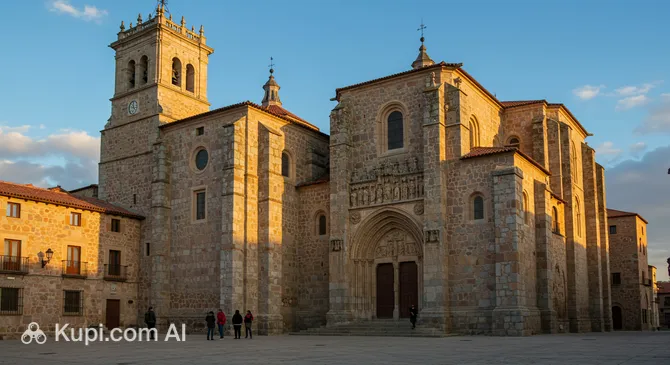
Convent and Birthplace of Saint Teresa of Ávila
Convent and Birthplace of Saint Teresa of Ávila. Иллюстрация. Источник: Kupi.com AI

This place is rightfully considered the spiritual heart that Spain is proud of. The architectural ensemble harmoniously combines the solemnity of the church, the austerity of the monastic quarters, and a modern museum exhibition. For visitors, it is not just a historical monument, but a unique opportunity to touch the legacy of a woman who reformed monastic traditions and left a deep mark on literature and mysticism.

The main feature of the monastery is that the altar of its church is located exactly above the place where the saint's bedroom was. The entire complex is permeated with an atmosphere of peace and contemplation, making it a must-visit for any traveler interested in European history and culture.

Contacts

To plan your visit and check for details, you can use the following contact information:

How to contactContact
AddressCarmelitas Descalzos, Pl. la Santa, Nº 2, 05001 Ávila, Spain
Phone+34 920 21 10 30
Websitewww.teresadejesus.com

What to Do

The main focus of attention for visitors is the Baroque church of the monastery. Inside, in a specially designed chapel at the saint's birthplace, you can see the famous sculpture of Saint Teresa by the great master Gregorio Fernández. The emotionality and detail of this work leave no one indifferent. Be sure to pay attention to the rich interior of the church, reflecting the grandeur of Spanish Baroque.

For a deeper immersion in history, stop by the Museum of Saint Teresa, which opened its doors in 1999. Its halls contain unique relics, manuscripts, and personal belongings of the saint, allowing you to trace her journey from a young girl from a noble family to a great reformer. The exhibition is masterfully arranged to reveal not only her biography but also the spiritual legacy of the great Carmelite.

A walk through the monastery grounds will allow you to see the elegant square cloister (inner courtyard) and the majestic soaring staircase. This is the perfect place for quiet reflection. In addition, the monastery still serves as a shelter for pilgrims, so you can often meet people from all corners of the world who have come here for inspiration and prayer in an atmosphere of absolute peace.

Getting There

Finding this spiritual center is quite easy, as it is located in the heart of the historic district that Ávila is famous for. The monastery is located at Plaza la Santa, 2. If you are already walking inside the famous fortress walls, you just need to walk to Plaza la Santa — it will take only a few minutes from anywhere in the old town.

If you are arriving from other regions of the country, Spain offers convenient transport links. There are regular trains and buses from Madrid. The train journey takes about 1.5 hours, while the bus takes between an hour and a half and two hours. From Ávila's train or bus station, you can walk to the monastery in about 15–20 minutes or use a local taxi, which will quickly take you to the main gates of the abbey.

For those traveling by car, keep in mind that traffic in the historic center may be restricted. It is recommended to leave your car in one of the parking lots outside the city walls and enjoy a walk through the ancient cobbled streets leading to the birthplace of the saint.

Ближайший город: Avila

History & Facts

The history of this holy place is inextricably linked to the life of Saint Teresa of Jesus, the great reformer of the Carmelite Order. This is where her family's house stood in 1515, and where she was born. Teresa's spiritual journey led her to found her first convent of Discalced Carmelites in Ávila in 1562, seeking to return monastic life to the ideals of asceticism, silence, and strict poverty.

Construction of the modern monastery building we see today began much later after her death, in 1629. The project was led by the architect Fray Alonso de San José. The foundation stone was laid in October 1630, and only six years later, the solemn consecration of the church took place. Such rapid construction of the complex was made possible thanks to the patronage of the Count-Duke of Olivares, one of the most influential noblemen at the court of the Spanish king.

Over the centuries, the functions of the monastery changed: in the 17th and 18th centuries, it housed a college of theology, and later a center for the study of philosophy. The building survived difficult times in the 19th century during the confiscation of church property but was carefully restored. The last major renovation was completed in 1982, preserving a unique example of Baroque architecture for posterity.

Interestingly, the monastery is still active today. The Order of Discalced Carmelites continues the traditions established by Saint Teresa, turning this place not just into a museum, but into a living center of prayer and spiritual search, visited by thousands of pilgrims from all over the world.

Time Needed

To leisurely explore the church interiors, sit in the silence of the chapel, and study the museum exhibits in detail, most travelers need 1.5 to 2 hours. This is enough time to soak up the atmosphere of the place and learn the main facts about the life of Saint Teresa.

If you plan to visit the monastery as a pilgrim, participating in prayers or staying for reflection in the garden, you may need a bit more time. For a standard tourist visit, half a day is enough to combine a visit to the abbey with a walk along the nearby sections of the fortress wall.

Working Hours

You can visit the monastery throughout the week, but you should take into account the midday break. The current working schedule is as follows:

From Monday to Saturday, the doors of the abbey are open in the morning from 7:00 to 13:00 and in the afternoon from 15:30 to 19:30. On Sunday, visiting is limited to the morning hours — from 9:30 to 11:00, due to the celebratory services.

DayWorking hours
Понедельник7:00 – 13:00, 3:30 – 19:30
Вторник7:00 – 13:00, 3:30 – 19:30
Среда7:00 – 13:00, 3:30 – 19:30
Четверг7:00 – 13:00, 3:30 – 19:30
Пятница7:00 – 13:00, 3:30 – 19:30
Суббота7:00 – 13:00, 3:30 – 19:30
Воскресенье9:30 – 11:00

Nearby

The monastery is located in the heart of the ancient city, so your journey through these parts would be incomplete without visiting neighboring architectural monuments. Exploring the surrounding area will allow you to deeper experience the atmosphere of a medieval Castilian city.

NameDistance
Museum of Saint Teresa of Ávila0 km
Palacio de Polentinos0.1 km
Mercado Chico Square0.2 km
Los Candiles0.3 km
Puerta del Carmen0.4 km
Adaja Gate0.4 km
Avila Cathedral0.4 km

Reached the end of the page?

That means the route is fully explored