Support

Basilica of San Prudencio de Armentia

About

In the picturesque Armentia district of Vitoria-Gasteiz lies one of the region's most significant religious monuments — the Basilica of San Prudencio de Armentia. This Catholic church, built in the 12th century, is a magnificent example of Romanesque architecture. Situated on the famous Camino de Santiago pilgrimage route, the basilica has served as an important spiritual center for all of Spain for centuries.
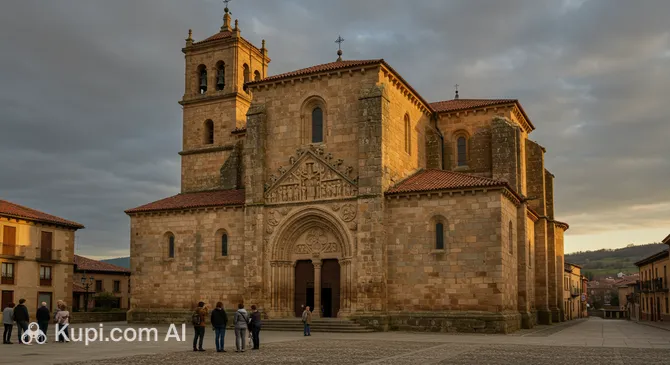
Basilica of San Prudencio de Armentia
Basilica of San Prudencio de Armentia. Иллюстрация. Источник: Kupi.com AI

The church features a classic Latin cross floor plan. Despite renovations in subsequent centuries, it has retained its unique medieval atmosphere. Its apse is particularly noteworthy—a pure example of the Romanesque style that inspires with its austerity and harmonious forms. In 1931, the basilica was granted the status of a site of cultural interest, highlighting its immense historical value.

One of the main jewels of this site is the sculptural ensemble in the atrium. Here, visitors can see fragments of the original portal, including tympanums depicting the Lamb of God and Christ with the apostles. These bas-reliefs are considered some of the finest examples of medieval art in the Basque Country, attracting history and architecture enthusiasts from around the world.

Contacts

For those planning a visit to the Basilica of San Prudencio de Armentia, it is helpful to have current contact information to confirm details before your trip.

How to contactContact
AddressArmentiabo Bidea, 24, 01007 Armentia, Araba, Испания
Phone+34 945 13 39 05

What to Do

When visiting the basilica, your first priority should be the details of the facade and atrium. Be sure to examine the zoomorphic capitals and bas-reliefs featuring scenes of knights battling centaurs—a rare opportunity to see medieval sculpture in such an excellent state of preservation. Inside the church, a mystical and serene atmosphere reigns, complemented by the elegant vaults over the apse.

For photography enthusiasts, the Basilica of San Prudencio de Armentia is a true find. The play of light on the ancient stones and the expressive details of the portal make for striking shots. After exploring the architecture, you can take a stroll through the surrounding green spaces. The picturesque trails around the church are perfect for experiencing the spirit of pilgrimage or simply enjoying a short break in nature.

Travelers often note that a visit here provides a rare sense of tranquility. The opportunity to combine historical exploration with a walk in the fresh air makes this a must-see stop on any Vitoria-Gasteiz itinerary.

Getting There

Getting to this secluded spot is quite simple. The basilica is located on the outskirts of the city at Armentiabo Bidea, 24. If you enjoy walking, the journey from the city center is about 3–4 kilometers. The route passes through scenic areas and is part of the famous Camino de Santiago pilgrimage path, which adds a special sense of purpose to the walk.

For those who prefer comfort, you can take a taxi from the city center or use public transport to reach the nearest stops in the Armentia district. Navigation coordinates: 42.8331427, -2.7019923.

If you are traveling by private or rental car, parking is available near the church. The area is also excellent for cyclists, thanks to a well-developed network of paths and trails connecting the basilica with the city's nature parks.

Ближайший город: Vitoria-Gasteiz

History & Facts

The history of this site dates back to the early Middle Ages. Originally, a church dedicated to Saint Andrew stood on this spot. The current Romanesque building was erected in the 12th century and has since been considered one of the most important architectural monuments in the province of Álava.

In 1776, the church underwent a major reconstruction, during which some original medieval structures were lost. However, builders managed to preserve the magnificent Romanesque apse. Another significant update occurred in 1961, when urgent repairs were needed following a partial collapse of the vault, helping to preserve the monument for future generations.

The site's significance has been officially recognized at the national level: in 1931, the building was declared a monument of cultural interest (Bien de Interés Cultural). Since 2012, the basilica has been part of the Basque cultural heritage as one of the sites associated with the Way of Saint James.

Time Needed

To leisurely explore the church interior, study the intricate bas-reliefs in the atrium, and take a walk through the adjacent natural area, you will typically need 1 to 2 hours.

This is plenty of time to take beautiful photographs of the architectural details and enjoy the peace and quiet away from the bustling center. If you plan to have a picnic in the surrounding parks or walk a portion of the pilgrim route, you should set aside a bit more time for your visit.

Working Hours

The Basilica of San Prudencio de Armentia is generally open to visitors daily. From Monday to Saturday, the church doors are open from 09:00 to 19:30, while on Sundays, it has a reduced schedule from 09:00 to 13:30.

Since exact opening hours may vary depending on religious holidays or services, visitors are recommended to confirm information on-site or check official city tourism resources before their visit.

DayWorking hours
понедельник09:00–19:30
вторник09:00–19:30
среда09:00–19:30
четверг09:00–19:30
пятница09:00–19:30
суббота09:00–19:30
воскресенье09:00–13:30

Nearby

A visit to the basilica can easily be combined with exploring other interesting sights in the city. A walk around the surrounding area will allow you to better feel the atmosphere of this ancient settlement and see how history intertwines with modernity.

Below are some attractions located within a few kilometers of the church:

NameDistance
Museum of Fine Arts of Álava2 km
Álava Armoury Museum2.1 km
Florida Park2.4 km
Cathedral of Mary Immaculate (New Cathedral of Vitoria)2.4 km
Dublin Café2.7 km
El Caminante2.7 km
Virgen Blanca Square2.8 km

Reached the end of the page?

That means the route is fully explored