Support

Museo de Ciencias Naturales de Álava

About

In the heart of the old quarter lies the Museum of Natural Sciences of Álava—a place where the history of the planet meets medieval architecture. This fascinating space is housed in the historic Torre de Doña Ochanda, built back in the 15th century. Here, scientific discoveries are presented within the setting of an ancient fortress, making a visit to Vitoria-Gasteiz truly memorable.
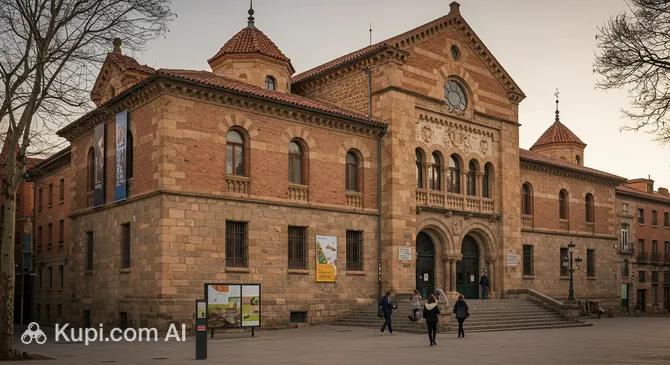
Álava Museum of Natural Sciences
Álava Museum of Natural Sciences. Иллюстрация. Источник: Kupi.com AI

The museum is considered one of the main cultural centers that Spain is proud of, especially when it comes to paleontological finds. Its main pride is a unique collection of fossilized amber from the Cretaceous period, which contains insects and plants that lived millions of years ago. These "time capsules" allow a glimpse into the Earth's incredibly distant past.

In addition to amber, the museum holds extensive collections in geology, botany, and zoology, totaling more than 600,000 exhibits. A special plus for budget travelers is that entry to the museum is absolutely free, making it a must-visit for families and nature lovers.

Contacts

To inquire about special exhibitions or to organize a group visit, you can contact the museum administration directly. The staff is always ready to help tourists with the schedule and current events. Below are the up-to-date contact details for planning your visit.

How to contactContact
AddressFundadora de las Siervas de Jesus Kalea, 24, 01001 Vitoria-Gasteiz, Araba, Spain
Phone+34 945 18 19 24
Websitenaturazientzienmuseoa.eus

What to Do

A visit to the museum is a real adventure into the world of science. First of all, head to the displays featuring ancient amber. Looking through magnifying glasses at tiny insects trapped in resin millions of years ago, you can feel like a real paleontologist. This is the most valuable part of the exhibition, delighting both adults and children.

Be sure to walk through the halls dedicated to mineralogy and botany. You will see rare crystals found in the mountains of the Álava province and study the famous VIT herbarium. The walk itself through the halls of the medieval tower adds atmosphere: creaking floors and stone vaults create a sense of time travel, complementing scientific facts with historical charm.

Animal lovers will enjoy the zoology rooms with collections of vertebrates and invertebrates. Here you can see how the region's fauna has changed over the centuries. The museum encourages self-guided exploration and photography, so don't forget your camera to capture unusual finds and the architectural details of the tower.

Getting There

The museum is located in the heart of the historic quarter at Fundadora de las Siervas de Jesus Kalea, 24. Due to its central location, it is very easy to reach on foot from most parts of the old town while enjoying the medieval architecture along the way.

If you prefer public transport, use the city buses that stop in the Cuadrilla de Vitoria area. The walk from the city's main railway station takes about 15–20 minutes at a leisurely pace, or just 5 minutes by bus. Tickets can be purchased through mobile apps or directly at the stops.

For a most comfortable and fast trip from outlying areas or the airport, you can use taxi services. A ride from the central square to the museum will take only a few minutes. If you are traveling by car, keep in mind that parking in the historic center is limited, so it is better to leave your car in one of the park-and-ride lots and walk.

Ближайший город: Vitoria-Gasteiz

History & Facts

The history of the museum is inextricably linked with the work of local enthusiasts and scientists. It was officially founded in 1986, taking under its wing the collections of the Association for the Study and Protection of Nature in Álava. Over time, a modest regional collection has grown into one of the most significant scientific bases in the region, covering the flora and fauna of the entire Iberian Peninsula.

The museum building itself, the Torre de Doña Ochanda, deserves special attention. This majestic 15th-century defensive structure once served as an important fortification in the city wall system. The combination of austere medieval walls and modern display cases with rare minerals and fossils creates a unique contrast that emphasizes the connection between eras.

The museum archives house the famous VIT herbarium, which includes rare plant specimens collected back in the 19th century by the renowned naturalist José María de Lacoizqueta. Today, the total number of items in the funds reaches an impressive 600,000 specimens, making the museum an important center for international scientific research.

Time Needed

To leisurely explore all three main sections—geology, botany, and zoology—most travelers need between 1.5 and 2.5 hours. This is enough time to examine the amber inclusions in detail and get acquainted with the rich collection of minerals.

If you are planning a visit with children, who will likely want to linger longer at the ancient fossil displays, it is worth allowing a bit more time. The museum is very compact but packed with information, so even a couple of hours here will fly by unnoticed.

Working Hours

The museum welcomes visitors throughout the week, except on Mondays. Please note that there is a mid-day break, typical for many institutions in the region.

Opening Hours:

  • Tuesday – Saturday: from 10:00 to 14:00 and from 16:00 to 18:30
  • Sunday: from 11:00 to 14:00
  • Monday: Closed
On public holidays, the museum usually operates according to the Sunday schedule (from 11:00 to 14:00).

DayWorking hours
ПонедельникЗакрыто
Вторник10:00 – 14:00, 4:00 – 18:30
Среда10:00 – 14:00, 4:00 – 18:30
Четверг10:00 – 14:00, 4:00 – 18:30
Пятница10:00 – 14:00, 4:00 – 18:30
Суббота10:00 – 14:00, 4:00 – 18:30
Воскресенье11:00 – 14:00

Nearby

Strolling through the area around the museum is a great way to immerse yourself deeper into the atmosphere of the medieval city. Key historical monuments are located nearby, allowing you to get a complete picture of the region's cultural heritage.

Most attractions are within walking distance, making this area ideal for walking tours. Below is a list of interesting sites to visit after exploring the natural science collections.

NameDistance
Dottor Pizza Vino & Cucina0 km
Cathedral of Santa María of Vitoria0.2 km
Plaza de la Burullería0.2 km
Church of San Pedro Apóstol0.2 km
Fournier Playing Card Museum – BIBAT0.3 km
Virgen Blanca Square0.4 km
Dublin Café0.4 km

Reached the end of the page?

That means the route is fully explored