Support

Museu del Port de Tarragona

About

On the shores of the sunny Costa Dorada lies the Port of Tarragona Museum—a unique cultural space dedicated to the inseparable bond between man and the sea. This modern museum is nestled on the beautifully landscaped Moll de Costa pier, which has become a favorite spot for strolls among both locals and visitors.

The primary mission of this institution is to preserve and promote the rich maritime heritage that has shaped the identity of Tarragona over centuries. Here, ancient traditions meet modern technology, creating a fascinating narrative about the port's development and its significance for all of Spain.
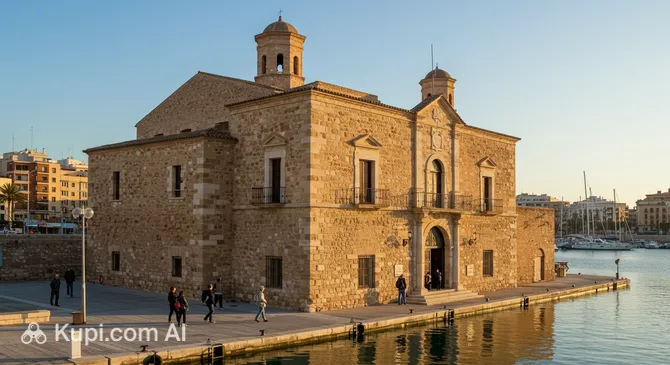
Port Museum of Tarragona
Port Museum of Tarragona. Иллюстрация. Источник: Kupi.com AI

Visitors can expect more than just an exhibition of artifacts; it is a true immersion into the atmosphere of Mediterranean navigation. The museum is a vital part of the region's cultural life, highlighting the city's status as a key port hub with a history stretching back to the Roman era.

Contacts

For more information about special exhibitions or group visits, you can contact the museum administration directly. The Port of Tarragona Museum is always happy to assist tourists and maritime history researchers.

How to contactContact
AddressMoll de la Costa, s/n, 43004, Tarragona, Spain
Phone+34 977 25 94 34
Websitewww.porttarragona.cat

What to Do

In the museum's halls, a grand panorama of maritime history unfolds before you: from the first fishing boats to giant modern liners. Visitors can examine detailed ship models, ancient anchors, lighthouse lanterns, and vintage diving gear. The displays clearly demonstrate how the port has influenced the region's economy and culture through the centuries.

A walk along the Moll de Costa pier itself is a particular delight. This open-air space is perfect for those who love watching the life of a modern port. Here, you can capture stunning photographs against the backdrop of the Mediterranean Sea, admire the yachts, and discover art installations situated right on the waterfront.

For families with children, the museum offers interactive elements that make learning about port professions an engaging activity. You can learn how port cranes operate, how sea routes are mapped, and what kinds of goods pass through the terminals of this massive logistics hub every day.

Getting There

Finding the museum is quite easy, as it is located in the historic part of the city, right near the coastline. Tarragona itself is situated about 100 kilometers south of Barcelona, making it an ideal destination for a day trip.

The most convenient way to get here from the Catalan capital is by train. The journey takes about an hour, and trains run regularly. You can also take a bus or drive via the scenic AP-7 highway. From the Tarragona railway station, the museum is just a 10–15 minute walk towards the sea.

If you are in the city center, a pleasant walk through Imperial Tàrraco Square and down towards the port will lead you straight to the Moll de Costa. For those who prefer comfort, city taxis or buses to the Serrallo stop—located just steps from the entrance—are always available.

Ближайший город: Tarragona

History & Facts

The history of the Port of Tarragona dates back to ancient times when the city was known as Tarraco. Founded by the Romans in 218 BC, it became the first and oldest Roman colony on the Iberian Peninsula. In those days, the local harbor served as the primary maritime gateway for the entire province, ensuring the region's prosperity.

Following the golden age of the Roman Empire, the port went through various periods. In the Middle Ages, its importance declined significantly: ancient structures gradually fell into ruin, and the once-great city came to resemble a small settlement. It wasn't until the 11th century that maritime trade began a slow revival, laying the foundation for the city's modern appearance in Spain.

The modern era of development began about 150 years ago. This period saw large-scale construction of new piers and the modernization of the entire port infrastructure. It was during these works that numerous archaeological artifacts were discovered, which are now carefully preserved in the museum's halls, reminding visitors of the region's glorious maritime past.

Time Needed

A standard tour of the museum's main exhibition usually takes between 1 and 2 hours. This is ample time to leisurely explore the ship models, antique navigational instruments, and interactive panels that tell the story of port life.

If you plan to combine your museum visit with a walk along the Moll de Costa pier and a break at one of the restaurants in the nearby Serrallo district, it is better to set aside about 3 hours. This will allow you to enjoy the sea breeze and the atmosphere of the port city without any rush.

Working Hours

When planning your visit, please take note of the museum's opening hours, which account for the traditional Spanish afternoon break. Monday is a rest day, and the museum is closed to the public.

On all other days, the museum operates on the following schedule:

  • Tuesday – Saturday: 10:00 to 14:00 and 16:00 to 19:00.
  • Sunday: 11:00 to 14:00.
This schedule allows you to comfortably combine your museum visit with lunch at one of the seaside cafes during the siesta hours.

DayWorking hours
ПонедельникЗакрыто
Вторник10:00 – 14:00, 4:00 – 19:00
Среда10:00 – 14:00, 4:00 – 19:00
Четверг10:00 – 14:00, 4:00 – 19:00
Пятница10:00 – 14:00, 4:00 – 19:00
Суббота10:00 – 14:00, 4:00 – 19:00
Воскресенье11:00 – 14:00

Nearby

A stroll around the port area is just the beginning of a grand journey through Tarragona. The museum's surroundings are steeped in history, with UNESCO World Heritage sites located just a stone's throw away. Exploring these locations will help you better understand how the city has evolved from ancient times to the present day.

NameDistance
Serrallo District0.1 km
El Pòsit0.3 km
Roman Theatre of Tarraco0.5 km
Sala Zero0.5 km
Colonial Forum of Tarraco0.6 km
Selvático Beach Club0.7 km
Twins Craft Beer0.8 km

Reached the end of the page?

That means the route is fully explored