Support

Campo Santo

About

In the heart of the historic city of Perpignan, within the southern part of the Saint-Jean-Baptiste Cathedral grounds, lies a unique architectural ensemble — Campo Santo. It is the oldest and largest medieval cloister-cemetery in all of France. Built in the early 14th century, it features a majestic rectangular courtyard surrounded by elegant Gothic galleries with marble columns.
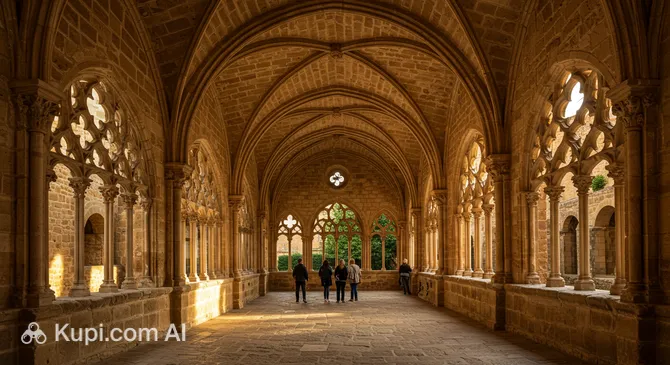
Campo Santo
Campo Santo. Иллюстрация. Источник: Kupi.com AI

This site stands out among other attractions for its Mediterranean Gothic style. Walking under the pointed arches, visitors can see numerous burial niches decorated with the coats of arms of noble families who once paid for the right to be buried in this sacred place. The complex's architecture creates a wonderful sense of seclusion and peace, shielding guests from the city's bustle with its stone vaults and buttresses.

Of particular significance is the northeastern part, which houses the Funeraria Chapel (La Funeraria), dedicated to St. John the Evangelist. It is famous for its modern stained-glass windows by the artist Shirley Jaffe, which create a striking contrast with the ancient walls. Today, Campo Santo is not just a historical monument but also an important cultural venue where history meets contemporary art.

Contacts

For more information about visiting this historical site, you can use the following contact details:

How to contactContact
Address6 Rue Amiral Ribeil, 66000 Perpignan, Франция
Phone+33 4 68 66 30 66
Websitewww.mairie-perpignan.fr

What to Do

Visitors can take an atmospheric stroll through the long galleries of the cloister, admiring the masterfully crafted white marble capitals. The main highlight is the hundreds of medieval niches where the coats of arms of the city's noble families are preserved — a great opportunity to connect with history through heraldry. The central courtyard, covered in green grass, serves as an ideal spot for quiet reflection and contemplation of the symmetrical Gothic architecture.

Be sure to visit the Funeraria Chapel to see the famous stained-glass windows by Shirley Jaffé. The vibrant colors and modern glass forms, combined with the centuries-old stones, create a unique visual effect. It is also worth noting the ossuary of 1321, which is one of the oldest elements of the complex.

In the summer months, the cloister space is transformed: it often hosts concerts, art installations, and the famous photojournalism festival Visa pour l'Image. During these periods, the ancient walls become the backdrop for contemporary world art, making a visit even more enriching and memorable.

Getting There

The historical monument is located in the heart of the old town, at 6 Rue Amiral Ribeil, literally steps away from the majestic Saint-Jean-Baptiste Cathedral. Thanks to its central location, it is easy to find by following the cathedral's tall spires.

If you arrive by train, the walk from the Perpignan railway station takes about 15–20 minutes (approximately 1.5 km). The route passes through picturesque ancient streets and the main Place de la Loge, allowing you to immediately immerse yourself in the local atmosphere. You can also take city buses that stop near the central square.

For those traveling by car, it is recommended to leave your vehicle in one of the paid parking lots in the city center, as the streets in the immediate vicinity of the attraction are pedestrianized or have limited access. A taxi ride from anywhere in the center will take only a few minutes.

Ближайший город: Perpignan

History & Facts

The history of this site dates back to the end of the 13th century. The construction of Campo Santo began around 1298–1302, and the official initiative to create an organized cemetery for the cathedral's canons was led by Bishop Guillaume de Harcourt in 1321. At that time, the city was growing rapidly, and there was a need to create a worthy burial place for the local elite near the religious center.

The complex reached its peak in the 14th century when the city was the capital of the Kingdom of Majorca. The architectural techniques used in the construction of the cloister echo those used in the royal palace. Wealthy local families eagerly donated funds for the construction of private niches and chapels, such as the Chapel of Saint-Michel, adorned with exquisite carvings.

By the 18th century, the cemetery had fallen into some neglect; however, extensive restoration work was carried out in the 19th and 20th centuries. The repair of the Gothic arches and the careful cleaning of the marble allowed the monument to be preserved for future generations. Today, the complex is a protected historical monument and is considered one of the main symbols of the region's "golden age."

Time Needed

To leisurely explore the entire complex, including the galleries, burial niches, and the inner chapel, 30–60 minutes is usually sufficient. This is enough time to appreciate the details of the Gothic carvings and enjoy the tranquility in the heart of the city.

If you plan to study the coats of arms on the ancient tombstones in detail or are a fan of architectural photography, you might want to stay longer. During the summer, when exhibitions are held, a visit can last up to an hour and a half.

Working Hours

The complex is usually open to visitors from Tuesday to Sunday, 11:00 AM to 5:30 PM. Monday is traditionally a closing day.

Please note that during the summer and during major cultural festivals (such as Visa pour l'Image), the schedule may change, or access may be temporarily restricted for private events. It is recommended to check the official city website for the latest information before your visit.

DayWorking hours
понедельникЗакрыто
вторник11:00–17:30
среда11:00–17:30
четверг11:00–17:30
пятница11:00–17:30
суббота11:00–17:30
воскресенье11:00–17:30

Nearby

Its location in the historic center makes this site an ideal starting point for further exploration of the city's architectural heritage. A walk through the surrounding streets will allow you to see many ancient buildings and monuments, each with its own unique story.

Exploring the neighboring quarters will significantly enrich your understanding of the region's culture, as most key tourist sites are within walking distance.

NameDistance
Saint John the Baptist Cathedral Basilica0.1 km
Place de la République0.3 km
Le Castillet – Casa Pairal Museum0.3 km
Hôtel Pams0.3 km
Couvent des Minimes of Perpignan0.3 km
The Little Train of Perpignan0.3 km
Hyacinthe Rigaud Art Museum0.4 km

Reached the end of the page?

That means the route is fully explored