Support

Natural History Museum

About

Perpignan Natural History Museum is a fascinating window into the natural world, located in the heart of the ancient city of Perpignan. The museum is housed in the historic Hôtel Sagarriga (Casa Sagarriga), an elegant mansion built in the 16th century, which adds a certain aristocratic charm to the scientific displays.
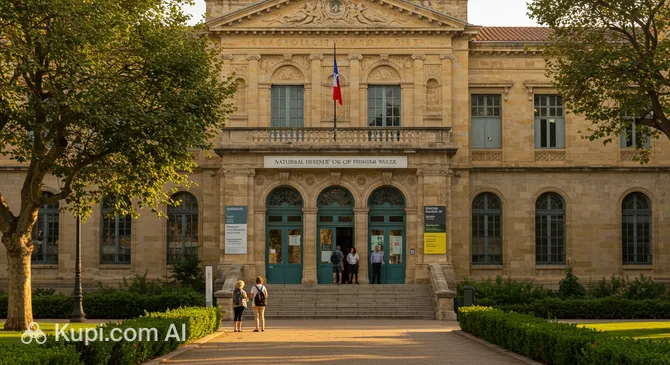
Natural History Museum of Perpignan
Natural History Museum of Perpignan. Иллюстрация. Источник: Kupi.com AI

Founded back in the 18th century, the museum preserves extensive collections dedicated to the biodiversity of the Pyrénées-Orientales region, showcasing the diverse nature of France. Across an area of about 350 square meters, visitors can see rare birds, mammals, stunning butterflies, and unique minerals. One of the collection's crown jewels is an authentic Egyptian mummy in a sarcophagus, gifted to the city in 1847.

The museum proudly holds the title of “Musée de France” and plays a vital educational role. It is the perfect spot for those who want to learn more about the natural world—from the coastal lagoons of the Mediterranean to the snow-capped peaks of the Pyrenees—without leaving the city's historic center.

Contacts

To plan your visit or inquire about current exhibitions at this cultural center, you can use the following contact information:

How to contactContact
Address12 Rue Font Neuve, 66000 Perpignan, Франция
Phone+33 4 68 66 33 68

What to Do

The museum’s galleries offer an immersion into the worlds of zoology and geology. Be sure to explore the taxidermy collection: it features common inhabitants of local forests alongside rare and extinct animal species from the Pyrénées-Orientales. Notice the incredible variety of birds and insects—the butterfly collection is particularly striking for its vibrant colors and elegance.

The ethnology department is especially interesting, displaying artifacts from Africa and Oceania that allow for a comparison between the cultures and natural environments of different continents. Don't forget to take a close look at the ceramic panels above the main staircase, which visually illustrate the biological classification of species. And, of course, the central focus is always the ancient Egyptian mummy, holding secrets thousands of years old.

The museum is an excellent choice for a family outing. Thanks to free admission and regular temporary exhibitions, there is always something new to discover. Educational programs and interactive elements help both children and adults better understand the region's fragile ecosystem, making a visit to the museum both entertaining and informative.

Getting There

The museum is easy to find—it is located in the vibrant historic La Réal quarter, right in the city center. If you are already touring the main attractions, the walk from St. John the Baptist Cathedral to the museum doors will take only a few minutes.

For those preferring public transport, it is most convenient to take buses that stop near Place de la Loge. From the Perpignan railway station, the walk takes about 15–20 minutes, but you can also use a taxi or local bus routes to reach the center faster.

If you are traveling by car, it is recommended to leave it in one of the central parking lots, as the museum is located in an area with dense historic buildings. Using a GPS for 12 Rue Font Neuve will help you easily navigate the city's charming narrow streets.

Ближайший город: Perpignan

History & Facts

The history of this collection began in 1770 when a cabinet of curiosities was opened at the University of Perpignan. At that time, such collections served as essential tools of the Enlightenment, allowing scholars and students to study the diversity of the natural world through physical specimens of minerals and animals.

In 1835, the Philomatic Society took over the care of the collection, and by August 1840, the museum officially gained municipal status. The city authorities purchased the holdings to ensure their preservation and make them accessible to the general public, marking a major step forward for education in the region.

The museum moved into its current home in the Hôtel Sagarriga in 1900. This magnificent 16th-century mansion is a historic landmark in its own right. Moving into the new building allowed for a significant expansion of the exhibits and helped create the atmosphere of a classic European natural history museum, which it maintains to this day by constantly updating its collections and visitor engagement methods.

Time Needed

For a general introductory visit, most guests find that 1–2 hours is sufficient. This provides enough time to stroll through the halls of the 16th-century mansion, see the Egyptian mummy, and get acquainted with the main fauna of the Pyrenees.

If you are visiting with children or are a passionate natural science enthusiast, plan to spend about 2–3 hours here. The museum often hosts interesting temporary exhibitions and educational programs that can captivate you for a longer stay.

Working Hours

The Natural History Museum usually welcomes visitors from Tuesday to Sunday. Doors are open from 11:00 AM to 5:30 PM. Please note that Monday is the traditional closing day when the museum is closed to the public.

Hours may vary on public holidays, so it is a good idea to check the latest schedule on city information boards or the official municipal website before your visit to ensure a perfect trip.

DayWorking hours
понедельникЗакрыто
вторник11:00–17:30
среда11:00–17:30
четверг11:00–17:30
пятница11:00–17:30
суббота11:00–17:30
воскресенье11:00–17:30

Nearby

Exploring the museum's surroundings can significantly enrich your trip, as it is surrounded by numerous historical monuments and cozy squares. Walking from one site to another will allow you to fully experience the atmosphere of the old town.

NameDistance
Hôtel Pams0.1 km
Couvent des Minimes of Perpignan0.3 km
Place de la République0.4 km
Campo Santo0.4 km
Saint John the Baptist Cathedral Basilica0.4 km
Palace of the Kings of Majorca0.6 km
Le Castillet – Casa Pairal Museum0.6 km

Reached the end of the page?

That means the route is fully explored