Support

Huesca Museum

About

In the heart of the historic center of Huesca lies one of the region's most important cultural institutions — the Museum of Huesca. This provincial museum offers a unique journey through time, bringing together rich collections of archaeology and fine arts under one roof. Spain is famous for its regional museums, and this site holds a special place among them thanks to its outstanding architecture.
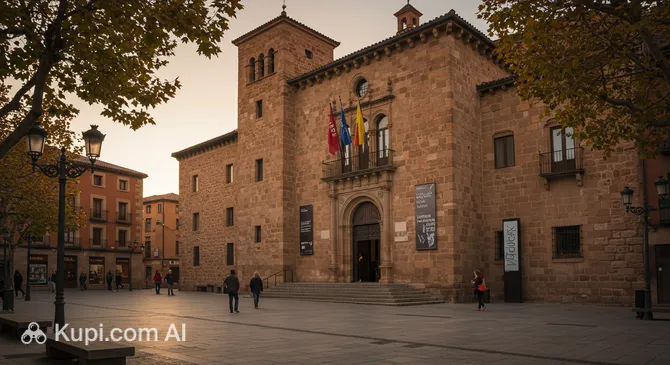
Huesca Museum
Huesca Museum. Иллюстрация. Источник: Kupi.com AI

The museum's collection is housed in two interconnected buildings of colossal historical value. One is the former Sertorian University, built in an elegant Baroque style, and the other is the austere and majestic Palace of the Kings of Aragon, a rare example of late 12th-century Romanesque civil architecture. The university's courtyard, with its Tuscan columns and lush greenery, creates an atmosphere of peace and intellectual pursuit.

Across eight exhibition halls, visitors can see everything from prehistoric tools to works by the great Francisco Goya. The museum is rightly considered a key point for understanding Aragon's heritage, offering guests not just dry facts, but a vivid immersion into the evolution of culture from the Paleolithic to the present day.

Contacts

To clarify visiting details or book group tours, you can use the institution's official communication channels. We recommend checking for up-to-date information on the museum's website before your visit.

How to contactContact
AddressPl. Universidad, 1, 22002 Huesca, Spain
Phone+34 974 22 05 86
Websitemuseodehuesca.es

What to Do

A visit to the museum turns into a fascinating chronological quest through eight halls. The first rooms are dedicated to archaeology: here you can see ancient Mousterian tools, elegant Roman ceramics, and even fragments of Visigoth treasures. Special attention should be paid to the Iberian artifacts — painted vessels and jewelry tell the story of the peoples who inhabited these lands thousands of years ago.

Moving into the fine arts section, be sure to find the famous Goya lithographs from the "Bulls of Bordeaux" series. Art lovers will also enjoy the medieval Gothic triptychs and canvases illustrating dramatic events in local history. In the museum's halls, art is closely intertwined with architecture, creating a unique visual experience.

Don't forget to look into the palace's historic rooms: the Throne Room and the Hall of Doña Petronila. The main magnet for tourists remains the Hall of the Bell, shrouded in a grim legend of a royal execution. After touring the exhibits, it is pleasant to stroll through the inner courtyard, enjoying the silence and admiring the architectural details of the Baroque facade.

Getting There

Finding the Museum of Huesca is easy, as it is located in the heart of the historic quarter. If you are already walking through the city center, the path from the Cathedral will take only about 5–10 minutes of a pleasant stroll through ancient streets.

For those arriving in the city by public transport, it is most convenient to use Renfe trains or buses. The railway station is approximately 1.5 kilometers from the museum, which is about a 20-minute walk or a short taxi ride. Comfortable trains run regularly here from major cities like Madrid or Barcelona.

If you are traveling by car via the A-23 highway, it is recommended to leave your vehicle in one of the parking lots outside the narrow streets of the old town, for example, in the Plaza de las Américas area. This will allow you to enjoy a hassle-free pedestrian route to the province's main cultural treasure.

Ближайший город: Huesca

History & Facts

The history of this site began in 1835, when works of art from the region's closed monasteries were saved thanks to the artist Valentín Carderera. The institution officially opened in 1873, and since then, the collection has come a long way before finding its permanent home within the walls of the former university.

The building housing the museum is a unique exhibit in itself. It combines the Baroque Sertorian University, with its unusual octagonal plan, and the 12th-century Palace of the Kings of Aragon. The latter is considered a magnificent example of Romanesque civil architecture, preserving the spirit of medieval power.

One of the most fascinating and dark chapters in the museum's history is the legend of the "Bell of Huesca". It is believed that it was within these walls that King Ramiro II brutally dealt with rebellious nobles. Today, visitors can look into the famous Hall of the Bell, where the legends of Aragon's past come to life.

Time Needed

To leisurely explore all eight halls and soak in the atmosphere of the ancient palace, most travelers need between 1.5 and 2.5 hours. This time is quite sufficient to get acquainted with both the archaeological finds and the art gallery.

If you are a passionate history buff or plan to study Goya's lithographs and medieval paintings in detail, it's worth setting aside about 3 hours for the visit. The museum offers a logical chronological route that leads the visitor through the centuries, so there is no need to rush — each hall holds its own unique treasures.

Working Hours

The museum welcomes guests according to a set schedule that accounts for the traditional Spanish break. From Tuesday to Saturday, the doors are open from 10:00 to 14:00 and, after an afternoon pause, from 17:00 to 20:00. On Sunday, the museum is open only in the morning — from 10:00 to 14:00. Please note that Monday is a day off.

When planning your visit, keep the afternoon siesta in mind so that your exploration of the exhibits is calm and thoughtful. It is recommended to arrive at least an hour before closing to have time to complete the main route.

DayWorking hours
ПонедельникЗакрыто
Вторник10:00 – 14:00, 5:00 – 20:00
Среда10:00 – 14:00, 5:00 – 20:00
Четверг10:00 – 14:00, 5:00 – 20:00
Пятница10:00 – 14:00, 5:00 – 20:00
Суббота10:00 – 14:00, 5:00 – 20:00
Воскресенье10:00 – 14:00

Nearby

The surroundings of the Museum of Huesca are a true labyrinth of history, where every building can tell its own unique chronicle. Exploring this area will allow you to dive deeper into the atmosphere of an ancient Aragonese city and see sites preserved from ancient and medieval times.

Just a few steps from the museum are ancient ruins and majestic squares that form the city's cultural framework. We have prepared a list of interesting places to visit before or after your museum trip:

NameDistance
Huesca Cathedral0.2 km
Huesca Bullring0.3 km
Tatau Restaurant0.4 km
Perfumery Huesca0.4 km
Abbey of San Pedro el Viejo0.4 km
Parque Universidad Huesca0.4 km
Jorge's Bar0.5 km

Reached the end of the page?

That means the route is fully explored