Support

Abbey of San Pedro el Viejo

About

The Abbey of San Pedro el Viejo invites you to immerse yourself in the atmosphere of medieval Aragon. It is one of the oldest and most significant monastic complexes in Spain. Located in the heart of the historic center of Huesca, this site is considered a benchmark of Romanesque architecture and holds the secrets of centuries of history within its walls.
\n\n
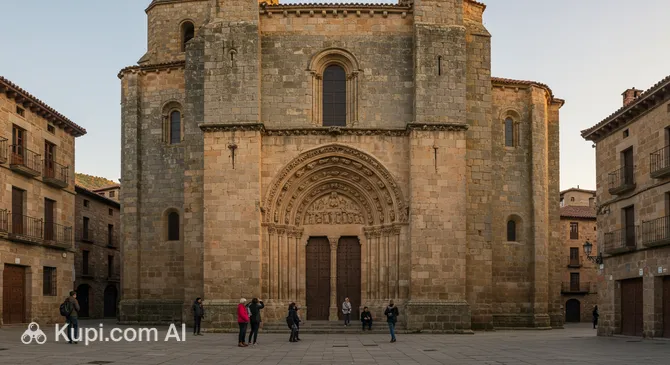
Abbey of San Pedro el Viejo
Abbey of San Pedro el Viejo. Иллюстрация. Источник: Kupi.com AI
\n\n

The current monastery building, erected in the 12th century, was built on the foundations of an even older Visigothic structure. The name "Old" (el Viejo) emphasizes this continuity, serving as a reminder of the deep roots of Christian tradition in the region. Today, the former Benedictine monastery holds the status of a national monument and attracts pilgrims and art lovers from all over the world.

\n\n

The complex's main architectural value lies in its magnificently preserved cloisters—covered galleries surrounding an inner courtyard. San Pedro el Viejo is not just a church, but a complete religious ensemble where every stone and every arch tells the story of the monastic order and the kings who found refuge and eternal peace here.

Contacts

For further information or to organize group tours, you can use the abbey's official contact details.

\n\n
How to contactContact
AddressPl. de San Pedro, 1, 22001 Huesca, Spain
Phone+34 974 22 23 87
Websitewww.sanpedroelviejo.com

What to Do

The main treasure worth visiting the abbey for is its Romanesque cloister. As you stroll beneath its vaults, be sure to look at the carved column capitals—they are outstanding examples of medieval sculpture, depicting biblical scenes and fantastical creatures. The silence and the play of light in the galleries create a unique feeling of contact with eternity.

\n\n

Inside the church itself, visitors will find a rich collection of artworks. Of particular note is the 17th-century main altarpiece, made of polychrome wood by Juan de Alí, as well as the elegant Gothic "Annunciation" retablo. The church walls still bear fragments of 13th-century murals, which allow you to imagine what the monastery interior looked like during its heyday.

\n\n

Don't miss the Chapel of San Benito, known as the Royal Pantheon. This place possesses a special energy: the remains of two Aragonese kings—Alfonso I and Ramiro II—rest here. Viewing their tombs surrounded by austere medieval architecture is one of the most impressive moments of a visit to the abbey.

Getting There

The Abbey of San Pedro el Viejo is located at Pl. de San Pedro, 1, right in the historic heart of the city. Thanks to its central location, it is very easy to reach on foot from almost anywhere in the old quarter. If you are staying in the center, the walk will take no more than 10–15 minutes.

\n\n

For those who prefer public transport, city buses running key routes stop within walking distance of the abbey. You can also always use the local taxi services, which will take you from Huesca's train or bus station to the monastery entrance in just a few minutes.

\n\n

If you are traveling through the Aragon region by rental car, we recommend leaving your vehicle in one of the paid parking lots on the periphery of the historic center, as the streets around the abbey are quite narrow. For navigation, it is convenient to use the GPS coordinates: 42.1382472, -0.4074278.

Ближайший город: Huesca

History & Facts

The history of this site dates back to antiquity, long before the current walls were raised. It is believed that the modern building stands on the foundations of a Visigothic temple that existed here during the pre-Muslim period. The name "San Pedro el Viejo" (St. Peter the Old) directly points to the venerable age of the sanctuary, emphasizing its continuity with the ancient structure.

\n\n

Construction of the monastery we see today began in the 12th century under the auspices of the Benedictine Order. During this period, it became one of the primary spiritual and architectural centers of Aragon. The Romanesque style of the abbey has been preserved in remarkable purity, making it an invaluable site for researchers of medieval art.

\n\n

In the 13th century, the monastery's significance grew even further with the creation of the Royal Pantheon. Two prominent monarchs found their eternal rest here: Alfonso I the Battler and his brother Ramiro II the Monk. These burials transformed the abbey into a vital memorial complex, inseparably linked to the history of the Spanish monarchy.

\n\n

Official recognition of the site's architectural value occurred in 1886, when the monastery was granted the status of a national monument. Since then, San Pedro el Viejo has been protected by the state as one of the oldest and most significant Romanesque structures in the entire country.

Time Needed

To explore all corners of the monastic complex at a leisurely pace, typical visitors are recommended to set aside 1 to 2 hours. This time is sufficient to soak in the atmosphere of medieval tranquility in the cloister and carefully study the details of the church interior.

\n\n

If you plan to examine the ancient column capitals in detail, study the royal tombs in the pantheon, and familiarize yourself with the collection of retablos, it is better to aim for the upper end of this timeframe. Architecture photography enthusiasts might also need a bit more time to catch the perfect light in the courtyard arcades.

Working Hours

The opening hours of the San Pedro el Viejo monastery may vary depending on the season, religious services, or cultural events. Since the exact schedule is not always fixed, we strongly recommend that visitors check the current visiting hours on the abbey's official website or by phone before their visit.

\n\n

Typically, such historical sites in the Aragon region are open to tourists in the morning and late afternoon with a break for siesta; however, checking the information in advance will help you properly plan your route through Huesca.

Nearby

Exploring the surroundings of the abbey will allow you to dive deeper into the rich history of this region and see how different eras have layered within the city's architecture. Very close to the monastery, you will find both ancient ruins and charming squares perfect for relaxing after your tour.

\n\n

Many points of interest are located just a few minutes' walk away, allowing you to create a packed walking itinerary through the old center.

\n\n
NameDistance
Tatau Restaurant0.1 km
Galician Arcades0.2 km
Bar Mandala0.2 km
La Goyosa Restaurant0.2 km
Perfumery Huesca0.2 km
Navarra Square0.3 km
Huesca Cathedral0.3 km

Reached the end of the page?

That means the route is fully explored