Support

Le Castillet MUSEE CASA PAIRAL

About

The symbol and "heart" of the ancient city of Perpignan is rightfully considered Le Castillet—an impressive medieval red-brick tower. Built in the 14th century, it once served as the main gate of the city walls, and today it stands as the primary reminder of the Catalan heritage carefully preserved by France.
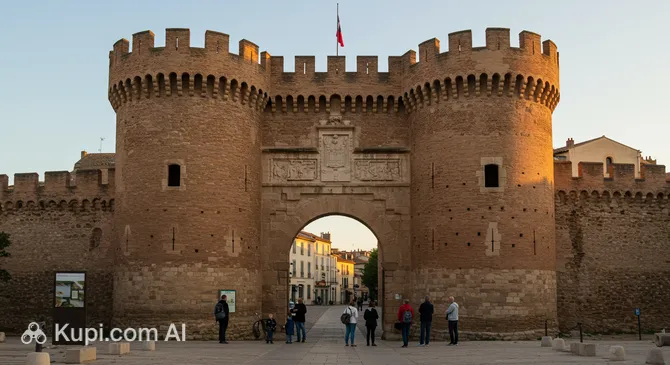
Le Castillet – Casa Pairal Museum
Le Castillet – Casa Pairal Museum. Иллюстрация. Источник: Kupi.com AI

Inside this historic citadel lies the Casa Pairal museum, dedicated to the folk arts and traditions of Roussillon. Here, you can see unique ethnographic artifacts: from traditional costumes and delicate lace to ancient agricultural tools. The museum is recognized at the state level and holds the status of Musée de France.

The combination of rugged defensive architecture and the elegance of the museum collections gives the place a special charm. Visitors can expect thick walls, narrow arrow slits, and a climb to the very top of the tower, which offers a breathtaking 360-degree panoramic view of the city quarters, the Roussillon plain, and the majestic Pyrenees.

Contacts

To check current information about exhibitions or plan a group visit, you can use the following museum contact details.

How to contactContact
AddressPl. de Verdun, 66000 Perpignan, France
Phone+33 4 68 35 42 05
Websitewww.mairie-perpignan.fr

What to Do

The main attraction for visitors is the rich collection of the Casa Pairal museum. Here, you can see firsthand how the lives of the region's inhabitants changed: examine embroidered Catalan costumes, study winemakers' tools, and antique interior items. The exhibition masterfully combines artifacts from different eras—from medieval religious art to 19th-century crafts.

Don't miss the chance to climb to the upper levels of the tower. After tackling the steps, you'll find yourself on an open platform offering the best view of the old town's tiled roofs and the Canigou massif. This is the perfect spot for photos, allowing you to appreciate the scale and beauty of the historic center from a bird's-eye view.

Additionally, the museum walls often host cultural events: from lectures on regional history to workshops and performances by folklore groups. These events allow you not just to observe history from the sidelines but to actively interact with the living traditions of Northern Catalonia.

Getting There

Finding this iconic architectural monument is easy, as it is located on Place de Verdun (Pl. de Verdun), right at the entrance to the historic center. If you arrive at the main station in Perpignan, the walk to the tower will take about 18–20 minutes (approximately 1.5 km) through picturesque city streets.

For those who prefer public transport, the Sankeo bus network is a convenient option. The nearest stop—PERPIGNAN – SANKEO Mercader—is just a 10-minute walk from the museum. You can also use the liO regional transport services, which are well-developed in this area.

Travelers by car should remember that the city center is mostly pedestrianized. It is recommended to leave your car in one of the paid parking lots nearby and continue on foot or by bicycle to fully experience the southern charm of the city.

Ближайший город: Perpignan

History & Facts

The majestic tower was erected around 1368 by order of Infante John of Aragon. Under the direction of master Guillaume Gatard, it replaced the old city gates, becoming a key link in the city's defense system. Built from characteristic red brick, it still looks like an impregnable 14th-century bastion today.

Over centuries, the structure changed many roles. When the fortress's military significance declined, it was turned into a state prison. However, over time, residents recognized the architectural value of the building, and in 1889, it was officially declared a historical monument (Monument Historique).

The museum history of the site began in the 20th century. Since 2002, the Casa Pairal museum located inside has held the prestigious title of "Museum of France" (Musée de France). The exhibition recreates the life of Northern Catalans in detail, demonstrating their inseparable connection to the land, winemaking, and crafts throughout the ages.

Time Needed

To leisurely explore all levels of the tower and get to know the ethnographic collection, most visitors need about 1.5 to 2 hours. This is plenty of time to carefully study the exhibits and read the information plaques.

Be sure to budget time for climbing the spiral staircases and resting on the observation deck. The panoramic view from the top is worth lingering over, taking in the details of the city rooftops and the distant mountain peaks.

Working Hours

The museum welcomes guests from Tuesday to Sunday. Please note that Monday is a day off, when access to the tower is closed.

Standard operating hours: 11:00 AM to 5:30 PM. During the summer season, opening hours may be extended (sometimes until 6:30 PM), so it is recommended to check the official city website before your visit.

DayWorking hours
ПонедельникЗакрыто
Вторник11:00 – 17:30
Среда11:00 – 17:30
Четверг11:00 – 17:30
Пятница11:00 – 17:30
Суббота11:00 – 17:30
Воскресенье11:00 – 17:30

Nearby

The museum's location in the heart of the city makes it easy to combine your visit with other iconic sites. A walk around the neighborhood will reveal architectural treasures from different eras and cozy squares with a unique atmosphere.

NameDistance
The Little Train of Perpignan0 km
Saint John the Baptist Cathedral Basilica0.2 km
Place de la République0.3 km
Campo Santo0.3 km
O'Flaherty's0.3 km
Hyacinthe Rigaud Art Museum0.3 km
Hôtel Pams0.5 km

Reached the end of the page?

That means the route is fully explored