Support

Musée d'art Hyacinthe Rigaud

About

In the heart of the charming city of Perpignan, in the south of France, lies one of the region's most significant cultural treasures—the Hyacinthe Rigaud Museum of Fine Arts. This is a place where architectural history meets the greatest achievements in painting, housed within two majestic 18th-century mansions—the Hôtel de Lazerme and Hôtel de Mailly.
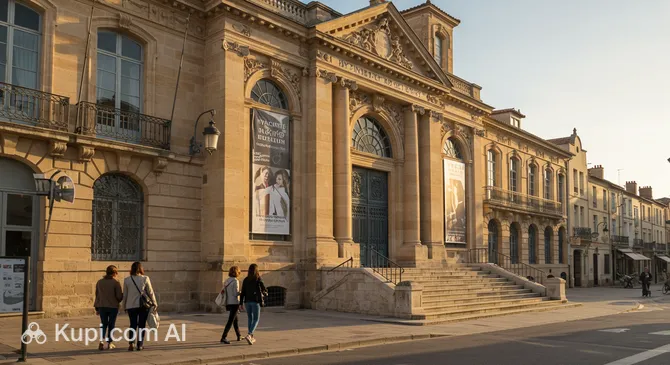
Hyacinthe Rigaud Art Museum
Hyacinthe Rigaud Art Museum. Иллюстрация. Источник: Kupi.com AI

The museum owes its name to the outstanding Baroque portrait master Hyacinthe Rigaud, who was born here and later became the official painter to King Louis XIV. After a large-scale renovation in 2017, the exhibition space was transformed into an elegant symbiosis of old French aesthetics and modern minimalism, offering guests a comfortable and inspiring journey through the centuries.

The collection is striking in its diversity, ranging from delicate Renaissance works to bold contemporary creations. Here, you can see not only masterpieces by Rigaud himself but also works by such legends as Pablo Picasso, Salvador Dalí, and Aristide Maillol. The museum is a living testament to the rich Catalan heritage and a key point for everyone who wants to experience authentic art in an atmosphere of historical tranquility.

Contacts

To check current information about special exhibitions or to book group tours, you can use the official communication channels. The museum actively maintains contact with visitors through its website and by phone.

How to contactContact
Address21 Rue Mailly, 66000 Perpignan, France
Phone+33 4 68 66 19 83
Websitewww.musee-rigaud.fr

What to Do

The main magnet for visitors is undoubtedly the Hyacinthe Rigaud portrait gallery. Be sure to find time to examine the ceremonial portraits of Louis XIV—these canvases are stunning in their detailed rendering of coronation robes and the grandeur of the "Sun King." Equally interesting is the room featuring the Trinity Altar, which greets guests with its mystical glow and masterly execution.

Art history enthusiasts should pay attention to the rare collection of Catalan primitives from the 14th to 16th centuries. These works allow you to see how the region's artistic traditions were born. In addition to painting, the museum widely represents sculpture, fine ceramics, and tapestries, turning a visit into a comprehensive introduction to the decorative and applied arts of France.

Besides the permanent exhibition, the museum is famous for its temporary exhibitions, which often feature works by Rodin or Maillol. If you want to discover the hidden meanings within the canvases, we recommend joining a guided tour. Professional art historians will help reveal the creative genius of the masters and tell fascinating stories about how certain masterpieces were created.

Getting There

Finding this cultural hub is easy, as it is located at 21 Rue Mailly, in the very heart of the historic district. If you are traveling by train, the walk from the railway station to the museum doors will be a pleasant introduction to your visit, as the route winds through the picturesque streets of the old town.

For those who prefer public transport, the extensive bus network is ideal. Most routes passing through the city center have stops within a few minutes' walk of the museum. You can also always use taxi services, which are easy to call from anywhere in the city.

Drivers should keep in mind that the historic center is mostly pedestrian-friendly. Nevertheless, there are paid parking zones nearby. After leaving your car, you can fully enjoy the atmosphere of the old town before immersing yourself in the world of fine art.

Ближайший город: Perpignan

History & Facts

The history of this iconic site began back in 1820 when city authorities decided to create a municipal collection. Initially, the exposition was quite modest, featuring only 40 paintings, and was located in the Town Hall building. The museum received its current name in honor of the great portraitist in 1833, cementing its status as an important cultural institution in the region.

A significant milestone was 1850, when the growing collection of masterpieces moved to the building of the former Minimes Monastery. However, the real breakthrough in its reputation occurred in 1878, when the museum acquired a significant number of works by Hyacinthe Rigaud himself. This event turned it into a must-visit destination for all lovers of Baroque painting and connoisseurs of French court art.

The 20th century brought new treasures to the museum. The collection was enriched with works by such titans as Picasso, Maillol, and Dufy, allowing visitors to trace the evolution of art from classical to avant-garde. To meet international standards, a major modernization was carried out at the end of the last century, including the installation of modern climate control and lighting systems.

The latest grand renovation was completed in 2017. The museum didn't just expand its area by joining two historic mansions but also transformed into a high-tech space. Today, the 18th-century historic walls harmoniously coexist with innovative exhibition solutions, creating a unique environment for experiencing art.

Time Needed

To leisurely explore the main exhibition and enjoy the interiors of the historic mansions, most visitors need about 2 to 3 hours. This is enough time to get acquainted with Rigaud's key masterpieces and see the works of the modernists.

If your visit coincides with one of the major temporary exhibitions (for example, dedicated to Rodin or Maillol), or if you decide to use an audio guide for a deep dive into the history of each painting, it is worth setting aside about 4–5 hours. The museum invites thoughtful contemplation, so we do not recommend planning a rushed visit.

Working Hours

When planning your visit, please note the opening hours. The museum welcomes guests from Tuesday to Saturday from 11:00 to 17:30. On Sundays, the doors open slightly later—from 14:30 to 17:30. Please remember that Monday is a closing day.

It is recommended to arrive an hour before closing to ensure you have time to go through ticket control. Also, keep in mind that during special events or national holidays, opening hours may change slightly, so it wouldn't hurt to check the museum's official website before your trip.

DayWorking hours
ПонедельникЗакрыто
Вторник11:00 – 17:30
Среда11:00 – 17:30
Четверг11:00 – 17:30
Пятница11:00 – 17:30
Суббота11:00 – 17:30
Воскресенье2:30 – 17:30

Nearby

Its location in the historic core of the city allows tourists to combine a trip to the museum with a visit to many other interesting sites. Literally around every corner, architectural monuments, cozy squares, and ancient chapels hide, creating the unique flavor of the region.

A walk through the surroundings will help you better feel the spirit of the past and see how different eras are intertwined in the city's appearance. Here is a list of notable places within walking distance:

NameDistance
Place de la République0.2 km
Le Castillet – Casa Pairal Museum0.3 km
The Little Train of Perpignan0.3 km
Campo Santo0.4 km
O'Flaherty's0.4 km
Hôtel Pams0.4 km
Saint John the Baptist Cathedral Basilica0.4 km

Reached the end of the page?

That means the route is fully explored