Support

Basílica de Sant Feliu

About

The majestic St. Felix Basilica (Basílica de Sant Feliu) is one of the most iconic and ancient temples that Girona is proud of. Located in the heart of the old town, this architectural masterpiece in Spain represents a fascinating journey through the centuries, reflected in stone.
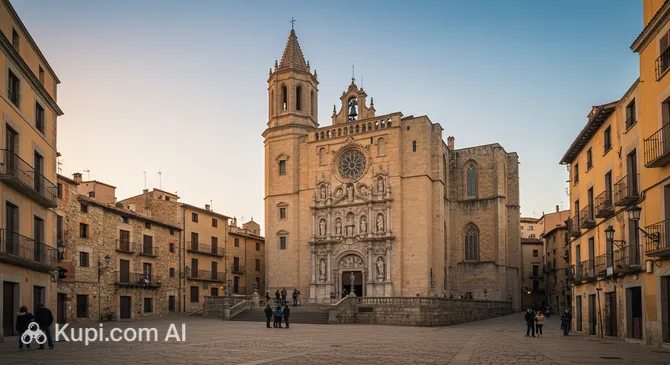
Basilica of Sant Feliu
Basilica of Sant Feliu. Иллюстрация. Источник: Kupi.com AI

The uniqueness of the basilica lies in its unusual appearance, which blends features from several eras. Built on the site of a paleo-Christian necropolis where, according to tradition, Saints Felix and Narcissus were buried, it impresses with its layering: a massive Romanesque base sits alongside a Gothic nave and an ornate Baroque facade.

Until the 10th century, this very church served as the city's main cathedral. Today, it stands out against the city skyline with its slender octagonal bell tower, which is a recognized symbol of the city and is visible from many points in Girona. Inside the church, rare works of art and historical relics are kept, including unique early Christian sarcophagi.

Contacts

To plan your visit and get the latest information on special events, you can use the official contact details. St. Felix Basilica is a highly-rated popular site with a score of 4.6 based on more than 1,400 visitor reviews.

How to contactContact
AddressCarrer Trasfigueres, 4, 17004 Girona, Spain
Phone+34 972 20 14 07
Websitewww.catedraldegirona.cat

What to Do

Inside the basilica, visitors will find a monumental interior consisting of three naves separated by massive arches. Be sure to notice the Gothic window in the main apse, which fills the space with soft light. While exploring the church, look into the seven side chapels: each one—ranging from austere Gothic to lavish Baroque—has its own unique design. The Baroque Chapel of St. Narcissus, dedicated to the city's patron saint, deserves special attention.

One of the church's most precious treasures is the collection of eight marble sarcophagi dating from the 3rd–4th centuries AD. Discovered beneath the building's floor, they are adorned with exquisite carvings: some depict scenes from Greek mythology, while others show early Christian religious motifs. This is a rare chance to see Late Roman art in such a well-preserved state.

Don't forget to look up at the walls and ceilings: recent restorations have revealed 14th-century Gothic murals that have retained their vibrancy after centuries. To round off your visit, admire the high altar, which houses a magnificent 16th-century retable with detailed depictions of local saints, representing the pinnacle of local craftsmanship from that period.

Getting There

Finding this majestic church is easy—it is located in the heart of the historic center at Carrer Trasfigueres, 4. Thanks to its tall bell tower, the basilica serves as an excellent landmark, and the tourist entrance is located on the southern side of the building.

If you are in the city center, the most convenient way to reach the church is on foot, enjoying a walk through the medieval streets. From the main train and bus station, the walk takes about 15–20 minutes. You can also take a taxi, which will drop you off as close as possible to the pedestrian zone of the old town.

For those traveling through Spain, Girona is a major transport hub. The city is well-connected by high-speed trains and bus routes to Barcelona (the journey takes 1–1.5 hours). Drivers should note that the historic center is pedestrianized, so it is best to leave your car in one of the parking lots outside the old quarters.

Ближайший город: Girona

History & Facts

The history of this site dates back to antiquity, with the first house of prayer appearing here in the 4th century AD. It was built on a paleo-Christian necropolis in memory of Saints Felix and Narcissus, who, according to legend, suffered martyrdom here. Researchers have discovered that the foundation of the current building dates back to the 6th century, while the mysterious crypt preserves traces from the 9th to 11th centuries.

The current appearance of the basilica took shape over six hundred years—from the 12th to the 18th century. This prolonged construction was a necessity: since the church was located outside the city walls, it was the first to face the brunt of numerous city sieges. After each destruction, the building was reconstructed almost from scratch, incorporating elements of new eras: this led to the addition of the Gothic bell tower in the 15th century and the Baroque facade in the 17th century.

An interesting legend suggests that during the brief Muslim rule in the 8th century, the cathedral was temporarily converted into a mosque before becoming a Christian church once again. Another dramatic event occurred in 1581, when a powerful lightning strike destroyed the spire of the tall tower. Despite all these trials, the church has survived and retained its majestic appearance, reminiscent of a fortress.

Time Needed

To leisurely explore all the architectural details and the interior of the church, a typical visitor will need 1 to 2 hours. This is enough time to study the ancient sarcophagi, examine the paintings, and look into each of the seven side chapels.

If you plan to study the history of each artifact in detail or simply want to enjoy the silence under the majestic vaults, you should set aside a bit more time. A visit to St. Felix Basilica is easily combined with a visit to the Cathedral, as they are located very close to each other.

Working Hours

St. Felix Basilica welcomes visitors throughout the week, making it easy to include in any travel itinerary. The church is open daily, from Monday to Sunday, on a consistent schedule: from 10:00 AM to 7:00 PM.

When planning your visit, keep in mind that access to certain parts of the church for sightseeing may be restricted during religious services. It is recommended to arrive in the morning or on weekdays for a quieter experience of the site.

10:00 – 19:00

Nearby

The basilica's location in the historic heart of the city makes it an ideal starting point for further exploration. A walk through the surrounding area will allow you to dive deeper into the atmosphere of medieval Catalonia and see other iconic architectural monuments.

Just a few minutes' walk away are both ancient monuments and charming squares, each with its own story. Below is a list of the nearest points of interest:

NameDistance
Arab Baths0.1 km
Girona Cathedral0.1 km
Sunset Jazz Club0.1 km
Museum of Jewish History0.2 km
Girona Art Museum0.2 km
Rafael Masó Foundation / Casa Masó0.2 km
Sant Pere de Galligants Monastery0.2 km

Reached the end of the page?

That means the route is fully explored