Support

Mawella Lagoon Airport

About the Airport

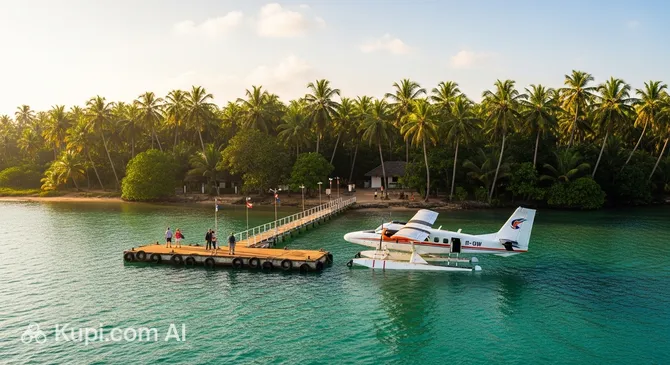
Mawella Lagoon Airport. Source: Kupi.com Binoculars

Mawella Lagoon Airport is not merely a transport hub, but a truly exotic gateway to the southern coast of Sri Lanka. Instead of the usual concrete runway, a smooth water landing awaits you here, directly onto the mirror-like surface of the picturesque Mawella Lagoon. This water aerodrome services small seaplanes, transforming a standard transfer from Colombo into a breathtaking aerial journey with panoramic views of the turquoise ocean and endless palm groves.

IATA Code DIW
ICAO Code None
City Dickwella
Distance to Centre ~5 km
Status Domestic (Water Aerodrome)
Annual Passengers No official data
Schedule Online board

Features and Advantages of the Airport

Mawella Lagoon is a unique piece of aviation infrastructure that differs radically from classic airports.

  • Unique Arrival Experience: Landing on water is an adventure in itself. Passengers step out of the aircraft onto a dedicated pier surrounded by tropical nature, which immediately immerses them in an atmosphere of relaxed leisure.
  • Speed and Comfort: The flight here from Colombo takes about 45 minutes, saving hours of tiring road travel and allowing you to reach the beaches of Dickwella and Tangalle as quickly as possible.
  • Scenic Views: The flight takes place at a low altitude, revealing stunning views of the island's southern coast, fishing villages, and golden sands.
  • Proximity to Resorts: The water aerodrome is located just a few minutes' drive from popular hotels and villas in the region, ensuring premium logistics for travellers.

Contact Information

  • Official Airport Website: www.cinnamonair.com (managed by Cinnamon Air)
  • Inquiry Service Phone: +94 11 2 475 475 (operator hotline)
  • Airport Address: Mawella Lagoon, Dickwella, Southern Province, Sri Lanka (water aerodrome)
  • Email: sales@cinnamonair.com
  • Airport Social Media: Official Cinnamon Air pages on Facebook, Instagram, and YouTube
  • Lost Luggage Information: Contact airline support at +94 11 2 475 475
  • Passenger Support Contacts: +94 11 2 440 738 (sales and reservation office)

How to Get to the Airport

Since Mawella Lagoon Airport is a water aerodrome (a pier for seaplanes), logistics here have their own specifics. The terminal is located directly on the shore of the lagoon, and you can reach it by the same means as the local beaches or hotels. The main flow of passengers arrives here to fly to Colombo or other parts of the island, so it is important to plan your travel time correctly.

Taxi and Transfer

The most convenient and reliable way to reach the departure point. Since public transport does not go directly to the seaplane pier, booking a car or a local three-wheeled taxi is the optimal choice.

  • Tuk-tuk: The most popular mode of transport in Dickwella. A trip from the city centre to the lagoon will take just 10–15 minutes. Drivers are well aware of the Cinnamon Air landing point location. The estimated cost of the trip is between 300 and 600 LKR (depending on your negotiation skills and the distance from the hotel).
  • Hotel Transfer: Most resort hotels in Dickwella and Tangalle offer a transfer service to the water aerodrome. This is the most comfortable option, as the driver will assist with luggage and take you directly to the check-in area.
  • Taxi Apps: Services like Uber or PickMe may operate in this region, but the waiting time for a car is often longer than in Colombo. It is recommended to book a car in advance.

Public Transport

There is no direct public transport route to the pier itself, but you can get to the nearest transport hubs and then transfer to a tuk-tuk.

  • Bus: Intercity buses running on the Matara — Hambantota or Colombo — Kataragama routes pass through the town of Dickwella. You can get off at the main bus station in the town, from where it is about 2–3 km to the airport (5 minutes by tuk-tuk).
  • Train: The nearest major railway station is Beliatta, located approximately 10–12 km from the lagoon. Modern trains from Colombo and Galle arrive here. From the station to the airport, you will need to take a taxi or tuk-tuk (travel time is about 20–25 minutes).

Car Rental and Parking

If you are travelling in a rented car, getting to the lagoon is not difficult — the road is paved and scenic.

  • Parking: Since Mawella Lagoon is not an airport in the traditional sense, there are no covered multi-level car parks here. Usually, there is a small area for dropping off passengers and short-term parking for vehicles meeting passengers directly at the pier or on the territory adjacent to the lagoon. Leaving a car here for a long period is not recommended without coordination with local staff.
  • Car Rental: Car rental services (most often with a driver) are available in the centre of Dickwella or through hotel reception desks.

Alternative Airports Nearby

If seaplane flights do not suit you or are cancelled due to weather conditions, you can use other air harbours in the region. The nearest option is Koggala Airport, located 45 km to the west, which also accepts domestic flights and is closer to Galle.

For international flights, the main hub remains Bandaranaike International Airport, however, the journey to it by land will take about 2.5–3 hours via the expressway. Also, other points for small aviation operate in the central part of the country, for example, Castlereigh Reservoir Waterdrome and Polgolla Reservoir Airport in Kandy, but they are located at a significant distance from the southern coast.

On the east coast lies Batticaloa Airport, but it is relevant only for those planning a trip inland or to the opposite shore.

Recommendations for Passengers:

  • Arrive at the lagoon at least 30 minutes before departure. The boarding procedure here is simplified but requires time for document checks and luggage weighing.
  • Note that seaplanes have strict luggage weight restrictions. If you have large suitcases, they may need to be sent via ground transfer.
  • Sea weather can affect the schedule. Always stay in touch with the airline before leaving for the airport.

Terminals and Map

Structure and Terminals

Since Mawella Lagoon Airport (DIW) is a water aerodrome, you will not find the usual multi-storey terminals, confusing corridors, or jet bridges here. The entire infrastructure is extremely concise and maximally integrated into the surrounding nature. The complex consists of one nominal mini-terminal, which is essentially an equipped waiting area on the shore and a special floating pier (pontoon) where the seaplanes dock.

Features of the Single Terminal:

  • Type of Structure: This is an open area or a small pavilion where passengers can shelter from the sun while waiting for their flight. There are no air-conditioned waiting halls with Duty Free; instead, you are surrounded by fresh sea breeze and the sounds of nature.
  • Purpose: The terminal serves both departures and arrivals. Passenger flows are separated by time: the plane first disembarks arrivals, and then takes boarders.
  • Navigation: It is impossible to get lost here. The movement scheme is linear: parking/drop-off zone — check-in area (often just a counter or a meeting with an airline representative) — pier — aircraft.

Departure and Arrival Zones

At Mawella Lagoon, the boundaries between zones are nominal, creating a sense of private travel.

  • Departure Zone: Represents a meeting point at the beginning of the pier. Document checks and luggage weighing take place here. Airline staff accompany passengers directly to the aircraft.
  • Arrival Zone: After landing on water, the plane taxis to the pontoon. Disembarkation takes place directly onto the wooden deck. The crew helps passengers step ashore and unloads luggage, which is handed over "hand-to-hand" literally a couple of minutes after the engines stop.

Check-in and Security Procedures

The main advantage of this airport is the lack of bureaucracy and queues. All processes take place in a relaxed but organised mode.

  • Check-in Time: It is recommended to arrive 30 minutes before departure. Check-in usually closes 15 minutes before departure.
  • Security Check: There are typically no classic metal detector frames or scanners here. Screening is conducted visually or using handheld scanners by the airline's security service. The procedure takes mere minutes.
  • Passport Control: Since flights are domestic, there is no customs or passport control. It is sufficient to present a passport or ID and a ticket (printed or electronic).

Recommendations for Navigation and Comfort

Despite the simplicity of the airport layout, there are a few nuances to consider for a comfortable journey:

  • Footwear: The pier can be wet or sway slightly on the waves. It is recommended to wear comfortable flat shoes, avoiding high heels.
  • Mobility: There are no luggage belts or trolleys here. If you have heavy luggage, staff will certainly help carry it to the plane or taxi, but be prepared that you will need to walk along the pier.
  • Weather Conditions: Waiting takes place practically in the open air. Keep sunglasses and a hat handy, as the sun on the lagoon can be very strong.

Airport History

The history of Mawella Lagoon Airport (DIW) differs significantly from the chronicles of major international hubs. You will not find records of laying the first stone of a terminal or the construction of multi-kilometre concrete runways here. The history of this air harbour is inextricably linked with the development of small aviation in Sri Lanka and the rapid growth of premium tourism in the island's southern province at the beginning of the 21st century.

Establishment and Route Opening

For a long time, the picturesque beaches of Dickwella and Tangalle could only be reached by road, which took 4 to 6 hours of tiring travel from Colombo. The need for a fast and comfortable transfer led to the idea of using natural bodies of water as landing sites. The actual "birth" of the airport in its modern commercial form can be considered the period of 2012–2013, when the country's leading seaplane operator, Cinnamon Air, began establishing regular connections between Bandaranaike International Airport and key tourist zones. It was then that Mawella Lagoon received the official IATA code (DIW) and the status of a full-fledged destination on the world aviation map.

Stages of Development

The evolution of the airport took place not through the expansion of buildings, but through integration into global tourism logistics:

  • Initial Stage: Use of the lagoon primarily for charter flights and private transfers by individual order.
  • Launch of Regular Flights: Including Dickwella in the daily flight schedule allowed tourists to plan connections with international flights, which sharply increased the popularity of the region's resorts.
  • Fleet Modernisation: The airport's history is closely linked to the operation of the reliable Cessna 208 Caravan amphibian aircraft. These machines became a symbol of reliability and allowed flights even in changeable tropical weather.

Significance for the Region

Opening air connections to Mawella Lagoon became a catalyst for the development of local infrastructure. The ability to reach a hotel in 45 minutes instead of several hours attracted major hotel chains and investors to the region. In effect, the appearance of a dot on the air route map moved Dickwella from the category of "hard-to-reach exoticism" to the category of elite and easily accessible resorts.

Interesting Facts

Despite its youth, the airport has managed to accumulate a number of curious features:

  • "Green" Airport: This is one of the few airports in the world where construction required practically no change to the landscape. The runway is created by nature itself, and the infrastructure is fully integrated into the lagoon's ecosystem.
  • Dual Environment: The aircraft serving the airport are amphibians. Historically, they take off from a concrete runway in Colombo (on wheeled landing gear) and land on water in Dickwella (on floats), demonstrating the versatility of aviation.
  • Role in Emergencies: During periods when ground transport was difficult due to floods or road repairs, water aerodromes like Mawella Lagoon became the only fast way to communicate with the outside world for delivering urgent cargo or evacuating people.

Services and Facilities

Services and Facilities at Mawella Lagoon Airport (DIW)

For travellers planning to depart or arrive via Mawella Lagoon, it is important to understand the specifics of this location. As this is a water aerodrome consisting of a pier and a landing area on the shore, there is a complete absence of classic terminal infrastructure typical of large airports. There is no terminal building with shops, food courts, or business lounges. The entire concept is built on the principle of "arrive and leave" (or "arrive and fly"), minimising the passenger's time on the facility's territory.

Restaurants, Cafes, and Shops

Directly on the pier or in the waiting area, there are no food outlets or shops. You will not find Duty Free, souvenir stalls, or coffee shops here.

  • Tip: If you are flying from Mawella, it is recommended to have a snack at your hotel before leaving. Be sure to take a bottle of water with you, as there will be nowhere to buy one on-site.
  • Nearest Infrastructure: The nearest cafes, grocery stores, and fruit stalls are located in the town of Dickwella, just a 5–10 minute tuk-tuk ride from the departure point.

Waiting Halls and VIP Services

Specialised enclosed VIP halls or airline lounges are not provided here. However, the format of seaplane travel itself implies a high level of service.

  • Waiting Area: Usually, this is a shaded outdoor area or the lobby of the nearest partner hotel, if one exists in the immediate vicinity of the pier.
  • Atmosphere: The role of the "lounge" here is played by the surrounding nature: the silence of the lagoon and views of tropical greenery create a relaxing environment unavailable in concrete terminals.

Wi-Fi, Connectivity, and Charging Stations

There is no public Wi-Fi network or stationary charging stands for gadgets on the pier.

  • Connectivity: Mobile coverage in the lagoon area is stable (4G coverage is provided by major Sri Lankan operators: Dialog, Mobitel). It is recommended to use mobile data.
  • Power Supply: Ensure your phones and cameras are charged in advance, as there are no power outlets in the boarding area.

Banks and Currency Exchange

Banking services are not available at the airport. There are no ATMs or currency exchange points.

  • Where to Withdraw Cash: ATMs and bank branches (Bank of Ceylon, People's Bank) are located in the centre of Dickwella town (about 2–3 km from the lagoon). It is recommended to carry some cash rupees for paying taxis or small expenses.

Medical Services

There is no medical centre or pharmacy on the territory of the water aerodrome.

  • First Aid: The aircraft crew and ground staff are trained in first aid and carry standard medical kits.
  • Hospitals: In case of serious health issues, the nearest government hospital is in Dickwella (Dickwella Base Hospital), and larger medical centres are in Matara or Tangalle (20–40 minutes drive).

Services for Passengers with Children

There are no specialised mother and child rooms or playgrounds. Since waiting takes place near the water, parents should watch their children closely.

Services for Passengers with Reduced Mobility

The infrastructure of the water aerodrome has natural limitations for passengers with reduced mobility.

  • Accessibility: Boarding the seaplane and moving along the pier may be difficult for people in wheelchairs. There are no special lifts or ramps.
  • Assistance: Airline staff are always ready to provide maximum assistance during boarding and disembarkation; however, the airline must be notified of the need for assistance at the ticket booking stage.

Hotels Near the Airport

The airport serves one of the most picturesque resort regions, so there is no shortage of accommodation nearby. Many tourists choose to stay within a 15–20 minute drive radius.

  • Luxury Options: In the immediate vicinity are high-class boutique hotels such as Ani Sri Lanka and resorts of the Amanwella chain (in neighbouring Tangalle).
  • Mid-Range: Along the Dickwella coast (Hiriketiya Beach and surroundings), there are many cosy villas and guesthouses popular among surfers and yoga enthusiasts, for example, Dickwella Resort and Spa.

Conference Rooms and Business Centres

There are no business services at the airport itself. For meetings or work, you should use the infrastructure of nearby hotels. Most large resorts in Dickwella and Tangalle have conference rooms and provide business centre services (document printing, high-speed internet).
Where to Eat

Dining Features at the Airport

Passengers departing from or arriving at Mawella Lagoon Airport (DIW) must consider the unique format of this transport hub. Since the airport is an equipped pier in nature without a terminal building, there are absolutely no restaurants, cafes, bars, or vending machines directly in the boarding area (on the pier or in the waiting zone). The "Air Taxi" concept implies minimal passenger time on the ground.

Dining Options for Travellers

The lack of infrastructure on the pier itself is compensated by the proximity to the Dickwella resort area. In fact, the "food court zone" for passengers is served by the establishments of the town and coastal hotels located 5–15 minutes drive from the takeoff/landing site.

Recommendations for a Full Meal (Before Arrival at the Airport)

If you plan to have a substantial meal before your flight, it is recommended to visit restaurants in Dickwella or on Hiriketiya Beach. Most of them are open from 11:00 to 22:00.

  • Cuisine and Specialities: The south coast is famous for the freshest seafood. You should definitely try jumbo prawns, crabs, or grilled fish. A traditional dish is "rice and curry" (rice with several types of spicy and savoury sides) — a hearty and inexpensive option.
  • Average Price Range: Lunch in a local cafe will cost 1500–3000 LKR per person, and in a hotel restaurant — from 4000 LKR.
  • Location: Landside (public area of the town). There is no food in the "airside" zone after document checks.

Options for a Quick Snack

Since it is impossible to buy food on the pier, you should take care of a snack in advance:

  • Bakeries and Stalls: In the centre of Dickwella, there are local bakeries where you can buy "short eats" — local pastries. Popular items include fish buns and vegetable roti. This is an ideal takeaway option.
  • Fruits: On the way to the lagoon, you can stop at fruit stalls and buy King Coconuts (Thambili) to quench your thirst or a bunch of bananas.

Dietary Dining (Vegetarian, Halal, Gluten-Free)

Although there is no choice at the airport itself, the Dickwella/Hiriketiya region is very friendly to various diets thanks to the yoga retreat culture:

  • Vegetarians and Vegans: Local Sri Lankan cuisine offers many vegan options by default (lentil curry, vegetable roti, coconut sambols). In Hiriketiya cafes, it is easy to find smoothie bowls and avocado toast.
  • Halal: A Muslim community resides in the town, so finding Halal cafes in the centre of Dickwella is not difficult (look for the corresponding sign).
  • Gluten-Free: Traditional rice flour dishes (hoppers) are gluten-free, but it is worth checking the composition of sauces in restaurants.

Important Tips Before Departure

  • Water: It is critical to carry a bottle of drinking water, as there is nowhere to buy it on the pier, and waiting under the tropical sun can cause thirst.
  • Opening Hours: Morning flights (usually around 10:00–11:00) may not coincide with the opening times of major restaurants, so it is better to have breakfast at your hotel.
  • Alcohol: The consumption of alcohol on the pier and carrying open containers on board is prohibited.

Traveller Tips

Travelling through Mawella Lagoon Airport is a unique experience, more akin to an exciting excursion than a standard flight. To ensure your visit to this water aerodrome goes as smoothly and comfortably as possible, we have prepared a number of practical recommendations, taking into account the specifics of small aviation and the tropical climate.

Optimal Arrival Time

Unlike major international hubs, there is no need to arrive 2–3 hours early here. The optimal arrival time at the pier is 30–45 minutes before departure. Check-in closes strictly 15 minutes before departure. Lateness is not acceptable: pilots follow a strict schedule, and the seaplane will not wait for passengers stuck in traffic.

Nuances of Check-in and Security

Be prepared for the check-in procedure here to be more "personal" and informal.

  • Weighing: This is a standard procedure for small aviation. Not only luggage is weighed, but often passengers themselves (or they are asked to state their exact weight). This is necessary for the correct weight distribution (balance) of the aircraft. Do not be embarrassed — this is a safety matter.
  • Documents: Keep passports and electronic tickets handy. Although there are no queues here, document checks happen right before boarding the boat or pier.
  • Security Check: Conducted quickly, without the need to remove shoes or belts. The main focus is on the absence of prohibited items.

Seat Selection and Comfort on Board

In aircraft like the Cessna 208 Caravan, which are usually used on this route, there are no assigned seats on the boarding pass.

  • Free Seating: Seats are taken on a first-come, first-served basis or allocated by the crew to balance weight.
  • Best Views: Since you are flying over a picturesque coastline, any view from the window will be stunning. However, if flying from Colombo to Dickwella, try to sit on the right side in the direction of travel to see the coastline.
  • Facilities: It is important to remember that there is no toilet on board seaplanes. Given that the flight lasts about 45–60 minutes, it is worth visiting the restroom at the hotel before leaving for the airport.

Hand Luggage and Baggage: Strict Rules

This is perhaps the most important point of planning.

  • Type of Bags: It is strongly recommended to use soft bags instead of hard suitcases. The luggage compartments of seaplanes have a non-standard shape, and soft luggage is much easier to stow. Hard cases may simply not fit.
  • Weight Restrictions: The standard allowance is often lower than on international flights (usually up to 23 kg of luggage and 5 kg of hand luggage). Excess weight is expensive or luggage may be sent on the next flight/by ground transport.
  • Valuables: Keep cameras, phones, documents, and medicines in a small handbag with you. Overhead bins in such aircraft are absent or very small.

Tips for Connecting Passengers

If Mawella Lagoon is part of your route connecting to an international flight in Colombo (Bandaranaike):

  • Time Buffer: Allow a minimum of 3 hours between the arrival of the seaplane and the departure of your international flight. Although the flight is fast, weather can cause adjustments.
  • Luggage Transfer: Check with the airline (usually Cinnamon Air) if they have an interline agreement with your international carrier. Most often, luggage needs to be collected upon arrival in Colombo and re-checked at the international flight check-in counter.

Customs Formalities

Since the flight is domestic, there is no customs control at Mawella Lagoon. However, if you are carrying specific goods (for example, expensive souvenirs, antiques), keep receipts to present at customs when departing the country at the main airport.

How to Save Time and Money

  • Group Transfer: A taxi to the lagoon can be expensive. If you are travelling from a popular hotel, coordinate with other tourists to share a minivan rental.
  • Watch for Promotions: Sometimes airlines offer discounts when booking tickets in advance (30–60 days) or for less busy daytime flights.
  • Light Luggage: Travelling with minimal belongings will save you from excess weight charges and the need to wait for luggage unloading.

Actions in Case of Flight Delay or Cancellation

Hydro-aviation is highly dependent on weather conditions. Strong winds or high waves in the lagoon can cause delays.

  • Stay Connected: Switch on your phone immediately after leaving the hotel. The airline may notify you of a rescheduled departure time.
  • Plan "B": Always have the contacts of a reliable driver or taxi service. In case of complete flight cancellation due to bad weather, the airline usually offers a ground transfer, but arranging a trip yourself may be faster.
  • Where to Wait: If the flight is delayed, do not stand under the sun on the pier. Ask the tuk-tuk driver to take you to the nearest cafe in Dickwella (5 minutes drive) and return by the new departure time.

Reached the end of the page?

That means the route is fully explored