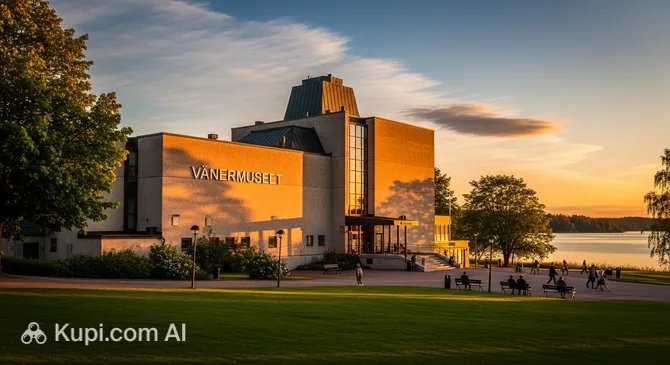
On the picturesque shores of the country's largest lake, in the town of Lidköping, lies a fascinating place — Vänermuseet. This museum is entirely dedicated to the unique nature, rich culture, and centuries-old history of Lake Vänern, Europe's third-largest lake. Located in a conservation area where the Lidan River meets the lake, the museum serves as a bridge between the past and present of this remarkable region in Sweden.
Vänermuseum. Illustration.
Source: Kupi.com AI
Traveler photos:
Inside, visitors will find captivating exhibitions revealing the secrets of the lake's ecosystem. Special attention is paid to flora and fauna: special aquariums showcase the living inhabitants of the depths—from noble salmon and trout to pike-perch and whitefish. The museum harmoniously combines a natural science approach with stories of the people whose lives for generations have been inextricably linked to fishing and shipping on Vänern.
As part of a town known as the "porcelain capital" of Scandinavia, Vänermuseet also offers a glimpse into local traditions of applied arts. Interactive exhibits and modern design make the visit interesting for all ages, highlighting the importance of the balance between humanity and nature in this fragile and majestic northern land.
Contacts
To confirm up-to-date information before your visit or to organize a group tour, you can use the museum's official contact details.
At Vänermuseet, every visitor will find something to enjoy. One of the most popular areas is the aquarium section, where you can see the inhabitants of Lake Vänern in detail. Watching the graceful movement of trout and salmon in the water creates a calming atmosphere and allows for a closer look at the region's biodiversity. Interactive displays will help you learn more about the lake's ecosystem and how human activity affects the environment.
For history buffs, there are detailed models of old ships and artifacts recovered from the lake bottom or found in the ports. You can trace the development of shipping and see how fishing technologies have changed over the centuries. Those interested in art should definitely visit the sections dedicated to the famous Rörstrand ceramics, which made the town world-famous.
Families with children will appreciate the educational programs and play areas where they can learn about the laws of nature in a fun way. In the warmer months, a visit to the museum can be complemented by a boat trip directly from the city pier or a hike along the ecological trails of the adjacent nature reserve, watching sailboats glide across the mirror-like water.
Getting There
Vänermuseet is located at Framnäsvägen 2, in a picturesque spot right by Lake Vänern. If you are traveling by car from Gothenburg (about 110 km) or Stockholm (about 290 km), it is most convenient to take the E20 highway, following signs to the city center. There is convenient parking for visitors right at the museum.
For those who prefer public transport, the best option is a train to Lidköping railway station. From the station, the museum is a 15–20 minute walk away, or you can take a local bus in just 10 minutes. If you are already in the city center, a pleasant walk along the banks of the Lidan River will take about 20–30 minutes, allowing you to enjoy views of sailboats and historic architecture along the way.
During the summer season, you can reach the museum in an even more romantic way — on an excursion boat departing from the city pier. Taxi services and bicycle rentals are also popular in the city, allowing you to reach your destination quickly and comfortably from any part of town.
Nearest city: Lidkoping
History & Facts
The history of Lidköping, where the museum is located, dates back to the Late Middle Ages. It is believed to have been officially founded in 1446, when King Christopher of Bavaria granted the settlement city rights. Its strategic position at the mouth of the Lidan River made the town an important trading hub, where for centuries goods were exchanged between the agricultural regions of Västergötland and the waterways of the massive lake.
The name of the town itself reflects its commercial essence: the root "köping" in Swedish traditionally means a marketplace or trading square. For centuries, life here revolved around the port and shipping. Vänermuseet carefully preserves the memory of this era, exhibiting artifacts related to the development of the local economy and the daily lives of people whose well-being depended on the whims of the water.
Despite a devastating fire in 1849 that wiped out a significant part of the old wooden buildings on the left bank, the town managed to maintain its identity. The museum collections emphasize the continuity of the traditions of hospitality and craftsmanship for which this region has always been famous, evolving over time into one of the cultural centers of Sweden.
Time Needed
To leisurely explore all the main exhibitions of Vänermuseet, a typical visitor will need about 2–3 hours. This is quite enough time to get to know the inhabitants of the aquariums and study the historical artifacts and interactive stands dedicated to the lake's ecology.
If you plan to visit temporary themed exhibitions or take part in one of the creative workshops, it is worth setting aside half a day (about 4 hours). Families with children are also recommended to allocate more time, as the museum's educational programs and interactive zones are usually very engaging for young explorers.
Working Hours
The museum welcomes guests throughout the week except for Mondays. Standard opening hours are: Tuesday to Friday — from 10:00 to 17:00; on Saturdays and Sundays, the doors are open from 11:00 to 16:00.
Since opening hours may vary depending on the season or special holiday events, it is recommended to check the current schedule on the museum's official website just before your trip.
Day
Working hours
Monday
Закрыто
Tuesday
10:00–17:00
Wednesday
10:00–17:00
Thursday
10:00–17:00
Friday
10:00–17:00
Saturday
11:00–16:00
Sunday
11:00–16:00
Nearby
Exploring the surroundings of Vänermuseet will allow you to dive deeper into the atmosphere of this cozy Swedish town. Near the museum, you will find both historical locations and modern spots for relaxation and gastronomic discoveries.