Support

St Gallen

About

St. Gallen is the cultural and economic heart of Eastern Switzerland, a city with unique charm and an academic atmosphere. Nestled in a picturesque valley between Lake Constance and the foothills of the Alps, it attracts travelers with its cozy feel and carefully preserved heritage.

Geographically, the city sits on a high plateau, providing fresh air and beautiful views of the surrounding area. Here, Switzerland reveals its particularly peaceful side, where green hills harmonize with ancient architecture. With a population of about 76,000, the city remains compact yet functions as a dynamic and modern center.
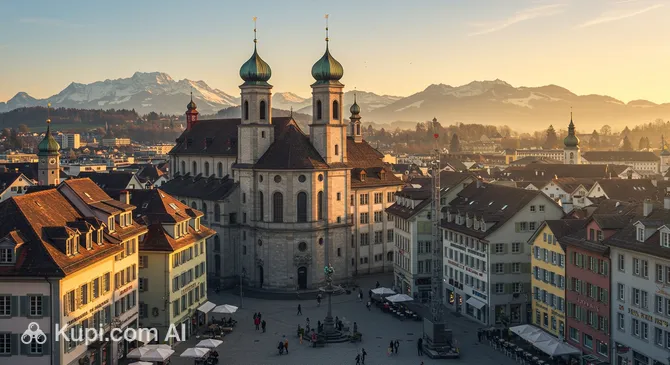
St Gallen. Illustration.
Source: Kupi.com AI

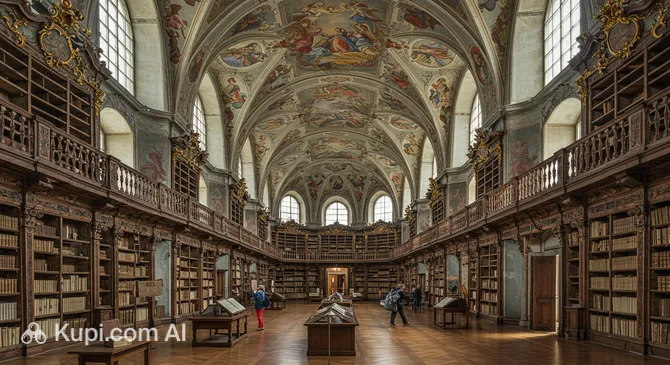
Dating back centuries, the history of St. Gallen is inextricably linked to the monastic abbey around which the settlement formed. The city's crown jewel is undoubtedly the Abbey of Saint Gall, a UNESCO World Heritage site. Of particular note is the Abbey Library — one of the oldest and most beautiful in the world, housing priceless medieval manuscripts within magnificent Rococo interiors.

Strolling through the pedestrian zone of the old town, it is impossible to miss the famous painted oriel windows. These elaborately decorated protrusions on house facades (there are over a hundred here) serve as reminders of the prosperity of local merchants. For those who appreciate aesthetics, the city is also renowned for its embroidery and textile traditions, which remain highly valued by global couturiers.

A visit to St. Gallen is an unforgettable experience for those seeking architectural inspiration and intellectual relaxation. Come here to enjoy the blend of majestic antiquity and the comfortable rhythm of modern life.
Weather Overview

The climate in St. Gallen is largely determined by its location between Lake Constance and the Alps. Travelers can expect moderately warm summers with occasional rain and cool winters, when temperatures often hover around freezing.

The summer months, from June to August, are the most comfortable for long walks around the city. The average temperature during this time is around 17–19°C, with peak values in July reaching 23°C. However, an umbrella is a useful accessory: even in summer, up to 17–18 days with precipitation are recorded each month.

Winter in the city is mild but crisp. In January, average figures drop to 0.6°C, with night frosts down to -2.3°C. To plan your wardrobe correctly for the trip, we recommend checking the current weather in St. Gallen before departure. Spring and autumn are characterized by gradual temperature changes: from a cool 4.9°C in March to a pleasant 14.6°C in September, with May traditionally considered one of the rainiest months of the year.

Average monthly temperature

Average monthly precipitation

Interesting Facts

The city of St. Gallen hides many fascinating secrets beyond its main attractions, from strict culinary taboos to unexpected historical artifacts. These peculiarities give the city its unique character and often surprise guests.
Abbey Library of Saint Gall. Illustration.
Source: Kupi.com AI

Traveler photos:

  • Sausage Etiquette: The local bratwurst is not just food; it is a point of pride. There is an unspoken but strict rule in the city: never eat a St. Gallen sausage with mustard. Locals consider it an insult to the butcher's craft, believing that the rich bouquet of spices in the meat requires no additives.

  • Egyptian Mystery: The famous Abbey Library of St. Gallen is known for its medieval manuscripts, but few know that a real Egyptian mummy rests within its halls. Schepenese, the daughter of a priest from Thebes, has been here since 1820, creating a striking contrast with the Baroque interior of the hall.

  • Dual-Purpose Ponds: The picturesque Drei Weieren (Three Ponds), located on a hill above the city, are a favorite recreation and swimming area today. However, these reservoirs were originally created by monks in the 17th century for a purely practical purpose — to provide water for textile dye works and fire fighting.

  • The Legend of the Bear: The city's coat of arms features a bear wearing a golden collar. According to legend, the Irish monk Gall encountered a bear in the forest that did not attack him but helped him gather firewood for a fire. In gratitude, the hermit shared his bread with the beast, and a hermitage was founded on that spot, which later grew into the city.

How to Get There

St. Gallen, situated at the crossroads of four countries, boasts excellent transport accessibility. Traveling here, whether by plane or train, is usually comfortable and offers picturesque views even before arriving at your destination. You can find all the details and plan your route by reading more on how to get to St. Gallen, and below we cover the main transport hubs.

St. Gallen does not have its own airport, so most tourists choose Zurich Airport (ZRH). It is Switzerland's largest international aviation hub, located in the city of Zurich, about 61 km from St. Gallen. A journey by car or taxi takes about 1 hour and 50 minutes, but many prefer direct trains that depart right from the terminal. The airport receives flights from all over the world and is noted for its high level of service.

Another convenient option, especially for those traveling within Europe, is Friedrichshafen Airport (FDH). It is located in the German city of Friedrichshafen, just 28.5 km from St. Gallen (on the other side of Lake Constance). This is a small but cozy airport. A taxi ride, considering the border crossing and potential ferry use, takes about an hour. You might also consider Memmingen Allgäu Airport (FMM) in Memmingen (Germany, about 90 km away), which is popular with low-cost airlines.

For convenience, here is a summary of the main airports:

AirportPassenger trafficDistance
Altenrhein Airport84 10016 km
Friedrichshafen Airport339 55628 km
Zurich Airport31.2 mln62 km
Memmingen Allgäu Airport3.2 mln90 km
EuroAirport Basel Mulhouse Freiburg8 mln140 km

Rail travel is the pride of Switzerland. While St. Gallen does not have a hub station on the scale of Zurich, it is perfectly integrated into the national network. Travelers most often arrive via Zurich Hauptbahnhof (Zurich Main Station), located 63.3 km away. It is one of the busiest stations in the world with huge passenger traffic. Fast and comfortable trains depart regularly from here, delivering passengers to the center of St. Gallen in less than an hour.

Another important transit point is Basel SBB station in the city of Basel (about 135 km from St. Gallen). Many high-speed trains from France and Germany arrive here. Despite the distance, the efficient Swiss transport system allows you to reach your destination with minimal effort and few transfers.

Below are the nearest major railway hubs:

StationPassenger trafficDistance
Zürich Hauptbahnhof154.6 mln63 km
Basel Badischer Bahnhof7.3 mln134 km
Basel SBB station40 mln135 km
Stuttgart Hauptbahnhof80.3 mln152 km
Oerlikon Railway Station34.4 mln153 km

Main Attractions

St. Gallen offers travelers a harmonious blend of rich historical heritage, architectural masterpieces, and picturesque natural corners. A walk through the city is a journey through eras, where every stone tells its own legend.

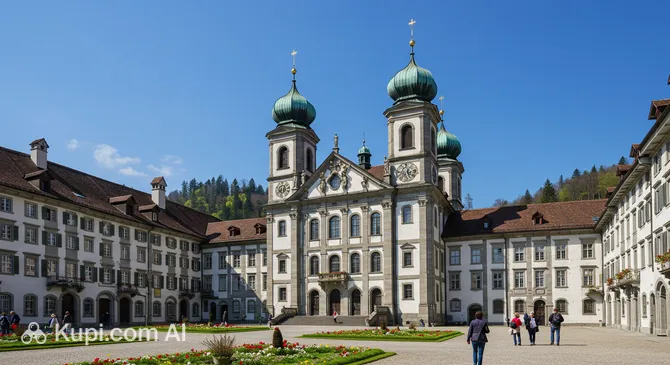
The undisputed center of attraction for tourists is the Abbey of Saint Gall. This majestic monastery complex, listed as a UNESCO World Heritage site, is rightfully considered one of Europe's most important spiritual centers. The Baroque architectural ensemble impresses with its scale and detail, serving as a living testament to the region's centuries-old history.

Abbey of Saint Gall. Illustration.
Source: Kupi.com AI

Traveler photos:

The architectural landmark of the complex is the St. Gallen Cathedral. Its two towers are visible from almost any point in the old town. Inside, visitors are greeted by opulent decor: magnificent ceiling frescoes, intricate stucco work, and a monumental organ create a solemn atmosphere. This is a must-visit for connoisseurs of art and religious history.

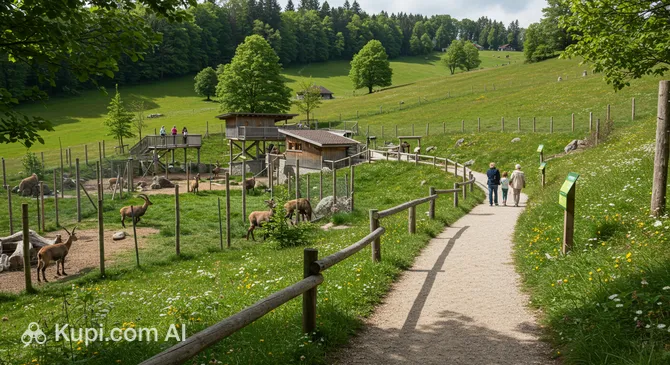
If you want to trade cityscapes for natural beauty, the Peter and Paul Wildlife Park is worth a visit. Located on the hills above the city, it allows you to observe Alpine animals — ibexes, chamoises, deer, and lynxes — in conditions that closely mimic their natural habitat. In addition to the wildlife, the park offers guests breathtaking panoramic views of Lake Constance and the surrounding area.

Peter and Paul Wildlife Park. Illustration.
Source: Kupi.com AI

Traveler photos:

For those interested in science and the natural world, the St. Gallen Natural History Museum opens its doors. Its modern exhibits tell a fascinating story of geology, biology, and the development of life on Earth. Here, you can see Switzerland's largest landscape relief map, which helps in better understanding the geography of this mountainous country.

Flower lovers and those seeking quiet walks will enjoy the St. Gallen Botanical Garden. This cozy green oasis houses thousands of plant species from all over the globe. The garden is perfect for taking a breather after sightseeing and enjoying the silence among blooming flowerbeds and greenhouses.

Local Cuisine

The gastronomic scene of St. Gallen is a harmonious blend of hearty Alpine traditions and the refinement inherent in the cultural capital of Eastern Switzerland. Local cuisine is based on high-quality farm products: fresh milk, meat, and cheeses. The main culinary symbol of the city is undoubtedly the Olma Bratwurst (St. Galler Bratwurst). This veal sausage, made with milk and spices, has such a delicate and self-sufficient flavor that locals eat it without mustard, serving it only with a crispy "Bürli" roll.

Among desserts, the St. Gallen Biber (Biber) takes the top spot. This is a handcrafted gingerbread filled with almond paste and honey, decorated with relief images often related to the history of the city or the abbey. The treat is perfect as a souvenir or an accompaniment to coffee. You can also frequently find classic Swiss dishes on local menus, such as rösti (a potato dish) and various cheese fondues, which are especially good during the cooler months.

Regarding beverages, St. Gallen is proud of its brewing heritage. It is home to Switzerland's oldest brewery, Schützengarten, founded back in 1779. Trying local beer varieties is a must for connoisseurs of the craft. Wine lovers should look for products from the nearby Rhine Valley; local white wines are known for their freshness and fruity notes.

The dining culture in the city is diverse: from quick sausage snacks on the market square to long dinners in cozy restaurants. If you want to immerse yourself in the atmosphere of genuine Swiss antiquity and try home cooking in a setting that feels like a "grandmother's house," you should visit the Schnuggebock restaurant. This place is famous for its authentic coziness and traditional recipes.

For a more sophisticated evening or an aperitif, the Einstein Bar is a great fit. Here you can enjoy cocktails and cigars in an elegant setting reminiscent of English clubs. And those looking for a place for a quiet breakfast or afternoon coffee and dessert should drop by Café Franz, located in the city's cultural center and popular among local intellectuals.

Travel Tips

Welcome to St. Gallen! To ensure your introduction to this cozy city is perfect, we have gathered the most important practical recommendations to help you save time and feel confident.

  1. Clothing and Accessories. The weather in the region can be changeable even in summer, so the best wardrobe principle here is layering. Be sure to bring comfortable flat shoes: the historical center is paved with cobblestones, and walking on them in heels will be difficult. Don't forget a power adapter: Switzerland uses Type J sockets (with three pins), which differ from standard European ones.
  2. Transport. The city's historical center is compact and ideal for walking. For longer distances (for example, to the Three Ponds), it is convenient to use the local VBSG bus network or trains. If you are staying in a hotel, be sure to ask about the Mobility Ticket — a free public transport pass often given to guests for the duration of their stay. For route planning, download the SBB Mobile app.
  3. Finances. The official currency is the Swiss Franc (CHF). While cards are accepted almost everywhere (including small cafes), having some cash on hand (10-20 franc notes) is useful for street markets or lockers. Service charges are usually included in the bill, but rounding up the amount is considered good manners.
  4. Health and Safety. St. Gallen is a very safe city, but standard precautions are always wise. Water in street fountains (unless there is a "Kein Trinkwasser" sign) is pure and drinkable — feel free to refill your bottles. Pharmacies are marked with a green cross; duty pharmacies operate on weekends. The emergency number for ambulances is 144, and for the police, it is 117.
  5. Communication. The main language is the Swiss dialect of German, but standard German ("Hochdeutsch") is understood by everyone. English is widely spoken, especially in tourism. For connectivity, it is beneficial to buy a prepaid SIM card from local operators (Swisscom, Sunrise, Salt) at the airport or mobile shops, but check for free city Wi-Fi (St.Galler Wireless) in the center first.
  6. Local Etiquette. Locals value politeness and restraint. When entering a shop or addressing someone, it is customary to say "Grüezi" (Hello). On public transport, try not to speak loudly on the phone — silence and the personal space of other passengers are respected here.
  7. Sunday Quiet. Sunday here is a day of absolute rest (Ruhetag). On this day, almost all shops and supermarkets are closed, except for those at the railway station. It is also not customary to make noise on the street or in residential areas. Plan your shopping in advance and dedicate Sunday to nature walks, visiting museums, or relaxing in a cafe.
  8. Shop Opening Hours. Keep in mind that retail outlets close quite early. On weekdays, most are open until 18:30 or 19:00 (on Thursdays sometimes later, until 20:00 or 21:00), and on Saturdays until 17:00. When planning to buy souvenirs or groceries, it is best not to leave it until late evening.

St. Gallen is a city that reveals itself to those who do not rush and respect its way of life. By following these simple tips, you can avoid minor inconveniences and enjoy the atmosphere of Eastern Switzerland to the fullest.

Entertainment & Nightlife

Despite its reputation as a city of rich historical heritage, St. Gallen knows how to surprise with its lively atmosphere. Thanks to its large university, a dynamic night scene has developed here, where centuries-old traditions sit alongside youthful energy. Evening leisure in the city is diverse: from cozy wine cellars to bustling concert venues.

The center of gravity for nightlife enthusiasts is the so-called "Bermuda Triangle" in the old town. This district, covering the streets around Marktplatz, is literally dotted with establishments for every taste. Here, it is customary not to stay in one place but to hop between bars, enjoying drinks and conversation. The atmosphere is casual, and strict dress codes are rarely encountered.

Fans of craft culture and signature mixes should visit The Pinch. This spot has earned locals' love for its attention to detail: they serve excellent beer and creative cocktails in an interior that invites long friendly chats. The staff is known for their friendliness and expert knowledge of beverages.

If your heart desires music and dancing, head to Grabenhalle. This iconic space, located in a former gymnasium, has become a home for the city's alternative culture. It regularly hosts live music concerts, themed parties, and theatrical performances. The venue attracts creative youth and those looking for an informal setting.

For those who prefer active recreation even in the evening, Escape Company & Bar is an excellent option. This unique format combines a bar with an entertainment center. Here, you can not only enjoy a cocktail but also tackle exciting quests or play a game of darts. It is the perfect place to start an evening with a large group.

Lovers of a more respectable and quiet leisure experience will appreciate the Einstein Bar. Its elegant interior, reminiscent of an English club, along with an extensive whiskey list and a cigar room, creates an old-world atmosphere where you can relax after a busy day.

Daytime entertainment in St. Gallen is not limited to museums. The city offers excellent shopping opportunities. For high-street finds, head to major malls such as Neumarkt St. Gallen or the modern Silberturm Shopping Center. There you will find both international brands and products from Swiss labels.

Good to know: The city's nightlife picks up closer to 10:00 PM, especially on Fridays and Saturdays. Prices reflect Swiss levels: a cocktail costs on average 15–20 francs. For night owls, special "night buses" (Nachtbus) operate on weekends, taking guests home until the early hours of the morning (note that these may require a separate ticket or a surcharge).

Parks & Museums

The cultural landscape of St. Gallen extends far beyond the famous Abbey District. The city harmoniously combines creative urban spaces, natural recreation areas, and rich museum collections, offering travelers leisure scenarios for every taste.

One of the most atmospheric places for relaxation is Drei Weieren (Three Ponds). Located on a hill above the city, these ponds become a popular recreation area in summer. Here you can swim in historical wooden Art Nouveau baths that still function today, preserving the charm of a bygone era. The water is clean and refreshing, and the wooden decks are perfect for sunbathing. Additionally, this is the city's best viewpoint, offering a breathtaking panorama of the old center's rooftops and the distant expanse of Lake Constance.

For those seeking something completely avant-garde, the Bleicheli district and its famous "City Lounge" (Stadtlounge) are a must-see. This is a bold outdoor art project created by artist Pipilotti Rist and architect Carlos Martinez. An entire city block has been transformed into a surreal living room: the asphalt is replaced by soft red granulate reminiscent of a carpet, and the street furniture mimics home sofas, tables, and floor lamps. A walk through "Red Square" gives a wonderful sense of coziness in the middle of a business district, blurring the lines between private space and the city street.

The history of the global success of the local industry is revealed at the Textile Museum (Textilmuseum). For centuries, St. Gallen held the title of embroidery capital, and the museum's exhibits clearly demonstrate the scale of this phenomenon. Its halls display unique samples of lace and fabrics — from Coptic textile fragments to luxurious Rococo embroideries. Special attention is paid to the connection with high fashion: you will learn why fabrics from St. Gallen are still chosen by leading couturiers from Chanel, Dior, and other fashion houses for their collections.

Fans of classical aesthetics should visit the Museum of Art (Kunstmuseum), located in the city park. The majestic building itself is an architectural monument, and inside lies an impressive collection of paintings and sculpture. The collection spans from the late Middle Ages to the present day, with a particular focus on 19th and 20th-century art and works by Swiss masters. The museum regularly hosts temporary exhibitions, creating a dialogue between classics and contemporary art.

Getting Around

Public transport in St. Gallen is characterized by Swiss precision, comfort, and comprehensive coverage. The city network, managed by VBSG, is so effective that a car becomes more of a burden than a necessity. The backbone of city travel consists of trolleybuses and buses, which run at short intervals, connecting the center with outlying districts and the station.

A unique feature of the street traffic is the red narrow-gauge railway Appenzeller Bahnen. Trains on this line run directly along the city streets, acting as a tram, and connect St. Gallen with neighboring picturesque towns like Trogen. This is not only convenient transport but also a kind of attraction, allowing you to see the city from an unusual perspective.

Fare payment operates on a zonal system under the OSTWIND transport association. The entire city and its immediate suburbs fall within zone 210. Tickets are valid for all types of transport, including buses, trains within city limits, and the funicular. You can purchase a single ticket (valid for a specific time, usually 1 hour) or a day pass (Tageskarte), which is worthwhile if you plan more than two trips a day.

The most convenient payment method for the modern tourist is using mobile apps such as SBB Mobile or FAIRTIQ. The FAIRTIQ app is especially popular: you simply swipe the screen before boarding ("Check-in") and after alighting ("Check-out"), and the system calculates the best fare for the day. If you prefer the classic way, tickets can be bought from machines at stops (accepting cards and coins), but remember: bus drivers do not sell tickets.

An important bonus for city guests: if you stay in a hotel, hostel, or apartment, you are generally provided with a free Mobility Ticket St.Gallen-Bodensee. It is valid from the moment of check-in until the day of departure inclusive and covers travel in all zones of the city and its surroundings (zones 210, 211, 212). Be sure to check for this ticket when registering at your accommodation.

Among unique modes of transport is the Mühleggbahn. This historical funicular takes passengers in a couple of minutes from the old town (from the station behind the monastery) up the hill to the St. Georgen district and the "Three Ponds" recreation area. The funicular is fully automated and operates like an inclined elevator, being part of the general fare system.

Transport runs from approximately 5:30 AM until midnight. On Fridays and Saturdays, night buses (Nachtbus) operate, allowing you to get home after parties. Paper tickets only need to be validated if they do not have a printed validity time (for example, multi-ride cards), but most machine-issued tickets are already activated. Boarding buses and trolleybuses is allowed through any door, with random ticket inspections.

As an alternative to public transport, you can use taxis, which have stands at the station and in the center, though prices are quite high. For short trips, electric scooter and bike rental services are popular. Nevertheless, given the compactness of the historical center, many attractions are easier and more pleasant to explore on foot.

Accommodation

While the choice of accommodation in St. Gallen is not as massive as in larger metropolises, it is characterized by high Swiss quality and a variety of formats. Travelers can find options here ranging from cozy family pensions (B&Bs) and youth hostels to modern business hotels and luxury properties located in historical buildings. The short-term apartment rental market is also well-developed, which is convenient for families or those planning a long stay.

The most popular and atmospheric area to stay is the Old Town (Altstadt). By staying here, you will be within walking distance of the main attractions, including the famous Abbey District. Living in the center means being able to start your morning with a stroll through pedestrian streets lined with painted oriel windows and enjoying breakfast at a local café. It is the ideal choice for those who want to fully immerse themselves in the city's history and culture.

For those who value practicality and mobility, the area around the railway station is an excellent option. This is a strategically convenient point: from here it is easy to reach the city center on foot or take a train to explore the shores of Lake Constance or Appenzell. Major chain hotels offering standardized service and modern amenities are concentrated here. If you are looking for peace and proximity to nature, look into the St. Georgen district, located just above the center, close to the "Three Ponds" recreation area.

The price range in St. Gallen corresponds to the general price level in the country: Switzerland is traditionally not a budget destination.

  • Budget segment: Hostels and inexpensive guesthouses (from 40–50 CHF per night).
  • Mid-range: Comfortable 3-4 star hotels (from 120 to 200 CHF).
  • Premium: Historical boutique hotels and luxury suites (from 250 CHF and up).

Booking Tip: St. Gallen is a popular center for business tourism and exhibitions (for example, during the OLMA fair in October). During major events or the summer tourist season, demand for housing rises sharply and prices increase. Therefore, it is strongly recommended to book a hotel in advance, at least a couple of months before your trip. And don't forget: staying in official hotels and hostels in the city entitles you to a free Mobility Ticket, which will help you save significantly on transportation.

Nearby Cities

For those looking to explore the surroundings, St. Gallen serves as an excellent starting point for day trips. The Eastern Switzerland region is rich in picturesque towns and natural attractions, most of which can be reached in less than half an hour.

Just 11 km from the city, on the shores of Lake Constance, lies Arbon. This historical town attracts tourists with its medieval castle and charming old center. A stroll along its promenade gives a sense of resort-like tranquility, and outdoor enthusiasts will appreciate the cycling routes along the lake.

Very close by, literally 8 km away, is Herisau — the gateway to the colorful Appenzell region. The town is known for its traditional houses and serves as an ideal start for hikes through the green hills. Here you can get a taste of the country's rural traditions without traveling far from civilization.

Also worth noting is Kreuzlingen, located on the border with Germany. It is famous for its magnificent Lakeside Park (Seeburgpark) — one of the most beautiful public parks on Lake Constance, where you can enjoy nature and visit a planetarium.

CityPopulationDistance
Wittenbach9 6914 km
Herisau15 7808 km
Goldach9 2699 km
Gossau18 17110 km
Appenzell5 75010 km

These nearby destinations offer a glimpse into the diverse culture and landscapes of the region.

Shopping & Souvenirs

Overview: Shopping in St. Gallen is not just a quest for purchases, but an opportunity to touch the city's rich traditions. As a world textile capital, the city offers a unique range of high-quality fabrics and embroidery that is hard to find anywhere else. The compact, car-free historical center turns a shopping trip into a relaxed promenade amidst architectural beauty.

Main Shopping Areas: The heart of shopping beats in the Old Town (Altstadt). The main shopping arteries are the pedestrian streets Multergasse and Spisergasse. Here you will find a concentration of clothing boutiques, shoe stores, jewelry shops, and bookstores. International brand windows sit harmoniously alongside small private shops located in ancient houses with oriel windows.

Shopping Centers: For those who prefer one-stop shopping, the city has several large complexes. One of the most popular is Neumarkt St. Gallen, conveniently located in the immediate vicinity of the railway station. It is a modern mall with a wide selection of fashion stores and electronics.

On the western edge of the city is the Silberturm Shopping Center, which also offers a diverse range of goods for the whole family and a large supermarket, convenient for buying groceries or essentials.

Markets: Lovers of gastronomy and authentic atmosphere should check out the Marktplatz (Market Square). Farmers' markets are held here regularly, where local producers offer fresh cheeses, vegetables, fruits, and flowers. During the pre-Christmas period, the city is transformed as a magical Christmas market opens, attracting tourists from all over Europe.

Souvenirs: The main souvenir from St. Gallen is undoubtedly textiles and lace. Scarves, tablecloths, or blouses with local embroidery make for exquisite gifts. For edible souvenirs, be sure to buy St. Gallen Biber — a traditional honey gingerbread with almond filling, often decorated with an image of the bear or the cathedral. And, of course, don't forget Swiss chocolate and cheese, which can be found in specialized shops.

Opening Hours and Payment: Most shops are open Monday through Friday from 09:00 to 18:30 or 19:00. On Thursdays, "evening shopping" (Abendverkauf) is traditionally held, with doors open until 20:00 or 21:00. On Saturdays, the working day is shorter — usually until 17:00. Sundays are a day off, except for shops at the station. Swiss Francs (CHF) and bank cards from almost all payment systems are accepted.

Tax Free: Tourists residing permanently outside Switzerland can claim a VAT refund on purchases. If the receipt amount in a single store exceeds 300 francs, ask the clerk for a Tax Free form. The refund can be processed at the airport or at major border points when leaving the country.

Reached the end of the page?

That means the route is fully explored