Support

St Margrethen

About

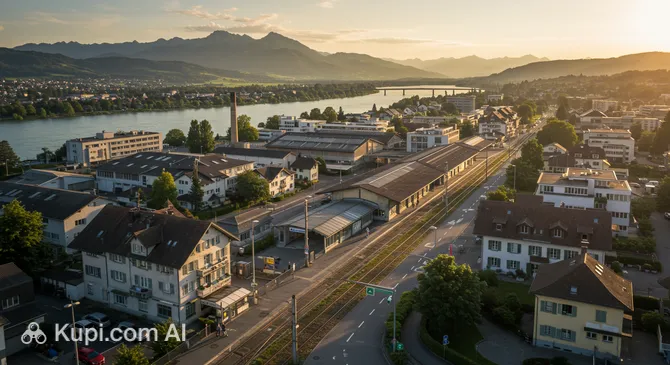
St. Margrethen is a cozy town located in the picturesque Rhine Valley in the Canton of St. Gallen. Situated in the far east of the country, Switzerland borders Austria here, making the town an important transport and cultural hub. Despite its small population of around 6,000, life here is vibrant thanks to its developed infrastructure and proximity to Lake Constance.

St. Margrethen. Illustration.
Source: Kupi.com AI

Its geographical position has influenced the development of the region for centuries. The fascinating history of St. Margrethen is inextricably linked to the river and its border status, which turned it into a kind of "gateway" to the country. Today, the town attracts visitors with its calm atmosphere and the mild microclimate of the river valley.

Among the main attractions, the popular Mineralheilbad thermal complex stands out, offering a relaxing getaway in mineral pools and saunas. Fans of fortifications will be impressed by the Heldsberg fortress museum, which is carved directly into the rock and was a secret facility for a long time. In addition, the picturesque surroundings of the old Rhine riverbed (Alter Rhein) are ideal for hiking and cycling in the fresh air.

St. Margrethen is an excellent choice for those seeking a harmonious combination of wellness, educational excursions, and nature before continuing their journey through the Alps.

Weather Overview

The climate in St. Margrethen can be characterized as temperate, with a mild change of seasons typical for the Rhine Valley. Summer here is comfortable and not exhaustingly hot: in July and August, the average temperature stays at around 18.5°C, while during the day the air warms up to 22.8°C. This is a wonderful time for walking; however, it is worth remembering that even in the summer months, the number of days with precipitation reaches 17, so an umbrella will be a traveler's loyal companion.

Winters in the town are cool but generally without severe frosts. In January, the average temperature is 0.3°C, sometimes dropping to -2.8°C at night. Transitional seasons can be changeable; for example, May is often the wettest month of the year (up to 19 days with precipitation). To choose the ideal dates for your trip, we recommend checking the detailed weather in St. Margrethen before planning your itinerary.

In general, expect a warm summer with occasional rain and cool winters with temperatures around zero. September is also a favorable time for a visit: the air warms up to a comfortable 14.4°C, and nature is colored in picturesque autumn tones.

Average monthly temperature

Average monthly precipitation

Interesting Facts

In addition to the main attractions, St. Margrethen holds many fascinating secrets and historical features related to its unique border location. This small town will surprise you with the scale of its underground structures and the unexpected scope of its commercial life.
  • Secrets inside the mountain. The famous Heldsberg Fortress, which was a classified military facility for a long time, goes hundreds of meters deep into the rock. Hidden inside the mountain is an entire network of tunnels with a total length of about 1,000 meters, where barracks, a kitchen, and even a hospital have been preserved, once ready to accommodate a garrison for completely autonomous living.

  • International scale shopping. Despite the town's modest population, it is home to one of the largest malls in the region. The Rheinpark Shopping Center attracts thousands of shoppers not only from Switzerland but also from neighboring Austria, making the town a bustling center of border trade.

  • Two beds of one river. The town's geography was artificially changed during large-scale hydraulic engineering works in the 19th and 20th centuries. Modern St. Margrethen borders the so-called "Old Rhine" (Alter Rhein)—the river's former bed, which, after the current was straightened, turned into a quiet and picturesque recreation area popular for swimming in the summer.

  • A strategic crossroads. Thanks to its location in a "triangle" of borders, the town has served as a vital customs and transport hub for centuries. Historically, key routes connecting southern Germany and Austria with Switzerland's Alpine passes passed through these lands.

Rheinpark Shopping Center. Illustration.
Source: Kupi.com AI

Traveler photos:

How to Get There

St. Margrethen is located at a strategically important intersection of transport routes connecting Switzerland with Austria and Germany, so getting here is quite simple. You can find out all the details and plan an exact route by following the link: more about how to get to St. Margrethen. Most travelers arrive in the region via major international airports and then use the developed Swiss railway network.

The main air gateway for a trip to this region is Zurich Airport (IATA: ZRH), located 81 km from the town. It is the country's largest aviation hub, receiving flights from all over the world. The most rational way to get from here to St. Margrethen is to take a train right at the station located in the airport building. A trip on a comfortable train will take just over an hour, saving you the need to look for a taxi or transfer.

If you are considering alternative options, look into Friedrichshafen Airport (IATA: FDH). It is located in Germany, just 26 km from St. Margrethen, making the journey very short. Memmingen Allgäu Airport (IATA: FMM) is also popular, as low-cost airlines often fly there. It is 75 km away, and the drive from there takes about an hour.

For clarity, here is a summary of the main airports:

AirportPassenger trafficDistance
Altenrhein Airport84 1007 km
Friedrichshafen Airport339 55626 km
Memmingen Allgäu Airport3.2 mln75 km
Zurich Airport31.2 mln81 km
Innsbruck Airport862 202131 km

The railway is the most convenient, popular, and scenic way to reach St. Margrethen. The Swiss railway system (SBB) works like clockwork. The key hub is Zurich Hauptbahnhof. The travel time from Zurich is about 1.5 hours. Both direct trains and services with a convenient short transfer run regularly. This allows tourists to relax and enjoy the views without worrying about traffic jams.

For those who prefer to travel by car, the drive from Zurich takes about 1 hour thanks to excellent high-speed motorways. Tourists from Germany also often use Stuttgart Central Station (152 km) as a starting point, from where they can continue their journey by train or rental car.

Below is a table with the nearest major railway hubs:

StationPassenger trafficDistance
Zürich Hauptbahnhof154.6 mln83 km
Innsbruck Railway Station14.1 mln135 km
Augsburg Hauptbahnhof18.3 mln138 km
Stuttgart Hauptbahnhof80.3 mln152 km
Basel Badischer Bahnhof7.3 mln154 km

Main Attractions

Despite its modest size, St. Margrethen offers travelers a surprising variety of experiences: from large-scale shopping to immersion in military history and relaxing in thermal waters. The town successfully combines modern infrastructure with a careful attitude toward its natural and historical heritage.

One of the most visited locations is the Rheinpark Shopping Center. This is not just a place for shopping but a true leisure center for the entire region, attracting guests even from neighboring Austria. Dozens of famous brand stores, restaurants, and cafes are gathered here under one roof. Its spacious galleries and convenient location make it an ideal place to spend a rainy day or pick up souvenirs and Swiss delicacies before departure.

Rheinpark Shopping Center. Illustration.
Source: Kupi.com AI

Traveler photos:

For those interested in history and engineering, the Heldsberg Fortress Museum (Festungsmuseum Heldsberg) is a must-see. This unique artillery fortification was built on the eve of World War II and remained a secret facility for many years. Today, the bunker is open to tourists: you can walk through the underground corridors and see the preserved weaponry, barracks, and life-support systems that allowed the garrison to live autonomously inside the mountain.

If you are looking for tranquility and wellness, look no further than Mineralheilbad St. Margrethen. This modern thermal complex is famous for its mineral water pools, which possess healing properties. In addition to the baths, there is a magnificent sauna world where you can relax after long walks and enjoy a peaceful atmosphere with views of the surrounding landscapes.

Nature lovers should head to the Old Rhine (Alter Rhein). This area, formed after the river's course was diverted, has turned into a picturesque nature reserve. There are convenient hiking and cycling paths, and in summer, locals and tourists come here to swim in the clean water and have picnics on the shore, enjoying the quiet away from the city bustle.

Local Cuisine

The gastronomic scene in St. Margrethen is inextricably linked to the traditions of the Canton of St. Gallen and the influence of neighboring Austria. Hearty, simple, yet incredibly high-quality food is valued here. The main culinary symbol of the region is the famous St. Galler Bratwurst. It is customary to eat this veal sausage without mustard so as not to overpower the delicate taste of the meat and spices—locals take this rule very seriously. It is often served with crispy rösti (potato pancake) or a fresh onion sauce.

A unique feature of the Rhine Valley is a dish called Rheintaler Ribel. This traditional meal is made from a special type of corn, resembling polenta but with a more crumbly texture. Ribel has Protected Designation of Origin (AOP) status and is often served for breakfast with white coffee or as a side dish for meat. For those with a sweet tooth, try the biberli gingerbread with almond filling—a perfect souvenir from eastern Switzerland.

As for drinks, the region is famous for its white wines, the grapes for which are grown on the sunny slopes of the Rhine Valley. On a hot day, the best choice is a glass of local Riesling-Silvaner. Among non-alcoholic drinks, Rivella is universally popular—a soda based on milk whey that the Swiss consider their national treasure. You can also always find excellent beer from the region's oldest breweries in local bars.

The dining culture in the town is diverse: from cozy family inns (Gasthof) to modern establishments. For tourists wishing to combine lunch with shopping, the Rheinpark Shopping Center is a major draw. It features a large food court and restaurants where you can grab a quick snack or a full meal, enjoying a wide selection of international and local dishes.

Travel Tips

A trip to the border town of St. Margrethen promises to be comfortable and fulfilling if you take into account a few important nuances in advance. We have compiled practical recommendations for you that will help you feel confident in this cozy corner of the Canton of St. Gallen and avoid typical tourist mistakes.

  1. Clothing and equipment. The weather in the Rhine Valley can be changeable. The best principle for choosing a wardrobe is layering: even in summer, it's worth bringing a light jacket or raincoat, as rain is not uncommon here. If you plan to visit the Heldsberg Fortress Museum or walk along the Old Rhine, be sure to wear convenient footwear with flat soles suitable for walking on uneven terrain.
  2. Transport and navigation. The town is compact, and its center is easy to explore on foot. Public transport is ideal for regional travel: trains and buses run strictly on schedule. We recommend installing the SBB Mobile app—it is indispensable for planning routes and buying tickets. Renting a car only makes sense if you plan complex routes into the mountains; a car is practically unnecessary within the town.
  3. Finances and shopping. The official currency is the Swiss franc (CHF). Although Switzerland borders the Eurozone and euros may be accepted in large shops (for example, in Rheinpark), change will be given in francs at an unfavorable exchange rate. It is better to pay by card (accepted almost everywhere) or withdraw some cash from an ATM for small expenses. Remember that shops close quite early (usually at 18:30–19:00) and are closed on Sundays.
  4. Health and water. St. Margrethen is a safe town where you can walk peacefully at any time of day. The tap water here is of excellent quality and safe to drink—feel free to fill your reusable bottles; this will help you save money. Pharmacies are marked with a green cross, but there are few 24-hour points, so it's better to have a basic first-aid kit with you.
  5. Language and communication. Locals speak the Swiss dialect of German, which is very different from standard German (Hochdeutsch), but everyone understands the latter. English is widely spoken, especially in the service industry. Learn a couple of polite words: the universal greeting "Grüezi" (Grüezi) will instantly win over your interlocutor.
  6. Local etiquette. The Swiss value personal space and quiet. It is not customary to talk loudly in public transport (including on the phone). When entering a small shop or an elevator, it is common to greet those present. Punctuality is a way of life here, so arrive on time for excursions or meetings.
  7. What to avoid. Do not cross the street in the wrong place, even if the road is empty—this is considered a sign of disrespect for the rules and can result in a fine. Also, avoid making noise on Sundays and in the evening (after 22:00)—the right to peaceful rest is strictly protected here.
  8. Important border nuance. St. Margrethen is located right on the border with Austria. You might accidentally cross it during a walk or bike ride. Always carry your passport or ID card with you, as despite the Schengen Area, selective document checks by border guards are entirely possible.

We hope these tips help you relax and get the most out of your trip. By following these simple rules, you can easily blend into the rhythm of local life and enjoy Swiss hospitality!

Entertainment & Nightlife

Nightlife in St. Margrethen has its own special, measured rhythm. This is not the kind of town where you will find noisy districts with neon signs and dance floors open until dawn at every turn. The evening atmosphere here is rather intimate and relaxed, focused on cozy gatherings with friends, gastronomic pleasures, and quality rest after a busy day. Locals value peace, so "party" life here gives way to comfort and conversation.

The area around the railway station and major infrastructure facilities remains the center of attraction, even in the evening. If you want to start your evening with some shopping followed by dinner, it's worth visiting the Rheinpark Shopping Center. Although the shops close early by Swiss standards (usually by 19:00, or 21:00 on Thursdays), the restaurants and cafes on its premises and in the vicinity stay open longer. This is a great place to start: you can have a delicious meal while watching the busy life of the border region.

For those seeking true relaxation under the stars, the Mineralheilbad St. Margrethen complex becomes the city's main "night club." The pools and saunas often operate until 22:00, offering a unique opportunity to enjoy warm mineral water with evening lighting. This is a popular form of leisure among couples and groups who prefer wellness over noisy bars. The dress code is appropriate—swimwear—and the atmosphere is as peaceful as possible.

If your heart yearns for dancing and cocktails, locals and tourists take advantage of the geography. St. Margrethen is only a 15-20 minute train ride from the city of St. Gallen, where the canton's student and club life is concentrated. Another popular option is a trip across the border to the Austrian city of Bregenz, famous for its festivals and casinos. Thanks to the excellent night train and bus services, you can return to your hotel even late at night.

Practical tips for evening leisure:

  • Opening hours: Remember that kitchens in most classic restaurants close around 21:30–22:00. If you plan on a late dinner, it is better to book a table in advance or check the operating hours.
  • Safety: St. Margrethen is a very safe town. The streets are well-lit, and you can walk without fear even alone. However, as it is a border town, it is recommended to always carry your ID.
  • Transport: If you stay out late, it's better to call a taxi via an app or by phone; "catching" a car on the street at night can be problematic.

As for daytime entertainment, the town offers excellent opportunities for quiet leisure. In addition to the aforementioned shopping at Rheinpark, you can visit local park areas along the Old Rhine. These are ideal locations for picnics and leisurely strolls, allowing you to recharge your energy before an evening out.

Parks & Museums

St. Margrethen offers guests a wonderful combination of Rhine Valley natural landscapes and fascinating military history. While there are no massive museum quarters here, the existing sites are unique, and Switzerland itself reveals an unexpected side—as a country of powerful fortifications and quiet river backwaters.

A true green oasis is the Old Rhine (Alter Rhein) area. After engineering work to straighten the riverbed, this area turned into a picturesque nature reserve running right along the border with Austria. Shady floodplain forests and water meadows are ideal for leisurely walks, Nordic walking, and cycling. In the summer season, the main attraction is the Strandbad St. Margrethen beach, where you can swim in a natural body of water surrounded by ancient trees and well-kept lawns.

The main cultural and historical site of the town is rightfully the Heldsberg Fortress Museum (Festungsmuseum Heldsberg). This massive bunker, carved directly into the rock, is an important monument of national defense from the World War II era. Visitors can walk through long underground tunnels and see well-preserved artillery pieces, garrison bedrooms, a kitchen, and command posts. An excursion here allows for a deep sense of the history of Swiss neutrality and an inside look at the daily lives of soldiers.

For lovers of panoramic views and sacred architecture, the ancient Church of St. Margaret is a must-visit. The church, which gave the town its name, stands on a hill offering a peaceful view of the tiled roofs and surrounding vineyards. Walking along the trails of Heldsberg hill will also provide excellent opportunities for photography and communion with nature away from the city bustle.

Technical enthusiasts and families with children should check out the Rhein-Schauen Museum, located in the immediate vicinity of the town. Its exhibition is dedicated to the grand history of regulating the wayward Rhine River. Rides on a historic steam locomotive along a narrow-gauge railway along the river dam are especially popular, making it a real adventure for travelers of all ages.

Getting Around

The transport system in St. Margrethen, as in the entire region, works with legendary Swiss precision. Given the town's compact size (population only about 6,000), there is no metro or trams. Public transport is based on trains and an extensive network of buses that are perfectly integrated with each other. The town's railway station serves as a key hub connecting local routes with international lines to Austria and Germany.

For getting around the town and trips to neighboring settlements, it is most convenient to use buses from the RTB Rheintal Bus company. The yellow and white-and-green buses run strictly on schedule, connecting residential areas, the station, and the popular Rheinpark shopping center. The intervals are comfortable, usually ranging from 15 to 30 minutes depending on the time of day and the route. It is important to remember that bus doors do not always open automatically—you need to press the button on the handrail or door.

The fare system here is zonal and part of the OSTWIND fare association. This means that one ticket is valid for both the train and the bus within the selected zones and time. For tourists, the simplest and most cost-effective solution is to use the SBB Mobile or FAIRTIQ apps. These apps eliminate the need to understand complex tariff zones: you simply swipe your finger on the screen before boarding (check-in) and after disembarking (check-out), and the system automatically deducts the lowest possible fare. If you prefer paper tickets, they can be bought at machines at the stops (accepting cards and coins), but this must be done strictly before boarding the vehicle.

For those planning to move around the region a lot, it is worth considering purchasing a day pass (Tageskarte) for the Ostwind zones. Conductors on trains and ticket inspectors on buses are common, and fines for traveling without a ticket are very high, so it's not worth the risk. Public transport starts early in the morning, around 05:00, and ends around midnight. At night on weekends, special night buses may run, but they may require a separate surcharge.

As an alternative to public transport, bicycles are extremely popular in St. Margrethen. Thanks to the flat landscape of the Rhine Valley, cycling here does not require serious physical preparation. Rental points can be found at the railway station. Taxis are available in town, but they are quite expensive, so locals rarely use them. Given the short distances, it is easier and more pleasant to walk to many attractions and shops while enjoying the views.

Accommodation

Accommodation in St. Margrethen is practical and cozy, which perfectly matches the spirit of this small but important transport hub. Since the town is not a large-scale tourist resort, the choice of housing here is limited but quite sufficient for a comfortable stay. Travelers mainly have access to mid-range hotels aimed at transit tourists and business people, as well as traditional Swiss inns (Gasthof) with a homey atmosphere.

In terms of location, the most convenient area to stay is the town center in the immediate vicinity of the railway station. This is an ideal choice for those planning to actively use trains to travel around the Lake Constance region or to neighboring Austria. Another popular area is the vicinity of the Rheinpark Shopping Center. Hotels in this part of town are convenient for car travelers due to their proximity to the motorway and the presence of developed infrastructure: shops, restaurants, and cafes are literally within walking distance.

The price range for housing varies from medium to high, which is typical for Switzerland. It is difficult to find budget hostels here, so budget-conscious tourists should look into private apartments or guesthouses. The cost of a standard double room in a hotel usually starts from 100–120 Swiss francs per night. A quality breakfast is often included in the price, and the level of service remains consistently high even in small family-run hotels.

Booking tip: Although St. Margrethen is not as crowded with tourists as Zurich or Lucerne, the number of rooms is small. We recommend booking your accommodation in advance, especially if your trip falls during the summer season or holiday periods. To find the best deals, it is better to use major international online platforms and compare prices 2–3 months before your arrival date.

Nearby Cities

For those looking to explore the surrounding area, St. Margrethen serves as an excellent starting point for day trips to several interesting nearby locations. Thanks to its convenient location and efficient transport system, travelers can easily reach the cultural centers and natural beauty of Eastern Switzerland.

Only a 20-minute drive away is St. Gallen—the regional capital and a true treasure trove of history. People come here to see the famous Abbey District with its library, a UNESCO World Heritage site. A walk through the old town with its painted oriel windows and cozy squares will provide plenty of aesthetic pleasure.

For a break by the water, Kreuzlingen, located on the shores of Lake Constance, is a great fit. It is the largest Swiss city on the lake, bordering the German town of Konstanz. Here you can visit the magnificent Seeburg Park, enjoy views of the water, or go on a boat cruise.

If you want to immerse yourself in the atmosphere of the traditional Swiss countryside, head to Herisau. This small town, surrounded by green hills, serves as the gateway to the picturesque Appenzell region. It attracts tourists with its authentic architecture and numerous hiking trails in the fresh air.

CityPopulationDistance
Heerbrugg4 km
Lustenau22 8214 km
Widnau9 6165 km
Altenrhein2 3006 km
Hard13 4956 km

These nearby destinations offer insight into the diverse culture and landscapes of the region, making your stay in St. Margrethen even more fulfilling.

Shopping & Souvenirs

Shopping in St. Margrethen is a phenomenon that pleasantly surprises many tourists. Despite the town's modest size, it serves as an important commercial center for the entire Rhine Valley region, attracting shoppers not only from the surrounding Swiss villages but also from neighboring Austria. You can find everything here: from daily necessities to branded clothing and electronics, all located very compactly and conveniently.

Unlike large metropolises, St. Margrethen does not have long pedestrian streets lined with boutiques. Commercial life here is organized differently and is concentrated mainly in large complexes and the railway station area. This saves travelers from having to move long distances around town in search of what they need—everything is literally within walking distance.

The main draw for shopaholics is the Rheinpark Shopping Center. This large-scale mall offers a huge selection of clothing, footwear, sporting goods, and cosmetics shops under one roof. It features both well-known international brands and local Swiss labels. Spacious galleries, a large supermarket, and recreation areas make it an ideal place for family shopping, especially in inclement weather.

As for markets, there are no large permanent bazaars in the town; however, seasonal fairs and small farm shops allow you to buy the freshest products of the region. Special attention should be paid to local cheeses and meat delicacies, which are often sold in specialty departments or small shops at farms in the surrounding area.

When choosing souvenirs, look for the gastronomic symbols of the region. A bottle of white wine from the Rhine Valley vineyards or traditional "biberli" gingerbread with almond filling makes a great gift. Famous Swiss chocolate, high-quality pocket knives, and textiles reminiscent of the rich history of embroidery in neighboring St. Gallen are also popular.

When planning your shopping trip, keep the operating hours in mind. Most shops are open from 09:00 to 18:30 or 19:00 on weekdays, and on Thursdays, closing times are often extended to 20:00 or 21:00. On Saturdays, shops close earlier, around 17:00, and Sunday is a day off for everyone except small kiosks at the station. Cards and Swiss francs are widely accepted. Euros may be accepted in large shops, but change will be given in francs at a less favorable exchange rate.

For tourists residing permanently outside of Switzerland, a VAT refund system (Tax Free) is available. If your purchase amount in one store exceeds 300 francs, remember to ask for a special receipt (Tax Free Form). When leaving the country, you can get a partial refund by presenting your purchases and documents at customs or at special refund points.

Reached the end of the page?

That means the route is fully explored