Support

Xingang

About

Xingang is a charming and cozy town located in the heart of Taiwan, on a picturesque plain surrounded by green hills and endless rice fields. The town is situated in the central part of the island, where a warm subtropical climate prevails, promoting lush vegetation and fertile lands. Thanks to this favorable location, the surroundings of Xingang delight the eye with vibrant greenery and the leisurely rhythm of rural life.
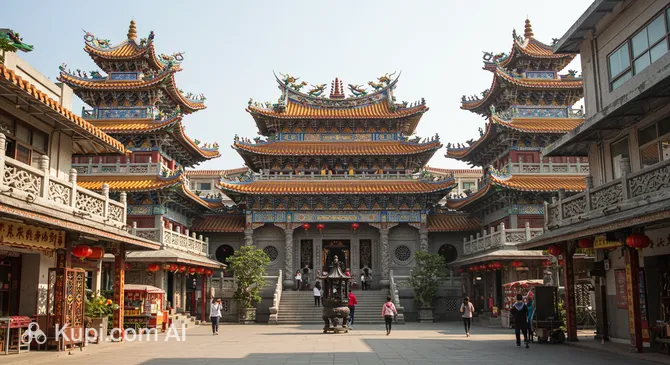
Xingang. Illustration.
Source: Kupi.com AI

Xingang has a population of about 30,543 people, creating the atmosphere of a compact and friendly community where local traditions are carefully preserved. The town is part of Chiayi County, known for its rich cultural heritage. Past and present blend wonderfully here: ancient temples, which are an important part of cultural life, peacefully coexist with modern establishments, while narrow streets invite you for leisurely strolls, immersing you in an atmosphere of tranquility and comfort.

Xingang attracts travelers seeking an authentic experience and wishing to relax from the urban bustle. One of the town's key features is its traditional architecture, which can be observed while walking through its streets. Tourists can also get acquainted with the life of local farmers and, of course, discover the gastronomic treasures of the region by trying local cuisine. Furthermore, Xingang often serves as a convenient starting point for exploring central Taiwan, with easy access to national parks, scenic mountain trails, and hot springs.

If you want to immerse yourself in true Taiwanese culture and enjoy the peace and beauty of nature, Xingang will be an excellent choice for your journey.

You can find more interesting facts on the Xingang city history page.

Weather Overview

The weather in Xingang is characterized by a warm climate all year round. Winters (December-February) are mild, with an average temperature of about 17-19°C and minimal precipitation, usually no more than 2 mm per month. Summers (June-August) are hot and humid, with the average temperature staying at 27-28°C, and precipitation increases significantly, reaching 13 mm, with the highest number of rainy days. Spring and autumn are transitional seasons with moderate temperatures and rainfall.

Expect a hot, humid summer with frequent rains and a warm, relatively dry winter. To get more detailed information about weather conditions, you can visit the Xingang Climate page.

Average monthly temperature

Average monthly precipitation

Interesting Facts

Beyond its obvious charms, Xingang holds many surprising stories and cultural features that reveal themselves only to the most curious travelers. Here are a few interesting facts about this town:

  • The famous Xingang Fengtian Temple, dedicated to the goddess Mazu, is not just a revered sanctuary. It becomes the center of one of the most impressive annual events in Taiwan—the grand Mazu pilgrimage, attracting thousands of believers from all over the country seeking the blessing of the patroness of sailors and fishermen.

  • Xingang is proud of its living artistic traditions. Ancient crafts, such as the creation of exquisite traditional lanterns and master wood carving, still flourish here. The works of local artisans regularly grace national exhibitions and festivals, showcasing unique mastery.

  • One of Xingang's old streets, according to local legends, was a favorite meeting place for lovers whose romantic stories inspired poets and artists. In the town's outskirts, you can find authentic farmhouses built in a unique Taiwanese style with characteristic curved roofs and brightly decorated facades.

  • Town festivals in Xingang are more than just colorful spectacles. During seasonal and family celebrations, you can not only see bright processions and the launching of sky lanterns but also participate in calligraphy workshops open to everyone wishing to join the local culture.

How to Get There

When planning a trip to this cozy corner of Taiwan, it is important to think through your route in advance, as the town itself does not have its own airport or railway station. However, the island's developed transport network makes it easy to get here from neighboring large centers. You can find out more about how to get to Xingang by choosing the most convenient method for you.

Since there is no airport in the town of Xingang, travelers usually fly into one of the airports in neighboring cities and then continue their journey by land transport. The closest to the town is Tainan Airport (TNN), located in Tainan, about 69 km from Xingang. A trip from here by taxi or bus with transfers may take about 2 hours. This is a convenient option for domestic flights or flights from some Asian countries.

For international travelers, larger hubs may be more suitable options. For example, Taichung International Airport (RMQ) in Shalu is at a distance of about 83 km. The journey from there will take approximately 2.5 hours. Another significant transport hub is Kaohsiung International Airport (KHH), located in Kaohsiung (about 109 km from Xingang). This is a major airport with high passenger traffic, receiving many international flights; the journey to Xingang from there will take about 3 hours.

For clarity, here is a summary of the main airports:

AirportPassenger trafficDistance
Chiayi Airport100 00011 km
Tainan Airport469 33869 km
Taichung Airport2.1 mln72 km
Magong Airport2.4 mln73 km
Taichung International Airport2.1 mln83 km

As for rail connections, there is no railway station in the town of Xingang itself. However, this is not a problem thanks to its proximity to the city of Chiayi, which serves as the main gateway to the region. Tourists often use High-Speed Rail (HSR) or regular trains (TRA) to reach stations in Chiayi.

Upon arrival at Chiayi HSR Station or Chiayi TRA Station, you can use local buses or taxis to cover the remaining short distance to Xingang. A taxi ride from the center of Chiayi to Xingang usually takes about 20-30 minutes, making this route very comfortable and popular among tourists.

Main Attractions

Xingang, nestled in Chiayi County, may not be a metropolis, but it preserves treasures of Taiwan's culture and history that attract curious travelers. Several places stand out in particular and should definitely be included in your itinerary.

The crown jewel of Xingang is undoubtedly the Fengtian Temple. It is one of the oldest and most revered temples in Taiwan, dedicated to the goddess Mazu, the patroness of seafarers. The temple impresses with its magnificent traditional architecture, intricate wood and stone carvings, and vibrant paintings. It is an important pilgrimage center, especially during the grand annual Dajia Mazu procession, when thousands of believers accompany the goddess's statue. Visiting Fengtian Temple is an opportunity to touch Taiwan's spiritual traditions and admire the craftsmanship of ancient architects.

Another fascinating place is the Bantaoyao Crafts Village. Here, you can learn about unique types of Taiwanese art: Koji pottery and Chien Nien—colorful 3D mosaics that decorate temples. In the village, you can not only see the impressive works of masters but also attend workshops to try creating something with your own hands. Bright sculptures and installations scattered throughout the area create a fairytale atmosphere, making it a perfect spot for walks and photo sessions, especially for families with children.

For those interested in traditional life and folk art, the Dingcaiyuan Rural Museum is worth a visit. It recreates the atmosphere of a Taiwanese village from years past. It houses items of ancient daily life, agricultural tools, and demonstrates traditional crafts, particularly the art of creating paper figures and lanterns. This is a wonderful opportunity to learn more about Taiwan's rural life and its cultural heritage while walking through the authentically decorated grounds.

Local Cuisine

The gastronomy of Xingang is a true immersion into the authentic flavors of Taiwan, where special attention is paid to the freshness of local products. The town is famous for its vegetable dishes and, of course, rice, as it is here in Chiayi County that some of the best varieties on the entire island are grown. Xingang's culinary traditions are carefully preserved and passed down from generation to generation, offering visitors a unique gastronomic experience.

Among the dishes you should definitely try in Xingang, duck meat rice stands out. This hearty and fragrant dish features tender duck meat served with fluffy rice, soy sauce, homemade pickles, and a piquant chili sauce. Another local delicacy is the famous "tea eggs," boiled in a rich broth with tea and spices that give them a unique taste and aroma. Don't miss out on traditional pastries with various fillings, such as sweet bean paste or sweet potato.

The food culture in Xingang is closely linked to lively markets and street food. This is where you can feel the true spirit of the city and try many local snacks. Look out for fried tofu, delicious rice cakes, and, of course, the freshest fruits. Popular drinks include refreshing herbal infusions, which perfectly quench thirst on a hot day. There is little information in public sources about specific local alcoholic beverages; the focus is on traditional non-alcoholic options.

Xingang is also known for its seasonal fruits. Depending on the time of year, you can enjoy juicy lychees, fragrant mangoes, and sweet pineapples grown on local plantations. The harvest period is often accompanied by fairs and small festivals where you can not only taste fresh fruit but also sample various dishes and desserts made from them.

The gastronomic scene of Xingang attracts tourists with its authenticity, use of fresh local products, and the opportunity to get acquainted with traditional Taiwanese cuisine. The town often hosts gastronomic festivals dedicated to the harvest and culinary traditions. Such events are a great opportunity not only to enjoy delicious food but also to learn the secrets of preparing local dishes and perhaps even participate in culinary workshops.

Travel Tips

Welcome to Xingang! To ensure your journey through this charming corner of Taiwan goes smoothly and leaves only pleasant impressions, we have prepared some practical tips.

  1. Clothing and Essentials: The climate in Xingang, like most of Taiwan, is subtropical—this means hot and humid summers and mild, short winters. In summer, bring light, breathable clothing made of cotton or linen. During the winter months (December-February), a light jacket or sweater will be useful, especially for evening walks. Be sure to bring comfortable walking shoes, as you will certainly want to explore the town and its surroundings. Don't forget sunscreen, a hat, and mosquito repellent, especially if you plan trips into nature. For electronics, you will need an adapter: Taiwan uses Type A and B sockets (American style) with a voltage of 110V. When visiting temples, such as the famous Fengtiangong Temple in Xingang, it is customary to dress modestly—shoulders and knees should be covered.
  2. Transport in the Town: Xingang is a small town, and it is quite comfortable to move around its center on foot. For longer trips across Chiayi County, you can use local buses; it's best to check the schedule on-site or online in advance. Taxis are available in Xingang, but there may not be as many as in large metropolises. Popular taxi-hailing apps in Taiwan (for example, Uber or local equivalents like Taiwan Taxi 55688) may work, but it is better to check their availability and coverage directly in Xingang. Renting a car can be an option for exploring the region, but note that an international driving permit is required, and traffic can be quite heavy.
  3. Finance: The official currency of Taiwan is the New Taiwan Dollar (TWD). It is best to exchange currency at banks or official exchange points at the airport upon arrival or in larger cities, as the choice in Xingang itself may be limited. Credit cards (Visa, Mastercard) are accepted in hotels, large shops, and some restaurants. However, in small cafes, markets, and local shops, cash is preferred. Check the possibility of card payment in advance and ensure your international cards will work. ATMs can be found, but it's better to have some cash on hand. An approximate daily budget (excluding accommodation) can range from 800 to 2000 TWD, depending on your plans. Tipping in Taiwan is usually not mandatory, as a service charge is often included in the bill (about 10%), but you can always leave a small amount for exceptionally good service.
  4. Health and Safety: Pharmacies (藥局 - yàojú) are available in Xingang, where you can purchase over-the-counter medications. For serious medical assistance, it is better to contact clinics or hospitals in the larger city of Chiayi. Having travel medical insurance is highly recommended. Xingang, like Taiwan in general, is considered a very safe place for tourists. The crime rate is low. Nevertheless, observe standard precautions: watch your belongings in crowded places and do not leave valuables unattended.
  5. Communication: The main language of communication is Chinese (Mandarin). In the tourism sector and among young people, some may speak English, but do not rely on this everywhere, especially in smaller towns like Xingang. Learn a few simple phrases in Mandarin: "你好" (Nǐ hǎo – Hello), "谢谢" (Xièxiè – Thank you), "对不起" (Duìbuqǐ – I'm sorry), "多少钱?" (Duōshao qián? – How much is it?). Local residents will greatly appreciate this. You can buy a local SIM card with internet access at the airport or at mobile service centers (e.g., Chunghwa Telecom, Taiwan Mobile, FarEasTone). Wi-Fi is widely available in hotels, cafes, shopping centers, and even in some public places (iTaiwan). Offline maps and translator apps will be useful.
  6. Local Etiquette: Taiwanese people are known for their friendliness and hospitality. Politeness and respect are important when communicating. A slight nod of the head when greeting or saying goodbye is the norm. When visiting temples, behave quietly, do not photograph people praying without permission, and follow instructions. When giving or receiving anything (for example, a business card or a gift), it is customary to do so with both hands or with the right hand while supporting it with the left under the elbow—this is a sign of respect. Avoid pointing at people with your finger; it is better to use an open palm.
  7. What to Avoid: Try not to initiate or delve into discussions on sensitive political topics, especially concerning the status of Taiwan and its relations with mainland China, if you do not want to put your interlocutor in an awkward position. Also, while at the table, do not stick chopsticks vertically into a bowl of rice—this resembles incense used at funerals and is considered a bad omen.
  8. Extra Tip: Xingang is famous for its magnificent Fengtian Temple (奉天宮 - Fèngtiān Gōng), dedicated to the goddess Mazu, the patroness of seafarers. This is one of the most important pilgrimage centers in Taiwan. If your trip coincides with one of the many temple festivals (especially the celebration of Mazu's birthday, usually in the spring), you will witness an incredibly colorful and authentic event. Check the schedule of local events—it could become a real highlight of your journey.

We hope these tips help you better prepare for your trip to Xingang and fully enjoy the hospitality and unique atmosphere of this town in Chiayi County. We wish you unforgettable impressions from your travels across Taiwan!

Entertainment & Nightlife

When the sun sets over Xingang, this charming town in Chiayi County offers its own more relaxed and authentic way to spend the evening. Xingang is not a metropolis with a buzzing nightlife and many neon signs, but rather a place where you can immerse yourself in local culture and enjoy Taiwan's hospitality at a measured pace.

Evening entertainment in Xingang is mainly centered around gastronomy and slow-paced relaxation. The town comes alive with numerous snack bars and small restaurants offering Taiwanese cuisine, many of which stay open until late evening. This is a wonderful opportunity to try local delicacies in an authentic setting. In some areas, especially near busy streets or market squares, evening markets may operate where you can not only grab a bite but also purchase souvenirs. As for nightclubs or large bars, it should be noted that Xingang is not famous for such establishments. You are unlikely to find a list of big names or famous dance floors here. Instead, you can discover small local bars or traditional tea houses where it's pleasant to spend time over a drink in the company of friends or while watching city life. Since such places are often oriented towards a local audience and may not be widely known outside the town, the best way to find them is to walk along the central streets or ask for advice from locals.

The atmosphere of Xingang at night is usually very relaxed and friendly. The crowd is mostly local—families and groups of friends enjoying dinner or an evening stroll. The dress code in most places is casual; formalities are unnecessary here. Establishments generally stay open until late evening, but do not expect 24-hour parties; life here usually quietens down around midnight or slightly later, especially on weekdays. The main activity is concentrated on streets with many cafes and restaurants, as well as near night markets, if they are open.

When planning your evening leisure, it's best to go out for a walk or dinner in the early evening hours. Prices in local establishments are generally very affordable, making dining out a pleasant part of the trip. Moving around the central part of Xingang in the evening is convenient on foot, as the town is small. For longer trips or returning to your hotel late at night, you can use taxi services. It is recommended to have your hotel address written in Chinese or use a ride-hailing app if possible.

Xingang is considered a fairly safe place, including in the evening. However, as with any trip, you should observe standard precautions: keep an eye on your belongings and avoid poorly lit and deserted areas late at night. You can call a taxi by asking the staff at a restaurant or hotel, or by using available mobile apps for ordering a taxi.

During the day, Xingang also offers interesting leisure options. The town is known for its temples, primarily the majestic Xingang Fengtian Temple, which is an important center of religious and cultural life. You can also visit small local markets to learn more about the products and traditions of the region, or simply stroll through the city streets, enjoying the calm atmosphere.

In general, evening in Xingang is an opportunity to relax from the hustle and bustle of big cities, enjoy delicious food, and the hospitality of local residents, immersing yourself in the steady pace of life in the Taiwanese countryside.

Parks & Museums

Despite its relatively small size, Xingang offers travelers an interesting combination of opportunities for outdoor relaxation and exploring cultural heritage. Here you can enjoy the tranquility of green zones and learn more about local history and traditions.

For nature lovers and active recreation enthusiasts, the Dengfeng Trails are an excellent choice. These historical walking routes pass through picturesque hills and forests surrounding Xingang. A walk along the Dengfeng Trails is a wonderful opportunity to enjoy fresh air, silence, beautiful panoramic views, and get acquainted with the natural diversity of the region. The routes are suitable for leisurely strolls and help you relax from the city bustle, restoring your strength in the lap of nature.

Another interesting place for walking is the Bantaoyao Crafts Village. Although it is widely known for its crafts, it can also be viewed as a kind of open-air gallery park. The area is decorated with numerous colorful sculptures skillfully integrated into the landscape, making a walk through the village fascinating and aesthetically pleasing. This is a great place for leisurely time outdoors surrounded by original art objects.

To gain a deeper understanding of Xingang's history and culture, it is worth visiting the Dingcaiyuan Village Museum. This museum is dedicated to preserving and demonstrating local heritage, telling visitors about the history of the community, the traditional way of life, and the development of the region. Displays may include household items from past eras, old photographs, agricultural tools, and artifacts related to local customs and beliefs. A visit to the Dingcaiyuan Museum allows for a better understanding of Xingang's roots and identity, offering a glimpse into the daily life of its residents in the past.

For total immersion in the town's atmosphere, stop by the traditional markets of Xingang. Here you can try various local delicacies, fresh fruits, and observe the daily life of the townspeople. Additionally, besides the large and well-known temples, you can discover smaller but no less authentic and colorful sanctuaries in the town and its surroundings, each holding its own unique history and traditions, offering a more secluded experience of spiritual life.

Getting Around

Public transport in Xingang is primarily represented by a bus network. Buses connect various districts of the town and provide links to nearby settlements and larger transport hubs in Chiayi County. For tourists, this is the most accessible and economical way to travel medium and long distances within the region.

The fare payment system on Xingang's buses, as in most of Taiwan, is quite convenient. You can pay with cash directly to the driver (it is recommended to have small bills and coins, as change is not always provided). However, a much more practical option is using rechargeable transport cards, such as EasyCard (悠遊卡) or iPASS (一卡通). These cards are accepted in almost all types of public transport across Taiwan, as well as in many convenience stores. You can purchase and top up the card at most chain convenience stores (e.g., 7-Eleven, FamilyMart), at major bus stations, or in the subways of large cities.

Tourists planning to use buses in Xingang should note a few things. Schedules and routes are usually posted at stops (often in Chinese, but key points may be duplicated in English). Card payment is made upon entry or exit (follow the instructions or the example of other passengers). To get off at the desired stop, press the signal button to the driver in advance. Buses typically run from early morning until late evening, but frequency may decrease in the evening hours and on weekends. It is recommended to check the current schedule in advance, especially if you plan a trip on a less popular route.

As an alternative to public transport, taxi services are always available in Xingang. This is a more expensive but comfortable and fast way to reach your destination, especially if you are traveling with luggage or at night. Taxis can be found at special stands or called by phone. For exploring Xingang itself and its immediate surroundings, especially if the weather permits, you might consider renting a bicycle. This will allow you to move at your own pace and discover interesting corners of the town.

Accommodation

In Xingang, you will find a variety of accommodation options suitable for different budgets and preferences. The town offers both cozy guesthouses and more traditional hotels, allowing every traveler to find something for themselves.

Tourists can choose between affordable options, such as hostels or guesthouses, which are perfect for budget travelers, and mid-range hotels offering greater comfort and an expanded range of services. Room rentals or small apartments may also be available for those looking for a more homelike setting.

When choosing a place to stay in Xingang, you should pay attention to its location. Some travelers prefer to stay in the central part of the town for easy access to local cafes and shops, while others may choose quieter areas if they are closer to the attractions they are interested in or have convenient transport links.

It is strongly recommended to book accommodation in advance, especially if your trip coincides with the peak tourist season, local holidays, or festivals. Early booking not only guarantees availability but often allows you to get better prices.

The primary booking methods are popular international and local online platforms, where you can easily compare options, read reviews from other guests, and choose the most suitable hotel or guesthouse. The price range in Xingang varies from budget to mid-range, making it possible to find an accommodation option for any wallet.

Nearby Cities

For those who want to explore the surroundings, Xingang serves as an excellent starting point for day trips to several interesting nearby locations. Each of them offers something unique, allowing you to get deeper acquainted with the culture and nature of the region.

For example, Chiayi, located just 13 kilometers away, is a major city and an important transport hub. Here you can visit the picturesque Chiayi Park, the Hinoki Village cultural complex dedicated to the history of Taiwan's timber industry, or explore the Wenhua Night Market with its many culinary delights. This is an excellent option for those interested in urban culture and history.

Another interesting option is Minxiong, located even closer, just 10 kilometers from Xingang. This small town is known for its quiet atmosphere and local products, such as pineapples. A trip here will allow you to immerse yourself in a more relaxed rhythm of life and perhaps visit local markets or small temples reflecting authentic Taiwanese flavor.

CityPopulationDistance
Beigang40 9885 km
Taibao38 6967 km
Xikou13 6587 km
Minxiong70 31610 km
Shuilin23 13411 km

These nearby destinations provide insight into the diverse culture and landscapes of the region.

Shopping & Souvenirs

Shopping in Xingang offers tourists the opportunity to immerse themselves in the atmosphere of a traditional Taiwanese town and purchase unique local goods. Instead of massive modern malls, you will find authentic shops, family-run stores, and markets where the focus is on local delicacies, handicrafts, and souvenirs related to the rich culture and history of the region. Xingang is especially famous for its traditional sweets and products associated with the renowned Fengtian Temple.

The main shopping spots in Xingang are concentrated around the central streets and, in particular, near Fengtian Temple. Walking through these streets, you will discover many shops selling local specialties, religious paraphernalia, tea, and souvenirs. These are not so much organized shopping districts in the European sense, but rather lively streets where trade is an integral part of everyday life.

Large modern shopping centers, characteristic of big cities, are rarely found in Xingang. Shopping here has a more traditional character. Instead, look for small specialized shops where you can find high-quality locally produced goods and chat with friendly sellers.

Markets play an important role in the commercial life of Xingang. You may come across traditional morning markets, where locals buy fresh produce, fruits, vegetables, and prepared dishes. Although Xingang is not as famous for night markets as Taiwan's large cities, stalls with street food and souvenirs may appear near Fengtian Temple or on central streets in the evenings, creating a lively atmosphere. Look for signs or ask locals about the location of the nearest markets—it's a great way to experience local culture.

Be sure to bring local delicacies back from Xingang. The town is famous for its "Xingang candy" (新港飴, Xingang Yi)—a traditional sweet based on malt, peanuts, or sesame, which makes an excellent gift. You should also pay attention to other local products, such as peanuts, sesame oil, and items related to Fengtian Temple, such as amulets or incense. Quality tea is also grown in the vicinity of Chiayi County and can be found in local shops.

Most shops in Xingang usually open from late morning (around 10:00-11:00) and operate until evening (20:00-21:00). Markets have their own schedules: morning markets start early in the morning and close by noon. Regarding payment, in small shops and markets, it is preferable to have cash (Taiwanese dollars). In larger stores and some tourist shops, credit cards may be accepted, but it is better to clarify this in advance.

For tourists making purchases in Taiwan, there is a Value Added Tax refund system (VAT Refund Scheme, TRS). If you make purchases of a certain amount in stores participating in this program (look for the Tax Free logo), you can apply for a tax refund upon leaving the country. Keep your receipts and check the application procedure with the sellers.

Reached the end of the page?

That means the route is fully explored