Support

Budai

About

Budai is a charming coastal town located in Chiayi County in southwestern Taiwan. It is famous for its vibrant atmosphere, deeply connected to the sea, and offers a unique blend of natural beauty and distinctive cultural attractions. The town's population is around 25,000 people, giving it a cozy, almost home-like feel.

Budai. Illustration.
Source: Kupi.com AI

One of Budai's most recognizable and unusual modern landmarks, attracting tourists from all over the world, is the High-Heel Wedding Church. This giant installation in the shape of a blue crystal shoe has become a popular spot for photo shoots and a symbol of modern Budai. Equally attractive to visitors is the lively Budai Fish Market. Here, you can not only purchase the freshest seafood but also try a variety of local dishes prepared right before your eyes. Additionally, Budai is known for its historical salt fields, which were once the backbone of the local economy and today offer picturesque landscapes that are especially beautiful at sunset.

Budai is a wonderful destination for those seeking authentic experiences, wanting to get acquainted with the island's coastal life, enjoy the fresh sea breeze, and discover bright and memorable corners. A visit to Budai will give you the opportunity to feel its unique character and the hospitality of the local residents.

You can find more interesting facts on the history of Budai page.

Weather Overview

The weather in Budai is characterized by a warm climate throughout the year. Summer, especially from May to August, is quite hot and humid, with average temperatures around 26-28°C and maximums reaching 30°C. This period also sees the highest amount of rainfall, with August receiving up to 14 mm, and the number of rainy days can reach 26. Winter, from December to February, is mild, with average temperatures around 18-19°C and minimums rarely dropping below 15°C. Precipitation in winter is minimal, amounting to only 1-2 mm per month.

Spring and autumn are transitional seasons with comfortable temperatures and moderate rainfall. Overall, expect a warm summer with frequent rains and mild, mostly dry winters. For more detailed information, check the weather forecast and monthly averages on the Budai Climate page.

Average monthly temperature

Average monthly precipitation

Interesting Facts

Beyond its famous landmarks, the coastal town of Budai hides many surprising stories and features that make it a truly unique place to visit. Here are just a few interesting facts about this charming corner of Taiwan:

High-Heel Wedding Church. Illustration.
Source: Kupi.com AI

Traveler photos:

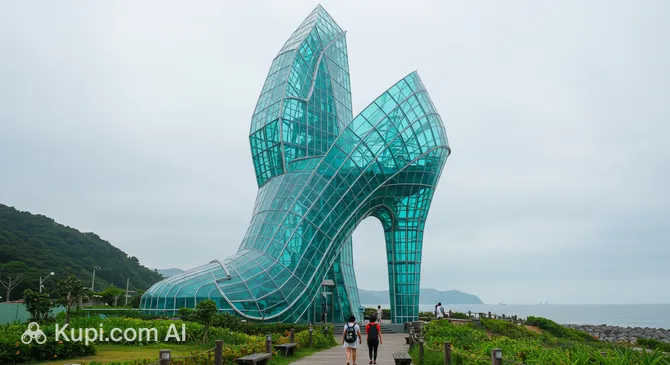
  • The famous High-Heel Wedding Church, made from over 300 blue glass panels, was built not as a traditional religious building, but primarily as a romantic venue for wedding ceremonies and photo shoots. Its unusual design was inspired by a local story about a girl who couldn't get married due to a leg amputation, symbolizing the fulfillment of the dream of a beautiful wedding.

  • Budai rightfully holds the title of the \"oyster capital\" of Taiwan. The town is famous for its oyster farms, and local oyster delicacies, such as oyster omelets, fried oysters, and fresh oysters, can be sampled at the Budai Port Fish Market and in numerous restaurants like Oyster King at Budai Port.

  • In the past, Budai was an important center for the salt industry in Taiwan. Although large-scale salt production is no longer carried out here, some old salt fields have been preserved and turned into tourist attractions where visitors can learn about traditional salt harvesting methods and the history of this trade in the region.

  • The coastal wetlands around Budai are a critical wintering site for the Black-faced Spoonbill—a rare and endangered bird species. Every year, hundreds of these graceful birds fly here, making Budai an attractive destination for birdwatchers and nature enthusiasts.

How to Get There

Budai is a cozy port town, and although it doesn't have its own airport, getting here is quite simple thanks to Taiwan's well-developed transport network. The trip usually involves a flight to one of the island's major cities followed by a journey by ground transport. You can find all the details and plan your route by visiting the how to get to Budai page.

The closest airport to the city is Tainan Airport (IATA: TNN). There is no airport in Budai itself, but you can fly into this hub located in Tainan City, which is about 45.8 km from Budai. It is a regional airport handling a limited number of flights. A taxi or bus ride from here will take about 1 hour and 30 minutes.

For international travelers, the most convenient option is often Kaohsiung International Airport (IATA: KHH). It is located in Kaohsiung City, approximately 89 km from Budai. This is Taiwan's second-largest airport with many international flights. The journey from Kaohsiung to Budai by road will take roughly 2 hours and 30 minutes.

You can also consider Taichung International Airport (IATA: RMQ), located in the Shalu District (Taichung City), about 110 km from your destination. The travel time by taxi is around 3 hours. This option is convenient if you plan to visit the central part of the island before heading to the coast.

For quick reference, here is summary information on the main airports:

AirportPassenger trafficDistance
Chiayi Airport100 00025 km
Tainan Airport469 33846 km
Magong Airport2.4 mln60 km
Kaohsiung International Airport5.9 mln89 km
Taichung Airport2.1 mln100 km

As for rail connections, there is no train station in Budai itself. The nearest major transfer hub is Chiayi City. Travelers usually arrive at the High-Speed Rail (HSR Chiayi Station) or the regular rail station (TRA Chiayi Station) in Chiayi. From there, regular buses run to the coast and Budai, and taxis are also available. The bus ride from Chiayi to Budai takes about 40–60 minutes, making this route one of the most popular ways to reach the town.

Main Attractions

Budai, a picturesque port town in Taiwan's Chiayi County, attracts travelers not only with its seascapes but also with a range of unique attractions. Everyone will find something interesting here: from unusual modern architecture to bustling markets and, of course, magnificent restaurants serving the freshest seafood.

High-Heel Wedding Church. Illustration.
Source: Kupi.com AI

Traveler photos:

One of the most iconic and photographed landmarks in Budai is the High-Heel Wedding Church. This unique architectural creation, built in 2016, consists of over 320 tinted blue glass panels and reaches 17 meters in height and 11 meters in width. The idea for the church came from local authorities to attract female tourists and develop wedding tourism. Although it is called a church and shaped like Cinderella's glass slipper, regular services are not held here; the structure is mainly used for wedding ceremonies and as a popular backdrop for photos, striking in its originality.

Budai Harbor Fish Market. Illustration.
Source: Kupi.com AI

Traveler photos:

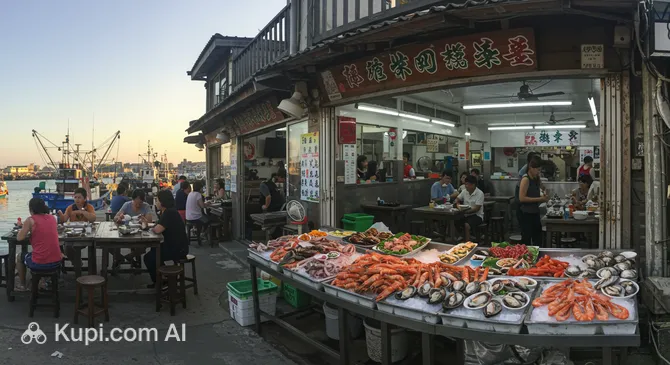
To experience the city's authentic atmosphere and taste the bounty of the sea, a visit to the Budai Port Fish Market is a must. It is not just a marketplace, but the true epicenter of the city's maritime life and one of the largest fresh seafood markets in the Chiayi region. Work begins early in the morning: fishermen unload their fresh catch, lively auctions take place, and stalls overflow with a variety of fish, shrimp, crabs, oysters, and other marine delicacies. Tourists can not only purchase the freshest products but also observe the colorful market hustle and bustle, or ask to have their chosen seafood prepared at one of the many cafes right on the market grounds. This is an excellent place to feel the authentic spirit of a coastal Taiwanese town.

Budai Pinxian Seafood Restaurant. Illustration.
Source: Kupi.com AI

Traveler photos:

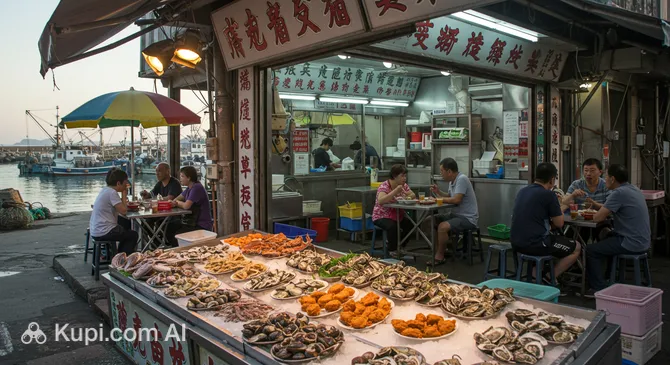
For those looking for another great spot to sample the fruits of the sea, the Pinxian Seafood Restaurant in Budai is worth noting. This establishment is famous for its wide assortment of fresh seafood prepared in a traditional Taiwanese style. Guests can choose live fish or other marine delicacies directly from the tanks, which are then skillfully prepared by local chefs. The restaurant is popular among both locals and tourists thanks to its high-quality cuisine and pleasant atmosphere.

Budai Port Oyster Fritter King. Illustration.
Source: Kupi.com AI

Traveler photos:

And, of course, you shouldn't overlook the Oyster King Restaurant at Budai Port. This establishment fully lives up to its name, offering visitors oysters in every possible form: fresh, baked, fried, in soups, and other dishes. It is considered one of the best places in Budai for connoisseurs of this delicacy. In addition to oysters, the menu includes other seafood dishes, making it attractive to a wide range of gourmands who wish to enjoy dinner with a view of the port.

Local Cuisine

The culinary scene in Budai is a true paradise for seafood lovers. As a port town, Budai is famous for the incredible freshness and variety of the bounty of the sea, which forms the basis of the local cuisine. Here, you can enjoy authentic dishes prepared from freshly caught fish, oysters, and other marine delicacies.

The star of the local cuisine is undoubtedly oysters. They are served here in many forms: fresh with a squeeze of lemon juice, grilled with garlic, or as part of the famous Taiwanese oyster omelet (蚵仔煎, o-a-tsian). Besides oysters, be sure to try the fresh fish, steamed with ginger and green onions to preserve its delicate flavor, or fried and grilled. Shrimp, crabs, and squid also hold a place of honor on local menus.

As for drinks in Budai, as in all of Taiwan, tea is popular. You can enjoy fragrant oolong or refresh yourself with the famous bubble tea (pearl tea). Freshly squeezed juices from local tropical fruits are also widespread. Local Taiwanese beer pairs excellently with seafood dishes.

Food culture in Budai is closely linked to the sea. The main gastronomic spots are concentrated near the port. Tourists and locals love visiting the numerous seafood restaurants where you can often choose live seafood from tanks before it's cooked. The Budai Port Fish Market holds a special place — it is not just a market, but a center of gastronomic life where you can not only buy the freshest seafood but also try it on the spot at small snack bars. To sample signature oyster dishes, check out, for example, the Oyster King at Budai Port.

Overall, Budai's dining scene is characterized by freshness, authenticity, and a strong maritime focus. It is a great place to immerse yourself in Taiwan's seafood culture and get unforgettable taste experiences right at the source.

Travel Tips

Planning a trip to Budai? Wonderful! To ensure your journey through this charming coastal town in Taiwan goes smoothly and leaves only pleasant impressions, we have prepared some practical tips.

  1. Wardrobe and Essentials: The climate in Budai is warm and humid, especially in summer. Bring light, breathable clothing made from natural fabrics. Don't forget a raincoat or umbrella for sudden downpours, especially if traveling during the typhoon season (summer-autumn). Comfortable shoes are a must for walking. Sunscreen, a hat, and sunglasses will also come in handy. To charge your gadgets, bring an adapter: Taiwan uses type A and B sockets, and the voltage is 110V. When visiting temples, choose modest clothing that covers shoulders and knees.
  2. Getting Around Town: Budai is a small town, so the main form of public transport here will likely be buses. Taxis are also available. For more flexibility when exploring the surroundings of Chiayi County, you might consider renting a scooter (a very popular mode of transport in Taiwan) or a car, but it's not always necessary for Budai itself. Check for local taxi-hailing apps or bus schedules.
  3. Financial Matters: The local currency is the New Taiwan Dollar (NTD or TWD). You can exchange money at banks or authorized exchange offices. Major hotels and some tourist shops may accept credit cards (Visa, Mastercard), but in small cafes, markets, and local shops in Budai, it is better to have cash. ATMs are quite common and can often be found in 7-Eleven or FamilyMart convenience stores. Tipping in Taiwan is generally not expected, as a service charge is often already included in the bill.
  4. Health and Safety: Pharmacies (look for the character 藥) exist, but 24-hour ones may be rare in small towns. Basic medications can be bought at convenience stores. Taiwan is generally a very safe country, and Budai is no exception. Follow standard precautions: keep an eye on your belongings, especially in crowded places. It is recommended to have travel medical insurance. In emergencies, call 119 (fire/ambulance) or 110 (police).
  5. Communication and Connection: The official language is Mandarin Chinese. Locals may also speak the Taiwanese dialect (Hokkien). English may be common in tourist spots, but in general, knowing a few basic phrases in Chinese will be very helpful: "Ni hao" (你好) – Hello, "Xiexie" (謝謝) – Thank you, "Duoshao qian?" (多少錢?) – How much is it? You can buy a local SIM card with internet access at the airport or at mobile service stores. Wi-Fi is often available in hotels, cafes, and some public places.
  6. Local Etiquette: Taiwanese people are very polite and friendly. A light nod or a smile is a good way to greet people. In public places, try not to speak too loudly. When visiting temples, behave respectfully, don't take photos without permission, and follow local rules (e.g., removing shoes at the entrance). It is customary to use two hands when giving and receiving items (like business cards or money).
  7. What to Avoid: It is best not to start conversations on sensitive political topics unless your interlocutor initiates them. Also, avoid actions that might cause someone to "lose face" (e.g., public criticism). Important: never stick your chopsticks vertically into a bowl of rice – this resembles incense used at funerals and is considered a bad omen.
  8. Local Features – Seafood and Unusual Architecture: Budai is famous for its fishing port and, of course, the freshest seafood. Be sure to visit the local fish market (布袋魚市) and try dishes made from freshly caught fish and other marine delicacies in one of the many restaurants. Another hallmark of Budai is the unique High-Heel Wedding Church, shaped like a giant blue shoe – a popular photo spot and a symbol of modern Budai.

We hope these tips help you better prepare for your trip and fully enjoy the hospitality and beauty of Budai. We wish you an unforgettable journey through Taiwan!

Entertainment & Nightlife

Budai, known for its bustling port and the freshest seafood, offers guests a cozy and authentic atmosphere for evening relaxation. Although there are no noisy districts with nightclubs like in the major metropolises, the town comes alive in its own way after sunset, offering pleasant gastronomic experiences and quiet entertainment.

Mainly, evening life in Budai is concentrated around the port and its adjacent streets, where numerous restaurants and snack bars are located. Here, you can enjoy a magnificent dinner of freshly caught seafood. The atmosphere in such places is usually casual and welcoming, perfect for a family dinner or a meeting with friends. Many restaurants stay open until late evening, especially on weekends. The dress code is generally casual.

One popular spot for dinner is the Oyster King at Budai Port, where you can taste the famous local oysters and other marine delicacies. Another establishment worth mentioning is the Pinxian Seafood Restaurant in Budai, known for its diverse menu and quality service. It's best to arrive in the early evening to secure good seats, especially if you plan to visit popular venues. Prices for seafood dinners can vary but generally remain affordable.

While Budai does not have large nightclubs or concert venues, some local cafes and small bars may offer drinks and light music in the evening. The atmosphere there is calm and conducive to conversation. Occasionally, in the area of the Budai Port Fish Market, you can find some evening activity, especially if night food stalls are operating or local events are being held.

Regarding safety, Budai is considered a quite peaceful town. However, as elsewhere, it is recommended to follow standard precautions, especially during the dark hours. For transportation at night, it is best to use taxi services, which can be called by phone or through apps if they are popular in the region. Ask your hotel staff about reliable taxi services.

During the day, Budai also offers interesting leisure options. You can visit the unique High-Heel Wedding Church — a bright and unusual landmark. Walking around the port, watching fishing boats, and visiting the local market will also bring pleasure. Although there are no large museums or theaters in the town, its charm lies in its authentic port atmosphere and the opportunity to experience the local culture and cuisine.

Parks & Museums

The town of Budai, located in Chiayi County, may not be famous for extensive traditional parks or a large number of classical museums, but it offers its guests unique opportunities to get acquainted with local culture and enjoy the coastal atmosphere. Here you will find special places that will leave a lasting impression.

Instead of formal parks, Budai enchants with its seaside environment. Walks along the coast or in the port area allow you to enjoy the fresh sea air and picturesque views of the Taiwan Strait. This is a wonderful opportunity to take a break from the city's hustle and bustle and feel a connection with nature while watching fishing boats and seascapes. Such walks can be an excellent alternative to visiting traditional park areas.

Budai Harbor Fish Market. Illustration.
Source: Kupi.com AI

Traveler photos:

When it comes to cultural attractions, one of the most vibrant places is the Budai Port Fish Market. It is not just a market, but a real center of local life where you can dive into an authentic atmosphere, watch the fresh seafood trade, and even taste it. for a tourist, this is a kind of \"living museum\" that demonstrates the region's maritime traditions and allows for a deeper understanding of the economy and daily life of a coastal town.

High-Heel Wedding Church. Illustration.
Source: Kupi.com AI

Traveler photos:

Another iconic and very unusual landmark is the High-Heel Wedding Church. This modern architectural structure, made of blue glass, has become a true symbol of Budai and a popular spot for photos. Although it is not a museum in the traditional sense, its unique design and history attract many visitors interested in modern architecture and unusual art objects. Visiting the church provides a glimpse into modern Taiwanese art and creativity.

For an authentic experience, take a walk through the less busy streets of the port district, where you can see the daily life of local residents. You can end the day by enjoying fresh oysters or other seafood at one of the local restaurants, such as Oyster King at Budai Port or Pinxian Seafood Restaurant in Budai, which is also an integral part of the cultural experience in Budai.

Getting Around

When planning your movement around Budai, keep in mind that it is a relatively small town, and the public transport system reflects this. Your primary mode of transport will likely be local and regional buses connecting Budai with other settlements in Chiayi County and larger cities.

Main Types of Transport and Payment:

The main means of transportation in Budai and its surroundings are buses. They run on various routes, linking key points of the town and neighboring areas. It is recommended to check schedules and frequencies in advance, as they can vary, especially in the evenings and on weekends.

The payment system for Taiwanese buses is quite unified. You can pay the fare in cash directly to the driver (it is advisable to have the exact amount as change may not be given) or use universal transit cards such as EasyCard (悠遊卡) or iPASS (一卡通). These cards are very popular throughout Taiwan and can be used not only for transport but also for purchases in shops. You can top them up at most convenience stores (7-Eleven, FamilyMart) and at some stations. Fare costs usually depend on the distance; for short trips around town, they are quite low.

Practical Tips for Tourists:

You can purchase or top up a transit card like EasyCard or iPASS at major transport hubs or at chain convenience stores. When entering the bus (and sometimes when exiting, depending on the fare system of the specific route), you must tap your card on the validator. If paying in cash, drop the coins into the special box next to the driver. Buses usually operate from early morning until evening, but it's best to check the exact schedule at stops or via online services if available for regional routes.

Alternative Ways to Get Around:

For more flexibility and convenience in Budai, you can use taxi services. They can be found at stands near key sites or called by phone. Taxi prices will be higher than the bus, but it's a good option for traveling with luggage or to places not served by public transport.

Scooter rental is also popular in Taiwan, which can be a convenient way to explore Budai's surroundings independently, especially if you have an international driving permit with the appropriate category. In some tourist zones, bicycle rental might also be available, suitable for leisurely rides along the coast or to local landmarks.

There are likely no unique types of transport, such as historical metros or cable cars, directly within Budai itself, given its size. The main emphasis is on bus services and individual means of transport.

Accommodation

When planning a trip to Budai, you will find various accommodation options to suit your budget and preferences. The town offers a choice from more affordable guesthouses and small hotels to comfortable mid-range options. You can also consider renting apartments or rooms, which can be convenient for families or long stays.

When choosing a place to stay in Budai, you should pay attention to areas located near the main attractions, such as the Budai Port Fish Market or the famous High-Heel Wedding Church, as well as those with easy access to transport hubs. Staying in these parts of town will save you travel time and allow you to fully enjoy the atmosphere of Budai.

While specific famous hotels were not highlighted in the provided information, you can generally find cozy family-run hotels and modern guesthouses in Budai. It is recommended to check reviews and ratings on popular booking platforms to find the best option.

Regarding prices, you can find both budget options and mid-range accommodation in Budai. Online platforms are convenient for booking, as they offer a wide choice and the ability to compare prices. Also, don't forget the possibility of direct booking through official hotel websites. Especially during the peak tourist season, it is recommended to book accommodation in advance to ensure the best choice and prices.

Nearby Cities

For those who want to explore the surroundings, Budai serves as an excellent starting point for day trips to several interesting nearby locations:

CityPopulationDistance
Yizhu17 1048 km
Puzi50 00013 km
Lucao14 57915 km
Shuilin23 13424 km
Shuishang48 16425 km

These nearby destinations provide an insight into the diverse culture and landscapes of the region.

Shopping & Souvenirs

Budai, a charming port town in Taiwan, offers a rather specific but interesting shopping experience that differs greatly from the bustle of big cities. You won't find huge shopping malls with global brands here, but you can immerse yourself in the local atmosphere and purchase unique goods, especially those related to the sea and local crafts. The town is famous for the freshest seafood, and this certainly leaves its mark on the range of goods offered.

The main shopping spots in Budai are concentrated in and around the port area. There are no long shopping streets lined with boutiques like in major metropolises. Instead, shopping here is more about searching for interesting stalls and counters scattered along the coastal zone, especially near busy spots like the fish market. This is where you can feel the true spirit of the town and find something authentic.

There are no large modern shopping centers in Budai. The town maintains its traditional way of life, and shopping here is oriented toward local markets and small specialized shops. If you are looking for designer clothes or electronics, it is better to head to Taiwan's larger cities. However, the lack of malls is compensated for by the uniqueness of the local trading spots.

The central shopping destination in Budai is undoubtedly the Budai Port Fish Market. This is not just a place to buy fresh fish and seafood, but a real attraction. Here you will find a wide selection of sea treasures, from freshly caught fish to oysters, shrimp, and crabs. Besides fresh products, the market often sells dried seafood, which makes for excellent edible souvenirs. The atmosphere here is very lively, especially in the mornings when fishermen bring in their catch.

As souvenirs from Budai, you should primarily bring home products related to the sea. These could be various types of dried fish, squid, and shrimp, as well as seafood-based sauces and seasonings. Given the popularity of such an unusual landmark as the High-Heel Wedding Church, you might also find themed souvenirs related to this unique structure. Also, look out for local sweets and handmade items if you come across them.

Shops and markets in Budai usually open in the morning and stay open until evening. The fish market starts its operations early in the morning. Small private stalls may have their own schedules. Regarding payment, cash (New Taiwan Dollar, TWD) is preferred at markets and in small shops. Some larger establishments or restaurants may accept credit cards, but it is always better to carry enough cash with you.

For foreign tourists, a VAT Refund system operates in Taiwan. If you make purchases of a certain amount at shops participating in this program (usually marked with a "Tax Free" sign), you can apply for a tax refund upon leaving the country. In a small town like Budai, there may not be many such shops, but if you are making a large purchase, it's always worth checking for this possibility with the seller.

Reached the end of the page?

That means the route is fully explored