Support

Mae Sai

About

Mae Sai is the northernmost city in Thailand, nestled on the banks of the river of the same name in Chiang Rai Province, right on the border with Myanmar. This city is a unique point where the famous Highway 1, leading from Bangkok to the north of the country, ends and the busy border crossing into the Myanmar city of Tachileik begins. Due to its strategic location, Mae Sai has historically served as an important trade and transit hub between the two countries.

With a population of about 20,000 people, Mae Sai maintains the atmosphere of a cozy and friendly town. Despite its modest size, life is in full swing here: numerous shops, colorful markets, and cafes line the main street, and both Thai and Burmese can often be heard in the streets. Founded in 1956, the city quickly became an important point on the map for travelers, especially those exploring Northern Thailand and the famous "Golden Triangle."
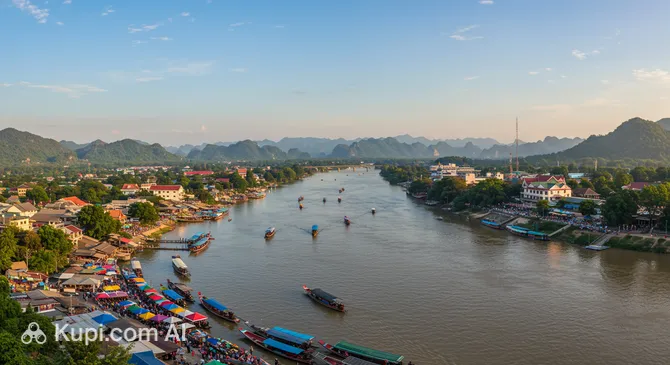
Mae Sai. Illustration.
Source: Kupi.com AI

The main attraction of Mae Sai is its unique border atmosphere. Cultures, languages, and traditions blend here in an amazing way, creating a lively and dynamic space. Bustling markets filled with the aromas of exotic spices and local delicacies invite you to plunge into authentic life at the junction of two worlds. One of the city's key features is the ability to easily cross the border and visit the Myanmar town of Tachileik, which adds an element of real adventure to the trip.

Mae Sai is undoubtedly worth visiting for the vivid impressions, unique souvenirs, and the chance to feel like you are at a crossroads of cultures. This city will give you an unforgettable experience and allow you to touch the unique atmosphere of Southeast Asia's border region.

You can find more interesting facts on the Mae Sai city history page.
Weather Overview

The weather in Mae Sai is characterized by a warm climate throughout the year. The hottest months are April and May, when the average temperature reaches 26-27°C. In April, the maximum temperature can rise above 33°C, and in May, up to 32.3°C. The coolest months are December and January, with an average temperature of about 19°C and minimum values around 13-14°C.

Expect a hot and humid summer with heavy rainfall, especially from June to September when the number of rainy days is at its maximum, and cooler, drier winters, especially from December to March. The highest amount of rainfall occurs in August (averaging 15 mm), and the lowest in January, February, March, and December (about 1 mm). To find out more details, check out the detailed information on the Mae Sai climate.

Average monthly temperature

Average monthly precipitation

Interesting Facts

In addition to its obvious advantages as a border town, Mae Sai hides many interesting details and stories that make it a truly unique place. This city in the north of Thailand is not just a transit point, but a place with its own character and amazing features.

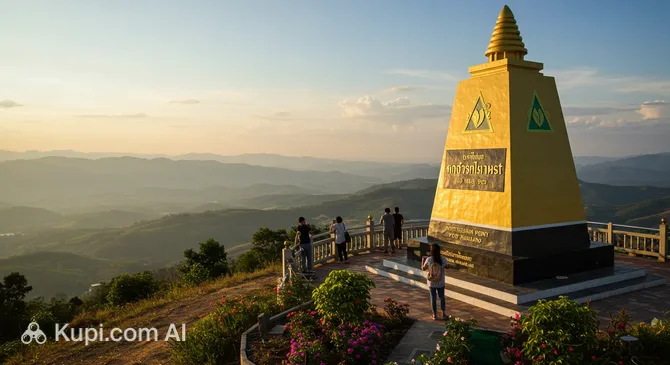
Northernmost Point of Thailand. Illustration.
Source: Kupi.com AI

Traveler photos:

  • Mae Sai is not just a city, but the northernmost point of Thailand. This is where the country's main highway ends, hitting the border with Myanmar. At the entrance to the city, travelers are greeted by the iconic Northernmost Point of Thailand monument, symbolizing the "Northern Gate of Thailand."

  • The city is famous for its huge border market, where you can find almost everything from local delicacies and handicrafts to goods from Myanmar, Laos, and China. It is a real kaleidoscope of cultures and trading traditions, where the atmosphere of a lively oriental bazaar reigns.

  • Due to its location, Mae Sai has become a popular destination for so-called "visa runs"—short trips across the border to renew or extend a Thai visa. This feature attracts many expats and long-term travelers who want to combine formalities with the opportunity for good shopping and new experiences.

  • In the vicinity of Mae Sai is the mystical Khun Nam Nang Non lagoon, also known as the "Lagoon of the Sleeping Princess." This place is shrouded in ancient legends and gained worldwide fame after the dramatic events related to the rescue of the youth football team from the Tham Luang cave complex, of which this picturesque lagoon is a part.

How to Get There

Getting to Mae Sai, located in northern Thailand on the border with Myanmar, can be done in several ways, but the most popular for most tourists is air travel followed by ground transfer.

Although Mae Sai itself does not have its own airport, the closest and most convenient option for international and many domestic flights is Mae Fah Luang - Chiang Rai International Airport (CEI). This major airport is located in the city of Chiang Rai, about 54 km south of Mae Sai. A taxi or shuttle bus trip from the airport to Mae Sai usually takes about 1 hour and 40 minutes. The airport serves flights from Bangkok and other major cities in Thailand, as well as some international destinations.

Significantly closer to Mae Sai, only about 6 km away, is Tachileik Airport (THL). It is important to note that this small airport is located in the city of Tachileik, in Myanmar, directly across the border crossing. Travelers considering this option should check current visa requirements and border crossing rules in advance. The journey from Tachileik Airport to the Mae Sai border will take approximately 30 minutes, not including time for border control.

Another airport that can be considered is Meng Tonpheng (Bokeo International) (BOR), also known as Houayxay/Bokeo Airport. It is located in the Laotian town of Ban Saeo (Bokeo Province), about 30 km from Mae Sai, considering the crossing of the Mekong. This option will also require a border crossing. The trip from there to Mae Sai may take about 1 hour and 5 minutes, plus time for border formalities and the crossing.

In addition to air travel, Mae Sai is well connected by bus to other cities in Northern Thailand, such as Chiang Mai and Chiang Rai. Intercity buses are an affordable way to travel around the region. Due to its border location, Mae Sai is also a key point for crossing the border with Myanmar (Tachileik).

For clarity, here is a summary of the airports that can be used for a trip to Mae Sai. Please note that some of them are located in neighboring countries, which may require taking visa rules and border control into account:

AirportPassenger trafficDistance
Tachilek Airport150 0006 km
Muang Ton Pheung (Bokeo International)250 00030 km
Chiang Rai International Airport2.9 mln54 km
Keng Tung Airport75 000100 km
Luang Namtha Airport25 000166 km

Main Attractions

Mae Sai, Thailand's northernmost city, offers tourists a unique experience of border culture and scenic views. One of the main points of attraction is the Northernmost Point of Thailand. This landmark marks the northern tip of the country on the border with Myanmar. A prominent arch and "The Northern Most of Thailand" plaque are located here, which have become a popular backdrop for commemorative photos. Tourists come here not only for a symbolic photo but also to see the border crossing into the Myanmar town of Tachileik and to feel the bustling atmosphere of the border zone where trade is thriving.

Northernmost Point of Thailand. Illustration.
Source: Kupi.com AI

Traveler photos:

Another important attraction in Mae Sai is Wat Phra That Doi Wao. Located at the top of a hill, this temple gives visitors breathtaking panoramic views of the city itself, neighboring Tachileik in Myanmar, and the surrounding mountain landscapes. In addition to the magnificent views, the temple is known for its large scorpion statue, associated with local legends, as well as its beautiful temple architecture and peaceful atmosphere. This place attracts both pilgrims and regular tourists seeking beautiful views and cultural enrichment.

It is impossible to imagine Mae Sai without its famous border market. This vibrant and noisy market is spread out near the Friendship Bridge connecting Thailand and Myanmar. The Mae Sai market is a true kaleidoscope of goods: here you can find inexpensive souvenirs, clothing, jewelry, electronics, as well as a variety of products and goods brought from Myanmar and China. Visiting the market is a great opportunity to immerse yourself in the local flavor, try exotic street food, and observe the brisk cross-border trade, feeling the unique spirit of this border town.

Local Cuisine

The gastronomy of Mae Sai is a true immersion into the authentic cuisine of Northern Thailand, seasoned with touches of neighboring Myanmar. The dishes here are characterized by their special spiciness, freshness of ingredients, and a unique combination of flavors that will not leave any gourmet indifferent. This is a place where culinary traditions are passed down from generation to generation, offering tourists an unforgettable gastronomic experience.

Be sure to try khao soi—a fragrant and hearty coconut milk noodle soup with chicken or beef, which has become a signature dish of the region. No less popular is fried rice with a variety of local spices and fresh vegetables. Fans of the exotic should pay attention to river fish dishes, which are prepared here in many ways, as well as sticky rice snacks with spicy sauces. For those who are not afraid to experiment, local chefs will offer dishes with fermented vegetables and meat—a real delicacy for connoisseurs.

The food culture in Mae Sai is closely linked to street food and local markets. This is where you can feel the true spirit of the city and try the freshest and most delicious dishes. On every corner, stalls with mouth-watering chicken and pork skewers, Thai banana pancakes (roti), aromatic soups, and, of course, refreshing tropical fruit drinks such as freshly squeezed mango, passion fruit, or guava juice await you. Among alcoholic beverages, local beer and rice whiskey are popular, but the main focus is still on non-alcoholic fresh juices and shakes.

The Mae Sai culinary scene is a bright kaleidoscope of flavors where everyone will find something for themselves. From small family cafes to bustling street stalls, the city offers many options for getting to know Northern Thai cuisine. Don't miss the chance to try dishes with a Burmese accent, such as fermented tea leaf salads or rich Burmese noodle soups. Visiting the local markets will be more than just a lunch; it will be a real culinary adventure.

Travel Tips

Planning a trip to Mae Sai? Great! This colorful border town in Thailand will offer you a unique experience. To make your trip as comfortable and memorable as possible, we have gathered some useful tips.

  1. Clothing and Items: Mae Sai has a tropical climate, so choose light, breathable clothing made from natural fabrics. Be sure to bring a hat, sunglasses, and high-SPF sunscreen. To visit temples, you will need clothing that covers your shoulders and knees. Comfortable shoes are your main companion for exploring the city and its surroundings. Don't forget an adapter for your electronics, as different types of sockets can be found in Thailand, and a raincoat, especially if your trip falls during the rainy season.
  2. Transport: Mae Sai is a relatively small town, and it's quite possible to get around the center on foot. The main types of local transport are songthaews (pickup trucks with two benches in the back) and motorcycle taxis. Renting a scooter is possible, but be careful on the roads, especially if you have little experience driving in Asia. For longer distances, you can use a taxi or negotiate with a songthaew driver.
  3. Finances: The official currency is the Thai Baht (THB). You can exchange currency at banks or exchange offices; the rate at banks is usually slightly better. Credit cards are accepted in large hotels and some shops, but cash is preferred at markets and in small cafes. ATMs are fairly common and usually work with international cards (check your bank's conditions in advance). Tipping in Thailand is not strictly mandatory but is always welcome for good service; usually, this is a small amount (10-20 baht) or rounding up the bill.
  4. Health and Safety: There are pharmacies in the town where you can buy basic medications. For serious medical care, you may need to go to clinics in larger cities in Chiang Rai province. Mae Sai is generally considered a safe city, but standard precautions won't hurt: keep an eye on your belongings, especially in crowded places, and avoid walking in poorly lit areas at night. Given the proximity of the border, always have a copy of your passport with you.
  5. Communication: The main language is Thai. In tourist areas, many people speak English, but knowing a few basic phrases in Thai (e.g., "Sawatdee" – hello/goodbye, "Khop Khun" – thank you) will be very helpful and will bring a smile to the faces of locals. You can buy a local SIM card with internet access upon arrival at the airport or at mobile phone shops. Wi-Fi is available in most hotels and many cafes.
  6. Local Etiquette: Thais value politeness and respect. The traditional greeting is the "wai" (a slight bow with palms pressed together). It is customary to remove your shoes when entering temples and private homes. The head is considered a sacred part of the body, so try not to touch the heads of locals. Conversely, feet are considered a "low" part of the body, so do not point your feet at people or sacred images.
  7. What to Avoid: Categorically avoid any negative statements or disrespectful gestures towards the Royal Family of Thailand—this is considered a serious offense and can lead to legal consequences. Also, try not to raise your voice or show excessive emotion in public, as this is not customary in Thai culture.
  8. Additional Tip: Mae Sai is the northernmost city in Thailand, famous for its border market where you can find interesting goods from Myanmar and China. Don't miss the chance to walk through it and perhaps buy unique souvenirs. Be prepared for a lively atmosphere and don't be afraid to haggle (within reasonable limits).

We hope these tips will help you better prepare for your trip and fully enjoy your stay in Mae Sai. We wish you an unforgettable experience in this unique corner of Thailand!

Entertainment & Nightlife

Mae Sai, as a busy border city in Thailand, offers its own special atmosphere for evening entertainment. The nightlife here is different from that of noisy metropolises; it is more intimate and authentic, with an emphasis on local venues and the unique border flavor characteristic of Chiang Rai Province. Instead of loud clubs, there is an atmosphere of cozy gatherings and getting to know the local culture.

Evening Mae Sai comes alive along the main street leading to the border crossing and in the local market area. Here you will find many local restaurants where you can taste Northern Thai and Burmese cuisine, many of which are open until late at night. Although Mae Sai is not famous for big names in the club industry, you can find authentic local venues here. For example, along the main street and by the river, there are small bars with live music, often without loud signs but with a cozy atmosphere, such as "Friendship Corner" or "Riverside Beats" (names are typical examples of such places and may vary, reflecting local flavor). Local pub-restaurants serving Thai and Burmese cuisine until late and karaoke bars, which are an integral part of Thai entertainment culture, are also popular. Sometimes you can stumble upon improvised night markets offering street food and various goods. Given that Mae Sai is a small border town, specific bars and similar establishments may change frequently or be missing from online directories, so the best way to find a suitable place is to walk around the mentioned areas and look around.

The atmosphere in evening Mae Sai is quite relaxed and friendly. The crowd mainly consists of locals, traders, and a few tourists exploring the northern corners of the country. There is no dress code in most venues; a simple and comfortable style of clothing is valued. Most places close around midnight, which is typical for small towns.

If you are planning an evening out, the best time to walk is after sunset, when the daytime heat subsides. Prices in Mae Sai establishments will pleasantly surprise you with their affordability. To get around the city at night, you can use tuk-tuks or motorcycle taxis. Always agree on the fare in advance to avoid misunderstandings. Public transport is rare at night.

Mae Sai is generally considered a safe city for tourists. However, as everywhere, especially in border areas, basic precautions should be observed: keep an eye on your personal belongings and avoid walking alone on poorly lit and deserted streets late at night. If you need a taxi, it is safest to ask your hotel or restaurant staff to call one.

During the day, Mae Sai also offers several interesting activities. The city is known as the northernmost point of the country, and the main attraction worth visiting is the Northernmost Point of Thailand. This is a symbolic place offering views of neighboring Myanmar and the border river. In addition, you can explore local temples, such as Wat Phra That Doi Wao, or walk through the bustling daytime market, which sells all sorts of goods from Thailand and Myanmar.

Although Mae Sai cannot boast of roaring discos and fashionable clubs, it offers a unique experience of immersion in the atmosphere of a quiet evening life in the Thai borderlands, where you can enjoy delicious food, leisurely conversation, and the flavor of local life.

Parks & Museums

Mae Sai, a bustling border city in Thailand, offers travelers not only a unique atmosphere at the crossroads of two cultures but also the opportunity to get to know interesting natural spots and places reflecting its history. Although the city itself is compact, its surroundings and its own territory hide several notable objects.

For nature lovers and those seeking peaceful relaxation, the surroundings of Mae Sai offer several options. Nearby is the famous Tham Luang – Khun Nam Nang Non National Park, known for its impressive cave systems and picturesque forest trails. This is a great place for hiking and getting to know the nature of Northern Thailand. Although it is not a park in the traditional sense, the Mae Sai riverfront, which separates Thailand and Myanmar, provides pleasant views and the opportunity for leisurely walks, especially at sunset.

Speaking of cultural heritage, it is worth noting that while there may not be large museums in Mae Sai itself, the Hall of Opium is located nearby in the Golden Triangle area. This museum offers a deep and comprehensive immersion into the history of the region related to the cultivation and trade of the opium poppy, presenting the exhibition in a very informative manner. In the city itself, a significant cultural and spiritual center is the Wat Phra That Doi Wao temple. Located on a hill, it not only houses Buddhist shrines but also serves as a magnificent observation deck offering panoramic views of Mae Sai and neighboring Myanmar.

One of the main attractions and a symbol of the city is the Northernmost Point of Thailand. This is not just a geographical marker, but a lively place with a market, shops, and the Thai-Myanmar Friendship Bridge, symbolizing the close ties between the two countries. Life is always in full swing here, and it is a great place to feel the border spirit of Mae Sai.

For a more authentic experience, check out the local market, especially the Talat Sao morning market, located near the border crossing. Here you can find fresh produce, goods from Myanmar, and simply observe the daily life of the townspeople—it is a wonderful opportunity to dive deeper into the local atmosphere.

Getting Around

Getting around Mae Sai is quite easy, given its compact size. The basis of public transport here is the songthaew—these are covered pickup trucks popular in Thailand with two benches in the back, plying the main streets and connecting key points in the city. Also, motorcycle taxis (motosai), easily recognizable by the drivers' bright vests, are widely used for short trips. Sometimes you can also find tuk-tuks, although songthaews and motorcycle taxis are more common for daily travel.

The payment system in Mae Sai is predominantly cash-based. Tickets for songthaews or fares for motorcycle taxis are paid in cash directly to the driver. The cost of a songthaew ride on a fixed route is usually small. For motorcycle taxi or tuk-tuk rides, it is recommended to agree on the price in advance, before the start of the trip, to avoid misunderstandings. There are usually no travel cards, mobile payment apps, or complex tariff zones typical of large cities here.

Songthaews and motorcycle taxis usually start working early in the morning and run throughout the daylight hours. In the evening, their numbers may decrease, so plan your late trips in advance. To use a songthaew, simply wave your hand to the driver on the street. If the songthaew does not have a fixed route, check with the driver if they are going in your direction and what the cost will be. It is always useful to have small bills and coins for convenience.

Walking is an alternative to public transport in Mae Sai, especially for exploring the central part of the city. Many attractions and markets are within walking distance of each other. For more freedom of movement and to explore the surroundings, tourists often rent scooters (motorbikes) or bicycles. Rental points can be found in tourist areas. Classic metered taxis are rare here; for long-distance trips or more comfortable travel, you can arrange a private transfer.

In general, the transport system in Mae Sai is simple and intuitive. It reflects the leisurely pace of life in a small border town and is oriented towards short trips. There is no complex metro or extensive tram network, but the available types of transport quite cope with the needs of locals and tourists, offering an authentic travel experience.

Accommodation

In Mae Sai, travelers will find a variety of accommodation options to suit different preferences and budgets. The main range of offers includes cozy guesthouses, small mid-range hotels, and budget hostels. Luxury resorts are rarer here, with an emphasis on more authentic and affordable accommodation.

Most hotels and guesthouses are conveniently located along the main street leading to the border crossing, as well as in close proximity to the local market and the bus station. This provides easy access to the city's main points and transport hubs. Some accommodation options may be located in quieter side streets, offering a peaceful atmosphere for relaxation.

While specific examples of well-known hotels are not provided in the data, you can easily find a suitable option through popular online booking platforms or even on the spot, especially if you are not traveling at the peak of the tourist season. To guarantee availability and get the best prices, especially during holidays or festivals, it is recommended to book your accommodation in advance. The price range in Mae Sai mostly varies from budget to mid-range, making it an attractive destination for many travelers.

Nearby Cities

For those who want to explore the surrounding area, Mae Sai serves as an excellent starting point for day trips to several interesting nearby places.

Among them, Chiang Rai stands out—the capital of the province of the same name, famous for its stunning temples such as Wat Rong Khun (the White Temple) and Wat Rong Suea Ten (the Blue Temple). For shorter trips, the towns of Ban Thoet Thai (only 28 km away) and Ban Pa Tueng (43 km) are suitable, where you can immerse yourself in the atmosphere of local life, visit colorful markets, or explore the natural beauty of the surroundings.

CityPopulationDistance
Tachileik51 5532 km
Ban Thoet Thai23 39228 km
Ban Pa Tueng22 13943 km
Ban Saeo11 44444 km
Mae Salong15 02844 km

These nearby destinations provide an insight into the region's diverse culture and landscapes.

Shopping & Souvenirs

Mae Sai, as a busy border town, offers unique shopping opportunities where Thai goods are closely intertwined with products from neighboring Myanmar. The city is especially known for its colorful markets, as well as the possibility of purchasing gemstones, especially jade, and products from local artisans. This is a place where you can find both inexpensive everyday items and interesting authentic souvenirs.

The main trading activity in Mae Sai is concentrated along the main street, Phahonyothin Road, especially the stretch leading to the Thai-Myanmar Friendship Bridge and the border crossing. Here you will find many shops, stalls, and street vendors offering a wide range of goods. The atmosphere here is always lively, especially during the daytime.

There are no large modern shopping centers in Mae Sai that are typical of big cities. Shopping here is more focused on street trade and markets. However, you can find small local department stores or shopping rows selling clothing, electronics, and household goods.

The crown jewel of shopping in Mae Sai is, without a doubt, the Mae Sai Market (Talat Mae Sai), located in the immediate vicinity of the border crossing. This is a huge and noisy market where you can find almost everything: from clothing, shoes, and electronics to Burmese cigars, thanaka cosmetics, local delicacies, and fresh products. Also, souvenir shops and small market areas are often found near popular tourist spots, for example, near the Northernmost Point of Thailand.

Northernmost Point of Thailand. Illustration.
Source: Kupi.com AI

Traveler photos:

As souvenirs from Mae Sai, it is worth paying attention to jade products and other gemstones (when buying expensive items, be careful and choose trusted places). Bright fabrics and handicrafts from hill tribes, Burmese lacquerware, wooden figurines, local tea, dried fruits, and spices are also popular. Many tourists also buy inexpensive clothing and accessories.

Shops and market stalls in Mae Sai usually start working in the morning, around 9:00-10:00, and close in the afternoon or early evening, around 17:00-18:00. At markets and in most small shops, the preferred form of payment is cash (Thai Baht). Credit cards may be accepted in some larger stores or hotels, but it is better to always have enough cash with you.

For tourists making purchases in stores participating in the VAT refund system (look for the "VAT Refund for Tourists" sign), it is possible to get a tax refund when leaving Thailand. To do this, you must keep the receipts and fill out a special P.P.10 form. Usually, this service is available when purchasing goods for a certain amount in one store during one day. This system typically does not apply at markets.

Reached the end of the page?

That means the route is fully explored