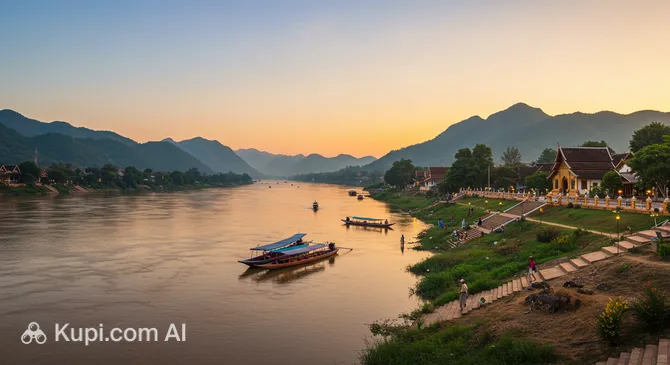
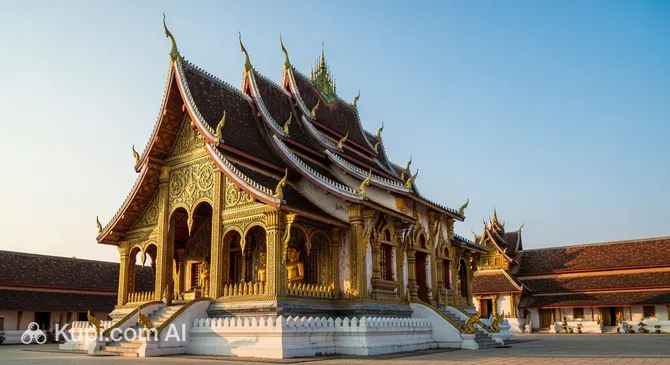
Huay Xai is a cozy and atmospheric town in the north, serving as the main gateway to Laos for those arriving from neighboring Thailand. Stretched along the scenic banks of the legendary Mekong River, it greets guests with a surprising sense of tranquility and friendliness, so characteristic of this country.
As the administrative center of Bokeo Province, the town retains the charm of provincial life with a population of approximately 17,687 people. There is no noisy capital bustle here; time seems to slow down, allowing travelers to enjoy colorful river sunsets and observe the steady pace of local life. Although the history of Huay Xai is inextricably linked to its role as a border and trading post, today it attracts visitors primarily for its proximity to untouched nature.
Houayxay. Illustration.
Source: Kupi.com AI
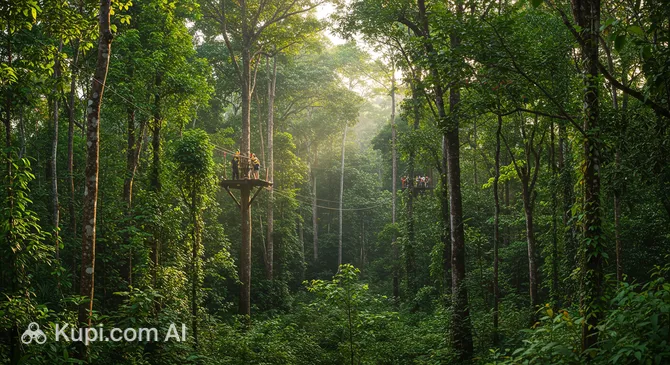
Many tourists linger here for unique experiences that are hard to find elsewhere. The main point of attraction is the famous The Gibbon Experience project, which offers exciting trekking through the jungle and overnight stays in houses at the tops of massive trees. Additionally, Huay Xai serves as a popular starting point for river cruises and exploring authentic Buddhist temples.
If you are looking for authenticity, new flavors, and real adventures away from glossy routes, Huay Xai is definitely worth adding to your travel plan.
Weather Overview
The climate in Huay Xai is typical for northern Laos and is characterized by a clear division into dry and wet seasons. Expect a hot spring, a rainy summer, and relatively cool, dry winter months. To plan your trip as comfortably as possible and choose the right clothes, it's useful to know in advance what the weather in Huay Xai will be during your visit.
The hottest period falls in April and May, when the average temperature stays around 28°C, and daytime maximums can reach 34.5°C. During this time, it can be quite muggy before the monsoons arrive. In contrast, January and December bring pleasant freshness: the average temperature drops to 20.3°C, and at night the air can cool down to 14.3°C, so a light jacket or sweater in your luggage will not be redundant at all.
The rainy season lasts from May to October, transforming the surrounding jungle into a bright green carpet. The wettest months are July and August, when up to 28 rainy days per month are recorded. Conversely, the period from November to March is considered the dry season: for example, in February there are only about 2 rainy days, making this time ideal for hiking and excursions.
Average monthly temperature
Average monthly precipitation
Interesting Facts
Beyond the main attractions, Huay Xai holds many fascinating secrets that make it more than just a transit point. This town is steeped in legends and living history that reveals itself to the attentive traveler.
Guardians of the River. Legends of Mekong spirits, who are invisibly present in the waters of the great river, circulate among the locals. It is believed that these mythical entities protect fishermen and travelers from danger, and many Laotians still perform small rituals to appease the river guardians before a long journey on the water.
Rescue through Tourism. The famous The Gibbon Experience project is not just a zipline attraction, but a serious ecological initiative. The sanctuary was created to protect rare black crested gibbons from poachers, and today, tourists staying in treehouses effectively fund the protection of this unique forest.
Caravan Heritage. Huay Xai was historically an important trade hub on the caravan route between Thailand and Laos. This atmosphere lives on to this day: at the local market, you can meet representatives of various ethnic groups whose ancestors exchanged goods here for centuries, bringing their culture into the life of the town.
Hill Tribe Crafts. The town is a magnet for artisans from the Khmu and Hmong ethnic groups. Here you can find unique bamboo products and handmade fabrics created using ancient technologies carefully passed down from generation to generation.
The Gibbon Experience. Illustration.
Source: Kupi.com AI
Traveler photos:
How to Get There
Huay Xai is an important transport hub on the border of Laos and Thailand, but the town's own airport does not currently accept regular commercial flights. Travelers usually combine a flight to the nearest major cities with a bus or taxi trip. You can find all the details and consider various routes on the page describing how to get to Huay Xai.
The most convenient option for international tourists is a flight to neighboring Thailand. The nearest major air hub is Chiang Rai International Airport (IATA: CEI). It is located in the city of Chiang Rai (Thailand), about 66 km from Huay Xai. The journey from the airport to the border (the town of Chiang Khong) and the subsequent crossing of the Friendship Bridge will take about 1.5–2 hours. This is the most popular way to get to Huay Xai for those flying from Bangkok or other major Asian cities.
If you are already in Laos and planning an internal flight, you can use Luang Namtha Airport (IATA: LXG). It is located in the town of Luang Namtha, about 128 km from Huay Xai. The journey by bus or minivan along scenic but winding mountain roads will take about 3–4 hours. Also in the immediate vicinity of the border, on the Thai side, is the small Meng-Tonpheng (Bokeo International) airport, located just 27 km away, although flights there may be irregular.
For clarity, here is summary information on the main airports in the region:
There is no railway station in the town of Huay Xai itself or its immediate surroundings. The railway network in Laos is just beginning to develop (the Boten – Vientiane route), but the line passes further east through the provinces of Oudomxay and Luang Prabang. Therefore, it is impossible to reach Huay Xai directly by train. Tourists usually take the train to the station in Boten or Oudomxay and then cover the remaining part of the journey by bus, which can take 4 to 6 hours depending on road conditions.
In addition to air travel and roads, water transport plays an important role. Huay Xai is a famous starting point for the two-day journey on "slow boats" down the Mekong to Luang Prabang. There is also regular bus service to other provinces in Laos and international buses running across Friendship Bridge IV from Thailand.
Main Attractions
Huay Xai is often perceived merely as a starting point for travels along the Mekong, but this town and its surroundings hide surprising places that are worth staying for. Ancient Buddhist traditions, colonial history, and incredible nature intertwine harmoniously here, offering tourists a unique set of experiences.
The absolute hallmark of the region is The Gibbon Experience. This is not just an excursion, but a large-scale eco-tourism project located in the dense jungles of Nam Kan National Park. Travelers can expect zipline flights at dizzying heights and overnight stays in the world's tallest treehouses. The main goal of the project is forest conservation and the protection of rare gibbons, which, if you are lucky, can be seen in their natural habitat. This adventure gives an incomparable feeling of freedom and unity with wild nature.
The Gibbon Experience. Illustration.
Source: Kupi.com AI
Traveler photos:
In the town itself, one of the most revered shrines is Wat Chomkao Manilat. This beautiful wooden temple, built in 1880 in the Shan style, stands on a hill above the town. It is reached by a scenic staircase decorated with Naga dragon figures. The temple is famous for its peaceful atmosphere and bright murals, but many come here for the stunning panoramic view. At sunset, a magnificent picture unfolds: the sun sets behind the Mekong River, painting the sky and waters in golden tones.
History buffs will find it interesting to visit the ruins of Fort Karnot. This is one of the most notable reminders of the French colonial period in Laos. Located at the top of a hill, the fort once served as an important military fortification. Today, only two towers and part of the walls remain, but the site possesses a special historical charm. A walk to the fort is a great way to stretch your legs and see the town from another unusual perspective.
Being on the border, it is impossible not to mention the cultural heritage of the opposite bank, which is closely linked to the history of the region. The majestic Wat Phra Keo Chiangkhong, located directly across from Huay Xai, is technically on the Thai side but is an important part of the shared cultural landscape. Its golden spires are clearly visible from the Mekong embankment, and a visit to this temple is often part of the itinerary for those traveling between the two countries.
Local Cuisine
The local cuisine in Huay Xai is a vibrant kaleidoscope of flavors, where the traditions of the hill tribes of northern Laos intertwine with a noticeable influence from neighboring Thailand. The staple of any table here is sticky rice (khao niew). It is served in woven bamboo baskets with most dishes and eaten by hand, rolled into small firm balls that are then dipped into sauces.
The gastronomic hallmark of the region is considered to be laap—a traditional salad made of finely chopped meat or river fish, generously seasoned with fresh herbs, mint, lime, chili, and toasted ground rice. This dish has a fresh, spicy, and rich flavor. You should also definitely try the famous green papaya salad—tam som. Be prepared that in its original version it can be very spicy, so it's better to specify your desired level of heat when ordering.
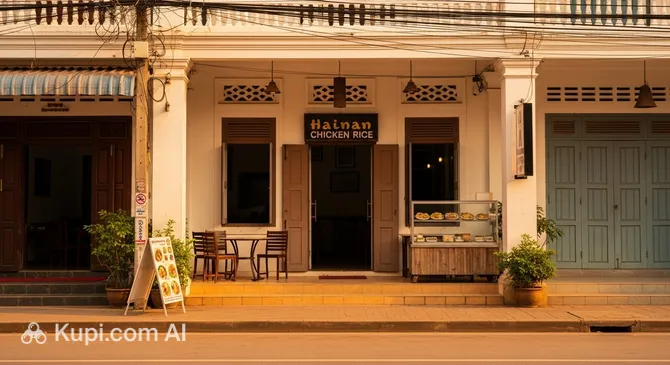
Hainan Chicken Rice. Illustration.
Source: Kupi.com AI
Traveler photos:
For a quick and hearty lunch, locals and tourists often choose noodle soups, such as the aromatic pho, which is prepared here with plenty of fresh herbs. If you are looking for something simple and familiar, stop by Hainan Chicken Rice, which serves classic Asian dishes loved by travelers for their heartiness and delicate taste.
Street food in Huay Xai deserves special attention. At local markets and along the roads, you can find appetizing chicken or pork skewers, fried fish caught directly from the Mekong, and fresh spring rolls. Those with a sweet tooth will enjoy fried bananas in batter and a variety of exotic fruits that grow in abundance on the fertile riverbanks.
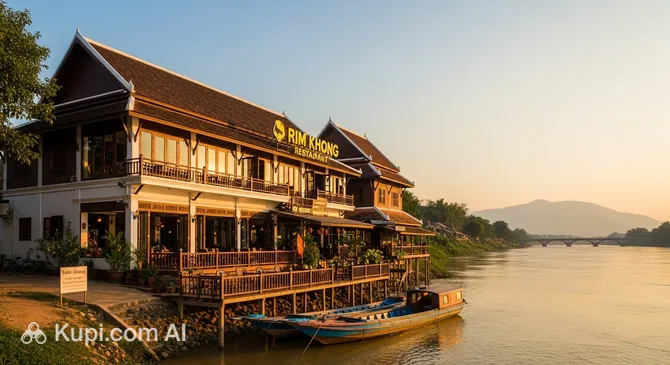
As for drinks, Laos is famous for its coffee, which is grown on the Bolaven Plateau. In Huay Xai, it is brewed strong and aromatic, often served with condensed milk, making the drink thick and sweet. Among alcoholic beverages, local rice wine and the famous Beerlao are popular. You can enjoy dinner with a sunset view at the scenic Rim Khong Restaurant, where excellent cuisine is complemented by a panorama of the great river.
Travel Tips
Huay Xai is a hospitable gateway to Laos, but even in such a calm and relaxed place, there are nuances worth knowing in advance. To ensure your journey—whether a crossing of the Mekong or a jungle expedition—goes smoothly, we have gathered several proven recommendations to help you feel confident from the first minutes of your stay.
Clothing and Essentials. The climate here is hot and humid, so the basis of your wardrobe should be light clothing made of natural fabrics (cotton, linen). However, if you plan a boat trip (where it can be windy) or participation in The Gibbon Experience, be sure to bring comfortable closed trekking shoes, long socks (protection from insects and leeches in the jungle), and a light windbreaker. A hat and sunglasses are necessary in any season.
Transport. There are no conventional taxis with apps like Uber in the town. The main way to travel long distances is by local tuk-tuks ("jumbo"). Important: always agree on the price of the trip before boarding, as there are no meters. The town center is very compact, and it is most pleasant to move between most guesthouses and restaurants on foot.
Finances. The official currency is the Laotian kip (LAK), but in Huay Xai, Thai baht (THB) and sometimes US dollars (for paying for visas or expensive tours) are widely and willingly accepted. ATMs (BCEL and others) are on the main street, but they may charge a withdrawal fee. Cards are accepted very rarely, only in expensive hotels or The Gibbon Experience office, so a cash supply is mandatory.
Health and Safety. Huay Xai is a safe town, but streets are poorly lit after dark, so be careful when walking. The main medical recommendation is to use high-quality repellents, as there is a risk of dengue fever in the region. There are pharmacies in the town, but the selection is basic; in case of serious health problems, it is better to immediately cross the border into Thailand (Chiang Rai), where medicine is better developed.
Communication. The English proficiency of locals is basic; it is understood in hotels and at the pier, but a little further from the center, you will have to explain yourself with gestures. We recommend buying a local SIM card (for example, Unitel or Lao Telecom) immediately upon arrival—points of sale are near the border crossing. Also, download offline maps and a translator in advance.
Local Etiquette. Laotians are very polite and reserved. The greeting is folded palms ("nop") and the word "Sabaidee." When entering any temple and many private homes (and even some shops), it is mandatory to remove your shoes. The head is considered a sacred part of the body, so never touch the heads of locals, even children.
What to Avoid. Never raise your voice or show aggression publicly—in the local culture, this is considered "losing face" and will only exacerbate any problem. Also, watch your feet: sitting with your feet pointed at a person or an image of Buddha is considered a gross insult.
Tip before the cruise. If you are going on a two-day slow boat trip to Luang Prabang, buy water, snacks, fruit, and baguettes in the town's shops in advance. Prices at the pier itself and on board the boat will be significantly higher, and the selection will be more limited. Also, seasoned travelers advise bringing a soft pillow or a blanket, as the wooden seats on the boats can be hard.
By following these simple tips, you can avoid minor troubles and fully focus on the beauty of nature and the unique atmosphere of northern Laos. Huay Xai is a place where time flows slower, so relax and enjoy every moment of your adventure!
Entertainment & Nightlife
Nightlife in Huay Xai has its own special, quiet rhythm, very different from the noisy parties in Vang Vieng or Luang Prabang. This is a transit town where travelers usually stay for one night before a boat trip, so the evening program here is focused on relaxation, socializing, and contemplation. You won't find loud night clubs with DJs here, but you can enjoy some of the most beautiful sunsets in Southeast Asia.
The center of evening attraction is the Mekong River embankment. It is here, along the main street, that the bulk of bars and restaurants are concentrated. At dusk, tourists and locals come out here to watch the sun set behind the hills on the Thai side of the river. The atmosphere in the establishments is very casual and friendly: there is no dress code, and the crowd is a mix of backpackers from all over the world and local families. The most popular "drink of the evening" is undoubtedly a cold Beerlao.
For a dinner with a river view and an evening cocktail, Rim Khong Restaurant is an excellent choice. This establishment is popular for its terrace, which offers a panorama of the Mekong at night. Here you can spend time leisurely, enjoying the coolness from the river and discussing plans for the upcoming journey with other tourists.
Rim Khong Restaurant. Illustration.
Source: Kupi.com AI
Traveler photos:
If you want a quick and inexpensive snack in a more authentic setting, it is worth paying attention to small local cafes, such as Hainan Chicken Rice. Such places often stay open until late evening and offer simple but delicious dishes, allowing you to immerse yourself in the town's gastronomic culture without unnecessary pathos.
For fans of more active recreation, it is worth knowing that the main entertainment for locals is karaoke. Away from the tourist center, you can find several "karaoke bars" (often just darkened rooms with neon lighting) where Laotians love to sing songs to loud music. This is a specific experience, but it gives an idea of the real leisure culture in the province.
Practical Tips and Safety:
Opening Hours: The town goes to sleep early. Most restaurants and bars on the embankment close by 10:00 PM – 11:00 PM. Plan your dinner in advance.
Safety: Huay Xai is a safe town, and walking around the center in the evening poses no threat. However, streets can be poorly lit, so having a flashlight or a charged phone will come in handy. Beware of stray dogs on the outskirts.
Transport: Finding a tuk-tuk at night can be problematic. Since the town center is compact, most hotels are easily reachable on foot.
As for classic daytime entertainment such as cinemas, theaters, or amusement parks, they are absent in Huay Xai. Daytime leisure here is entirely dedicated to nature and culture: visiting temples or preparing for jungle tours. The town is designed to slow down, exhale, and tune into the rhythm of the great river.
Parks & Museums
Huay Xai is a town where the boundaries between wild nature and cultural heritage blur, offering travelers not classic museum halls, but living history and untouched jungle. Here, green zones and historical monuments are harmoniously integrated into the landscape, creating a unique atmosphere for exploration.
The absolute dominant among natural attractions is the famous The Gibbon Experience project. Located within the Nam Kan National Park, this sanctuary offers not just a walk, but a complete immersion into the tropical forest ecosystem. This place is known for its ziplines, which allow you to literally soar over the treetops, and the opportunity to see rare gibbons in their natural habitat. For those who prefer a more relaxed vacation, a walk along the Mekong embankment is a great alternative; it effectively serves as the main town park, where you can enjoy the river breeze and views of neighboring Thailand.
Although there are no large state museums in Huay Xai, the role of history guardian is fulfilled by Fort Karnot. These ruins of a French colonial fortification, located on a hill, serve as a kind of open-air museum. Two surviving towers and remnants of walls allow you to touch the region's past, and from the top, one of the best panoramas of the town opens up. This is an ideal place for those who want to combine light trekking with studying the architectural heritage of the colonial era.
Wat Phra Kaew Chiang Khong. Illustration.
Source: Kupi.com AI
Traveler photos:
The spiritual culture of the region is vividly represented in temple architecture. Special attention should be paid to Wat Phra Keo Chiangkhong. Although geographically this significant temple is closely linked to the Thai shore, it is an integral part of the shared cultural space that has been formed on both sides of the river for centuries. A visit allows for a better understanding of the religious traditions that unite the peoples of this region. It is also worth visiting the local Wat Chomkao Manilat temple in Huay Xai itself, which is famous for its vibrant murals depicting the life of Buddha.
Insider Tip: If you want to see real "living ethnography," head to the small villages of the Khmu and Lanta ethnic groups in the town's outskirts. There are no display cases or tickets here, but the lifestyle, traditional costumes, and crafts of the locals will tell you much more about the culture of Laos than any official exhibition.
Getting Around
The transport system of Huay Xai is arranged as simply as possible and corresponds to the steady pace of life in this small town. There is no metro, trams, or conventional city buses running on schedule. The town is so compact that most tourist locations, hotels, and restaurants in the center can be easily reached on foot in 15–20 minutes, enjoying a walk along the embankment.
The main and practically only type of motorized public transport within the town are tuk-tuks (locals often call them "jumbo" or "skylab"). These are three-wheeled scooters with a covered body and benches for passengers. They do not follow strict routes but operate as a taxi or shared taxi, picking up passengers along the way. You can find a tuk-tuk near the border crossing, at the ferry pier, and on the town's main street.
The payment system in Huay Xai is exclusively cash-based. There are no validators, transport cards, or mobile apps for fare payment here. It is customary to pay in the local currency, but drivers also willingly accept Thai bahts, especially from tourists who have just crossed the border. Important tip: the fare is not fixed, so it is necessary to agree on the price with the driver before boarding. For short trips around town, the price is usually symbolic, but a trip to the bus station or airport will cost more.
For those who prefer freedom of movement, a popular alternative is renting a motorbike or bicycle. Rental points can be found at many guesthouses and travel agencies on the main street. This is a great way to independently explore the surroundings, for example, to get to Fort Karnot or distant temples. For renting a bike, they usually ask to leave a passport or a cash deposit, so be careful when completing the documents.
It is worth considering that there are two bus stations in the town, but they serve intercity and international routes rather than local transportation. The old bus station (closer to the center) sends buses to nearby provinces, while the new international terminal (located several kilometers from the center) serves long-distance routes. To get to these stations from your hotel, you will again need to use the services of a tuk-tuk.
Accommodation
Huay Xai is primarily a transit point, so the hotel infrastructure here is simple and functional, aimed at travelers staying for one or two nights before a Mekong cruise or a jungle trek. In the town, you won't find luxury five-star resorts or major international hotel chains. The bulk of the accommodation consists of cozy guesthouses, family-run mini-hotels, and mid-range hotels offering basic comfort and a warm welcome.
The most popular and strategically convenient area to stay is the Mekong River embankment and the adjacent main street. Choosing a hotel in this location has many advantages: proximity to the slow boat pier, access to the best cafes and restaurants, and stunning views. Many travelers specifically look for rooms with balconies overlooking the river to enjoy scenic sunsets and the view of neighboring Thailand in the evenings.
The price range in Huay Xai will pleasantly surprise even the most budget-conscious tourists visiting Laos. Most accommodation options fall into the budget category. For a very modest sum, you can rent a clean room with air conditioning, hot water, and Wi-Fi. Options that could conditionally be categorized as "luxury" by local standards usually only differ by fresher renovations, more spacious rooms, and better locations relative to the river.
Booking Tip: Despite the abundance of guesthouses, in the high season (November to March), demand for quality accommodation with a river view increases sharply. During this period, it is recommended to book rooms in advance through popular online platforms. In the low season, or if you are not tied to a specific view, it is quite possible to find a great option on the spot just by walking along the main street. Note that in many small family hotels, cash payment (Laotian kip or Thai baht) is preferred.
Nearby Cities
For those who want to explore the surroundings, Huay Xai serves as an excellent starting point for day trips to several interesting nearby locations:
Chiang Khong (Thailand)
Located directly on the opposite bank of the Mekong River, this Thai town is the most accessible destination for a short visit. It's enough just to cross the bridge or take a boat to immerse yourself in the atmosphere of another country. Chiang Khong is famous for its peaceful Buddhist temples, colorful Friday market, and excellent cafes on the embankment with a view of the home shore of Laos.
Golden Triangle
Just a few dozen kilometers upstream lies the legendary geographical point where the borders of Laos, Thailand, and Myanmar meet. A day trip by boat will allow you to see the famous confluence of the Ruak and Mekong rivers, visit Don Sao Island (technically Laotian territory, accessible without a visa for short visits from the Thai side), and enjoy the scenic jungle landscapes.
These nearby destinations provide an insight into the diverse culture and landscapes of the region.
Shopping & Souvenirs
Shopping in the town of Huay Xai is exclusively local and authentic. You should not expect to see sparkling display cases of brand boutiques or multi-story shopping complexes here. This is a place where shopping becomes part of the cultural experience, allowing you to touch the daily life of northern Laos. The range of products is primarily oriented towards the needs of locals and travelers preparing for a trip through the jungle or a river rafting excursion.
The main shopping points are concentrated along the town's main street, which runs parallel to the Mekong River. Small family shops are located here, offering everything you need: from clothes and shoes to food and household goods. A walk along this street is a relaxed process where you can peek into shops with handmade goods or buy snacks for the road.
There are no large shopping centers in the conventional sense in Huay Xai. All trade is conducted in a street retail format or at markets. This is worth considering when planning your trip: if you need specialized equipment or brand-name clothing, it is better to purchase them in advance in major Thai cities or in Vientiane.
The heart of local commerce is the markets. The most famous is the Morning Market, which comes to life with the first rays of the sun. It's worth coming here early to see the full variety of fresh products, exotic fruits, and greens brought by farmers from surrounding villages. Although the market is mainly food-oriented, you can also find stalls with clothing, textiles, and household goods. This is the best place to feel the true rhythm of the town's life.
As souvenirs from Huay Xai, tourists most often bring back items made by local artisans. Special attention should be paid to traditional Laotian textiles: silk and cotton scarves, as well as "sinh" skirts with unique patterns. Woven bamboo products are also popular, and of course, the famous Laotian coffee grown on the Bolaven Plateau. In some shops, you can find silver jewelry made by hill tribe craftsmen.
Opening hours and payment have their own specifics here. Most shops open around 8:00 AM and close by 6:00 PM – 7:00 PM, although some grocery stalls may stay open longer. Markets operate from early morning (from 6:00 AM) until noon. The main method of payment is cash. Laotian kips are accepted, but Thai bahts are also in use and are willingly taken almost everywhere. Credit cards are accepted very rarely, so a supply of cash is essential. There is no Tax Free system provided in the town.