Support

Phuket International Airport

About the Airport

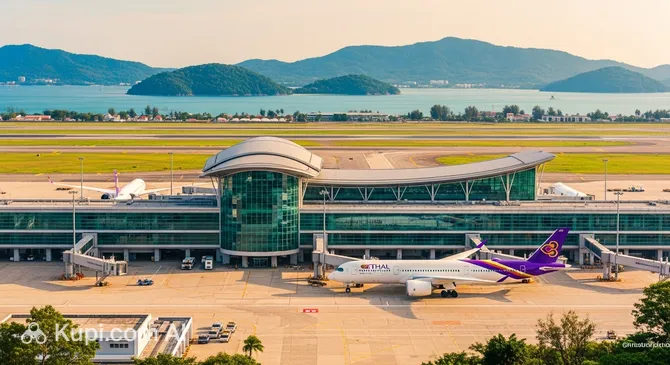
Phuket International Airport. Source: Kupi.com Binoculars

Phuket International Airport is not just a transport hub, but a true gateway to a world of tropical relaxation. For many tourists, the journey begins with a breathtaking view upon landing: airliners often approach the runway from the Andaman Sea, flying so low over the water that it feels as if you could reach out and touch the waves. As the second busiest airport in Thailand after Bangkok's Suvarnabhumi, it lives in the rhythm of the holiday season all year round, welcoming guests with warm, humid air and the anticipation of adventure.

IATA Code HKT
ICAO Code VTSP
City Phuket
Distance to Centre 32 km
Status International
Passengers per Year Approximately 17.2 million (based on 2024 data)

Features and Advantages of the Airport

Two Terminals and Easy Navigation

The airport is compact and easy to understand even for inexperienced travellers. The complex consists of two main buildings: the International Terminal and the Domestic Terminal. They are located within walking distance of each other, so transferring from an overseas flight to a local connection to Samui or Bangkok is effortless. A free shuttle bus also runs between the buildings.

Famous Mai Khao Beach

A unique feature of the airport is its location right next to Mai Khao Beach. This spot has become cult-famous among plane spotters and selfie enthusiasts: planes fly literally a few metres above the heads of holidaymakers here. However, it is important to remember safety and maintain a distance from the runway perimeter fence.

Transport Accessibility

You can get to your hotel in various ways. For budget travellers, the Phuket Smart Bus runs along the entire west coast through the popular beaches of Surin, Kamala, Patong, Karon, and Kata. For greater comfort, you can book an official taxi at a fixed price (metered taxi) directly in the arrival hall or rent a car at one of the numerous rental counters.

Connectivity and Services

Immediately after passing customs control, you will find many kiosks of local mobile operators. You can arrange a tourist SIM card with unlimited internet in just a few minutes — staff will assist with installation and setup. The waiting areas feature cafes, currency exchange points, and Duty Free shops where you can buy souvenirs before departure.

Contact Information

  • Official Website: phuket.airportthai.co.th. Here you will find flight schedules, terminal maps, and the latest news.
  • Inquiry Service Phone: +66 76 351 122 (for calls within Thailand you can dial 076 351 122). Call centre staff are ready to answer your questions around the clock.
  • Airport Address: 222 Mai Khao, Thalang District, Phuket 83110, Thailand.
  • Email: For official inquiries, you can use the address aotpr.hkt@airportthai.co.th.
  • Social Media: The airport has an official Facebook page (@Phuket.Official), where operational updates are published.
  • Lost Luggage Information: If you have lost items within the terminal, contact the "Lost and Found" service. If your luggage has not arrived or was damaged, you need to contact your airline's representative at the airport directly.
  • Passenger Support Contacts: For assistance and consultations, you can contact the inquiry service by phone or visit the information counters located in the arrival and departure halls.

How to Get to the Airport

Getting to Phuket International Airport (HKT) is not difficult, as the island's transport system offers options for every taste and budget. Regardless of where on the island of Phuket you are staying, you will be able to choose a convenient way to reach the terminal, whether it is a budget bus or a comfortable private transfer. The main thing is to calculate your time correctly to avoid rushing.

Public Transport

For economical travellers in Thailand, special buses are available. The Phuket Airport Bus consists of orange buses that run from the old bus terminal in Phuket Town to the airport. This is the cheapest option, with the fare being around 100 Baht. Another convenient route is the Phuket Smart Bus. This bus travels along the west coast, passing through the popular beaches of Rawai, Kata, Karon, and Patong, making it an ideal choice for tourists staying in resort zones. The fare depends on the distance and is up to 170 Baht.

Taxis and Transfers

The fastest and most comfortable way to get to the airport is by taxi. You can use the services of an official taxi (Taxi-Meter) or book a car through the Grab app, which is popular in Asia. A trip from popular beaches such as Patong or Karon will cost approximately 600–1000 Baht. To avoid surprises, it is recommended to agree on the price in advance or ensure the driver switches on the meter. Another excellent option, especially for families or large groups, is to book a private transfer. This can be arranged online or through your hotel, guaranteeing a fixed price and timely vehicle arrival.

Car Rental and Parking

If you rented a car for your holiday, you can easily return it directly at the airport. Most major rental companies have their counters and parking zones within the airport territory. This is a convenient way to end your journey without worrying about additional transport. For those arriving in their own or rented vehicles, both short-term and long-term parking is provided at the airport.

Travel Time and Recommendations

When planning your trip to the airport, be sure to allow extra time for potential traffic jams, especially during the high season and peak hours. The journey from Phuket Town takes about 45-60 minutes, while from Karon or Patong beaches the road can take from 1 to 1.5 hours. To avoid stress and not miss your flight, it is better to leave early, having at least 3-4 hours in reserve before departure.

Terminals and Map

Phuket International Airport (HKT) consists of two main passenger terminals that serve millions of tourists annually. Understanding their structure will help you orient yourself easily upon arrival or before departure.

Structure and Purpose of Terminals:

  • International Terminal (Terminal 1 or T1): This is the newer and more modern building that serves all international flights. It is significantly larger in size and equipped with all necessary services for travellers arriving from abroad or departing to other countries.
  • Domestic Terminal (Terminal 2 or T2): This is the older airport building which has been renovated and is now fully dedicated to serving domestic flights within Thailand — to Bangkok, Chiang Mai, Samui, and other destinations.

Navigation and Transfers Between Terminals:

Both terminals are located in close proximity to each other, just a few minutes' walk away. There is a convenient covered walkway between them, so no special transport is required for movement. Navigation inside the airport is intuitive: signs in Thai and English are installed everywhere to help find the necessary zones — Departures, Arrivals, check-in counters, boarding gates, and currency exchange points.

Departure and Arrival Zones and Features:

In the International Terminal, the departure zone is located on the upper floor. Here you will find check-in counters, passport control, and security screening points. After completing formalities, passengers enter a spacious area with Duty-Free shops, restaurants, and cafes. The arrival zone is on the ground floor, where baggage claim belts, customs control, and tour operator counters are located. In the Domestic Terminal, the structure is similar, but the scale is smaller. Procedures here generally take less time due to the absence of passport control.

Processing Time and Recommendations:

For international flights, it is recommended to arrive at the airport 2.5-3 hours before departure, especially during the high tourist season (from November to March), when queues for check-in and passport control can be significant. For domestic flights, 1.5-2 hours is usually sufficient. To avoid rushing, always check which terminal your flight departs from — this information is indicated on your ticket. If you are transiting from an international flight to a domestic one, allow sufficient time for the transfer between terminals and re-checking your luggage.

Airport History

The history of Phuket International Airport (HKT) is inextricably linked with the transformation of the island of the same name into one of the world's premier resorts. The airport was officially opened in 1976 to meet the growing demand from tourists captivated by the beauty of the Andaman coast of Thailand. In its early years of operation, it was a modest regional hub, but the rapid growth of the island's popularity in the 80s and 90s required significant expansion.

One of the most difficult and at the same time heroic periods in the airport's history occurred in December 2004. After the devastating tsunami, Phuket Airport became a critically important logistics centre. It received humanitarian aid, medical teams, and rescuers from all over the world around the clock, and also served as the main point for the evacuation of victims and tourists. This tragedy demonstrated the strategic importance of the airport far beyond tourism.

Realising that the infrastructure could not cope with the constantly growing passenger flow, the authorities initiated a large-scale reconstruction. The culmination of this process was the opening of a new modern international terminal in September 2016. This allowed the airport's capacity to nearly double — from 6.5 to 12.5 million passengers per year. The old terminal was completely renovated and handed over to serve domestic flights, significantly improving logistics and comfort for travellers.

Interesting fact: the airport's runway is located in immediate proximity to Mai Khao Beach. This unique location has made it one of the most famous places in the world for plane spotting — photographing planes coming in to land literally a few dozen metres above the heads of holidaymakers. Today, Phuket Airport is the second busiest in Thailand, second only to the capital's airports, and continues to play a key role in the development of the entire southern region of the country.

Services and Amenities

Phuket International Airport (HKT) offers passengers a full range of services to make waiting for a flight as comfortable as possible. In the terminals, you will find many restaurants and cafes for every taste: from establishments where you can try Thai cuisine to famous international fast-food chains. For shopping enthusiasts, there are Duty Free shops, souvenir stalls with products from Thailand, and boutiques of famous brands.

For those who need to stay connected, free Wi-Fi is available throughout the airport. Numerous stations for charging mobile devices are also equipped. If you prefer to wait for your flight in a calmer environment, several business lounges and VIP zones are at your service. Access to these may be provided depending on your ticket class or for an additional fee.

Financial matters are easily resolved at the airport: there are bank branches, currency exchange points, and many ATMs operating around the clock. In case medical assistance is needed, a medical centre is active within the terminal, ready to provide first aid.

Phuket Airport is well-equipped for passengers with special needs. For families with small children, mother and child rooms and play areas are provided. Passengers with reduced mobility are offered special assistance, including accompaniment and wheelchairs, and the terminal infrastructure is adapted for their comfortable movement.

If you have a long layover, you can stay at one of the hotels located in close proximity to the airport. For business travellers, business centre services and conference rooms are available, where you can hold a meeting or work in a quiet environment before departure.

Where to Eat

Phuket International Airport (HKT) offers diverse dining options to brighten up the wait for your flight. Here you can find both establishments with familiar international cuisine and spots where you can enjoy Thai dishes one last time before departure. Most restaurants and cafes are concentrated in the International Terminal, but you will not go hungry in the Domestic Terminal either.

In the International Terminal (Terminal 1), in the departure zone after passing passport control (airside), the largest selection awaits you. A large food court is located here, gathering corners with Thai, Japanese, and European cuisine under one roof. This is a great place for a full meal. Additionally, world-famous chains such as Burger King and Subway operate here, as well as coffee shops like Starbucks and The Coffee Club, where you can not only drink coffee but also order sandwiches, salads, and desserts. For those who want to relax in a calmer atmosphere, there are restaurants offering à la carte service.

In the public area of the International Terminal (landside), before check-in and security control, the selection is more modest but sufficient for a quick snack. Here you can also find coffee shops and several fast-food restaurants. This is a convenient option if you arrived at the airport early or are meeting arrivals.

The Domestic Terminal (Terminal 2) serves local flights, and the choice of establishments here is more limited. Nevertheless, you will find several cafes and eateries offering coffee, pastries, sandwiches, and basic Thai dishes. This is quite enough to refresh yourself before a short flight within Thailand.

Be sure to try local dishes. Look for Pad Thai (fried rice noodles), Tom Yum soup, or Green Curry on the menu. For dessert, you can grab the famous mango sticky rice. Many Thai dishes can be prepared in a vegetarian version — simply ask to add tofu instead of meat. For those adhering to Halal dietary requirements, there are certified establishments indicated by special signs.

Prices at Phuket Airport, as in any other major hub, are higher than in the city. Be prepared to pay more for a cup of coffee and a main course than in a beachside cafe. Most establishments in the international departure zone operate around the clock or until late at night, adjusting to the flight schedule, while spots in the public zone and Domestic Terminal may close earlier.

Travel Tips

To ensure your journey through Phuket International Airport goes smoothly, make use of these tips. It is recommended to arrive at the airport at least 3 hours before an international flight and 2 hours before a domestic one. During peak season (from November to February), allow extra time, as queues for check-in and security screening can be significantly longer.

To save time, complete online check-in for your flight if your airline provides this option. This will allow you to avoid the general queue and head straight to the baggage drop-off counter. When passing through security, be prepared to remove laptops, tablets, and other large electronic devices from your hand luggage. All liquids must be in containers of no more than 100 ml and packed in a single transparent bag.

When choosing a seat on a plane departing from Phuket or arriving on the island, consider that window seats will gift you unforgettable views of the Andaman Sea and picturesque islands. Aisle seats are more convenient if you plan to get up often during the flight. Emergency exit row seats usually offer more legroom but may require an extra fee.

It is prohibited to carry sharp objects and liquids in containers larger than 100 ml in hand luggage. Remember that portable chargers (power banks) can be carried only in hand luggage, and their capacity is often limited by airline regulations. Please note that bringing certain exotic fruits, such as durian, into the aircraft cabin may be prohibited due to their strong smell.

If you have a transfer at Phuket Airport, check with your airline in advance whether you need to collect your luggage and check in for the next flight again. The airport has two terminals — International and Domestic — with a shuttle running between them. Ensure you have enough time for the transfer and passing through control again if it is necessary for your route through Thailand.

At customs control, standard "Green" and "Red" channels operate. If you have no goods to declare, proceed through the Green channel. Otherwise (if you have large sums of cash or goods exceeding the limit), use the Red channel. Be prepared that customs officers may randomly ask you to open your luggage for inspection.

To save money, book a taxi at official counters in the arrival hall or through reliable mobile apps, avoiding offers from private touts. Prices for food and water in the airport are higher than in the city, so you can bring an empty reusable bottle and fill it at drinking fountains after the security zone.

In case of a flight delay, monitor information on departure boards and in your airline's app. Contact the carrier's counter to learn about your rights: for long delays, you may be provided with food vouchers or even hotel accommodation. Keep all receipts — they may be needed to claim compensation through travel insurance.

Reached the end of the page?

That means the route is fully explored