Support

Mevlana Meydanı

About

In the very heart of the ancient city of Konya lies the famous Mevlana Square—a place where history and spirituality intertwine. It is not just a city space, but a gateway to one of the most revered sanctuaries Turkey has given the world: the mausoleum and museum of the distinguished Sufi poet Jalaluddin Rumi.
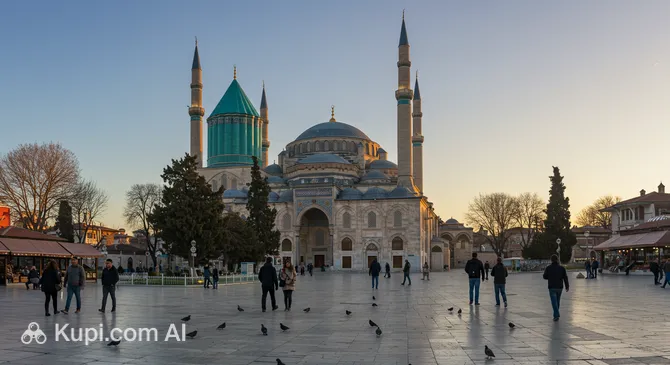
Mevlana Square
Mevlana Square. Иллюстрация. Источник: Kupi.com AI

The main visual highlight of the square is the Mevlana Museum with its recognizable turquoise dome. The complex is an architectural ensemble that includes a mosque, tombs, dervish cells, and a picturesque rose garden. This pilgrimage site draws thousands of people annually, all seeking inspiration and inner peace among the artifacts of the Sufi order.

Inside the museum walls, priceless treasures are kept: ancient manuscripts, musical instruments, and rare silk carpets, including one of the most expensive in the world. Mevlana Square serves as the cultural heart of the region, embodying the philosophy of love and tolerance preached by the great thinker.

Contacts

To plan your visit to this iconic landmark, it is worth saving the coordinates and main contact details in advance. The square and museum complex are located in the heart of the city, making them accessible to every traveler.

Below is detailed information about the location and ways to get in touch for the latest visiting details.

How to contactContact
AddressAziziye, Selimiye Cami No:3, 42030 Karatay/Konya, Türkiye

What to Do

Visiting this site is primarily an immersion into the world of Eastern philosophy and art. Be sure to stop by the Mevlana Museum, which features Rumi's personal belongings, exquisite calligraphy, and wax figures recreating dervish life. Special attention should be paid to Rumi's sarcophagus, covered in luxurious 13th-century brocade, and the casket which, according to tradition, holds a hair from the Prophet Muhammad's beard.

A stroll through the grounds offers true aesthetic pleasure: you can relax in the shade of trees in the fragrant rose garden or watch the ritual at the ablution fountain. For a deeper understanding of the exhibits, it is recommended to use an audio guide, which explains the symbolism of each item in the dervish cells.

Don't forget to visit the local souvenir shop to buy traditional sweets—sugar pillow-candies featuring images of whirling dervishes. If your trip is planned for December, you will have the unique chance to see the mesmerizing Sheb-i Arus festival, where the mystical "Sema" dance is performed to the sounds of ancient instruments.

Getting There

Reaching this spiritual center is easy, as it is located in the very heart of the city. If you are arriving at Konya Airport, the most comfortable way is a taxi ride, which takes about 20–30 minutes; transfer services or car rentals are also available.

For those who prefer public transport within Konya, the tram or bus is ideal. You should get off at the stop named "Mevlana". From historical sites like the Alaeddin Mosque or Culture Park, you can reach the square on foot in just 10–15 minutes while enjoying the atmosphere of the old streets.

If your journey begins in Cappadocia, regular intercity buses will take you to the city in about 3–4 hours. The square's central location makes it easy to include in any walking route through the historical part of the region.

Ближайший город: Konya

History & Facts

The history of this place is inextricably linked to the name of the great thinker Jalaluddin Rumi, better known as Mevlana. In the 13th century, this land was gifted to Rumi's father by the Seljuk Sultan, and it was here that the Mevlevi order was established, becoming famous for its mystical practices and philosophy of divine love.

After Rumi's death in 1273, a mausoleum was built over his grave. The architect Bedreddin created a unique structure—a cylindrical dome covered in emerald green tiles, which has remained the city's main landmark for centuries. Over time, a whole complex grew around the mausoleum, including dervish cells, a library, and classrooms.

In 1927, during reforms in Turkey, the lodge was closed as a religious institution, but by 1954, it officially opened its doors to the public as the Mevlana Museum. Today, it is not just a historical monument but a site of deep spiritual significance, where Rumi himself, his son Sultan Walad, and other important members of the order are buried.

Interestingly, the complex's architecture combines the best traditions of Seljuk and Ottoman design. Every element—from the ritual ablution fountain (shadirvan) to the elegant calligraphy on the walls—serves as a reminder of the centuries-old heritage of Sufi wisdom that continues to attract millions of people from all over the world.

Time Needed

To leisurely tour the mausoleum, explore the museum halls, and stroll through the rose garden, most visitors need about 1.5 to 3 hours. This is sufficient time to soak in the atmosphere and examine the details of the ancient artifacts.

If your visit coincides with the annual Whirling Dervish festival in December, you should set aside an entire day for the trip. The festive events and "Sema" ceremonies attract a huge number of people, and experiencing the culture during this time requires much more time and attention.

Working Hours

The site is usually open to visitors daily, though opening hours may change depending on the season and religious holidays. During festivals such as Eid al-Adha (Kurban Bayram), entry to the grounds is sometimes free, but the number of visitors increases significantly.

Since the official schedule may be adjusted, tourists are strongly encouraged to check for current information on the museum's official website or confirm the opening hours locally upon arrival in the city.

Nearby

The location in the historical center makes Mevlana Square an excellent starting point for further exploration of the region. A walk through the surrounding area will allow you to see not only religious monuments but also modern recreation zones that reveal the multifaceted nature of local life.

Many interesting locations are within walking distance or just a few minutes away by transport. Below is a list of sites that can complement your city itinerary.

NameDistance
Mevlana Museum0.1 km
Hichhane0.2 km
Aziziye Mosque0.3 km
Kapu Mosque0.4 km
Shams Tabrizi Mosque and Tomb0.6 km
Panorama Konya Museum0.7 km
Konya Archaeological Museum0.9 km

Reached the end of the page?

That means the route is fully explored