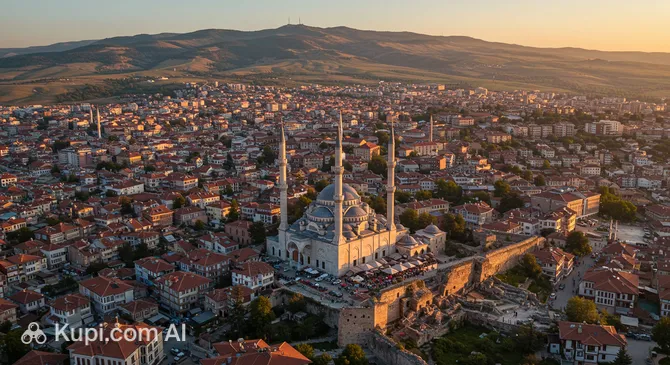
Siverek is an authentic and vibrant city in the Şanlıurfa province, located in southeastern Turkey. Situated at the crossroads of ancient trade routes in the basin of the legendary Euphrates River, it preserves the atmosphere of traditional Anatolia. With a population of about 258,000, the city serves as an important agricultural and commercial hub for the region, where the modern pace of life intertwines harmoniously with age-old traditions.
Siverek. Illustration.
Source: Kupi.com AI
Geographically, Siverek sprawls across arid but fertile lands, where basalt and brick architecture serves as a reminder of the local climate's rugged nature. Although the city is not a typical tourist center, it attracts travelers with its authenticity and the opportunity to see the daily life of a Turkish province unfiltered. The majestic central fortress, towering over the city blocks, silently preserves the centuries-old history of this region.
A visit to Siverek is a chance to immerse yourself in the hospitality of Southeastern Turkey, explore local markets, and feel the spirit of history among the ruins of ancient settlements. We invite you to discover this underrated corner of the country, where every stone and every narrow street can tell an amazing legend of past civilizations.
Weather Overview
Siverek has a continental climate, characterized by pronounced seasonal contrasts. If you are planning a trip, keep in mind that summers here can be truly hot and dry: in July and August, the average air temperature often reaches +37°C, and rain during this period is a rarity. The steppe landscape contributes to the rapid heating of the air, so it's better to spend daytime hours in the shade.
Winters in the city are cool, and sometimes quite cold. In January, temperatures can drop below freezing, while the average maximum is around +7°C...+10°C. The winter months are also the rainiest, with most precipitation falling from December to March. If you want to catch the most comfortable city climate, the ideal times for a visit are April, May, or October, when the weather is mildly warm.
Spring and autumn in Siverek are short but very picturesque. During this time, the arid steppe comes alive, and temperatures stay in a pleasant range from +15°C to +25°C. Expect a dry and sultry summer with minimal humidity, and a windy, wet winter that requires warm and waterproof clothing.
Average monthly temperature
Average monthly precipitation
Interesting Facts
The city of Siverek hides many surprising details that reveal its significance to the history and modernity of the region.
Strategic Hub: Historically, the city emerged around a powerful fortress as a key point at the intersection of trade routes connecting the Euphrates basin with other regions of Anatolia.
Traces of Ancient Empires: Archaeological finds confirm that these lands have been inhabited since deep antiquity, with great civilizations of the past, including the Romans and Byzantines, leaving their mark here.
Agricultural Giant: Thanks to its proximity to the Euphrates River, Siverek is one of the most important agricultural centers in the province, providing the region with grain and vegetable crops.
City Scale: With a population of over 250,000, Siverek exceeds many well-known tourist cities in size, while remaining a typical "undiscovered" urban center.
Unique Landscape: Its location in an arid steppe zone gives the city a rugged yet majestic appearance, especially at sunset, when the basalt walls of old buildings take on a special hue.
How to Get There
Siverek is conveniently located in the eastern part of Turkey, making it accessible for travelers exploring Mesopotamia. The main way to reach the city is by road, as high-quality regional highways pass through it. From the nearest large administrative center, Şanlıurfa, the trip by car or intercity bus takes about 1.5–2 hours, following a route through picturesque steppe landscapes.
For those planning to arrive from afar, the most convenient option is a flight to the airport in Şanlıurfa. After landing, you can use transfer services, take a taxi, or catch a regular bus heading toward Siverek. The total travel time from the airport to the city center is usually no more than 3 hours. There are also ways to get there from other major cities in the region, such as Diyarbakır.
Currently, there is no direct rail link to the city itself, so travelers who prefer trains should head to the nearest major transport hubs in neighboring provinces and then transfer to road transport. The main transportation load is carried by a network of modern highways that are kept in good condition.
Station
Passenger traffic
Distance
Diyarbakır railway station
5
81 km
Elazığ railway station
4
101 km
Yazlak railway station
1
119 km
Gökçe Train Station
1
135 km
Genç railway station
1
155 km
Main Attractions
Although Siverek is not a destination for mass tourism, it hides several local gems that deserve attention. The main landmark and historical core of the city is the central fortress. Situated on a hill, it served for centuries as a defensive point on trade routes. Today, its walls are a reminder of the city's strategic importance across different eras, from antiquity to the Ottoman period.
For those interested in ancient history, the outskirts of the city are of great interest, where traces of the Hellenistic settlement of Claudiopolis, dating back to the 1st century AD, have been preserved. Although archaeological work here is not continuous, the very possibility of touching the heritage of the Roman and Byzantine eras makes this place attractive to researchers and history buffs.
Modern city life is concentrated in the Hasan Çelebi and Yenişehir districts. Here, you can experience the true flavor of Southeastern Anatolia while walking through lively markets and central squares. These are the best places to observe the local way of life, browse small shops, and feel the welcoming, bustling atmosphere of a Turkish province.
Local Cuisine
A gastronomic journey to Siverek is an introduction to the rich culinary traditions of Southeastern Anatolia. The local cuisine is based on the use of fresh meat (predominantly lamb), various grains, and vegetables. One of the signature dishes that is definitely worth trying is the local kebabs, cooked over charcoal with a special set of spices unique to this region.
Freshly baked lavash and other types of flatbreads with fillings hold a special place on the table, perfectly complementing hearty lentil soups. The general character of the city's food scene is quite conservative: small family restaurants and lokantas, where food is prepared according to home recipes, predominate here. Locals often spend time in cafes such as Liiva Cafe, which serves traditional desserts and snacks.
Among drinks, the absolute leaders are strong Turkish tea, which is drunk here at any time of day, and refreshing ayran, which is the perfect accompaniment to meat dishes. The food culture in Siverek is closely linked to the markets, where you can always find the freshest products. Be sure to visit local shops to try local cheeses and olives, which make a great addition to breakfast.
Travel Tips
A trip to Siverek will give you a unique experience of discovering the authentic Turkey. To make your journey comfortable and leave you with only pleasant impressions, we have prepared some practical tips.
Clothing and Essentials: Summers in the region are very hot and dry, so choose clothing made of natural fabrics and don't forget a hat. It can be quite cold in winter, so bring a warm jacket. When visiting mosques or traditional neighborhoods, it is recommended to dress modestly, covering shoulders and knees.
Transport: The city center is best explored on foot. For trips to more distant areas, use dolmuses or taxis. If you plan to explore the Euphrates surroundings, renting a car will be the best solution.
Finance: The official currency is the Turkish lira. Cards are accepted in hotels and large stores, but you will definitely need cash in markets and small cafes. ATMs are located on the central streets.
Health and Safety: The city is generally safe, but follow standard precautions: do not leave your belongings unattended and avoid walking in unlit outskirts at night. Drink bottled water.
Communication: The main language is Turkish. English is not widely spoken here, so learn a few basic phrases: "Merhaba" (Hello), "Teşekkür ederim" (Thank you). Install an offline translator.
Local Etiquette: Siverek residents are very hospitable. Greet people politely and do not refuse offered tea—it is a sign of respect. It is better to photograph locals only after obtaining their consent.
What to Avoid: You should not publicly discuss sensitive political topics or criticize local customs. Also, avoid provocative behavior in public places.
Extra Tip: Be sure to visit the local market in the morning—it's the best time to see city life and buy the freshest products at low prices.
May your stay in this hospitable land be filled with bright discoveries and warm human connection. Have a pleasant trip!
Entertainment & Nightlife
Entertainment in Siverek is mostly quiet and traditional, reflecting the family-oriented lifestyle of the local residents. Nightlife in the conventional sense, with clubs and bars, is practically non-existent here, as the city lives to a daytime rhythm. In the evenings, locals prefer to spend time in cozy establishments like Liiva Cafe, where they can enjoy Turkish coffee or tea in the company of friends and family.
Traditional gaming establishments, such as Kasaplar Kıraathanesi, remain popular leisure spots for the male population. Here, over a cup of strong tea, endless conversations take place, and time flies by while playing backgammon or Okey. This is an important part of the local culture, providing a deeper understanding of the city's social structure.
For more active recreation, large shopping complexes, cinemas, and noisy entertainment centers, Siverek residents usually head to neighboring Şanlıurfa. Nevertheless, walking along the central illuminated streets and visiting local pastry shops in the evening creates a special, peaceful atmosphere, ideal for those who want to take a break from the hustle and bustle of megacities.
Parks & Museums
Since Siverek is primarily an administrative and agricultural center, it does not yet have a developed network of classical museums. The main "open-air museum" for the city remains its historical part and the old fortress. It is here that you can see the layering of eras and feel the antiquity of this land, even without formal exhibitions or museum guides.
The city's park culture is adapted to the local steppe climate. Although there are no large forest areas within the urban layout, you can find small squares and landscaped areas in the central districts that serve as a resting place for citizens on hot summer days. These cozy corners allow you to take a breath during a walk and enjoy the coolness by the fountains or in the shade of trees.
Nature lovers should pay attention to the outskirts of Siverek near the Euphrates River. While not a city park in the traditional sense, the shorelines and adjacent agricultural lands offer open space and unique landscapes that look especially impressive in the rays of the setting sun. This is a great alternative for those seeking solitude in the heart of nature.
Getting Around
The public transport system in Siverek is simple and efficient, perfectly suited to the needs of a provincial city. Movement is primarily based on buses and dolmuses—the famous Turkish minibuses. They connect the central districts with the outskirts and nearby rural settlements. Routes cover all key points in the city, and the traffic is quite frequent, although vehicles can be crowded during peak hours.
Fares are usually paid in cash to the driver or using special transport cards if they are implemented within the Şanlıurfa province. Travel prices are very affordable. For a tourist, a dolmus is not only a way to get from point A to point B but also an opportunity to immerse yourself in the local flavor and see the city through the eyes of its residents.
An alternative to public transport is the taxi, which is easy to find at designated stands in the center or call by phone. Thanks to the absence of serious traffic jams, taxi rides around Siverek are quick and inexpensive. It is also worth noting that the central part of the city is quite compact, and many interesting places, shops, and markets are convenient to explore during walking tours.
Accommodation
Accommodation options in Siverek are primarily aimed at transit travelers, business people, and those who want to get to know the real Turkey away from the beaten path. You won't find massive five-star complexes or luxury resorts here, but the city offers a decent selection of mid-range hotels and simple guest houses providing basic comfort and traditional hospitality.
Most accommodation facilities are concentrated in the central districts of the city. This is the most convenient option for tourists, as the main shops, cafes, and transport links will be within walking distance. Apartments are also popular, suitable for longer stays and allowing you to feel like part of the local community.
When planning your trip, it is recommended to book your accommodation in advance through popular international or Turkish services like Tripadvisor. Although Siverek is rarely overcrowded with tourists, booking ahead will ensure you have the best choice and peace of mind upon arrival. The price range here is very affordable, making the city an excellent option for budget travelers.
Nearby Cities
Siverek is an excellent starting point for exploring the southeastern region of Turkey, offering convenient access to the historical and cultural centers of neighboring provinces. Just an hour and a half to two hours away is the legendary Şanlıurfa, the "City of Prophets," where you can see the famous fish lake Balıklıgöl and visit the ancient temple complex of Göbeklitepe.
Those seeking tranquility and natural beauty should head toward Çermik, famous for its thermal springs and cozy atmosphere. Also of interest is the city of Kahta, which serves as the gateway to the majestic Mount Nemrut (Nemrut Dağ), where giant stone heads of ancient gods rest at the summit—this destination is perfect for a rich day trip.
City
Population
Distance
Cermik
50 812
44 km
Çüngüş
12 061
57 km
Kahta
122 774
62 km
Karaköprü
195 552
68 km
Ergani
130 105
69 km
The region around the city is literally steeped in history, and every direction opens up new facets of Mesopotamia to the traveler. We recommend not limiting yourself to city walks but boldly exploring the surroundings to fully experience the grandeur and diversity of this ancient land.
Shopping & Souvenirs
Shopping in Siverek is primarily an opportunity to purchase authentic goods and products that reflect the life and crafts of Southeastern Turkey. There are no giant malls with international brands in the city, but trade flourishes in specialized centers and markets. For example, at Çelik kuyumculuk, you can find exquisite gold jewelry made in the traditional oriental style, which is highly valued in this region.
The main shopping arteries are the Hasan Çelebi and Bahçelievler districts. Life is bustling here in small shops selling high-quality textiles, leather goods, and home products. Special attention should be paid to local markets: this is where you should buy spices, dried vegetables, nuts, and traditional Turkish sweets, which make excellent souvenirs for loved ones.
Shops usually operate from 9:00 AM until late evening, and markets open at dawn. Payment at most large shops is possible with bank cards, but for trips to markets and small family stores, you should definitely have Turkish lira cash with you. Remember that light and polite haggling is part of the communication culture at local markets and can help you get a pleasant discount.