Support

BerwickUponTweed

About

Berwick-upon-Tweed is an atmospheric and historically significant town located on the picturesque North Sea coast, right at the mouth of the River Tweed. As the northernmost town in England, it possesses a unique character where English and Scottish traditions are harmoniously intertwined. A journey here is an opportunity to see stunning architecture and touch the rich heritage for which Great Britain is famous.

Berwick-upon-Tweed. Illustration.
Source: Kupi.com AI

The town's geographical position has shaped its destiny for centuries. Located on the border of two kingdoms, Berwick changed hands many times, turning it into a true fortress. The eventful history of Berwick-upon-Tweed has left a vivid mark on its appearance: the town is still surrounded by mighty defensive fortifications. Today, it is home to about 12,000 people, and despite its turbulent past, the town greets tourists with comfort and tranquility.

The main hallmark of the place is the Elizabethan Walls — some of the best-preserved bastion fortifications in Europe. A walk along them allows you to circle the entire historical center and enjoy panoramic views. It is impossible not to notice the majestic Royal Border Bridge with its 28 arches, built for the railway by the famous engineer Robert Stephenson.

Berwick-upon-Tweed invites travelers to enjoy the fresh sea air, explore ancient streets, and visit Britain's first purpose-built barracks, which now house museums. It is an ideal destination for those who appreciate the beauty of northern nature and the grandeur of ancient architecture.

Weather Overview

The climate in this coastal town can be described as temperate maritime, which ensures an absence of extreme temperature fluctuations. To properly plan your wardrobe for the trip, we recommend checking the weather in Berwick-upon-Tweed in advance. The proximity of the North Sea significantly softens the climate, making it quite comfortable, though changeable.

Summers here are never exhaustingly hot: in the warmest months, July and August, the air usually warms up to a comfortable 15–17°C. Winters are mild but windy, with average temperatures in January and February ranging from 3.5°C to 7°C. Expect fresh summers and cool winters, accompanied by regular precipitation throughout the year. The number of rainy days is high — from 10 in April to 17 in the autumn-winter period, so a reliable raincoat or umbrella will be your faithful companions.

Average monthly temperature

Average monthly precipitation

Interesting Facts

Beyond its main attractions, Berwick-upon-Tweed holds many fascinating secrets and surprising stories. This town, which for centuries balanced between two cultures, is full of unexpected discoveries for the curious traveler.
  • Sports fans might be surprised to learn that the local football club, Berwick Rangers, is the only English team that plays in the Scottish professional league. This is a clear example of the town's unique border status, being geographically in England but often close in spirit to its northern neighbors.

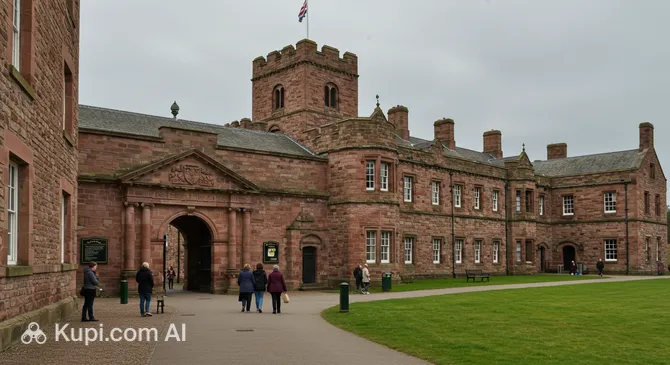
  • It is home to the Berwick-upon-Tweed Barracks, which are considered the first in Great Britain built specifically for the permanent housing of troops. Before their construction in the early 18th century, soldiers usually lived in the homes of local residents or inns, so this complex was a real revolution in military architecture.

  • If you arrive in town by train, you will find yourself right on the site of a historical monument. The 19th-century railway station stands on the site where the medieval Berwick-upon-Tweed Castle and Ramparts once stood. A memorial plaque on the platform marks the spot where the Great Hall once stood, where King Edward I decided the fate of the Scottish throne.

  • The town was a favorite holiday destination for the famous British artist L.S. Lowry. He regularly came here to capture the local landscapes, streets, and beaches. Today, visitors can follow a special trail to find the exact spots from which the master painted his pictures.

Berwick-upon-Tweed Barracks. Illustration.
Source: Kupi.com AI

Traveler photos:

How to Get There

When planning a trip to this picturesque border corner, it is worth studying the travel options in advance. You can read the details and learn more about how to get to Berwick-upon-Tweed to build the optimal route.

There is no airport in Berwick-upon-Tweed itself; however, the town is conveniently located between two major air hubs. One of the most popular arrival options is Edinburgh Airport (IATA: EDI), located approximately 85 km away. A car trip from there takes about 1 hour. Furthermore, Berwick is on the East Coast Main Line, so it is very convenient and fast to get here by train from central Edinburgh.

An alternative is Newcastle International Airport (IATA: NCL), located in Newcastle upon Tyne at the same distance — about 85 km. The drive by car also takes roughly 1 hour. As with Edinburgh, there is excellent rail communication between Newcastle and Berwick, making the trip comfortable and quick.

Summary information on the nearest airports is presented in the table:

AirportPassenger trafficDistance
Edinburgh Airport14.4 mln85 km
Newcastle International Airport4.9 mln85 km
Dundee Airport41 12797 km
Durham Tees Valley Airport228 126146 km
Glasgow International Airport8.1 mln150 km

Rail transport is one of the best ways to get to the town, as Berwick-upon-Tweed station is an important stop for trains running between London and Scotland. The nearest major hub is Waverley Station (IATA: ZXE) in Edinburgh (74 km). The train journey between the cities takes only about 45–50 minutes, which is often faster than a car trip.

You can also consider a route through the city of Dundee, where Dundee Railway Station (IATA: ZDU) is located. The distance is about 96 km, and the car trip takes just over an hour.

Data on the nearest major railway stations is provided below:

StationPassenger trafficDistance
Waverley Railway Station23.1 mln74 km
Dundee Railway Station1.7 mln96 km
Carlisle Central Station2.1 mln113 km
Durham Railway Station2.6 mln115 km
Aberdeen Railway Station2.3 mln138 km

Main Attractions

Berwick-upon-Tweed is a real open-air museum where every stone breathes history. The compact town center allows you to explore the main sights on foot, enjoying the atmosphere of old England and the fresh sea breeze.

One of the key points of attraction is Berwick-upon-Tweed Castle and Ramparts. This is a unique complex of defensive structures that completely encircles the historical center. The Elizabethan Walls are considered some of the finest surviving bastions in Europe. A walk along the ramparts, spanning about 1.5 kilometers, will reveal stunning views of the River Tweed estuary and the town's red-tiled roofs. From the medieval castle itself, picturesque ruins remain, adding a special touch of romance to the landscape.

Berwick-upon-Tweed Castle and Ramparts. Illustration.
Source: Kupi.com AI

Traveler photos:

To immerse yourself in the region's military past, it is worth visiting the Berwick-upon-Tweed Barracks. Built in the early 18th century, they were the first purpose-built barracks in Britain designed for permanent soldier housing rather than temporary billeting. Today, these majestic Georgian buildings house several museums at once, including an art gallery and a rich exhibition dedicated to the King's Own Scottish Borderers regiment. This place allows you to learn more about the daily life of a garrison town in different eras.

To see the town from an unusual perspective, we recommend taking one of the Berwick Boat Trips. A water excursion along the River Tweed is a great chance to see the famous bridges, including the majestic Victorian viaduct, from below and appreciate their scale. Additionally, during the trip, you can often spot wild seals and swans living in the river mouth, or head out into the open sea to admire the rugged beauty of the Northumberland coast.

Local Cuisine

Berwick-upon-Tweed's gastronomic map is a fascinating combination of North Sea bounty, Northumberland farm produce, and the culinary traditions of neighboring Scotland. Thanks to its location at the mouth of the river and on the coast, the town is famous for incredibly fresh seafood. The main delicacy here is rightfully considered to be Tweed River salmon, which has been caught by local fishermen for centuries and is valued by gourmets for its delicate flavor. Local restaurants will also offer you the freshest crabs, lobsters, and, of course, a British classic — a hearty portion of "fish and chips" in crispy batter.

Those with a sweet tooth should look out for a unique local souvenir — "Berwick Cockles". Despite the name, these are not shellfish at all, but traditional mint sweets. They have a characteristic shape and a red and white stripe, resembling old-fashioned hard candies. They first began to be produced in the early 19th century and have since become a sweet symbol of the town that tourists often buy as gifts.

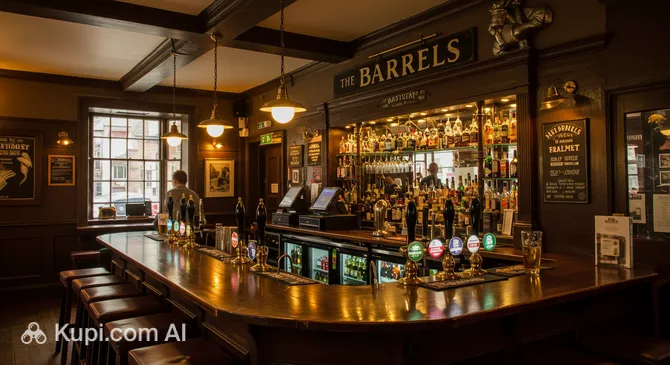
Drinking culture in Berwick is no less developed than its gastronomy. The town has many cozy establishments where you can try real English ale or craft beer. Locals value atmospheric places with history. For example, the Barrels Ale House is known for its eccentric interior and excellent selection of drinks. Live music often plays here, bringing together both townspeople and travelers.

The Barrels. Illustration.
Source: Kupi.com AI

Traveler photos:

If you prefer a more intimate setting and craft experiments, it's worth stopping by the Curfew Micro-pub. This small but very colorful establishment specializes in micro-batches of beer and cider, offering guests a chance to try rare varieties that are hard to find in regular bars. Besides beer, a honey drink is popular in the region — mead from the nearby Holy Island of Lindisfarne, which is often served in local cafes.

The tradition of afternoon tea is also strong in Berwick-upon-Tweed. During the day, many tourists and locals relax in tearooms, enjoying "Cream Tea" — tea with scones, clotted cream, and jam. For those who want to immerse themselves in the life of the town, it is recommended to visit the weekly markets where farmers sell local cheeses, pastries, and seasonal vegetables.

Travel Tips

A trip to Berwick-upon-Tweed is an immersion into living history on the scenic shores of the North Sea. To ensure your visit to this unique corner of Great Britain is as comfortable as possible and leaves only pleasant memories, we have prepared a list of useful recommendations to help you plan the perfect itinerary.

  1. Clothing and weather. The weather here is dictated by the proximity of the sea and is often windy even on sunny days. The best principle for your wardrobe is layering: bring a windproof jacket, a cozy sweater, and a scarf. For walks along the famous fortress walls and the old town's cobblestones, be sure to choose comfortable flat-soled shoes or sneakers — heels will be completely inappropriate and hazardous here.
  2. Transport accessibility. The historical center of Berwick-upon-Tweed is very compact, and it is best explored on foot. A car rental is only necessary if you plan trips deep into Northumberland. Local buses run in the town, and taxis are best booked by phone through local dispatch services, as popular international apps may work with delays or have few available cars.
  3. Finances and payment. The currency is the Pound Sterling (£). Most shops, pubs, and museums accept contactless payments via cards and smartphones. However, we strongly recommend having some cash (bills of £5–£10 and coins) for payments in small souvenir shops, at markets, or for tips, which are usually 10–12% of the bill in restaurants if a service charge is not automatically included.
  4. Health and safety. The town is quiet and safe for tourists. Pharmacies (for example, the Boots chain) are located in the center, but note that they usually close at 5:30 PM or 6:00 PM and rarely operate 24 hours a day. While walking along the waterfront and fortress ramparts, be careful: there are not railings everywhere, and gusts of wind can be strong.
  5. Communication and internet. English is the primary language, though you may hear a specific local dialect combining features of Northumbrian and Scots. Free Wi-Fi is available in many cafes, hotels, and even some public areas. If you need mobile internet, SIM cards from major British operators (EE, O2, Vodafone) can be bought in supermarkets or mobile phone stores.
  6. Etiquette and socializing. Locals are friendly but value politeness and personal space. It is customary to say hello when entering a shop or a bus. The most important rule is observing the queue. Britons take queuing very seriously, so never try to push ahead — it will be perceived as a gross violation of social norms.
  7. What to avoid. Do not call the locals Scots, even if the accent sounds similar or the border is very close. Berwick-upon-Tweed is an English town with a proud and complex history, and questions of national identity can be sensitive here. Simply enjoy the unique "border" atmosphere without labeling people.
  8. Important tip about tides. If you decide to visit the nearby Holy Island (Lindisfarne), which is a popular day trip from Berwick, strictly check the tide tables. The road to the island is completely submerged under water twice a day, and tourists regularly find themselves cut off from the mainland or stranded in their cars.

Berwick-upon-Tweed is a place where time flows a little slower, allowing you to enjoy every moment. By following these simple tips, you will feel confident and can focus on the main thing — the stunning views, delicious food, and the unique spirit of the northern borderlands.

Entertainment & Nightlife

Nightlife in Berwick-upon-Tweed differs from that of busy metropolises: you won't find huge nightclubs with neon signs operating until dawn here. Instead, the town offers a cozy, authentic atmosphere of traditional English pubs, intimate concerts, and cultural evenings. Most activity is concentrated in the historical center, especially around Bridge Street and Marygate, where ancient architecture creates a special backdrop for evening strolls.

The hub for live music and informal socializing is the Barrels Ale House. This establishment enjoys cult status among both locals and tourists thanks to its eccentric interior and regular live music performances. You can hear everything here from folk and jazz to rock and blues. Concerts are often held in the basement, and the atmosphere remains friendly and relaxed. There is no dress code here — the main thing is that you are comfortable.

For those who appreciate a quieter rest and craft drinks, the Curfew Micro-pub is an ideal choice. This place embodies the modern "micro-pub" trend — small establishments where there is no loud music or gaming machines, and the focus is on quality communication and tasting rare ales or ciders. The crowd here is intelligent, valuing coziness and good conversation. The venue is small, so it can get quite crowded on Friday and Saturday evenings.

If you are interested in cultural leisure, pay attention to the schedule at "The Maltings" center. This is the town's main theater and cinema, located in a picturesque spot overlooking the river. It regularly hosts theatrical productions, comedy shows, film screenings, and live opera broadcasts. It's a great alternative to going to a bar for those who want a more measured evening.

In terms of safety, Berwick-upon-Tweed is a very peaceful town. Walking through the center even late at night doesn't cause concern; however, it's worth remembering that the streets empty quite early. Most pubs close by 11:00 PM or midnight, with only a few operating until 1:00 AM on weekends. If you are not staying in the center, we strongly recommend writing down the numbers of local taxi services in advance, as catching a car on the street at night is almost impossible, and ride-hailing apps may not find available drivers.

Parks & Museums

Berwick-upon-Tweed, despite its rugged fortress status, offers guests surprisingly picturesque green zones and a rich cultural program. Here, historical heritage is closely intertwined with natural beauty, allowing tourists to alternate walks in the fresh air with visits to unique exhibitions.

For nature lovers, Castle Vale Park will be a real discovery. This reconstructed Victorian park is located on the slopes by the river, near the railway station. It is known for its whimsical rock gardens, ornamental "Lily" pond, and viewpoints that offer perhaps the best view of the famous Royal Border Bridge. It is an ideal place for a quiet rest in the shade of trees after exploring the town walls.

If you want to feel the power of the sea, head to Spittal Beach, located on the south bank of the River Tweed estuary. This is not just a sandy beach, but a popular recreation area with a Victorian-style promenade. Spittal attracts geology enthusiasts with its unique rock formations and fossils, as well as those who want to observe marine life — seals and dolphins can often be seen here.

The cultural heart of the town is rightfully the Berwick-upon-Tweed Barracks. Within the walls of this grand 18th-century complex today are several important museums. The "Berwick Museum and Art Gallery" offers an immersion into the history of the region, from medieval battles to the daily life of townspeople, and also presents part of the famous Burrell Collection, including works of art and antiques. There is also a regimental museum here, telling of the military prowess of the Scottish Borderers.

Contemporary art lovers should visit The Granary Gallery. Located in a restored ancient granary building, it is one of the leading exhibition spaces in the north of England. It regularly hosts exhibitions by contemporary artists, photographers, and sculptors, creating an interesting contrast with the ancient architecture of the building itself.

The Berwick-upon-Tweed Castle and Ramparts themselves can also be viewed as a unique open-air museum and park area. A walk along the grassy ramparts of the fortress walls is the town's most popular tourist route, combining a lesson in military engineering with enjoyment of sea panoramas.

Insider tip: Be sure to walk to the end of Berwick Pier to the lighthouse. This spot is rarely overcrowded with tourists, but it is from there that a breathtaking view of the town from the sea and the river estuary opens up, especially beautiful at sunset.

Getting Around

The transport system of Berwick-upon-Tweed matches its size and status as a historical settlement. Since the town is quite compact, there is no metro, trams, or trolleybuses here. Walking remains the main way for tourists to get around, as most attractions are concentrated within the fortress walls. However, for trips to the suburbs (for example, Spittal or Tweedmouth) or to nearby beaches, the bus network is well-developed.

The main bus operator in the region is Borders Buses. Their routes connect the town center with the railway station, residential areas, and neighboring settlements. The buses are modern, comfortable, and generally run strictly according to schedule. Special attention should be paid to the B1 route, which loops through the town's main areas, making it very convenient for quick travel.

The fare payment system here is simple and convenient for travelers. The most common way is to buy a ticket directly from the driver upon boarding. You can pay in cash (it's better to have small bills or coins) or use a contactless bank card, which is the preferred option. If you plan to make several trips in a day, it's more economical to purchase a Day Ticket, which gives you the right to an unlimited number of trips within the selected zone.

An important feature for motorists is the parking system in the Northumberland region. In many parts of the town, including the center, a parking disc system is in place. Parking itself is often free for a certain time (usually 2–3 hours), but you are required to buy a special cardboard clock-disc (costs about £1) from local shops, the library, or the tourist information center, set your arrival time, and place it under the windshield. Failure to have a disc may result in a fine.

As an alternative to public transport, taxis are popular. Unlike in large metropolises, you shouldn't count on instant dispatch through apps like Uber. It's better to book cars in advance by phone through local dispatch services or look for them at special taxi ranks located at the railway station and on the main street, Marygate. This is especially relevant in the evening when buses run less frequently.

For active leisure enthusiasts, bicycle rental is available. Berwick-upon-Tweed is an important point on the "Coast and Castles" national cycle route. By renting a bike, you can not only quickly see the town fortifications but also take a picturesque ride along the coast to Holy Island, if the tide schedule allows.

Accommodation

The choice of accommodation in Berwick-upon-Tweed will pleasantly surprise you with its variety: from ancient coaching inns that remember the stagecoaches of past centuries to cozy family guest houses with sea views. As a popular tourist destination on the border of two cultures, the town offers accommodation options for every taste and budget, allowing guests to fully immerse themselves in the atmosphere of the northern borderlands.

For those who want to be in the center of the action, hotels inside the historical fortress walls are an ideal choice. Many of them are located in restored Georgian and Victorian buildings. By staying here, you will be within walking distance of the main attractions, the railway station, and colorful pubs. This is the best option for history buffs and those traveling without a car.

If you prefer a quieter holiday and proximity to nature, look at the Spittal area on the south bank of the River Tweed. Here, along the coast and promenade, many cozy B&Bs (Bed & Breakfasts) and guest houses are concentrated. Many rooms offer stunning views of the North Sea and the river estuary, and the sandy beach is just a couple of minutes' walk away.

The region is also famous for its campsites and holiday parks, which are especially popular with families. Located on picturesque cliffs near the town, they offer budget accommodation in comfortable caravan homes with access to entertainment and swimming pools. This is an excellent base for exploring not only the town itself but the entire Northumberland coast.

When planning a trip in the summer months, especially in July and August, it is recommended to book accommodation in advance. Great Britain is in high demand during this period, and the best options in Berwick fill up quickly. In the off-season, prices become more affordable, and the town takes on a special melancholic charm that attracts lovers of peace and quiet.

Nearby Cities

For those wanting to explore the surroundings, Berwick-upon-Tweed serves as an excellent starting point for day trips to several interesting nearby places:

The absolute favorite for a short trip is majestic Edinburgh. The capital of Scotland is just a 45–50 minute train ride away. This is a city of stunning architecture where you can stroll along the famous Royal Mile, visit the ancient Edinburgh Castle perched on a rock, and immerse yourself in the atmosphere of endless festivals and history.

Very close to the Scottish capital is the colorful port district of Leith. Once a separate town, today it attracts tourists with its trendy food scene, cozy waterfront cafes, and the main attraction — the Royal Yacht Britannia, which is moored at the local terminal and open for tours.

Also worth noting is Musselburgh, known as "The Honest Toun." This is the oldest settlement in Scotland, located on the shores of the Firth of Forth. People come here to enjoy quiet coastal walks, visit the famous racecourse, or play golf on one of the oldest courses in the world.

CityPopulationDistance
Dunbar9 03039 km
Haddington9 13050 km
Galashiels13 00051 km
Felton10 60757 km
Tranent12 14060 km

These nearby destinations provide a glimpse into the diverse culture and landscapes of the region, making your journey even more fulfilling and memorable.

Shopping & Souvenirs

Shopping:

Shopping in Berwick-upon-Tweed is a pleasant and relaxing activity, free from the bustle of huge metropolises. The town does not claim the title of a fashion capital, but it charms travelers with its unique assortment. Independent boutiques, antique shops, arts and crafts stores, and family businesses passed down through generations predominate here. Special attention should be paid to local products and handmade items reflecting the border spirit of the region.

The town's main shopping artery is Marygate. This is where most of the life is concentrated: there are bank branches, pharmacies, and popular British high-street clothing and home goods stores. If you are looking for something more authentic, turn onto Bridge Street or Castlegate. These areas are famous for their independent shops where you can find rare books, vintage clothing, designer jewelry, and home decor. A walk here feels like a treasure hunt, with something interesting hidden behind every storefront.

In the historical center of Berwick-upon-Tweed, you won't find giant indoor shopping malls, which helps preserve the town's architectural character. For those who need large supermarkets or electronics stores, the Tweedbank Retail Park operates on the outskirts. However, most tourists prefer to explore the compact shops in the center, enjoying the atmosphere of the ancient streets.

An important part of the town's trade is the traditional Marygate Market. It takes place in the open air every Wednesday and Saturday, continuing a centuries-old tradition of charter markets. Here, farmers from Northumberland and the Scottish Borders offer fresh vegetables, cheeses, homemade pastries, and fish. You can also find stalls with flowers, clothing, and household items. It's a great place to feel the town's living rhythm and chat with the locals.

When choosing souvenirs, pay attention to the town's gastronomic symbols. The famous mint sweets "Berwick Cockles" are a must-buy. Also popular are wool and tweed products, a reminder of the proximity to Scotland, and a bottle of mead from the nearby Holy Island of Lindisfarne. History buffs should check out the gift shops at the museums; for example, when visiting the Berwick-upon-Tweed Barracks, you can buy themed books, toy soldiers, and unique gifts related to the town's military history.

Shops in the town usually operate from Monday to Saturday from 09:00 to 17:00 or 17:30. On Sunday, many small shops may be closed, and larger chain stores operate on a reduced schedule (usually from 10:00 or 11:00 until 16:00). As for payment, bank cards (Visa, Mastercard) are accepted almost everywhere, including small cafes. However, for purchases at the market or in very small kiosks, it is recommended to have some cash pounds on hand.

Reached the end of the page?

That means the route is fully explored