Support

Norman House

About

The Norman House is a rare and wonderfully atmospheric monument of medieval domestic architecture, located in the historic center of Bournemouth (in the Christchurch area), United Kingdom. The site features the ruins of a motte-and-bailey castle, where the remains of a stone keep stand atop a high earth mound, with the 12th-century manor house itself nestled at its base.
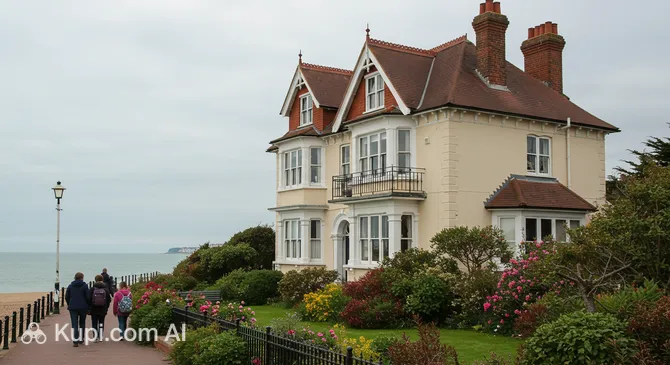
Norman House
Norman House. Иллюстрация. Источник: Kupi.com AI

The site's primary architectural pride is its unique cylindrical chimney—one of only five such surviving examples in all of England. Built around 1160, the Norman House served as a luxurious residence for local lords, offering comforts that were available only to the elite at the time. Here, you can see the remains of a solar (private room), storage areas, and even a medieval "garderobe tower," which functioned as an early toilet.

Today, the castle grounds are a picturesque open-air archaeological park, where ancient gray stones contrast with a bright green bowling green. Situated at the confluence of the Rivers Avon and Stour, this complex attracts travelers not only for its historical significance but also for its panoramic views of the river expanses and the city's ancient streets.

Contacts

If you are planning a visit and would like to clarify any details, you can use the official resources of English Heritage, which manages this historic site.

Below is a table with basic contact information for visitors:

How to contactContact
AddressCastle and Norman House, Castle St, Christchurch BH23 1DT, UK
Websitewww.english-heritage.org.uk

What to Do

The main activity here is immersing yourself in history by exploring the stone ruins. Be sure to follow the path to the top of the motte (earth mound) to examine the remains of the nine-meter stone keep. From this vantage point, you'll get a magnificent panoramic view of the River Avon and the tiled roofs of Christchurch—the perfect spot for atmospheric photos.

Inside the Norman House itself, it is worth looking closely at the details: find that famous cylindrical chimney and note the thickness of the east wall, which once served as a defensive line. Tourists often linger at the English Heritage information boards, which help "reconstruct" the missing parts of the building in your imagination and envision what the daily life of a 12th-century lord was like.

The area of the former castle courtyard (bailey) has now been transformed into a well-kept green lawn. Here, you can not only take a stroll but also have a picnic in the shade of the ancient walls or watch a leisurely game of lawn bowls. The proximity to the water makes this a popular spot for relaxing after sightseeing.

You can conclude your visit with a walk along the embankment to the town quay. This allows you to combine your cultural program with outdoor relaxation. The site is excellent for families with children, as there is plenty of open space to move around, and the lack of an entrance fee makes visiting accessible to every traveler.

Getting There

The attraction is located at Castle Street, Christchurch BH23 1DT, just 10 kilometers from the popular resort of Bournemouth. The easiest way to get here is by public transport: the train journey from Bournemouth central station to Christchurch station takes about 10–15 minutes, followed by a pleasant ten-minute walk through the town center.

If you prefer buses, use routes 1, 2, X1, X2, or X3, which run from Bournemouth directly to the High Street stop. From the stop, the castle ruins are just a few hundred meters away towards the river.

For those traveling by car, it is most convenient to take the A35 or A338. Paid parking is available in the center of Christchurch, costing approximately £2–3 per hour. Outdoor enthusiasts can reach the castle by bicycle, following the scenic coastal paths from the coast to the confluence of the Rivers Avon and Stour.

A taxi from the town center or nearby areas is also a convenient option, especially if you are arriving at Bournemouth Airport—the trip will take no more than 15 minutes. Thanks to the compactness of the historic center, a visit to the Norman House is easy to combine with a walk to the local Priory or relaxation at the quay.

Ближайший город: Bournemouth

History & Facts

The history of this site began back in the Saxon era, when a fortified settlement called Twynham was located here. However, the castle's modern appearance began to take shape in the early 12th century, when the Norman baron Richard de Redvers erected the first motte-and-bailey castle here. For a century and a half, the castle served as the administrative center and home for the powerful de Redvers family.

The Norman House itself was built around 1160 as a luxurious residential building for the lord and his family. At the time, it was the pinnacle of architectural sophistication: stone walls, a solar room, and a cylindrical chimney, which was extremely rare for that era. In 1293, the castle passed into the hands of the Crown, and its strategic importance was highlighted by the fact that its management was entrusted to high-ranking constables.

In the mid-17th century, during the Civil War, the castle found itself at the center of turbulent events. In 1645, it was captured by Parliamentary forces, who held the fortification until the end of the conflict. Later, in 1651, by order of Parliament, the main fortifications were demolished to prevent them from being used by enemies, and local residents began dismantling the ruins for building materials.

Today, the Norman House is only partially preserved, but even in ruins, it remains an invaluable testament to Norman-period residential architecture. Today, the site is under the careful stewardship of English Heritage, which ensures the preservation of this historical legacy for future generations.

Time Needed

To leisurely explore the castle ruins and look inside the surviving rooms of the Norman House, most tourists need between 30 and 60 minutes. This is quite enough time to climb the hill, study the information boards, and take commemorative photos against the backdrop of the ancient walls and the River Avon.

If you are a history enthusiast and enjoy examining architectural elements in detail, such as the unique chimney or ancient arrow slits, we recommend allowing about 1.5 hours for your visit. This will allow you to soak in the medieval atmosphere without rushing and enjoy the views from the top of the motte.

You can make your visit longer by combining it with a rest on the adjacent green lawn. Many visitors come for a couple of hours to have a small picnic or watch a game of bowls, which traditionally takes place on the grounds of the former castle courtyard during the warmer months.

Working Hours

One of the pleasant features of this attraction is its accessibility. The castle ruins and the Norman House are open to the public round the clock, 24 hours a day, seven days a week. This gives tourists a unique opportunity to see the ancient walls in the rays of the rising sun or at twilight, when they look particularly mysterious.

Despite the round-the-clock opening hours, experienced travelers recommend planning your visit for daylight hours. Not only will this ensure your safety when moving over uneven ground and steps, but it will also allow you to see all the architectural details and enjoy the river views. Admission to the site is free.

Круглосуточно

Nearby

A visit to the castle ruins and the Norman House is only part of what this picturesque corner has to offer. The surroundings of Christchurch and nearby Bournemouth are full of entertainment for all tastes: from modern virtual reality centers to cozy aquariums and active outdoor zones.

Exploring neighboring sites will allow you to create a full day's itinerary, combining historical tours with active recreation and family fun. Below are the nearest places of interest:

NameDistance
Quomps Splashpark0.5 km
Christchurch Retail Park1.3 km
Southbourne Beach2.1 km
Mudeford Quay2.5 km
Highcliffe Castle4.3 km
Bournemouth Beach Lodges4.4 km
Boscombe Pier5.1 km

Reached the end of the page?

That means the route is fully explored