Support

Sueno’s Stone

About

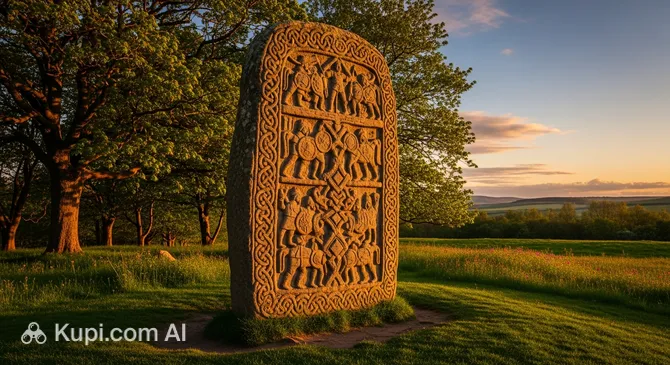
Standing at an impressive seven meters, Sueno's Stone is one of Northern Europe’s most majestic and enigmatic monuments from the early Middle Ages. This colossal monolith, carved from local sandstone over a thousand years ago, is located on the outskirts of the town of Forres. It represents a unique example of late Pictish art, dating back to the 8th–10th centuries, and is rightfully considered a historical treasure held within Great Britain.
Sueno
Sueno's Stone. Иллюстрация. Источник: Kupi.com AI

The monument's primary value lies in its incredibly detailed carvings. One side features a giant ring-headed cross decorated with complex interlace patterns, while the other side depicts a large-scale battle panorama divided into several levels. Here, you can see rows of infantry, cavalry, and even scenes of the execution of the defeated, turning the stone into a kind of stone chronicle of a forgotten battle.

Today, the site is under state care and protected by a special glass pavilion that shields the ancient sandstone from the harsh Scottish climate. Despite its modern shell, the stone stands in its historical location, overlooking the floodplains of the Rivers Mosset and Findhorn just as it did centuries ago, serving as a reminder of the times when the Picts ruled these lands.

Contacts

To plan your visit to the monument, you can use the information provided on the official resource of the organization that protects Scotland's historical heritage.

How to contactContact
AddressFindhorn Rd, Forres IV36 3WX, Великобритания
Websitewww.historicenvironment.scot

What to Do

Visiting this site is, first and foremost, an opportunity to experience a masterpiece of ancient art. The glass protective enclosure allows you to examine the finest details of the carving from a close distance. It is recommended to walk slowly around the monument: on the western side, you will see a symbol of faith—the majestic cross—and on the eastern side, a dramatic history of war, resembling a tapestry frozen in time. Particular attention should be paid to the lower panels, which depict scenes that historians interpret as the triumph of Christianity or the commemoration of a great victory.

Many tourists come here for the mystical atmosphere and solitude. Although the stone is near a road, the surrounding Scottish landscape remains peaceful. Photography enthusiasts will appreciate how sunlight passing through the glass highlights the contours of the cavalry and infantry. For a deeper immersion into the region's history, you can complement your visit with a walk to Cluny Hill or by searching for the legendary "Witch's Stone" in the heart of the town.

The site is popular among history and archaeology buffs due to its scale and state of preservation. Reading the information plaques will help you navigate the complex narratives depicted on the panels and learn about various theories regarding the monument's origins. It is an ideal stop for those wanting to see the real Scotland off the beaten tourist path.

Getting There

Finding this majestic monument is easy: it is located at Findhorn Rd, Forres IV36 3WX, almost at the edge of the town. If you are traveling by car, follow the A96 road toward Findhorn. The stone is clearly visible from the road, and there is free parking available for visitors nearby.

For those who prefer public transport, buses operated by Stagecoach running from Inverness or Elgin are a good option. From the bus stop or Forres railway station, the monument can be reached on foot in about 15–20 minutes (the distance is approximately 2 km). You can also use a local taxi service to get directly to the glass pavilion in comfort.

If you are already in the town center, a pleasant walk along scenic paths will take about half an hour. The route to the attraction is straightforward and suitable for tourists of all ages, while cyclists will appreciate the easy access to the site from the main routes.

Ближайший город: Forres

History & Facts

This monumental pillar was created by the Picts, presumably in the 9th–10th centuries AD. Researchers still debate which specific event it commemorates. Traditional legend links it to the Danish king Sweyn Forkbeard (Sueno) and his supposed encounter with Malcolm II, but modern historians propose other versions. It is possible the stone was erected to honor the victories of King Kenneth MacAlpin or marks the spot where King Dub mac Ailpín died in 966.

The western side of the stone is decorated with a massive Celtic cross, clearly indicating a Christian context for its creation. At the same time, the eastern side serves as a veritable "stone comic strip" of the Middle Ages. Four panels depict battle scenes in great detail: from the arrival of the cavalry to the grisly details of the enemy's defeat, including rows of decapitated bodies, making it one of the most informative sources on warfare of that era.

Interestingly, the first written mention of the name "Sueno's Stone" only appeared in 1726 in the works of historian Alexander Gordon. A decade later, in 1747, the monument caught the attention of soldiers during the Jacobite rising. In the early 1990s, during archaeological excavations, scientists discovered the remains of a foundation and suggested that a second similar stone once stood here, which, unfortunately, has not survived to this day.

Time Needed

For a thoughtful exploration of the attraction, 30–60 minutes is sufficient for most travelers. This is enough time to walk around the monument, study the intricate carvings in detail, and read the information on the nearby display stands.

If you are planning a full walk through the town, including a visit to Nelson’s Tower or the local parks, you should allocate about 2–3 hours for a visit to this part of Forres. Photographers are advised to set aside a bit more time to wait for the ideal lighting when shadows emphasize the relief of the ancient images.

Working Hours

The attraction is open for viewing 24 hours a day, 7 days a week. Since the monument is outdoors (protected by a glass canopy), you can visit it at any convenient time, regardless of public holidays.

For the most detailed study of the carvings, it is best to choose daylight hours. Night visits are also possible, but without special lighting, it will be difficult to see the delicate patterns of the Pictish masters. Before your trip, it is recommended to check the official Historic Environment Scotland website in case of any maintenance work on the site.

Круглосуточно

Nearby

Exploring the surroundings of this historical site will allow you to immerse yourself deeper into the atmosphere of the Scottish town and discover its rich heritage. After examining the ancient carvings, it is worth spending some time walking through the center, where many interesting architectural landmarks have been preserved.

NameDistance
Ramnee Hotel0.4 km
Grant Park0.5 km
Red Lion1.1 km
Mosset Tavern1.3 km

Reached the end of the page?

That means the route is fully explored