Support

Historic Adventist Village

About

Imagine having the chance to travel through time and find yourself in the middle of the 19th century. Adventist Historic Village is a unique open-air museum located in the city of Battle Creek, USA. This site recreates the atmosphere of the legendary "Advent Town," where one of the world's largest religious movements once originated.
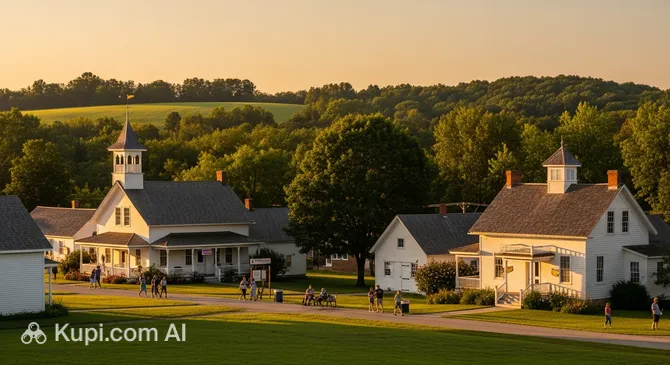
Historic Adventist Village. Source: Kupi.com AI

The complex spans three blocks and brings together 29 restored historic buildings. Among them, you will find the cozy homes of the church's first pioneers, an old one-room schoolhouse, a log cabin, and authentic churches. Special attention is drawn to the Dr. J.H. Kellogg Discovery Center, where you can learn about the amazing medical inventions of the man who made this region famous worldwide.

Today, this site serves as a living monument to history, telling the story of the lifestyle, faith, and healthy living principles of the people of that time. Visitors are greeted by guides in Victorian-era costumes, making a stroll through the village truly immersive and educational for guests of all ages and faiths.

Contacts

To clarify visit details or organize a group tour, you can use the museum's official contact information. The village administration is always ready to assist tourists with information about current events.

Address 480 W Van Buren St, Battle Creek, MI 49037, USA
Phone +1 269-965-3000
Official Website adventistheritage.org

What to Do

The highlight of your visit will be a walking tour accompanied by guides dressed in 19th-century attire. They don't just recount facts but literally bring history to life, telling stories about the pioneers' daily lives and their contributions to education and medicine. In the Welcome Center, be sure to watch the documentary, which will help you better understand the context of the era and get to know the White family.

Science and technology enthusiasts will find the collection of Dr. Kellogg's inventions fascinating. It features quirky exercise machines and medical devices from that era, which became the prototypes for modern fitness equipment. You can peek inside the houses to see the original interiors and visit the building of the first Adventist school, which laid the foundation for an extensive educational system.

Don't forget to stop by the replica of the famous "Ascension Rock"—a significant site for those interested in Millerite history. The village offers many locations for atmospheric photos and is perfect for a family outing, turning history into an exciting adventure among log cabins and old carriage barns.

Getting There

Getting to this historic corner is easy, as it is conveniently located in the western part of the city, near the confluence of the Battle Creek and Kalamazoo rivers. If you are traveling by car, the drive from the city center via Van Buren St will take only a few minutes. Free parking is provided for visitors on-site.

For those who prefer public transport, Battle Creek Transit buses stop within walking distance. If you are arriving from another region, the nearest major transport hub is the Kalamazoo/Battle Creek International Airport (AZO), located approximately 25 kilometers away. A trip from the airport by taxi or rental car will take about 20–30 minutes.

Many tourists prefer to reach the village on foot or by bicycle if they are staying in hotels in the downtown area. A walk will allow you to better experience the atmosphere of the old neighborhood and see other iconic sites, such as the memorials located nearby.

History & Facts

The history of this place is inextricably linked to the formation of the Seventh-day Adventist Church. In 1855, a small group of believers invited Ellen White and her husband James to settle in these parts, which effectively turned the settlement into the headquarters of the new movement. Over the next fifty years, the community grew to hundreds of thousands of members worldwide, creating a powerful base for educational and medical activities here.

The neighborhood known as "Advent Town" was a unique social experiment for its time. More than two thousand local residents strictly observed the Sabbath and followed healthy eating principles inspired by Ellen White's teachings. It was here that the foundations of modern dietetics were born, and the country's first major sanitariums and publishing houses were established.

The idea of creating a "living museum" as we see it today was born in 1980. Thanks to the efforts of enthusiasts and the support of city authorities, key buildings were purchased and restored, including the homes of famous community figures. The city recognized the invaluable contribution of Adventist heritage to the region's development, turning this block into an important tourist and cultural center.

Time Needed

To fully enjoy the 19th-century atmosphere and explore all the exhibits in detail, we recommend allowing 2 to 3 hours for your visit. This will be enough time for a leisurely stroll through the grounds, participating in the main tour, and viewing the interiors of the most significant buildings.

If you plan a deep dive into the history of medicine at the Dr. J.H. Kellogg Discovery Center or want to take time to watch the thematic films at the Welcome Center, it's worth adding an extra half hour. A complete tour of all 29 village sites without rushing will allow you to truly feel the spirit of the pioneer era.

Working Hours

The museum is open to visitors most of the week; however, the schedule may change depending on the season. On regular days, the village gates are open on Monday, Tuesday, Thursday, Friday, and Sunday from 10:00 AM to 4:00 PM. On Saturday, the museum opens later—from 2:00 PM to 4:00 PM—and it is closed on Wednesdays.

Keep in mind that the last tour usually begins one hour before closing, so it's best to arrive early. During the summer period (May to September), operating hours are often extended until 5:00 PM, so it is recommended to check the official website for the current schedule before your trip.

Nearby

Exploring the surrounding area after visiting the historic village will help you get a more complete picture of the cultural and natural diversity of this region. Nearby, you will find many monuments, parks, and cozy spots where you can relax after a long walk.

Name Distance (km)
Indian Chief Statue 1.3
Flash Flood Water Park 1.4
New Holland Brewing - Battle Creek Brewpub 1.4
Clara's on the River 1.5
Binder Building 1.7
Underground Railroad Sculpture 1.8
Sojourner Truth Monument 1.9
Painted Rock 3.4
Penniman Castle 3.4
Verona Dam 3.7

Reached the end of the page?

That means the route is fully explored