Support

Cape Lisburne

About the Airport

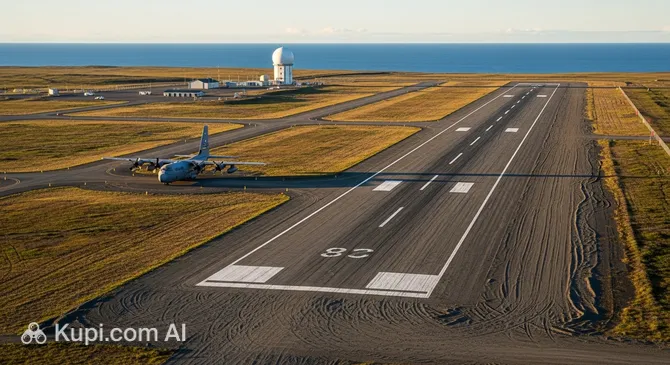
Cape Lisburne. Source: Kupi.com Binoculars

Cape Lisburne Airport (LUR) is not merely a transport hub, but a true outpost of civilisation at the edge of the world, where the sky meets the harsh waters of the Chukchi Sea. Located on a remote and rocky cape in Alaska, this airfield serves a Long Range Radar Station, acting as the only reliable link for personnel to the "mainland" amidst Arctic isolation. Arriving here is akin to an expedition: pilots must battle strong winds and fog, while passengers are treated to breathtaking views of the wild tundra and icy expanses, inaccessible to the ordinary tourist.

IATA Code LUR
ICAO Code PALU
City Cape Lisburne (Alaska)
Distance to Centre 0 km (airport is located within the station grounds)
Status Military / Private Use
Annual Passengers Limited (service personnel and contractors only)
Schedule Closed (special flights only)

Airport Features and Highlights:

Extreme Location. The airport is situated in a permafrost zone within the Alaska Maritime National Wildlife Refuge. The runway is literally sandwiched between steep cliffs and the sea, requiring the highest level of skill from pilots, especially during the winter period.

Strategic Purpose. Cape Lisburne is a military facility (Long Range Radar Station) that is part of the defence system. There are no regular commercial flights for tourists here; access is strictly regulated and requires Prior Permission Required (PPR) from the US Air Force. The main traffic consists of cargo and charter flights to support the station's operations.

Infrastructure. The airfield is equipped with a single gravel runway approximately 1,460 metres in length. There are no standard terminals, cafes, or Duty Free shops here. It is a purely functional facility where reliability and safety in changeable Arctic weather conditions are paramount.

Contact Information

As Cape Lisburne Airport (LUR) is an active military facility (Long Range Radar Station) and is closed to civil aviation, it lacks the service departments customary for tourists. Contact information is strictly limited:

  • Official Airport Website: No public website exists (the facility is managed by the US Air Force / Pacific Air Forces Regional Support Center).
  • Airport Address: Cape Lisburne Long Range Radar Station, Alaska, USA (coordinates: 68°52′31″N 166°06′38″W).
  • Inquiry Service Phone: Not available for civilians (communication lines are used exclusively for military and official purposes).
  • Email: No public email address is provided.
  • Social Media: Official accounts are absent.
  • Lost Luggage Information: Service not provided, as commercial passenger transport is not conducted.
  • Support Service Contacts: Available only for authorised station personnel and contractors via internal communication channels of the 611th Air Support Group.

How to Get to the Airport

It is important to understand that Cape Lisburne Airport is located on an isolated military station, not connected by a road network to the rest of Alaska. It is impossible to reach here by standard ground methods, and tourist logistics are completely absent. Below are details on transport accessibility considering the specific nature of the facility.

Public Transport

There is absolutely no public transport in the Cape Lisburne area. There are no bus routes, trains, or metro. The airport exclusively serves the personnel of the Long Range Radar Station, and movement within the territory is carried out only on service vehicles provided by the US Air Force or contractors.

Taxi, Transfers, and Car Rental

Taxi services (including Uber or Lyft) and car rental companies do not operate in this part of the globe. Roads in the vicinity of the airport are gravel tracks connecting the runway with residential and technical modules of the station. They do not extend beyond the base, so it is impossible to drive here from other Alaskan cities.

Parking

There is no specialised parking for travellers. Small parking areas near buildings are intended exclusively for service all-terrain vehicles and trucks supporting the radar's operation.

How to Get There: Alternative Options

Since direct access for tourists is closed, travellers wishing to see the harsh nature of this Chukchi Sea region usually choose the nearest settlements where regular civil flights operate. The logistical hubs in this region are:

  • Point Hope Airport (PHO). Located approximately 64 km to the south. This is the nearest civil settlement (Tikigaq) where one can fly to experience Inupiat culture and Arctic nature similar to the landscapes of Cape Lisburne.
  • Ralph Wien Memorial Airport (OTZ) in the city of Kotzebue. Located 265 km away. This is a major regional hub from where small planes frequently depart to remote villages.
  • Wiley Post-Will Rogers Memorial Airport (BRW) in Utqiaġvik (Barrow). Located 445 km away, it is the northernmost point of the USA with developed air links.
  • Nome Airport (OME). Located 486 km away, known for its Gold Rush history and as the finish line of the Iditarod dog sled race.

Cost and Travel Time

For authorised personnel, travel is conducted via special flights, the cost of which is covered by government contract. Flight time on a small aircraft from Kotzebue or Nome takes from 45 minutes to 1.5 hours, depending on weather conditions. For tourists, the budget for visiting neighbouring open regions (e.g., Point Hope) can range from 300 to 800 USD for a ticket from Anchorage or Fairbanks.

Recommendations

Do not attempt to plan a route directly through Cape Lisburne without official clearance from military authorities. For extreme tourism in Alaska, it is better to choose a flight to Point Hope or Utqiaġvik, where there is minimal tourist infrastructure and the opportunity to legally enjoy views of the Arctic.

Terminals and Map

Structure and Terminals

As Cape Lisburne Airport (LUR) is a strictly military and logistical facility, the terminal infrastructure customary for tourists is absent here. There is no separation into international and domestic terminals, no gates, and no airbridges. The entire airport complex is essentially represented by one small multifunctional building (operations centre), located in immediate proximity to the gravel runway.

Service Features:

  • Single Zone: Arrival and departure are carried out through the same exit leading to the aircraft parking area.
  • Lack of Amenities: The building has no business class lounges, shops, cafes, or ATMs. Infrastructure is limited to minimally necessary service rooms for pilots and station technical staff.
  • Luggage: Luggage collection and handover are performed manually directly at the aircraft side by the crew or the ground support team. Luggage belts are not provided.

Map and Navigation

Navigating Cape Lisburne is extremely simple, as getting lost here is impossible. The airport is a linear structure: the runway, a small apron for turning and parking aircraft, and the adjacent technical modules of the station. All navigation boils down to moving from the aircraft steps to the entrance of a residential or service module accompanied by meeting personnel.

Navigation Recommendations:

  • Follow the Escort: Free movement around the airfield and station territory is strictly prohibited. Upon arrival, all passengers are met by a responsible officer or supervisor.
  • Caution, Wind: The distance from the aircraft to shelter is minimal, but due to strong gusty winds from the Chukchi Sea, this short path can be difficult. Stay close to the group.
  • Winter Conditions: In winter (which lasts most of the year here), the boundaries of pedestrian zones may be hidden by snow. Do not stray from cleared paths.

Check-in and Screening Procedures

Standard procedures typical for civil airports (online check-in, scanning boarding passes, removing shoes at security) are not applied here in the classic form. However, the restricted status of the facility imposes its own limitations.

Timing and Control Features:

  • Prior Approval: The main verification happens long before departure. All arrivals must have Prior Permission Required (PPR) from the military authority. Without it, boarding is impossible.
  • Passport Control: Upon arrival, documents are checked by authorised station personnel. The procedure takes 5–10 minutes, as passenger lists are known in advance.
  • Cargo Inspection: All incoming cargo and personal belongings may be inspected for prohibited items (alcohol, weapons without permits, etc.). This happens promptly immediately after unloading.
  • Departure Check-in: Passengers (usually rotational staff) are advised to be ready for loading 30–40 minutes before the aircraft arrives, to have time to weigh luggage and prepare documents, as aircraft parking time is often reduced due to unstable weather.

Airport History

The history of Cape Lisburne Airport (LUR) is inextricably linked with the military history of Alaska and Arctic exploration. Unlike civil airports that developed for trade and tourism, this runway appeared as a vital element of defence during the Cold War, becoming the only reliable bridge between an isolated garrison and the outside world.

Foundation and Construction (1950s)

Although the cape itself was discovered and named in 1778 by the famous navigator James Cook, the aviation history of this place began only in the mid-20th century. In 1951, the US Air Force selected this inaccessible rocky terrain for the construction of a radar control station. Building an airfield in conditions of permafrost and gale-force winds was a true engineering feat. Officially, the station and its supporting airfield began full operation in 1953.

The "White Alice" Era

In 1957, Cape Lisburne became part of the famous "White Alice" communications system. This was a tropospheric radio scatter network connecting remote corners of Alaska with huge parabolic antennas resembling billboards. During this period, the airport experienced peak activity: planes constantly arrived with engineers, equipment, and supplies to service the giant antennas that provided communication before the advent of reliable satellite technologies. This era ended in 1979 when more modern data transmission methods replaced "Alice".

Modernisation and Renovations

Over the decades of its existence, the runway has been modernised repeatedly. Initially, it was a short dirt strip suitable only for light aviation. Later, the strip was widened and reinforced with gravel, bringing its length to 1,460 metres so it could accommodate heavy transport aircraft like the C-130 Hercules. These planes became the main "workhorses," delivering fuel and bulky cargo that cannot be brought by sea for most of the year.

Interesting Facts and Milestones:

  • Reduced Presence: While in the 1950s and 60s, more than 100 military personnel lived permanently at the station and around the airfield, after radar automation in the 1980s, the permanent population decreased to a minimum. Today, the airport serves only rotational shifts of technical specialists.
  • Climate Records: The airport operates in a zone of extreme weather conditions. Historically, pilots flying here have had to land aircraft with crosswinds exceeding 50 knots (about 90 km/h) and in conditions of near-zero visibility.
  • Environmental Transformation: In the 1990s and 2000s, a large-scale removal of obsolete equipment and structures of the dismantled "White Alice" system was carried out through the airport, becoming one of the largest logistical operations in the station's history.
  • Rescue Role: Despite its closed status, the Cape Lisburne strip historically serves as an alternate airfield for small planes in distress over the Chukchi Sea, offering pilots the only chance for a safe landing for hundreds of kilometres around.

Services and Facilities

Since Cape Lisburne Airport (LUR) is a closed military facility with harsh operating conditions, the level of service here differs radically from what passengers of civil airlines are accustomed to. The infrastructure is entirely oriented towards supporting the life of station personnel and fulfilling official tasks, so familiar tourist amenities are absent here.

Dining and Retail

There are no commercial restaurants, coffee shops, or Duty Free stores at the airport or on the station grounds.

  • Dining: Food provision for employees and crews is carried out in a centralised canteen (galley). Meals are strictly on schedule and only for authorised personnel. It is impossible for tourists or casual visitors to buy food here.
  • Shops: Retail trade is absent. A small kiosk with necessities (hygiene products, snacks) may be available only for employees residing at the base for a long time, but it does not operate as a public store.

Communication and Finance

Digital isolation is one of the features of this place.

  • Wi-Fi and Internet: There are no public Wi-Fi networks for passengers. Internet connection is provided via satellite channels exclusively for official use. Personal communication may be limited or entirely absent.
  • Banks and Currency Exchange: There are no ATMs, bank branches, or currency exchange points at the station. Personnel must resolve all financial matters before arriving on the "mainland". Transactions on the base territory, if required, usually do not involve the use of cash in the usual format.

Comfort and Waiting Areas

Specialised VIP lounges or comfortable waiting areas with soft armchairs are not provided at Cape Lisburne. Passengers awaiting departure (usually rotational shifts or technical specialists) stay in the common areas of residential modules or in the operations centre until boarding. Charging stations as a separate service are absent, although residential blocks have standard sockets (US standard, 110V) for personnel's personal devices.

Medical Services

A small medical point operates at the station, equipped to provide first aid and stabilise the condition of the injured. However, there is no full-scale pharmacy or hospital here. In case of serious illness or injury, emergency medical evacuation (medevac) by sanitary flight to the nearest major cities, such as Kotzebue or Anchorage, is required, which may take several hours depending on the weather.

Special Categories of Passengers

The airport infrastructure is not adapted for special groups of travellers due to the specific nature of the facility:

  • Passengers with Children: Mother and child rooms, play areas, or child escort services are absent, as the presence of minors on the territory of a military radar station is not provided for by the rules.
  • Passengers with Disabilities: A barrier-free environment is absent. Movement around the territory requires good physical fitness: there are many steep stairs, narrow passages in modules, and uneven gravel surfaces outside. There are no special lifts or ramps for wheelchairs.

Accommodation and Business Services

Hotels: There are no commercial hotels at the airport or within a radius of hundreds of kilometres. The only accommodation option is service dormitories (barracks) on the station grounds, available only for military personnel and contractors with confirmed clearance. The nearest tourist hotels are in the cities of Kotzebue or Nome, accessible only by plane.

Business Centres: Conference rooms for rent are absent. Work meetings are held in station service rooms and concern exclusively operational issues. Printing, photocopying, or fax services are available only for fulfilling official mission tasks.

Where to Eat

It is important to note immediately that Cape Lisburne Airport (LUR) does not possess a familiar food court zone. Here you will not find famous brand coffee shops, fine dining restaurants, bars with panoramic views of the runway, or even snack vending machines. Given that the airport is part of a remote military station, the catering sphere here is purely functional and is not designed for commercial passenger service.

Restaurants and Cafes: The Reality of a Military Facility

The only place to eat at the station is the Dining Facility / Galley, located inside the main residential complex. Access is strictly regulated and open only to military personnel, contractors, and officially seconded individuals. Casual travellers or transit passengers cannot use it.

  • Location: Inside the main residential module of the station (Landside), a few minutes' walk from the airfield.
  • Opening Hours: Meals are organised strictly according to a schedule ("windows" for breakfast, lunch, and dinner lasting 1–1.5 hours each). 24-hour service is absent.
  • Price Range: For authorised personnel, meals are typically included in the contract or provided at the department's expense. Commercial pricing is absent, as selling food for cash is not practised.

Menu and Local Features

The gastronomic experience at Cape Lisburne can be described as "hearty and caloric," dictated by the need to maintain strength in the harsh Arctic climate.

  • Dishes: The menu is based on classic American "comfort food": steaks, burgers, mashed potatoes, fried chicken, macaroni and cheese, thick soups, and canned vegetables. Fresh fruits and vegetables are a real luxury here; their availability depends directly on recent cargo flights.
  • Specialities: Sometimes cooks may prepare fresh fish if personnel managed to organise fishing in coastal waters during free time, but this is the exception rather than the rule.
  • Drinks: Coffee (filter coffee in large volumes), tea, juices, and carbonated drinks are available. Alcohol is strictly prohibited on the station; there are no bars.

Special Dietary Requirements (Vegetarian, Halal, Gluten-Free)

Considering the logistical isolation, choices are extremely limited:

  • Vegetarians and Vegans: No specialised menu is provided. The selection is usually limited to side dishes (rice, potatoes, canned corn) and salads from available vegetables.
  • Dietary Requests: Finding gluten-free or lactose-free products is difficult. Personnel with special dietary needs or allergies are recommended to bring special products with them.
  • Halal and Kosher: Separate food preparation according to religious standards in the station's general kitchen is technically impossible to ensure.

Recommendations for Arrivals

Since you cannot buy food upon arrival, meal planning is a critically important part of preparing for a visit to Cape Lisburne (for those with clearance).

1. "Bring Everything" Strategy
Regardless of the duration of your stay, be sure to bring a supply of food. The best options for snacks: protein bars, nuts, dried meat (jerky), chocolate, and freeze-dried products that can be reconstituted with boiling water. This is your insurance in case you arrive outside the canteen's operating hours.

2. Water
Although there is drinking water at the station, it is recommended to carry a personal flask or bottle of water, especially for the flight and waiting for transport.

3. Quick Snack vs Full Meal
Do not count on the possibility of having a full lunch at the airport before flying back. Eating at the station is a regulated process for employees. For a quick snack, use your own supplies, which can be eaten on board the plane or in the loading waiting area.
Traveller Tips

Travelling to Cape Lisburne differs radically from a standard tourist flight. Since this is a closed military facility with harsh Arctic conditions, standard airport behaviour rules here give way to specific safety and survival requirements. Preparation for a flight here requires special attention to detail and discipline.

Arrival Time Recommendations

Unlike major hubs, you do not need to arrive 3 hours before departure here, but punctuality is critical. Flights often depend on weather "windows" that can open and close in a matter of minutes.

  • Be Ready in Advance: Be in the waiting area (usually the operations centre or residential module) 45–60 minutes before the estimated aircraft arrival time.
  • Readiness No. 1: As soon as the plane has landed and unloaded, boarding happens instantly. Pilots strive to take off as quickly as possible to avoid icing or deteriorating visibility. Latecomers are not waited for here.

Check-in and Security Features

There are no body scanners, metal detector frames, or shoe removal belts here, but control is stricter than in civil airports.

  • Documents: Your main document is not only your passport but also your entry permit (PPR). Keep them in an easily accessible place, preferably in a waterproof file.
  • Screening: Be prepared for your luggage to be manually searched for prohibited items. This is done by military police or authorised station personnel.
  • Dry Law: Cape Lisburne is an alcohol-free zone. Any alcoholic beverages in luggage will be confiscated, and the violator may be denied boarding or have their station access revoked entirely.

Seat Selection Tips

Flights are operated by small turboprop aircraft (often Beechcraft, CASA, or Piper Navajo), where seats are not assigned on the boarding pass.

  • Warmth or Views: In winter, it can be cool in the cabin. If you get cold, ask the pilot where the heater is working and sit closer to it. If you want unique shots of the tundra, choose a window seat (but ensure it is not blocked by the wing).
  • Motion Sickness: In conditions of turbulence over the Chukchi Sea, shaking can be severe. People with a weak vestibular system are better off sitting closer to the cockpit or the wing—motion is felt less there.

What Can and Cannot Be Carried in Hand Luggage

Your hand luggage should be packed as a "survival kit" in case of an unforeseen overnight stay in the tundra or an emergency landing.

  • Must Take in Cabin: Personal medication (with a week's supply), warm clothes (hat, gloves, thermal underwear), power bank, sunglasses (snow blindness is a real danger), and high-calorie snacks.
  • Strictly Prohibited: Alcohol, narcotics, weapons (without a special order and commander notification), explosives. Lithium batteries must be in hand luggage only, not in checked baggage.

Recommendations for Connecting Passengers

Cape Lisburne is an end point; there are no direct flights to the "mainland" (to Seattle or Anchorage) from here. Connections usually take place in Kotzebue or Nome.

  • Allow 24 Hours for Connection: Never buy a connecting ticket from Kotzebue or Anchorage with a tight margin (e.g., a 2–3 hour difference). Weather at Cape Lisburne is unpredictable, and departure may be delayed for several days. Purchase flexible fare tickets.
  • Luggage on Transfer: Luggage is not checked through to the final destination. You will have to collect it at the intermediate airport (e.g., in Kotzebue) and re-check it for the major airline flight.

Tips for Saving Time and Money

In conditions of total isolation, money loses its value, and time becomes the main resource.

  • Bring Everything with You: It is impossible to buy forgotten toothpaste, a phone charger, or tobacco here. The absence of small things can create huge discomfort. Saving lies in careful planning of the packing list.
  • Cash: Carry 100–200 dollars in cash in small bills. You won't need them at the station, but they may save the situation in the intermediate airport (Kotzebue or Nome) if cards do not work due to communication failures.

What to Do in Case of Flight Delay

Delays here are the norm, not the exception. Departure may be postponed due to fog, strong wind, or blizzards.

  • Psychological Mindset: Accept the situation. Pressuring staff or pilots is useless—they do not risk lives for a schedule.
  • Leisure: Wi-Fi may not work or be overloaded. Download books, movies, or music to your phone in advance. A paper book is a polar explorer's best friend.
  • Do Not Wander Far: Even if the flight is delayed, do not go walking in the tundra. A weather window may open suddenly, and you will have 15 minutes to gather. Furthermore, walks outside the perimeter are dangerous due to wild animals (bears).

Reached the end of the page?

That means the route is fully explored