Support

Dew Station Airport

About the Airport

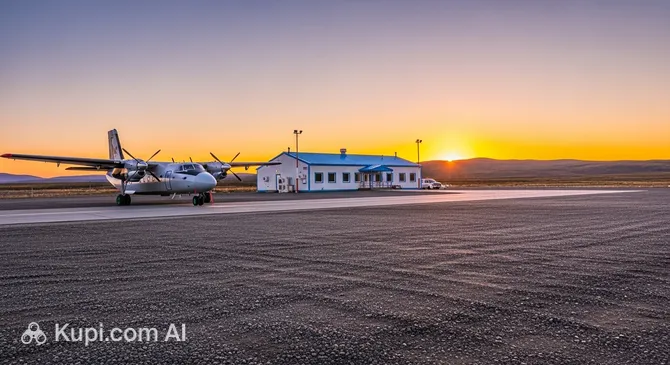
Dew Station Airport. Source: Kupi.com Binoculars

Imagine a journey to the very edge of the earth, where the boundless tundra meets the harsh waters of the Arctic Ocean. Point Lay Airport, also known as "Dew Station," is not just a transport hub, but a true "lifeline" for an isolated community in northern Alaska. There are no familiar departure lounges with duty-free shops here; instead, passengers are greeted by the piercing Arctic wind and a sense of genuine adventure far from civilization. This small airfield serves as a reminder of how vital aviation is in the most inaccessible corners of our planet.

IATA Code PIZ
ICAO Code PPIZ
City Point Lay
Distance to center ~2 km
Status Regional (Domestic)
Passengers per year ~2,500 pax
Schedule Local schedule

Airport Features and Highlights:

Point Lay Airport is a unique facility with a rich history, originally created as part of the Distant Early Warning (DEW) Line system, which explains its secondary name, "Dew Station." One of its main features is its gravel runway, which requires special skill from pilots, especially during winter and the off-season. The airport plays a critically important role for local residents, ensuring the delivery of mail, food, and medicine, as well as emergency medical evacuation. Due to extreme weather conditions, flight schedules here often depend on the whims of nature, making every plane arrival a significant event.

Contact Information

It is important to understand that Point Lay Airport (PIZ) is a small gravel strip in the Arctic zone without a standard passenger terminal. There is no permanent information desk or commercial zones here. Most passenger service functions are performed by the air carrier and local representatives of the North Slope Borough.

  • Official Airport Website: The airport does not have its own separate website. Official information regarding the airfield status is posted on the North Slope Borough administration portal, while flight schedules are on the website of the main carrier, Wright Air Service.
  • Inquiry Service Phone: +1 (907) 474-0502 (Wright Air Service inquiry desk — the most reliable source of information for passengers). Administrative questions: +1 (907) 852-0489 (North Slope Borough Airports Department).
  • Airport Address: Point Lay LRRS Airport, Point Lay, Alaska 99759, USA (Approximately 2 km south of the Point Lay village).
  • Email: There is no direct airport email. For communication, it is recommended to use the contact forms on the Wright Air Service website or the Borough administration site.
  • Airport Social Media: Official accounts are absent.
  • Lost Luggage Information: The airline handles lost property. You need to contact the Wright Air Service office by phone at +1 (907) 474-0591 (cargo department) or +1 (907) 474-0502.
  • Customer Support Contacts: Support is provided centrally through the Wright Air Service call center (+1 907-474-0502) or via the airline agent meeting flights directly on the runway.

How to Get to the Airport

Transport accessibility to Point Lay Airport (PIZ) differs radically from typical urban conditions. Since the village of Point Lay is isolated from Alaska's road network and represents a small community, standard logistics rules do not apply here. The "road" to the airport is a short journey along a gravel track that depends entirely on the season and local specifics.

Travel Time and Distance

The airport is located just 2–3 kilometers from the residential area of the village. A trip by vehicle takes literally 5–10 minutes. A walk could take about 20–30 minutes, but due to harsh weather conditions (wind, frost) and the possibility of encountering wild animals (including polar bears), walking without an escort and protective means is strongly discouraged.

Public Transport

Point Lay completely lacks public transport in the traditional sense. There are no:

  • Bus routes;
  • Trains or railway connections;
  • Metro or shuttles.

Taxis, Transfers, and Private Transport

There are no official taxi services with meters here either. The transport system relies on personal arrangements and the mutual assistance of residents.

  • Meeting by Locals: The main way to get to or from the airport is to arrange with a host (relatives, friends, or administration representatives if you are on a work visit).
  • Seasonal Transport: In summer, the main means of transport are ATVs (All-Terrain Vehicles) and pickup trucks. In winter, when everything is covered in snow, snowmobiles become the primary transport.
  • Cost: There are no fixed fares. If a local resident gives you a lift, it is customary to agree on a price individually or leave a small sum as gratitude for fuel.

Car Rental

There are no car rental agencies in Point Lay. The nearest chain agencies are in major Alaskan cities (Anchorage, Fairbanks), but since roads to Point Lay do not exist, it is impossible to drive here in a rented car.

Airport Parking

There is no specialized paid parking with security and barriers here. Near the runway, there is a small dirt area where locals leave their snowmobiles or ATVs while meeting a flight. Parking is free and informal.

Other Airports in the Region

Since Point Lay has no ground connection with other cities, neighboring airports are important hubs for transfers when traveling through Northern Alaska. Distances are indicated in a straight line (by air), as there are no roads between these settlements.

Recommendations for Travelers: When planning a departure from Point Lay, always arrange a transfer with local residents in advance. Consider that due to sudden blizzards or fog, the flight may be delayed or cancelled, so have a reserve of time and provisions.

Terminals and Map

The structure of Point Lay Airport (PIZ) differs radically from what travelers are used to seeing in standard international or even regional airports. Here, the concept of a "terminal" is nominal, and all infrastructure is subject to the harsh conditions of the Arctic and functional necessity.

Number of Terminals and Layout

The airport is a single compact facility without division into multiple terminals. In fact, the passenger area is a small one-story structure (or even just a fenced area depending on the season and current state of infrastructure), serving as a waiting room and check-in zone simultaneously. In such airports, called "bush airports" (airfields for small aviation in remote areas), there are no jet bridges or complex multi-level walkways.

Navigation Scheme and Transfers

Navigation at Dew Station is as simple and intuitive as possible, as it is impossible to get lost here. The entire passenger path runs from the edge of the runway to the aircraft board.

  • Transfers between terminals: None, as there is only one (and very nominal) terminal.
  • Boarding Gate: This is done on foot over gravel or packed snow directly to the aircraft. The distance from the waiting area to the stairs is usually no more than 20–50 meters.

Departure and Arrival Zones

At Point Lay Airport, arrival and departure zones are not separated by physical barriers or glass partitions. It is a single space on the apron.

  • Arrival Zone: After landing, the aircraft taxis to the unloading zone. Passengers descend via the aircraft's built-in stairs directly onto the runway. Luggage is unloaded manually by the pilots and handed to passengers right there, by the aircraft side.
  • Departure Zone: Passengers wait for the aircraft's arrival either in a small room (if open) or, more often, in the personal vehicles of those meeting or seeing them off, to avoid freezing in the wind.

Service Features and Infrastructure

The main feature of the PIZ terminal is its asceticism. Travelers should take into account the absence of familiar amenities:

  • There are no cafes, shops, ATMs, or currency exchange points here.
  • Restrooms may be absent or locked; it is recommended to take care of this before leaving for the airport.
  • The waiting area is not always properly heated, so warm clothing is the main guarantee of comfort.

Check-in and Screening Procedures

Check-in processes here are much faster and more informal than in major hubs.

  • Check-in: Usually begins 30–45 minutes before departure. Often the procedure is conducted by the pilot or airline agent themselves, checking passenger names against a list on a tablet or paper.
  • Luggage: Weighing luggage (and sometimes passengers themselves to calculate the aircraft's center of gravity) is a mandatory procedure. It takes literally 5–10 minutes.
  • Screening: There is no classic screening with metal detector frames and scanners here. However, the pilot has the right to visually inspect luggage and ask questions about transported cargo for flight safety purposes.

Navigation Recommendations

Since you will be on an active airfield without fences, exercise extreme caution. Never approach the aircraft until the propellers have completely stopped, and always follow the pilot's visual signals. Given the strong winds from the ocean, hold onto small items and hats tightly when moving from the car to the plane.

Airport History

The history of Point Lay Airport (PIZ) is not just a chronicle of a transport hub's development, but a story of how technology and strategic necessity changed the lives of Alaska's indigenous population. Unlike many civilian airports that emerged for trade or tourism, this airfield appeared due to global geopolitical processes of the mid-20th century.

The Birth of "Dew Station" and Early Years

The founding of the airport dates back to 1957. It was then that the LIZ-2 radar detection station was put into operation, becoming part of the famous DEW Line (Distant Early Warning Line). This network of stations was created for early warning of aerial threats from the north. The runway was built by military engineers to ensure supplies for the garrison, as cargo delivery by sea was possible only during a short navigation period. It is to its military origin that the airport owes its second, unofficial but widely used name — Dew Station.

Turning Point: Moving the Village

A key stage in the airport's history was the 1970s. Initially, the historic Inupiat settlement of Point Lay was located on a barrier island separated from the mainland by a lagoon. However, the island was subject to constant flooding and coastline erosion. Residents decided to move the village to the mainland, closer to reliable infrastructure — that is, to the military radar station and the airport. Thanks to the presence of the airfield, the move became possible: planes delivered building materials for new homes, fuel, and equipment. From that moment, the airport ceased to be a purely military facility and turned into a vital civilian hub.

Modernization and Present Day

Over the decades, the airport has undergone changes aimed at improving flight safety in extreme Arctic conditions:

  • Transfer of Control: Over time, as military tensions decreased, operational control of the airfield passed from the US Air Force to civilian authorities — the North Slope Borough administration, although the facility still retains LRRS (Long Range Radar Site) status.
  • Runway Improvement: The gravel strip has been reinforced and leveled repeatedly to accept not only light aircraft but also heavier cargo planes, such as the C-130 Hercules, which are necessary for delivering bulky cargo.
  • Navigation Equipment: In the 2000s and 2010s, lighting equipment was modernized, and modern navigation systems were installed, allowing pilots to land in conditions of polar night and dense fog.

Interesting Facts from Airport History:

  • Southernmost in the North: The Point Lay sector was the southernmost point in the chain of stations managed from Barrow (Utqiagvik), yet remained one of the most isolated.
  • Dual Purpose: In the airport's history, there were periods when it served as a base for scientific expeditions studying marine mammal migration and climate change in the Arctic.
  • "Saving Strip": Throughout its history, the airport has been used hundreds of times for air ambulance (Medevac) services. Locals remember cases when pilots landed planes in severe blizzards, guided by the lights of snowmobiles lined up along the strip (before the installation of modern lighting) to save patients' lives.

Services and Facilities

Expectations for service at Point Lay Airport (PIZ) must be adjusted for reality: this is a remote Arctic facility where functionality and survival come first. There are no familiar attributes of international hub comfort here, such as business lounges or food courts. Travelers should prepare for Spartan conditions.

Restaurants, Cafes, and Shops

On the airport territory (runway and waiting area), catering and retail outlets are completely absent.

  • Food: There are no cafes or vending machines with coffee or snacks here. Passengers are strongly advised to bring food and water with them, especially if a layover is ahead or waiting for a flight due to weather is possible.
  • Shops: Duty-Free and souvenir shops are absent. The nearest and only store — Native Store — is located in the village of Point Lay itself, about 2–3 km from the strip. The assortment there is basic, and prices are significantly higher than on the mainland due to complex logistics.

Lounges and VIP Services

The concept of a VIP lounge is not applicable at Dew Station. The airport does not have separate zones of increased comfort.

  • General Hall: Represents a small room (shelter), which is not always open. Most often, the "waiting room" serves as the cabin of the car or snowmobile you arrived in.
  • Business Centers: Absent. There is no office equipment, meeting rooms, or computers for public use here.

Communication and Electronics

Technological amenities at the airport are kept to a minimum.

  • Wi-Fi: There is no public free internet access. Mobile coverage in the airport area may be unstable or absent altogether, depending on your operator (GCI has the best coverage).
  • Charging Stations: There are no specialized stands for charging gadgets. Power outlets in the waiting area may not exist, or access to them will be limited. It is critically important to carry fully charged power banks (portable batteries), as batteries drain very quickly in the cold.

Financial Services

There are no ATMs or currency exchange points at the airport or in its immediate vicinity. Bank branches are also absent in the village. Payments in the local store are possible by card, but for paying for private transfers or emergency purchases, it is necessary to carry cash (US Dollars), withdrawn in advance in major cities (Anchorage, Fairbanks, Utqiagvik).

Medical Services and Safety

There is no medical post or pharmacy in the airport itself. First aid kits are available on board the aircraft.

  • Emergency Help: In case of an emergency, it is necessary to contact the Point Lay Clinic located in the village. Medical staff (usually paramedics) can provide first aid, but serious cases require evacuation by air ambulance.
  • Police: A Village Public Safety Officer (VPSO) or a North Slope Borough police officer works in the village, but there is no permanent post at the airport.

Services for Passengers with Children

There is no specialized infrastructure for children (mother and child rooms, play areas). Given the lack of warm toilets and changing tables directly at the strip, parents should take care of the child's hygiene before leaving the village.

Accessible Environment (Passengers with Disabilities)

The airport infrastructure is not adapted to modern barrier-free environment standards due to the gravel surface and lack of capital structures.

  • Boarding: Carried out via the aircraft stairs. There are no elevators or ambulifts. Pilots and airline staff provide assistance with boarding and disembarking passengers with reduced mobility manually.
  • Movement: The gravel surface makes using wheelchairs difficult. It is recommended to notify the air carrier (Wright Air Service) in advance about the need for assistance.

Accommodation: Hotels Near the Airport

In Point Lay, there are no commercial hotels or hostels in the usual sense, and it is impossible to book a room through popular aggregators. Tourism is not developed here.

  • Accommodation: The only overnight options are an arrangement with the local administration, school, or fire station, where business travelers are sometimes allowed to stay, or renting a room from local residents.
  • Important Rule: It is categorically not recommended to fly to Point Lay without a prior accommodation arrangement, as you risk remaining on the street in harsh Arctic conditions.
Where to Eat

When planning a trip through Point Lay Airport (PIZ), a key factor that every passenger needs to consider is complete autonomy regarding food. Since the airport is a remote gravel runway without a full-fledged terminal complex, the usual catering structure is completely absent here.

Restaurants, Cafes, and Bars

On the airport territory, including the waiting area (if open) and the apron, there is not a single catering establishment. You will not find cafes, restaurants, bars, or even hot dog stands here. Vending machines with snacks, chocolate bars, or coffee are also absent. Passengers must be prepared for the fact that upon arrival at the strip or before departure, there will be no opportunity to buy ready-made food on-site.

Shops and Alternative Options

The only source of food within a radius of several hundred kilometers is the village store, Native Store, located in the residential part of Point Lay, approximately 2–3 kilometers from the runway.

  • Assortment: The store offers a basic set of non-perishable products: canned goods, crackers, chips, frozen semi-finished products, carbonated drinks, and bottled water. Fresh fruits, vegetables, and dairy products appear only immediately after the arrival of cargo flights and sell out quickly.
  • Local Cuisine: There are no commercial restaurants in Point Lay where one could order local dishes. Traditional Inupiat food (dishes made from whale meat, venison, or fish) is prepared exclusively in private homes and is not sold to tourists. You can try it only if local residents invite you as a guest.
  • Opening Hours: The store operates on a reduced schedule, usually closing early in the evening and may be closed on weekends or holidays. Exact hours are best checked with locals upon arrival.

Special Dietary Requirements (Vegetarian, Halal, Gluten-Free)

Given the lack of public catering and the limited assortment of the only village store, finding specialized products (vegan, gluten-free, or Halal) in Point Lay is practically impossible. If you follow a strict diet or have food allergies, it is critically important to bring all necessary food supplies with you from the "mainland" (from Anchorage or Fairbanks).

Price Range

The cost of products in the Native Store is extremely high due to complex logistics (all goods are delivered by aviation). Prices can be 2–3 times higher than in ordinary US supermarkets. A simple bottle of water or a pack of cookies may cost significantly more than usual.

Recommendations for Passengers

To avoid discomfort and hunger, especially in case of flight delays due to weather conditions, follow these tips:

  • For a Quick Snack: Always have energy bars, nuts, dried fruits, or chocolate in your carry-on luggage. This is an "emergency supply" that won't take up much space but will sustain your energy.
  • For a Full Meal: If you have a long wait or a flight with transfers, buy sandwiches, salads, or hot food in advance at the departure airport (for example, in Anchorage or Utqiagvik) and pack them in a thermal bag. There will be nowhere to heat food at Dew Station.
  • Water: Be sure to bring a supply of drinking water. There are no drinking fountains at the airport, and tap water in the village may have a specific taste or require boiling.

Travel Tips

Traveling through Point Lay Airport (Dew Station) is an experience that has nothing in common with standard flights. Here you won't find security queues with hundreds of people or endless corridors to gates. However, the harsh Arctic specifics require special preparation and knowledge of the unspoken rules of Alaska's "bush aviation" from the tourist.

Recommendations on Arrival Time

Forget the rule of "arriving 2–3 hours early." In Point Lay conditions, this is not only pointless but also dangerous for health if it is freezing outside and the waiting room is locked.

  • Optimal Time: Arriving at the runway 30–40 minutes before departure is worthwhile. This time is quite sufficient for check-in and loading.
  • Coordination: Since the plane may be delayed or arrive slightly earlier, stay in touch with the airline representative or locals. The ideal option is to wait for the aircraft's arrival in a warm house in the village and leave only after confirmation that the plane is approaching.

Check-in and Screening Features

The check-in procedure here is maximally simplified but has its strict nuances related to flight safety on small turboprop aircraft.

  • Weighing: Be mentally prepared to be asked to step on the scales together with your carry-on luggage. This is not a whim, but a necessity for calculating the correct aircraft balance. Honestly state your weight when booking tickets.
  • Screening: There are no body scanners or X-ray belts here. Screening is often limited to a visual check and questions from the pilot about the contents of your bags. However, the pilot has the full right to ask you to open luggage if they have doubts.
  • Documents: Despite the informal atmosphere, always keep your ID (passport) in an easily accessible place (for example, in an inner jacket pocket) so as not to search for it in the wind.

Seat Selection on the Plane

In aircraft like the Cessna Caravan or Piper Navajo, there is no standard seat numbering indicated on the boarding pass.

  • Allocation: Boarding is directed by the pilot. They will indicate where you should sit based on weight distribution on board. This is critically important for the aircraft's balance.
  • Tip: If weight and balance allow, you can politely ask for a window seat. Views of the tundra and the Arctic Ocean coast from a low altitude are stunning. But never argue with the pilot's decision.

Luggage and Carry-on

Cargo compartments of small aircraft have a specific shape and limited volume.

  • Type of Bags: It is strongly recommended to use soft bags or backpacks. Rigid plastic suitcases on wheels are difficult to place in the small luggage compartment ("belly") of the plane, and they may simply not be accepted on board if fully loaded.
  • Prohibited Items: Rules for transporting dangerous substances (gas, flammable liquids) are observed even more strictly here. Bear spray is categorically prohibited in the cabin; its transport is possible only in luggage and only provided it is in sealed packaging and with prior notification to the pilot.
  • Carry-on: Keep everything valuable, fragile, as well as vital medicines with you in a small bag. It may be cool in the cabin, so an extra sweater in your hands won't hurt.

Tips for Transit Passengers

Point Lay is not connected by direct flights to major cities outside the region. A transfer in Utqiagvik (Barrow) or Kotzebue is inevitable.

  • Separate Tickets: Most likely, your flight from Point Lay and the subsequent flight (for example, Alaska Airlines to Anchorage) are issued on different tickets. Luggage will not be transferred automatically. You will have to collect it and check it in again.
  • Time Reserve: Never plan a connection "back-to-back." Allow a minimum of 3–4 hours, or better yet — a day. Small aviation is extremely weather-dependent, and a flight delay from Point Lay for several hours is a common occurrence.

Customs Control

Flights to Point Lay are domestic, so there is no customs or border control at the airport itself. However, if you are a foreign tourist, always have your passport with a visa with you, as document checks are possible at major transfer hub airports.

Saving Time and Money

  • Bring Food: The most important way to save money is to bring food with you. There are no cafes in Point Lay, and prices in the store are very high. A sandwich bought in advance in a big city will save you $15–20.
  • Wear Your Clothes: To avoid paying for excess weight (tariffs for excess baggage in small aviation are high), wear the heaviest and bulkiest clothing (parkas, winter boots) on yourself.

What to Do in Case of Flight Delay

This is the most common scenario in Alaska. A "Weather hold" can last from several hours to several days.

  • Plan "B": Always have an arrangement with your place of accommodation in Point Lay regarding a possible extension of your stay. Do not check out completely until you are sure that the plane has taken off to get you.
  • Medicine Supply: If you take prescription drugs, always take a supply for 3–4 days more than the planned trip duration. There is no pharmacy here.
  • Patience: Do not pressure pilots or agents. If they say it is dangerous to fly, it truly is. In the Arctic, safety always stands above the schedule.

Reached the end of the page?

That means the route is fully explored