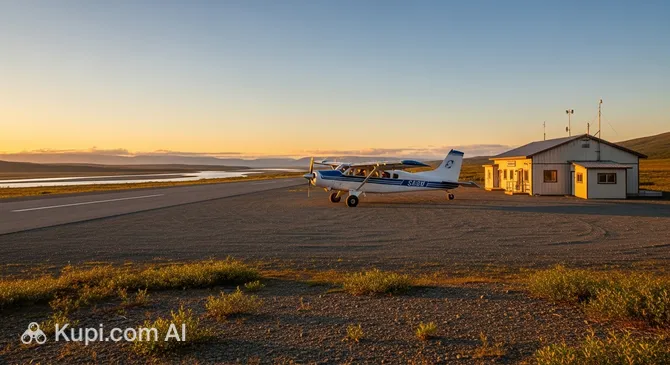
Travelling through Shungnak Airport differs radically from flights through major international hubs. The rules of "bush flying" apply here, where personal contact, weather conditions, and cargo weight are crucial. To ensure your flight goes smoothly and safely, use the following practical tips.
Optimal Arrival Time
Unlike large airports, there is no need to arrive 2–3 hours early here. However, being late is not an option either.
- Recommended Time: Arrive at the boarding point 30–45 minutes before the scheduled departure time.
- Why It Is Necessary: The pilot needs time to weigh all luggage (and sometimes passengers), distribute the load for proper aircraft balancing, and process documents. If you arrive at the last minute, your luggage might not be loaded in time.
Check-in and Security: What to Expect
Forget about long queues, removing shoes, and strict bans on liquids over 100 ml. Procedures here are simplified to the maximum but have their nuances:
- Identification: Keep your ID (passport or ID card) handy. The pilot or ground agent will verify your name against the passenger list manually.
- Screening: There is no classic TSA screening with scanners here. However, the pilot bears full responsibility for the safety of the flight and has the right to ask you to open your bag if they have suspicions.
- Weighing: This is the most important procedure. Be mentally prepared to step on the scales. This is not a whim, but a safety requirement for flights on small turboprop aircraft. Honestly state your weight if asked — the lives of everyone on board depend on it.
Seat Selection on the Plane
In aircraft like the Cessna Caravan or Piper Navajo, there is no online seat reservation system.
- Balance is More Important than View: The pilot will tell you where to sit based on weight distribution. Do not argue or change seats without permission.
- Co-pilot's Seat: If the plane is full and you are travelling light, there is a small chance you will be offered the co-pilot's seat (front right). This provides the best view but requires strict adherence to the rule: "Touch nothing!".
- Photography: Windows in such planes are often scratched, but the views are stunning. Try to wear dark clothing to avoid reflections on the glass when shooting.
Hand Luggage and Baggage: What is Allowed and Prohibited
Space in the cabin of small aircraft is extremely limited.
- Type of Bags: Use soft duffel bags or backpacks instead of hard suitcases on wheels. Soft luggage is easier to fit into the small cargo hold of the aircraft.
- Hand Luggage: The concept of "hand luggage" is conditional here. A large backpack that is considered hand luggage on a Boeing will be asked to be checked in here. Take only the essentials into the cabin: documents, phone, camera, and medicines.
- Prohibited Items: Despite the lack of scanners, rules for transporting dangerous substances (gas, explosives, flammable liquids, bear sprays) are strictly enforced. Be sure to warn the pilot if you are carrying anything similar. Bear spray must be handed to the pilot and placed in an external compartment.
Tips for Transit Passengers
Shungnak is usually the starting point of a route with a transfer in Kotzebue.
- Time Buffer: Allow at least 2–3 hours for the transfer in Kotzebue, or better yet — half a day. Weather in Alaska is unpredictable, and flights from Shungnak may be delayed.
- Baggage: In most cases, your baggage will not be automatically transferred to mainline airline flights (e.g., Alaska Airlines). You will have to collect it in Kotzebue and check it in again for the next flight. Clarify this point with the pilot upon boarding.
Customs Control
Since flights from Shungnak are exclusively domestic, there is no customs control at the airport. However, if you plan to export souvenirs made from animal materials (walrus ivory, baleen), ensure you have the appropriate certificates for passing control at major airports or when departing the USA.
How to Save Time and Money
- Cargo Transport: If you have a lot of heavy gear, send it in advance via cargo flight (Air Cargo). This is significantly cheaper than paying for excess baggage on a passenger flight.
- Food to Go: Buy snacks and water in advance in the village. No food is provided at the airport or on the plane, and prices at the transfer airport may be high.
- Cash: Always have small denomination cash with you. It may be needed to pay for a taxi (snowmobile) to the airport or for tips for help with luggage.
Actions in Case of Flight Delay
In Alaska, they say: "The weather has no schedule." Delays here are a common occurrence.
- Communication: Do not wait in the empty cold airport building if the plane is not visible on the horizon. Stay in the village (at the school or with the host party) and maintain contact with the airline agent by phone.
- Patience and a Backup Plan: Always have a book, a power bank for your phone, and warm clothes with you. If the flight is cancelled due to a blizzard, departure may be rescheduled for the next day. Have an arrangement for a possible overnight stay in the village in case of force majeure.