Support

Koyukuk Airport

About the Airport

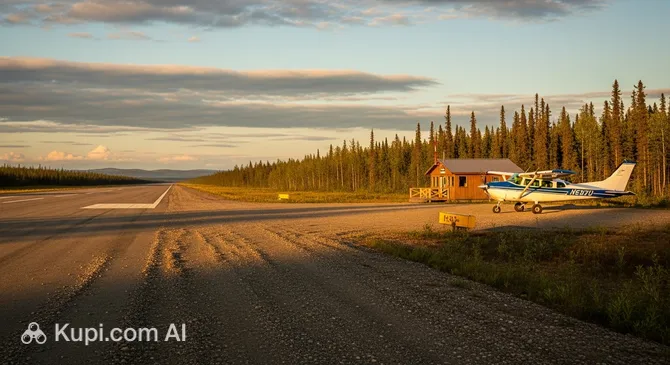
Koyukuk Airport. Source: Kupi.com Binoculars

Koyukuk Airport (KYU) is not merely a transport hub, but a vital lifeline for the small community living at the confluence of the Yukon and Koyukuk rivers. This air port lacks the gleam of international terminals, yet it offers travellers an authentic immersion into the atmosphere of Alaska from the very first minutes of arrival. Surrounded by wild nature and endless expanses, the airport serves as a reliable bridge connecting this remote corner with the rest of the world.

IATA Code KYU
ICAO Code PFKU
City Koyukuk
Distance to centre ~1 km
Status Regional / Domestic
Annual Passengers About 1,500 – 2,000
Schedule Local connections

The airport possesses a number of unique features characteristic of small aviation in the northern USA:

  • Unpaved Runway: The runway has a gravel surface, which requires special skill from pilots and adds a spirit of true adventure to the flight.
  • Walking Distance: The airport is located practically within the settlement limits, so one can reach residential houses in just a few minutes, often even on foot.
  • Key Importance: Since road connections to Koyukuk are limited (especially during the summer period), the airport is the main method for delivering mail, food supplies, and medicines for local residents.

Contact Information

As Koyukuk Airport (KYU) is a small regional airfield located in a remote rural area of Alaska, it does not have the infrastructure typical of major hubs (its own call centre, marketing department, or dedicated website). The facility is managed by the State Department of Transportation. Below are the most current contact details for planning your trip:

  • Official Airport Website: The airport does not have a separate website. Current information on runway conditions can be found on the Alaska Department of Transportation (Alaska DOT&PF) resource: dot.alaska.gov.
  • Administrator Phone (DOT&PF): +1 (907) 451-2200 (Northern Region Office, Fairbanks). Please note: this number handles administrative issues regarding airfield operation.
  • Flight and Ticket Information: +1 (907) 474-0502 (Wright Air Service — the main carrier).
  • Airport Address: Koyukuk Airport, Koyukuk, AK 99754, USA.
  • Email: There is no direct email. For official inquiries, it is recommended to use the feedback form on the Alaska Department of Transportation website.
  • Social Media: There are no official airport accounts.
  • Lost Luggage and Passenger Support: These services are provided directly by the airline. In case of lost items or flight delays, it is necessary to contact representatives of Wright Air Service at the point of departure (usually Fairbanks) or via the carrier's hotline.

How to Get to the Airport

Transport logistics in Koyukuk differ radically from standard city norms. Since the settlement is isolated from the North American road network, and the village itself is very compact, there is no conventional public transport, taxi services (like Uber), or car rental counters here. The journey to the airport is an immersion into the local Alaskan way of life.

How to reach the airstrip:

  • On Foot: Considering the airport is approximately 1 km from the centre of the settlement, most travellers with light luggage prefer to walk. The walk takes 10 to 15 minutes and allows one to enjoy views of the Yukon River.
  • ATVs (Quad Bikes) and Snowmobiles: This is the main mode of transport for local residents. Quad bikes are used in summer, and snowmobiles in winter. If you have heavy luggage, it is recommended to arrange a meeting with your host or lodge owner in advance. There is no official taxi, but locals often help tourists for a nominal fee or out of neighbourly courtesy.
  • Private Vehicles: There are a few pickup trucks in the village belonging to locals, but they are rarely used due to the limited length of roads within the village.

Parking and Car Rental

Rent-a-Car services are completely absent in Koyukuk. Arriving here by car from other cities is impossible due to the lack of roads. Regarding parking, there is a small open area near the runway where locals can leave their transport (snowmobile or quad bike). Parking is free, but unguarded.

Travel Time and Cost

Method Time from centre Cost
On Foot 10–15 min Free
Transfer from lodge / locals 2–5 min Free or ~$10–20 (tips)

Important Recommendations for Tourists:

When planning your departure, consider weather conditions. In winter, temperatures can drop extremely low, so even a short ride on a snowmobile requires warm gear. Always confirm with your guide or accommodation host who can give you a lift to the plane, as finding spontaneous transport before departure can be difficult.

Alternative Airports and Connections

Koyukuk is often just one point in a complex route across Alaska. If weather conditions do not allow landing here, or you are planning a complex itinerary, pay attention to neighbouring transport hubs. The closest to the settlement is Nulato Airport, located just 24 km away, which by Alaskan standards is "next door".

An important regional hub with more developed infrastructure is considered to be Edward G. Pitka Sr. Airport in the city of Galena (about 40 km away). Connecting flights from major cities often pass through here. For travel to more remote areas, Unalakleet Airport on the coast or McGrath Airport, located inland, might be of interest. Also, within a radius of 230 km lies Shungnak Airport, serving the village of the same name.

Terminals and Map

The infrastructure of Koyukuk Airport (KYU) fully corresponds to its status as a remote northern small aviation airfield. You will not find multi-level complexes, jet bridges, or confusing corridors here. The entire air terminal is an example of minimalism and functionality necessary for survival and transport provision in the harsh conditions of Alaska.

Structure and Number of Terminals

The airport features just one small passenger module. It is a single-story structure that functions as a waiting room, check-in area, and shelter from the weather. The building is located in immediate proximity to the gravel runway.

Features of the single terminal:

  • Compactness: All service zones are in one room. It is impossible to get lost here — all processes happen in plain sight.
  • Heating: Given the Arctic climate, the building is equipped with a heating system, which is critically important for passengers waiting for flights in winter.
  • No Transfers: The concept of "transfer between terminals" is irrelevant here. Boarding and disembarking take place just a few metres from the building entrance.

Navigation Scheme and Service Zones

Navigation at Koyukuk Airport is intuitive and requires no maps or signs. The space is organised as simply as possible:

  • Check-in Zone: Usually represents a small counter or even a table where the airline representative (often the pilot themselves) checks passenger documents.
  • Departure and Arrival Zone: There is no separation of passenger flows at the airport. Arriving travellers exit the plane directly onto the gravel patch and head towards the airfield exit or to those meeting them. Passengers waiting for departure stay in the same room or outside (in good weather) until the pilot gives the command for boarding.
  • Luggage Zone: There are no luggage belts or carousels. Luggage handover and receipt are done manually directly at the aircraft side ("hand to hand").

Check-in and Screening Procedures

The check-in process in Koyukuk differs significantly from standard procedures in major international hubs. A more informal yet responsible atmosphere prevails here.

Procedure Features:

  • Weighing: This is the most important stage. Since flights are operated on small aircraft (like Cessna or Piper), precise weight calculation is critically important. They weigh not only suitcases but often the passengers themselves along with their hand luggage.
  • Screening (Security): There are no familiar metal detector frames or body scanners here. A visual inspection may be conducted by the pilot. However, remember the rules for transporting dangerous substances — they apply everywhere.
  • Time: You do not need to arrive 2-3 hours early. Arriving at the airport 20–30 minutes before departure is considered optimal. This time is sufficient to mark your presence, weigh luggage, and prepare for boarding.

Recommendations for Navigation and Comfort

Although "navigation" here is simple, there are a few tips that will make your stay more comfortable:

  • Dress Warmly: Even if you plan to wait only 15 minutes, the building can be cool, and the walk to the plane across a windy field will require good gear.
  • Stay Near the Pilot: Since there are no voice announcements via a PA system, the pilot personally invites passengers for boarding. Be attentive and do not wander far from the terminal building.
  • Restrooms: Amenities at the airport are minimal (often an outdoor latrine or a basic sanitary room), so it is recommended to use the restroom before arriving at the airfield.

Airport History

The history of Koyukuk Airport (KYU) is a chronicle of the struggle for accessibility and connection with the outside world amidst harsh subarctic nature. Unlike major hubs developed for commerce and tourism, this airfield emerged from a vital necessity to ensure reliable communication for an isolated settlement at the confluence of two powerful rivers.

Foundation and Territory Era

The official starting point in the history of the air harbour is considered to be 1949. It is important to note that at that time, Alaska did not yet have statehood status, being an incorporated territory of the USA. The opening of the airport was the result of efforts by the federal government and the territory administration to create a transport network in remote regions. Before the appearance of a permanent strip, aviation here was seasonal: in summer, seaplanes landed on water, and in winter, ski landing gears touched the frozen bed of the Yukon River.

Stages of Development and Modernisation

Over the past decades, the airport has journeyed from a simple cleared patch to a vital infrastructure facility. Key milestones of development included:

  • Surface Reinforcement: Initially, the strip was dirt and heavily dependent on the weather. A crucial stage was the application of high-quality gravel surfacing, which allows planes to land even during periods of autumn rains and spring thaw.
  • Battling the Polar Night: The installation of modern lighting equipment radically changed the airport's operation. This allowed flights to be conducted during dark hours, which is critically important in winter when daylight lasts only a few hours.
  • Erosion Protection: Due to the proximity of the Yukon and Koyukuk rivers, the airport's history includes constant engineering works to strengthen the embankment and protect the strip from shoreline erosion.

The Airport and Historical Challenges

The settlement's location in a lowland makes it vulnerable to spring floods. The airport's chronicles contain dramatic pages related to flooding. In years when ice jams on the river caused rapid water rises, the runway, located on an elevation, often remained the only dry island of safety. The airport has repeatedly become the headquarters for rescue operations and the main evacuation point for residents.

Interesting Facts

  • Role in the Bypass Mail System: The history of the airport's development is inextricably linked to Alaska's unique postal subsidy programme. Thanks to this, the airfield became the main channel for food supply, turning planes into "flying trucks" with provisions.
  • Evolution of Navigation: Old-timers remember times when pilots navigated exclusively visually by the bends of the rivers. Today, despite the visual simplicity of the airfield, landing approaches are carried out using modern GPS technologies.
  • Social Centre: Historically, the arrival of a plane in Koyukuk is the main event of the day. The airport has always served as a gathering place for residents, exchanging news, and meeting long-awaited cargo, retaining this function as a public space to this day.

Services and Facilities

The infrastructure and service at Koyukuk Airport (KYU) differ radically from what passengers of large international hubs are accustomed to. There are no Duty Free shops, food courts, or business lounges here. The range of services is reduced to the necessary minimum, ensuring basic comfort and safety in the harsh conditions of Alaska. Travellers should prepare in advance for an ascetic environment.

Restaurants, Cafes, and Shops

There are absolutely no catering outlets or shops in the airport building or on the adjacent territory. You cannot buy coffee, sandwiches, souvenirs, or newspapers here. There are also no vending machines with water and snacks.

Tip for Tourists: Be sure to bring a supply of water and food (a thermos with tea, sandwiches, energy bars) with you, especially if you are flying with transfers or expecting a long layover. The nearest shop (general store) is located in the settlement itself, but its operating hours may be unstable, and the assortment limited to basic long-life products.

Waiting Rooms and VIP Services

The concept of a "VIP lounge" is absent in Koyukuk. The entire terminal is a single small room serving as a general waiting area. The main "luxury" here is the presence of heating protecting from Arctic winds, and the ability to wait out bad weather under a roof. There are few seats (usually a few chairs or a bench), but given the low passenger flow, there is usually enough space for everyone.

Communication, Wi-Fi, and Electricity

  • Wi-Fi: There is no public Wi-Fi network at the airport.
  • Mobile Connection: Cellular coverage in the airport area may be unstable or completely absent, depending on your operator (GCI works best in Alaska; AT&T reception is poorer).
  • Charging Stations: There are no specialised stands for charging gadgets. A standard wall socket might be found in the waiting room, but one should not count on it — it may be occupied by equipment. It is recommended to carry a fully charged power bank.

Financial Services

There are no ATMs, currency exchange points, or bank branches at the airport (nor in the entire settlement). Card payments in such remote areas are often impossible due to lack of connectivity.

Important: Arrive in Koyukuk with a sufficient supply of cash (US Dollars) in small denominations. They will be needed to pay for private transfers, accommodation, or purchases from locals.

Medical Services

There is no medical post or pharmacy in the terminal building. In emergencies, assistance can be provided by the local clinic in the settlement (Koyukuk Health Clinic), where paramedics work. However, serious medical assistance requires evacuation to Fairbanks. Always carry a personal first aid kit with necessary medications.

Services for Passengers with Children

Specialised mother-and-child rooms or play areas are not provided. Due to the lack of running water in the building (facilities are often outside), caring for infants can be difficult. Travelling with small children to this region requires thorough preparation: take a supply of nappies, wet wipes, and baby food with you.

Accessibility for Passengers with Reduced Mobility

Infrastructure for citizens with reduced mobility is poorly developed:

  • Access to Building: The terminal is single-story, which facilitates entry, but the lack of automatic doors may be an obstacle.
  • Boarding the Plane: There are no jet bridges or ambulifts. Boarding is carried out from the ground via small ramps or aircraft steps.
  • Assistance: The main assistance during boarding and disembarking is provided by airline pilots. They are generally very helpful and assist passengers with special needs, but the airline (Wright Air Service) should be informed of the need for such assistance in advance when booking the ticket.

Accommodation: Hotels and Guesthouses

There are no hotels at the airport itself. Koyukuk is a traditional Athabascan village, and there are no chain hotels like Hilton or Holiday Inn here. Accommodation options are extremely limited:

  • Private Sector: The only way to stay overnight is to arrange with local residents (B&B) or the settlement administration for accommodation in guest rooms.
  • School: Sometimes travellers (especially groups) are accommodated in the local school gym by prior arrangement with the tribal council or school district.

Arriving without a prior arrangement for overnight stay is categorically not recommended, especially in the winter period.

Business Services

Conference rooms, business centres, fax or photocopying services are absent at the airport. This is a place for a complete digital detox and immersion in nature, not for conducting business negotiations.
Where to Eat

If you are used to waiting for a flight while enjoying a cappuccino or a hot lunch in a restaurant overlooking the runway, Koyukuk Airport (KYU) will force you to completely rethink your approach to travel. This is a strictly utilitarian facility in the Alaskan wilderness, where the concept of "airport dining" is non-existent.

It is important to understand: there are no cafes, restaurants, lounges, or even vending machines in the terminal. You cannot buy a bottle of water, a sandwich, or a packet of biscuits here.

Dining Strategy for Travellers

Given the complete autonomy of the airport, responsibility for your nutrition rests solely on your shoulders. To avoid going hungry while waiting for departure (which may be delayed due to weather), it is necessary to follow the rule "bring everything with you".

  • Main Recommendation: Purchase food and drinks at the point of departure (usually Fairbanks) before boarding the plane.
  • Water: There are no drinking fountains in the terminal building. Be sure to carry a supply of water, especially in summer.
  • Thermos: Hot tea or coffee in a good thermos is not a luxury but a necessity, especially in winter when waiting for a flight can drag on in the freezing cold.

Village Store (Alternative)

If you have already arrived in Koyukuk or have a long time before departure, the only source of food is the local rural shop — Koyukuk Native Store (or General Store). It is located not at the airport, but in the settlement itself (approximately 10–15 minutes walk from the strip).

Assortment and Features of the Store:

  • Product Selection: The assortment is limited to basic long-life goods (canned food, pasta, grains, frozen semi-finished products, crisps, fizzy drinks). Fresh vegetables and fruits are a great rarity; they are delivered irregularly.
  • Ready-made Food: There is no deli section or cafeteria in the store. Buying a hot lunch here is impossible. The most you can count on are snacks or instant products (noodles) if you can find boiling water.
  • Prices: Be prepared for "bush prices". The cost of products here is 2–3 times higher than in the "mainland" USA due to complex logistics of delivery by aviation or barges.
  • Opening Hours: The schedule may change and not coincide with your flight time. The store is often closed during lunch hours and on weekends.

Special Dietary Requirements (Vegetarian, Halal, Gluten-Free)

Finding specialised products in Koyukuk is practically impossible. In the local store, the choice for people with dietary restrictions is extremely scarce.

  • Vegans and Vegetarians: The entire diet must be planned in advance and brought with you. In the village, you might only be able to buy canned vegetables, crackers, or nuts.
  • Gluten-Free Diet: Specialised baked goods or marked-free products are absent.
  • Halal: Travellers requiring Halal food should note that Halal-certified products are not available in the local store. It is essential to bring your own compliant food supplies.

Local Cuisine

There are no local cuisine restaurants at the airport or in public places in the settlement. Traditional Alaskan dishes (salmon, moose or caribou meat, northern berries) are prepared exclusively in the homes of local residents. A tourist can try them only if invited as a guest or treated by the hosts of private accommodation. This is a matter of personal arrangements and hospitality, not commercial service.

Summary

Do not count on having a snack at Koyukuk Airport. Treat this leg of the journey as an expedition: a hearty breakfast before departing from a major city and having "dry rations" (nuts, chocolate, dried meat) in your backpack are the key to your comfort and well-being.

Traveller Tips

Travelling through Koyukuk Airport differs significantly from flying through major international hubs. The rules of "small aviation" apply here, where flexibility, weather conditions, and weight are of decisive importance. To ensure your flight is as comfortable and surprise-free as possible, use the following recommendations.

Optimal Arrival Time

Forget the rule of "arriving 2 hours early". In Koyukuk, everything happens much faster, but discipline is still important:

  • Arrival: Be at the airstrip 20–30 minutes before the scheduled departure time. This is sufficient for weighing and processing documents.
  • Do Not Be Late: Pilots often follow a tight schedule, serving several villages in one flight. The plane will not wait for late passengers, especially if the weather window is closing soon.

Check-in and Security Control

Procedures here are simple but strict regarding mass:

  • Total Weighing: Be mentally prepared to step on the scales together with your belongings. For small aircraft, precise calculation of the centre of gravity is vital. Do not try to understate the weight of hand luggage — everything will be weighed.
  • Screening: There are no scanners or frames here. Screening is often limited to a visual check and questions from the pilot about the contents of bags. Honesty is the key to the safety of the entire flight.
  • Documents: Despite the informal atmosphere, always carry photo identification.

Choosing a Seat on the Plane

In small aviation aircraft (like the Cessna Caravan or Piper Navajo), you cannot book a seat online or choose it at check-in.

  • The Pilot Decides: Seating is determined exclusively based on the balancing of the aircraft. The pilot will assign you a specific seat to distribute weight evenly.
  • Best Views: Since planes fly at a relatively low altitude, an excellent view of the tundra and Yukon River opens up from any seat. If you are allowed to choose, sit on the right side when flying towards Fairbanks — often the views are more picturesque from there.

Hand Luggage and Baggage: What is Allowed and Forbidden

Space in the cabin is extremely limited, and luggage compartments have non-standard shapes.

  • Type of Bags: Use soft bags or backpacks. Rigid suitcases on wheels are difficult to place in the small luggage compartment of a Cessna, and you may be asked to leave them or send them on the next flight.
  • Dangerous Items: It is strictly forbidden to carry bear spray, fuel for burners, uncased weapons, and flammable liquids in the cabin. The airline must be informed about the transport of weapons and ammunition in advance — special packaging rules apply to them.
  • Hand Luggage: Only a small camera bag or purse will fit under the seat. Everything else will go into the luggage compartment.

Recommendations for Connecting Flights

If Koyukuk is just the beginning of your journey, and you are flying further from Fairbanks or Anchorage:

  • Time Buffer: Never plan a connection "back-to-back". Weather in Alaska is unpredictable, and departure from the village can be delayed by several hours or even postponed to the next day.
  • Ideal Plan: Leave at least 4–6 hours between the flight from Koyukuk and the next departure, or better yet — plan an overnight stay in the transfer city (usually Fairbanks).
  • Baggage: There is generally no through-check-in for baggage. You will have to collect your items upon arrival at the hub and check them in again for the next flight of another airline.

Customs Control

Koyukuk Airport serves only domestic flights. There is no customs or border control here. If you are an international tourist, you will pass all formalities at the first point of arrival in the USA (usually Anchorage, Seattle, or Los Angeles) long before reaching this village.

Tips for Saving Time and Money

  • Food with You: Groceries in Koyukuk are very expensive. Buy snacks and water at a supermarket in Fairbanks before flying here — this will save you a significant amount.
  • Walk to the Airport: Do not look for a paid transfer. Distances allow walking for free if your luggage is not too heavy.
  • Cash: Always carry small cash denominations. Cards may not be accepted, and locals might not have change for large notes ($50 or $100).

Actions in Case of Flight Delay

Delays and cancellations due to fog, wind, or low clouds are common.

  • Patience and Communication: Check the flight status not at the airport (there might be no one there), but by phone with the airline or with your host in the settlement.
  • Where to Wait: If the delay is long, do not sit in an unheated or poorly heated room. Ask to wait in the school building or settlement administration (Tribal Hall).
  • Autonomy: Always have a charged power bank, a book (internet might not work), and a small supply of calorie-dense food in your hand luggage.

Reached the end of the page?

That means the route is fully explored