Support

Anvik Airport

About the Airport

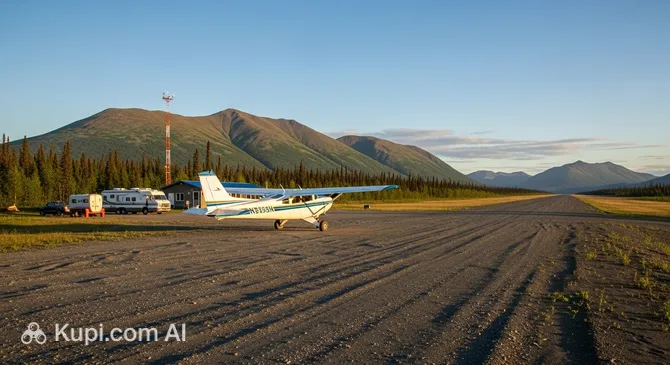
Anvik Airport is not merely a runway, but a true "lifeline" for the settlement of the same name in Alaska. In conditions where ground transport is extremely difficult, this air harbour connects residents with the rest of the world, ensuring the delivery of mail, goods, and, of course, passengers. For a traveller seeking an authentic experience far from bustling metropolises, arriving here becomes the first step in getting acquainted with the wild and beautiful nature of the USA.

Anvik Airport. Source: Kupi.com Binoculars
IATA Code ANV
ICAO Code PANV
City Anvik
Distance to centre Less than 2 km
Status Domestic
Passengers per year About 2,000
Popular Airlines Wright Air Service, Ryan Air Services

The main feature of Anvik Airport is its vital role for the local community. It is a small airfield with a single gravel runway, which is typical for remote areas of Alaska. There is no hustle of large terminals here, and check-in and boarding procedures are as simple and quick as possible.

Despite its modest size, the airport fully performs its function, accepting small propeller aircraft of regional airlines. The main advantages for the passenger are simple navigation and the ability to quickly reach the settlement. Anvik Airport is a key transport hub that opens access to unique opportunities for fishing, hunting, and eco-tourism in this picturesque corner of Alaska.

Contact Information

You can contact representatives of Anvik Airport (ANV) or obtain additional information in several ways. It is important to consider that this is a small regional airport, so many services customary for large aviation hubs may be absent or combined here.

  • Official Website: Anvik Airport does not have its own dedicated website. It is under the jurisdiction of the Alaska Department of Transportation and Public Facilities (Alaska DOT&PF), on whose official resource general information can be found.
  • Information Desk Phone: A direct phone number for enquiries at the airport is generally unavailable. For questions related to the operation and condition of the airport, it is recommended to contact the regional office of Alaska DOT&PF.
  • Airport Address: Anvik Airport, Anvik, AK 99558, USA.
  • Email: A specialised email address for the airport is not provided. For official enquiries, contact forms on the Alaska Department of Transportation website should be used.
  • Social Media: The airport does not maintain official pages on social networks.
  • Lost Luggage Information: For all questions regarding lost or damaged luggage, it is necessary to contact the airline directly on whose flight you travelled. Airport staff do not handle luggage tracing.
  • Passenger Support Contacts: A specialised support service at the airport is absent. Assistance to passengers is provided by airline representatives during check-in and boarding.

How to Get to the Airport

Anvik Airport (ANV) is located in the immediate vicinity of the settlement of the same name in the USA. Given the compact size of Anvik and its remote location, the ways of getting to the airport customary for big cities are irrelevant here. The main and simplest method of movement is on foot, as the terminal is located within a short walk from any point in the settlement.

In Anvik, public transport types such as buses, trains, or the metro are completely absent. There are also no official taxi services or car rental companies due to the lack of a developed road network connecting the settlement with other localities. Movement is mainly carried out along local dirt roads or trails.

For transportation, especially with luggage or in bad weather, local residents use quad bikes (ATVs) in summer and snowmobiles in winter. If you require transport, it is strongly recommended to arrange a meeting in advance — for example, with representatives of your accommodation or local contacts. This is practically the only reliable way to organise a transfer. The cost of such a service is usually negotiable.

The journey from the central part of the settlement to the airport will take you no more than 5–10 minutes on foot. If you use local transport, such as a quad bike, there is usually space for unofficial free parking near the airport building where the vehicle can be left for a time.

Air travel is the key way to get to Anvik and travel around this region of Alaska. If you are planning a complex route, it is worth studying other nearby airports. Among them are Grayling Airport (about 28 km), Shageluk Airport (about 32 km), and Holy Cross Airport (about 55 km). They also serve small local airlines and can become part of your journey.

Terminals and Map

Anvik Airport (ANV) is a small regional airport serving the town of the same name in Alaska. Its infrastructure differs significantly from large international hubs, offering passengers simple and fast navigation.

The airport operates one small terminal, which is a compact single-storey building. All zones and services necessary for passenger service are combined here. Due to the modest size of the airport and low passenger flow, there is no complex map or confusing corridors. All key points — the check-in counter, waiting area, boarding gate, and baggage claim area — are located in one common hall or in immediate proximity to each other.

Departure and arrival zones are effectively not separated as strictly as in large airports. Passengers arriving and departing use the same main entrance and exit of the building. Naturally, there are no transfers between terminals, as there is only one terminal.

Flight check-in and security screening procedures are very quick. There are no long queues here, and the entire process from entering the building to boarding usually takes minimum time. Nevertheless, it is recommended to arrive at the airport in advance, following your airline's recommendations. The main advice on navigation is simple: in such a compact space, it is practically impossible to get lost. The entire path is intuitively understandable and visible from a single point.

Airport History

The history of Anvik Airport (ANV) is a clear example of how aviation becomes a vital artery for remote settlements in Alaska. The airport was officially opened in 1959, and from the very beginning, its mission was not to serve tourist flows, but to ensure basic connection of the isolated community with the outside world. In the harsh conditions of the USA, where ground communication is often interrupted, this small airfield became the only reliable way to deliver mail, food, medicines, and transport passengers.

A key event in the airport's history was its complete reconstruction and relocation. Initially, the runway was located too close to the Yukon River, making it vulnerable to seasonal floods and erosion. To ensure safety and year-round operation, a new gravel strip was built and put into operation in 1995 at a safer distance from the river. This modernisation was not just an improvement, but a strategic step guaranteeing the stability of Anvik's air gateway operations.

The main achievement of the airport is its many years of uninterrupted service within the framework of the federal Essential Air Service (EAS) programme, which subsidises flights to hard-to-reach settlements. This underscores its indispensable status. For pilots working on the so-called "bush" routes of Alaska, flying to Anvik is still a demonstration of the highest skill. Thus, the history of the airport is not a chronicle of records and expansions, but a story of its daily, yet absolutely critical role in sustaining the life of an entire community.

Services and Amenities

When planning a trip through Anvik Airport (ANV), it is important to remember that this is a small regional airport serving a remote settlement in Alaska. Its infrastructure provides for the basic needs of passengers; however, the range of services here differs significantly from large international airports. It is recommended to prepare for the trip in advance, taking local specifics into account.

The terminal building lacks restaurants, cafes, and shops. Passengers should bring their own snacks and drinks. Opportunities for shopping, including souvenir shops or Duty-Free, are also not provided. Wi-Fi access and public stations for charging electronic devices are generally absent, so it is worth taking care of a portable power bank.

The airport does not have specialised premium lounges or VIP zones. There are also no bank branches, ATMs, or currency exchange points here. All financial operations are recommended to be completed in advance in larger cities. A specialised medical centre is absent in the terminal, but in emergency cases, airport staff will be able to provide basic assistance or call the necessary services.

Services for passengers with children, such as play areas or nursing rooms, are not provided. For travellers with limited mobility, basic accessibility is ensured; however, for comfortable movement and assistance when boarding, it is strongly recommended to contact the airline in advance and notify them of your needs. There are no hotels directly on the airport territory; accommodation options should be sought in the village of Anvik itself and booked in advance. Conference halls and business centres are also absent.

Where to Eat

When planning a journey through Anvik Airport (ANV), it is important to understand that this is a very small regional airport serving the town of the same name in the state of Alaska. Unlike large transport hubs, infrastructure here is minimal and designed to serve a small number of passengers on local flights.

Unfortunately, there are absolutely no food outlets on the territory of Anvik Airport. Here you will not find restaurants, cafes, bars, or even vending machines with snacks and drinks. The air terminal is a small building for waiting for a flight, offering no commercial services.

In this regard, we strongly recommend all passengers departing from Anvik Airport or arriving at it to take care of food and water in advance. The best solution would be to bring all necessary snacks and drinks with you, as purchasing them immediately before departure or right after arrival will be impossible.

If you have time before your flight, you can explore opportunities to buy groceries in the town of Anvik itself. However, it is worth noting that this is a small and remote settlement, so the selection will likely be very limited. Plan your meals in advance to avoid inconvenience.

Traveler Tips

Travelling through a regional airport such as Anvik Airport has its own specific features. To ensure your trip goes smoothly, use these tips adapted for a small aviation hub in the heart of Alaska.

Arrival Time and Check-in: Unlike large international airports, there is no need to arrive 3-4 hours before departure here. For domestic flights served by Anvik Airport, it is usually sufficient to arrive 60–90 minutes before departure. This time is enough to check in for the flight and drop off luggage without rushing. Processes here happen much faster, but one should not arrive at the last minute, especially if travelling with a large amount of luggage or in bad weather.

Security Screening: The security service operates according to standard US Transportation Security Administration (TSA) rules. Ensure that there are no prohibited items in your hand luggage, and all liquids are packed in containers up to 100 ml and placed in a transparent bag. Since the passenger flow is small, queues for screening are generally minimal or non-existent, which is a big plus.

Seat Selection on the Plane: Flights to and from Anvik are often operated on small propeller aircraft. The main advice is to choose a window seat if possible. Flights over Alaska offer unforgettable views of the boundless tundra, rivers, and mountains. Due to the compact size of the aircraft, there are practically no bad seats, and a stunning panorama opens up from any window.

Customs Control: Anvik Airport serves exclusively domestic flights within the USA. This means that there is no international connection or customs control here. You will not have to worry about filling out declarations or passing through passport control upon arrival in Anvik from another American city.

Passengers with Transfers: If you have a connecting flight (most likely in Anchorage or Fairbanks), clarify during check-in whether your luggage will be transferred automatically to the final destination. Air travel in Alaska depends heavily on the weather, so allow enough time for the transfer to avoid problems in case of a delay of the previous flight.

Saving Time and Money: You are already saving time thanks to the compactness of the airport. To save money, book tickets in advance, as prices for flights to remote areas of Alaska can be high. Also, familiarise yourself with your airline's baggage allowance rules in advance — small regional carriers may have stricter restrictions on weight and size.

In Case of Flight Delay: Delays and cancellations due to weather conditions are a common occurrence in Alaska. The range of services in the Anvik Airport terminal is limited, so be prepared to wait. Bring a book, a charged power bank for your phone, light snacks, and water. Stay in touch with an airline representative to receive up-to-date information on the status of your flight.
Reached the end of the page?

That means the route is fully explored