Support

Dallas/Fort Worth International Airport

About the Airport

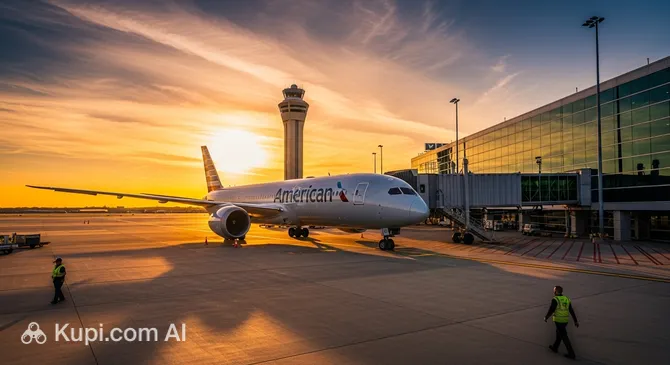
Dallas/Fort Worth International Airport. Source: Kupi.com Binoculars

Welcome to Dallas/Fort Worth International Airport (DFW) — a true aviation city within a metropolis. Imagine an airport the size of Manhattan island, boasting its own zip code, police force, and fire department! This is the main aerial gateway to Texas, where gigantic scale meets Southern hospitality and cutting-edge technology. Despite its size, it is surprisingly convenient: you can move between terminals on the high-speed Skylink train while enjoying views of taking-off liners, or simply relax in one of the numerous lounge zones.

IATA Code DFW
ICAO Code KDFW
City Dallas / Fort Worth
Distance to center ~32 km
Status International
Annual Passengers ~81.7 million
Popular Airlines American Airlines, Spirit Airlines, Frontier Airlines
Schedule Online Flight Board

Airport Features and Advantages

DFW is renowned for its incredible efficiency and passenger care. The airport's main pride is the Skylink system: a free high-speed train running every two minutes and connecting all five terminals without the need to go through security screening again. This makes transfers fast and comfortable, even if your gates are at opposite ends of the complex.

For those who have to stay at the airport longer, DFW offers more than just waiting halls. Here you can stretch out in a specially equipped yoga studio, sleep in cozy Minute Suites pods, or immerse yourself in virtual reality at Gameway gaming lounges. The airport's art program turns terminals into a contemporary art gallery, and the variety of restaurants allows you to start your acquaintance with Texan cuisine — from juicy barbecue to zesty Tex-Mex — even before stepping out into the city.

Contact Information

  • Official Airport Website: www.dfwairport.com
  • Information Service Phone: +1 972 973 3112 (Customer Experience Hub)
  • Airport Address: 2400 Aviation Drive, DFW Airport, TX 75261, USA
  • Email: Direct inquiries are accepted via the "Contact Us" form on the official website
  • Social Media: Latest news and updates can be found on profiles @DFWAirport (Facebook, Twitter/X, Instagram)
  • Lost Luggage Information:
    • Items left in terminals (Lost & Found): +1 972 973 4420
    • For issues regarding lost suitcases and checked baggage, you must contact your airline directly.
  • Passenger Support Service: Assistance is available via interactive kiosks in the terminals, by calling the information service, or through the DFW Airport mobile app.

How to Get to the Airport

Thanks to its strategic location exactly halfway between two major cities, getting to Dallas/Fort Worth International Airport (DFW) is quite simple, whatever mode of transport you prefer. The transport system here is thought out to the smallest detail to serve the huge flow of passengers.

Public Transport: Trains and Buses

The most economical and eco-friendly way to get to the airport is to use the rail service. The airport is served by three lines simultaneously, depending on where you are coming from:

  • DART (Dallas Area Rapid Transit): If you are traveling from downtown Dallas, you need the Orange Line. Trains run from early morning until late at night and arrive at DFW Airport Station, located at Terminal A. The travel time from downtown Dallas is about 50–60 minutes. A half-day or day pass costs just a few dollars, making this the most budget-friendly option.
  • TEXRail: For travelers heading from downtown Fort Worth, the TEXRail line is ideal. The train will take you directly to Terminal B. The trip takes just under an hour.
  • Trinity Railway Express (TRE): This line connects Dallas and Fort Worth. If you use it, you need to get to CentrePort/DFW Airport Station, from where a free shuttle bus runs to the terminals. Please note that TRE trains do not run on Sundays.

Taxis and Ridesharing Services

Taxis and app-based ride services (Uber, Lyft) are the most comfortable way to get to the airport, especially if you have heavy luggage. The trip from downtown Dallas or Fort Worth will take approximately 25–35 minutes excluding traffic jams.

At the airport, taxi pick-up zones are located on the lower level of each terminal. For Uber and Lyft, there are designated zones with signs reading App Based Rides. The cost of a trip from the city center usually varies from 45 to 60 dollars, but can be higher during peak hours.

Car Rental

DFW operates a huge 24-hour Rental Car Center, located at the south entrance of the airport. All major global rental brands are represented here. To get to the rental center from any terminal, follow the Rental Car signs and board the branded blue-and-white shuttle bus, which runs around the clock every 10–15 minutes.

Airport Parking

For car owners, several parking options are provided, from premium to budget:

  • Terminal Parking: The most convenient, but also the most expensive option. Garages are located directly opposite each terminal. Ideal for short trips or meet-and-greets.
  • Express Parking: A more accessible option requiring a short shuttle ride to the terminal.
  • Remote Parking: The cheapest option for long-term parking. Located furthest away, but free buses will quickly take you to departures.
  • Cell Phone Lots: Free waiting zones where drivers can park and wait for a call from an arriving passenger indicating they are ready to be picked up.

Alternative Regional Airports

Sometimes a route may be more convenient to build through neighboring hubs. The nearest alternative is Dallas Love Field, located much closer to downtown Dallas and handling many domestic flights.

If your journey covers other parts of Texas, the following airports may be useful to you:

Terminals and Map

Navigating Dallas/Fort Worth International Airport (DFW) is simpler than it seems at first glance, despite its colossal size. The secret lies in its unique layout: five terminals are arranged in semicircles along the central highway, International Parkway, which runs through the entire airport from north to south. Such a structure allows road transport to pull up to almost every boarding gate, minimizing the walking distance from the car to the check-in counter.

Terminals and Their Purpose

In total, 5 terminals function at the airport: A, B, C, D, and E. Altogether, they count more than 160 boarding gates. It is important to know in advance which terminal your flight departs from, as the distances here are vast.

  • Terminal A: Fully dedicated to the needs of American Airlines for domestic flights. This is a classic arc-shaped terminal, convenient for quick transfers within the country.
  • Terminal B: Serves primarily regional American Eagle flights. Smaller aircraft making flights to neighboring states and cities park here most often.
  • Terminal C: Another home hub for American Airlines. This is one of the busiest terminals, from which many mainline domestic flights depart.
  • Terminal D (International): The "Jewel" of the airport. This is the most modern and spacious terminal, handling the majority of international flights (Lufthansa, British Airways, Emirates, Qantas, etc.), as well as some American Airlines flights. Here you will find the best Duty Free shops, luxurious lounge zones, and the Grand Hyatt DFW hotel.
  • Terminal E: Serves all other airlines (Delta, United, Spirit, Frontier, JetBlue), as well as flights to Canada. This is the only terminal not located on the same line as A and C (it is located opposite C).

Transfers Between Terminals: Skylink and Terminal Link

The navigation system between terminals at DFW is considered one of the best in the world. You have two main methods of movement, the choice of which depends on whether you have already passed security screening or not.

If you are in the "secure" zone (after security screening/airside), use the Skylink train. This is a free automated system operating around the clock. Trains depart every 2 minutes and move in both directions on two loops. A trip between the furthest points takes no more than 9 minutes. This is the ideal option for transit passengers: you do not need to leave the secure zone and go through control again.

If you are in the public zone (before screening/landside), use the Terminal Link buses. These are orange or green shuttles running on the lower level of each terminal (at the pick-up/drop-off exits). The waiting time for a bus is from 5 to 10 minutes.

Departure, Arrival Zones, and Navigation

Each DFW terminal is set up as a self-sufficient module. Unlike many other airports, departure and arrival zones here are often on the same level or in immediate proximity, which speeds up the exit to the city.

  • Check-in and Departure: Check-in counters are located on the upper level of the access road. Thanks to the semicircular shape of the terminals, taxi drivers or private cars can drop you off very close to the necessary counter.
  • Baggage Claim: Baggage claim belts are located on the same level or a floor below (depending on the terminal), next to the exits to the street and transport.
  • Security Screening: TSA Checkpoints are distributed along the entire length of each terminal. This allows avoiding giant queues at a single point: you can pass control at any checkpoint in your terminal and walk to your gate inside.

Procedure Times

Despite efficiency, the size of the airport requires a time buffer. For domestic flights, it is recommended to arrive 2 hours before departure, and for international flights3 hours. During peak hours or holidays, security screening time may increase, however, the presence of multiple checkpoints helps distribute the flows. Passengers with TSA PreCheck and CLEAR privileges can use dedicated lines in all terminals.

Navigation Tips

For maximum comfort, download the official DFW Airport mobile app. It shows security checkpoint wait times in real-time, helps find the nearest Skylink station, and allows you to order food to the gate. If you arrived on an international flight at Terminal D, remember that after passing passport control and customs, you will need to re-check your luggage at the transfer counter (if you are flying further) and pass security screening to get to the Skylink train.

Airport History

History: From Rivalry to Unity

The emergence of Dallas/Fort Worth International Airport (DFW) is a story of how federal pressure turned two irreconcilable neighbors into partners. In the first half of the 20th century, Dallas and Fort Worth competed fiercely, developing their own airfields and refusing to cooperate. The situation changed in the 1960s when the US government issued an ultimatum: either the cities create a single regional hub, or they lose federal funding. This led to a historic agreement, and a neutral territory exactly halfway between the two metropolises was chosen for construction.

Grand Opening and Concorde Visit

Construction began in 1969 on lands located on the borders of the cities of Irving, Grapevine, and Euless. The project required massive land acquisition, but unlike many other construction projects of the century, large settlements did not have to be demolished here — the territory was occupied mainly by farms and small rural communities. The official opening took place in January 1974. This event was so significant for aviation that the first aircraft to touch the runway of the new airport on opening day was the legendary supersonic liner Concorde, which flew specially from Europe. Regular commercial flights started on January 13, 1974.

Era of Modernization and Expansion

Over the past decades, DFW has gone from a regional node to a global aerial gateway:

  • Becoming a Hub (1980s): After the deregulation of air travel in the USA, American Airlines made DFW its main base, which led to explosive growth in passenger traffic and the opening of hundreds of new destinations.
  • The Great Reconstruction (2005): This year became a milestone in the airport's history. The luxurious International Terminal D with an area of nearly 200,000 square meters was opened. Simultaneously, the high-speed Skylink train system was launched, replacing the slow and outdated Airtrans system. This innovation reduced transfer time between terminals from 45 minutes to just a few minutes.
  • Environmental Leadership (2016): DFW became the first airport in North America to receive Carbon Neutral status, proving that giant scales can be combined with care for nature.

Interesting Historical Facts

  • Aviation Dinosaur: During excavation work for the airport's construction, workers stumbled upon an unexpected find — the fossilized remains of a plesiosaur about 70 million years old. This fact reminds us that an ancient sea once splashed where the runways are now. The skeleton of the "aviation lizard" was later transferred to a museum.
  • Space Harbor: In 1989, the airport hosted a unique guest — the Space Shuttle "Atlantis". The shuttle made an intermediate landing at DFW, mounted on the back of a specially equipped Boeing 747, on its way to Florida. Thousands of Texans gathered to watch this spectacle.
  • Island Scale: The territory allocated for the airport in the late 60s was so huge (more than 70 square kilometers) that it exceeds the area of Manhattan Island in New York.

Services and Amenities

Waiting for a flight at Dallas/Fort Worth International Airport (DFW) is not just passing time, but part of the journey. Thanks to its scale, the airport offers a level of service comparable to a large shopping mall or a good hotel. Everything necessary to work productively, relax before a long flight, or entertain children is here.

Restaurants, Cafes, and Shops

DFW is a true paradise for gourmets. The airport offers more than 200 dining establishments, and this is a great chance to experience local cuisine without going into the city. Be sure to try authentic Texas barbecue (for example, at The Salt Lick Barbecue in Terminal A) or burgers in local chain establishments. For those in a hurry, all popular global fast-food brands are represented.

Shopping here is also impressive: from newsstands and Western-style souvenirs to boutiques of luxury brands (Chanel, Gucci, etc.), concentrated mainly in the international Terminal D. Duty Free shops are also located in Terminal D, offering cosmetics, perfumes, and duty-free goods for international travelers.

Lounges and VIP Service

Since DFW is the main base for American Airlines, many of their branded Admirals Club lounges are located here (available in every terminal) and the exclusive Flagship Lounge in Terminal D. Additionally, the airport offers:

  • American Express Centurion Lounge: One of the best lounges in the network, located in Terminal D. Known for its cuisine, beverage service, and spa services (massage, manicure).
  • Capital One Lounge: A modern space with zones for rest, work, and even cycling exercise machines (Terminal D).
  • The Club DFW: Available for Priority Pass cardholders (Terminal D).
  • Minute Suites: Private pods with a sofa, desk, and TV where you can sleep. Located in Terminals A and D. Some suites have access to showers.

Connectivity, Finance, and Facilities

Staying connected at DFW is easy: free and fast Wi-Fi operates throughout the territory (network DFW Airport Free WiFi). Charging stations with outlets and USB ports are built into seats in waiting areas at most gates, and are also available at special high-top counters.

ATMs are located everywhere in all terminals. Currency Exchange points are located primarily in International Terminal D (departure and arrival zones) and in Terminal A, so if you need cash dollars or other currency, it is better to take care of this there.

Services for Passengers with Children

Traveling with family at DFW passes with comfort. For mothers with infants, special Nursing Rooms are provided in all terminals — these are quiet enclosed spaces with comfortable chairs and sinks.

To let children burn off energy before the flight, there are play zones in the airport. The most popular is the McDonald’s Play Area in Terminal D. Also worth noting are the unique gaming lounges Gameway (in terminals B and E), where Xbox and PlayStation consoles are installed (paid service).

For Passengers with Reduced Mobility

The airport is fully adapted for citizens with limited mobility. Services include:

  • Unimpeded wheelchair access to all zones, including the Skylink train.
  • Restrooms equipped for people with special needs.
  • The Sunflower Lanyard program for people with hidden disabilities — a special lanyard lets staff know that the passenger may require more time or assistance.
  • Aira service — an app for the blind and visually impaired, helping with navigation through the terminals.

Hotels and Rest

If you have a long layover or an early departure, you do not necessarily have to leave the airport territory:

  • Grand Hyatt DFW: A luxury hotel integrated directly into Terminal D. You can get to it without going outside by taking the elevator. This is the ideal option for maximum comfort.
  • Hyatt Regency DFW: Located next to Terminal C. A free shuttle runs to it around the clock.
  • Hyatt Place DFW: Located in the Southgate Plaza area, it can also be reached by the airport bus.

Business Services

For business travelers, most lounges have business centers with printers and quiet zones. If you need to hold a meeting, the Grand Hyatt and Hyatt Regency hotels offer modern conference halls and meeting rooms that can be rented by the hour or for the day, while being in immediate proximity to the runways.

Medical Assistance

In emergencies, a paramedic service operates at the airport (call 911 or use any white phone in the terminal). Automated External Defibrillators (AED) are placed throughout the complex. Pharmacy kiosks with basic over-the-counter medications and hygiene items can be found in newsstands and specialized vending machines.
Where to Eat

The gastronomic scene of Dallas/Fort Worth International Airport (DFW) is capable of surprising even sophisticated travelers. Thanks to the huge size of the hub, an impressive selection of establishments is presented here — from iconic Texas fast food to fine dining restaurants. Given that all terminals are connected by the Skylink train in the "secure" zone, you are not limited to the choice of only your terminal: if you have time, you can easily get to any restaurant in the airport.

Where to Find Food: Location and Hours

It is important to remember that the vast majority of food outlets at DFW (more than 95%) are located in the controlled zone (airside), that is, after passing security screening. In the public zone (landside), the choice is extremely limited and comes down to small coffee shops or vending machines.

Most restaurants open about an hour before the first departure (around 5:00–5:30 AM) and close after the departure of the last flights (around 22:00). There are practically no 24-hour full-service restaurants here, however, in each terminal, you can find 24-hour convenience stores with ready-made sandwiches and snacks (for example, 7-Eleven or Hudson News).

Taste of Texas: Barbecue and Local Cuisine

It would be a crime to visit Texas and not try local barbecue or Tex-Mex cuisine. The airport provides an excellent opportunity to do this before departure:

  • The Salt Lick Barbecue (Terminal A, Gate A16): A branch of the legendary smokehouse from the Texas Hill Country. It is worth ordering brisket, pulled pork sandwiches, and their famous sauce here. This is a great option for a hearty lunch in true Texan style.
  • Railhead Smokehouse (Terminal D, Gate D25): Another excellent place for meat lovers, offering classic barbecue from Fort Worth.
  • Cantina Laredo (Terminal D, Gate D24): A restaurant of modern Mexican cuisine. Excellent enchiladas, tacos, and signature beverages are served here. A wonderful choice for a relaxed dinner.
  • Pappasito’s Cantina (Terminal A, Gate A28): A popular Tex-Mex chain known for its large portions of fajitas and chips with salsa.
  • Whataburger (Terminal E, Gate E27): If you want to understand why Texans love burgers so much, come here. This orange-and-white chain is a cultural phenomenon of the state. Try the classic burger with mustard.

International Cuisine and High-End Restaurants

If you are looking for something more refined or international, head to Terminal D. This is the gastronomic center of the airport:

  • Italian Kitchen by Wolfgang Puck (Terminal D): Pasta, pizza, and salads from the famous chef. A good option for those who want familiar high-quality European food.
  • Banh Shop (Terminal D): Vietnamese street food. Excellent banh mi sandwiches and noodle soups are served here, which is a good, lighter alternative to burgers.
  • Cru Food & Wine Bar (Terminal D): An ideal place to enjoy a refreshing beverage with light appetizers or thin-crust pizza before a long flight.

Quick Bites and Coffee

For those in a hurry, familiar chain establishments are in every terminal. Starbucks and Dunkin’ are located everywhere. Also widely represented are:

  • Chick-fil-A: Popular chicken sandwiches (note: closed on Sundays). Found in Terminals A, C, and D.
  • Panera Bread: A good choice for breakfast, soups, and salads (Terminal E).
  • Einstein Bros. Bagels: Fresh bagels and coffee, perfectly suited for morning flights.

Dietary Options (Vegetarian, Vegan, Gluten-Free)

Although Texas is famous for meat, finding healthy food at DFW will not be difficult, especially in international zones.

  • Vegetarians and Vegans: Pay attention to Banh Shop (Terminal D) with their tofu sandwiches or Ling & Louie’s (Terminal A) with Asian dishes. In Mexican restaurants (Pappasito’s, Cantina Laredo), you can always order vegetarian fajitas or salads without meat. The Au Bon Pain chain also offers good vegetarian soups and sandwiches.
  • Gluten-Free: Chick-fil-A offers gluten-free buns upon request. In full-service restaurants, such as Italian Kitchen or Maggiano’s Little Italy (Terminal C), staff are usually aware of allergens and can offer adapted dishes.
  • Halal: Specialized Halal restaurants are few, but vegetarian options at The Italian Kitchen or seafood dishes at Pappadeaux Seafood Kitchen (Terminal A) will be a safe choice.

Price Range

Prices at DFW airport are higher than average city prices by about 15–20%.
Quick bite (fast food): $10–18 for a combo meal.
Lunch in a cafe (Casual dining): $20–35 per person.
Full-service restaurants: from $40–50 per person.

Travel Tips

Traveling through one of the busiest airports in the world may seem like a difficult task, but with the right preparation, the experience at DFW will be comfortable and hassle-free. Here are a few proven tips that will help you save time and nerves.

Time Planning and Arrival

Do not underestimate the size of this aviation hub. The standard rule is to be at the airport 2 hours before a domestic flight departure and 3 hours before an international one. Even if you checked in online, time may be spent finding parking or walking from the train station to the terminal. If you are flying during peak hours (Monday morning or Friday evening), add another 30 minutes to this time.

Security Screening Tricks

A unique feature of DFW is the decentralized system of security checkpoints. Each terminal has multiple TSA control zones. Expert tip: if you see a huge queue at the nearest security checkpoint, do not rush to join it. Walk 50–100 meters to the right or left to the next Checkpoint in the same terminal — often it is completely empty there. Also, use the airport mobile app to check wait times in real-time.

Transfers: The Main Rule

If you are flying in transit (for example, on a domestic flight), under no circumstances leave the "secure" zone. As soon as you leave the secured area (exit to baggage claim or the street), you will have to go through full security screening again to return to the gates. To move between terminals, always use the Skylink train, which is located inside the security zone (go up the escalator following the signs).

International Arrival and Customs

Passengers arriving on international flights (usually at Terminal D) are required to pass passport control. To speed up the process, download the official Mobile Passport Control (MPC) app in advance. By filling in the data on your phone upon arrival, you can use a special dedicated lane that moves much faster than the general one. Remember: after customs, you will need to re-check your luggage at the transfer belt (Baggage Re-check) and pass security screening to get to your connecting flight.

Carry-on Luggage and Procedures

At security in the USA, requirements are strict. Liquids (up to 100 ml) must be in one transparent bag. Shoes will have to be removed unless you have TSA PreCheck status. Laptops and large tablets need to be taken out of bags. Life hack: put loose change, keys, watches, and belt in your jacket pocket or carry-on bag while standing in line, so as not to put them in the tray individually — this will speed up the process.

Seat Selection on the Plane

In summer in Dallas, the temperature often exceeds +35°C. If boarding is delayed, it can get hot in the cabin. When choosing a seat, try to avoid the sunny side (consider the flight direction and time of day) if you want coolness. Passengers with short transfers (less than 50 minutes) are strongly recommended to choose seats at the front of the cabin or on the aisle to be the first to exit the plane.

Saving Money at the Airport

Prices for water in the secure zone can be high. Bring an empty reusable bottle with you. Near most restrooms in DFW, free filtered chilled water stations (Bottle Filling Stations) are installed. For a budget snack, look for 7-Eleven stores (available in terminals A, C, D, and E) — there you can buy sandwiches, fruits, and drinks at prices close to city ones, which is significantly cheaper than restaurants.

What to Do in Case of Flight Delay

North Texas is known for its sudden thunderstorms, which can suspend airport operations. If your flight is delayed or canceled:

  • Do not stand in the long line at the agent's counter at the gate. It will be faster to call the airline's call center or use the rebooking function in their mobile app.
  • If the wait drags on, consider purchasing a one-time pass to a lounge (for example, through the Priority Pass program or for a fee at The Club DFW). There is food, drinks, Wi-Fi, and comfortable chairs, which will make waiting much more comfortable than in the general hall.
  • In case of an overnight delay, if you do not want to leave the terminal, you can rent an hourly suite at Minute Suites (Terminals A and D) to sleep in silence.

Reached the end of the page?

That means the route is fully explored