Support

Austin-Bergstrom International Airport

Airports in the city

About the Airport

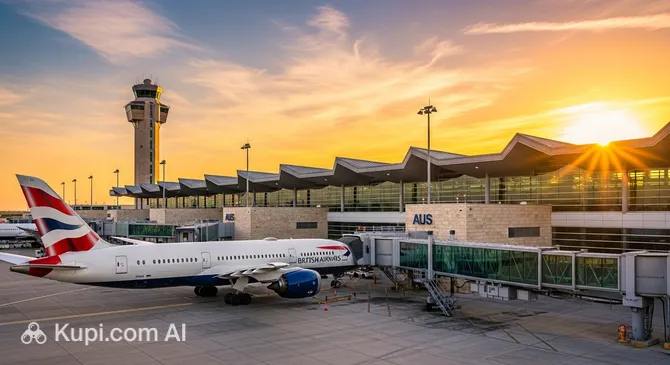
Austin-Bergstrom International Airport. Source: Kupi.com Binoculars

Austin-Bergstrom Airport is not just a transport hub, but a true overture to the "Live Music Capital of the World," a title rightfully held by Austin. Even in the terminal, instead of standard announcements, you might hear guitar riffs coming from one of the numerous stages, and the sterile scent of waiting halls gives way to the aromas of Texas barbecue. From the very first minute, this airport immerses travelers in the relaxed and creative atmosphere of the Lone Star State, turning the wait for a flight into part of the cultural program. Modern yet soulful, it perfectly reflects the city's motto: "Keep Austin Weird."

IATA Code AUS
ICAO Code KAUS
City Austin
Distance to Center ~13 km
Status International
Annual Passengers Over 22 million
Schedule Available on online board

Music in the Air. Austin-Bergstrom is one of the few airports in the world where a music program is part of the official strategy. Several stages are located within the terminal, including the main Asleep at the Wheel stage, where local bands perform regularly. Hundreds of free concerts take place here throughout the year, so you have every chance of catching a live performance right before boarding.

Gastronomic Tour Without Leaving the Airport. The airport focuses on local brands rather than global fast-food chains. Here you can try legendary barbecue from The Salt Lick, fresh tacos, or famous local ice cream without leaving the secure area. This is a great opportunity to get acquainted with Texas cuisine if you only have a short layover.

Art and Comfort. The Barbara Jordan Terminal space is filled with art installations and rotating exhibitions by local creators. Navigation in the airport is intuitive, and large panoramic windows let in plenty of natural light, creating a sense of spaciousness. It is important to remember that the airport has a separate South Terminal for low-cost carriers, which is located in a different building and requires a separate transfer, so always check your ticket in advance.

Contact Information

For your convenience, we have compiled the main contact information for Austin-Bergstrom Airport (AUS). If you have any questions, you can contact airport representatives in one of the following ways:

  • Official Website: www.austintexas.gov/airport — here you will find the most up-to-date information on flights, services, and airport rules.
  • Help Desk Phone: +1 512-530-2242 (24 hours).
  • Airport Address: 3600 Presidential Blvd, Austin, TX 78719, USA.
  • Email: A direct email address for general inquiries is not provided. It is recommended to use the dedicated contact form on the official website.
  • Social Media: Follow news and updates on the airport's official pages on X (Twitter) and Facebook under the handle @AUStinAirport.
  • Lost Luggage Information: For items lost in the terminal, contact the Lost and Found service at +1 512-530-5678. If your luggage was lost during a flight, you must contact your airline directly.
  • Passenger Support Service: Guest Services information desks are located in the terminal in the baggage claim area. Staff are ready to help with airport navigation and answer your questions.

How to Get to the Airport

Getting to Austin-Bergstrom Airport (AUS), the main transport hub of Austin, is possible via several convenient methods. Whether you prefer economical public transport, the speed of a taxi, or the flexibility of a rental car, you will find a suitable option for your trip. When planning your route, keep in mind that travel time from the city center is usually between 20 to 40 minutes but can vary depending on traffic.

The most budget-friendly way to get to the terminal is by bus. Capital Metro offers the Airport Flyer No. 20 route, which runs between the airport and the city center at regular intervals. A trip on it is not only economical (the ticket cost is just a few dollars) but also allows you to avoid parking hassles. The buses are equipped with special luggage racks, making the journey comfortable. The stop is easy to find near the baggage claim area.

For those who value comfort and time, taxis or rideshare services like Uber or Lyft are the ideal choice. This is the fastest way to get from anywhere in the city directly to the terminal doors. The cost of a trip from downtown Austin typically ranges between $30–$40, but may be higher during peak hours due to increased demand. Designated pick-up and drop-off zones for these services are located conveniently at the terminal.

If you plan to travel around Texas and the surrounding areas, renting a car is an excellent option. Austin-Bergstrom Airport hosts offices of all major rental companies. You can pick up and return your car directly at the dedicated Rental Car Facility, which is connected to the terminal by shuttles. For those arriving in their own vehicle, the airport offers several types of parking: from short-term right at the terminal to more affordable long-term and economy options connected to the terminal by free buses. It is recommended to book a parking spot online, especially during holiday periods, to save money and guarantee availability.

When planning your trip to the USA, it is worth knowing that other airports are located within a few hours' drive of Austin. This can be useful for finding alternative flights or if your final destination is in another city in the region. The largest alternative is San Antonio International Airport (approximately 107 km away). It is also worth considering flights to regional airports: Killeen–Fort Hood (Killeen), Easterwood Airport (College Station), Waco Airport, and Victoria Regional Airport in Port Lavaca. These options expand your possibilities for planning a route through Texas.

Terminals and Map

Austin-Bergstrom Airport (AUS) has a well-thought-out and relatively simple structure, but it is important to know key features to ensure navigation is as fast and comfortable as possible. The airport consists of two terminals located at a significant distance from each other and not connected by pedestrian walkways.

Barbara Jordan Terminal is the main and largest terminal of the airport. It serves the majority of major American and international airlines. The terminal has an elongated linear shape, simplifying navigation: it is quite difficult to get lost here. The departure area with ticket counters and check-in desks is located on the upper level, from where passengers proceed to security screening and then to the boarding gates. The arrival area with baggage claim belts and transport exits is located on the lower level.

The South Terminal is a separate, much smaller building located approximately 1.5 km from the main terminal. It specializes in serving ultra-low-cost airlines such as Allegiant and Frontier. The South Terminal has its own parking, check-in counters, and security zone. Its atmosphere is more informal and simple, reflecting the concept of budget travel.

Moving Between Terminals is a key point requiring attention. Since the terminals are not connected, you must use a special shuttle to move between them. Buses run regularly, but you should allow extra time for the trip — at least 20–30 minutes, including waiting time. The shuttle stop at the main terminal is located on the lower (arrivals) level.

Check-in and Security: During peak hours (early morning and late afternoon), security lines in the main terminal can be significant. It is recommended to arrive at the airport at least 2 hours before a domestic flight and 3 hours before an international one. In the South Terminal, procedures generally move faster due to lower passenger traffic. For quick navigation through the main terminal, follow the signs: all boarding gates are located in one long corridor after the security zone.

Main Advice for Travelers: Check in advance which terminal your airline operates from. This information is indicated on your ticket and the airport website. Mistaking the terminal can cost you significant time and stress, especially if you are on a tight schedule.

Airport History

The history of Austin-Bergstrom International Airport (AUS) is a unique example of transformation and growth, closely linked to the development of Austin itself. Unlike many airports built from scratch, Austin-Bergstrom inherited its infrastructure from Bergstrom Air Force Base. The decision to convert the base into a civilian airport was made in the early 1990s when it became obvious that the old Robert Mueller Airport could no longer handle the growing passenger traffic of the booming city. The official opening for passenger flights took place on May 23, 1999.

The airport was named in honor of Captain John August Earl Bergstrom, who was the first resident of Austin to be killed in World War II. This is a tribute to a man who served in the 19th Bombardment Group in the Philippines. Thus, the military past of this place is immortalized in its name, creating a link between history and modernity.

Since its opening, the airport has gone through several stages of rapid development. The growth of the technology sector in Austin led to a sharp increase in passenger numbers, requiring significant expansion. One of the most large-scale projects was the renovation completed in 2019. As part of this, a new east wing was opened with nine additional boarding gates, which significantly increased the terminal's capacity and allowed for more international flights.

Interesting fact: Austin-Bergstrom Airport is known nationwide for its "Keep Austin Weird" concept, integrated directly into the terminal. It is the only airport in the USA with such a number of stages for live music, where local groups perform. Here you can try dishes from famous Austin food trucks and restaurants without leaving the building. This makes it not just a transport hub, but part of the city's cultural experience, especially during major festivals like SXSW (South by Southwest) and the Formula 1 Grand Prix, when the airport operates at maximum capacity, setting passenger traffic records.

Services and Amenities

Austin-Bergstrom Airport (AUS) offers passengers a wide range of services to make waiting for a flight as comfortable and productive as possible. Regardless of the purpose of your trip to the USA, you will find everything you need here — from diverse restaurants to convenient areas for work and relaxation.

The airport's gastronomic possibilities are impressive: both popular fast-food chains and restaurants offering authentic Texas cuisine and famous barbecue are represented here. You can enjoy a cup of coffee in a cozy cafe or buy souvenirs, books, and travel goods in numerous shops, including the duty-free zone.

For those who need to stay connected, free Wi-Fi is available throughout the terminal. There are many charging stations for electronic devices located across the airport. Business travelers can use the services of business centers and conference rooms for meetings or quiet work before departure.

For a more comfortable wait, the airport features premium lounges such as the Admirals Club, Delta Sky Club, and United Club. They offer guests snacks, beverages, fresh newspapers, and a more secluded and quiet atmosphere.

In the terminal, you will easily find ATMs and currency exchange points to handle financial matters. In case of need, medical stations are provided in the airport where qualified personnel can provide first aid.

Austin-Bergstrom Airport cares for all categories of passengers. For travelers with children, special nursing rooms and even play areas are equipped. Passengers with reduced mobility are provided with all necessary assistance, and the terminal infrastructure, including restrooms and ramps, is fully adapted for their convenience.

If you have a long layover or an early flight, you can stay at one of the hotels located in the immediate vicinity of the airport. For example, the Hilton Austin Airport hotel is located directly on the airport grounds, making it an incredibly convenient option for an overnight stay.

Where to Eat

Austin-Bergstrom Airport (AUS) is not just a place to wait for a flight, but a true showcase of Austin's famous gastronomic scene. Here you will find plenty of establishments for every taste and budget, from a quick snack to a full dinner with local flair. Most restaurants and cafes are located in the main departure area (airside), after passing security control, but there are also several convenient options in the general area (landside).

For those who want to feel the spirit of Texas without leaving the terminal, the airport offers legendary dishes. Be sure to try authentic Texas barbecue at The Salt Lick BBQ, which is a branch of the famous restaurant. It is also worth paying attention to the numerous taco spots, for example, Tacodeli, where you can enjoy one of the main dishes of local cuisine. If you have time, stop by Second Bar + Kitchen, offering modern American cuisine and excellent beverages.

If you are in a hurry, there are plenty of options for a quick snack at the airport. You can grab coffee and pastries at Starbucks or Jo's Coffee, sandwiches and salads at ThunderCloud Subs, or enjoy famous local ice cream at Amy's Ice Creams. These establishments are perfect for taking something with you on board. Most of them open early in the morning and work until late in the evening, serving passengers of morning and evening flights.

Austin-Bergstrom Airport also pays attention to passengers with special dietary needs. Many restaurants offer halal-friendly (vegetarian/seafood), vegan, and gluten-free dishes in their menus — simply ask the staff or check the ingredients. The price range varies: from budget fast-food cafes to mid-range and high-end restaurants. In general, you will easily find an option that suits your budget and the time you have before departure.

Travel Tips

Planning a trip through Austin-Bergstrom Airport (AUS) will go smoothly if you consider a few useful tips. To avoid rushing, arrive at the airport in advance: 2 hours before a domestic flight and at least 3 hours before an international one. During peak hours, for example, on days of major festivals in Austin, it is worth allowing extra time.

To save time, check in for your flight online and save the boarding pass on your phone. Airports in the USA have the TSA PreCheck program, which allows for expedited security screening. If you do not have this option, prepare your passport and boarding pass in advance, and remove all electronic devices and liquids from your carry-on luggage. This will significantly speed up passing through security control.

Seat selection on the plane depends on your preferences. A window seat will offer beautiful views during takeoff and landing, while an aisle seat offers more legroom and the ability to stand up freely. If comfort is important, consider paying extra for seats in the emergency row (Exit Row) — there is always more legroom there.

When packing carry-on luggage, remember the rules: liquids are allowed in containers of no more than 100 ml, packed in one transparent bag. Sharp objects, flammable substances, and weapons are prohibited. Always check your airline's rules, as there may be additional restrictions on the weight and size of carry-on luggage.

Passengers with a layover in Austin should study the airport map in advance. If you arrive on an international flight and are flying further within the USA, you will need to pass passport control, collect your luggage, pass customs, and re-check it at the counter for transfer passengers. For domestic connections, this is not necessary; simply proceed to the required boarding gate.

Customs control for those arriving from abroad is a standard procedure. Have your passport and completed customs declaration ready (often it can be filled out electronically in advance). Be prepared to answer the officer's questions about the purpose of your trip and the duration of your stay in the country.

To save money, book airport parking online — it is often cheaper. Bring an empty water bottle to fill after passing security, and light snacks, as food at the airport can be expensive. Free Wi-Fi will help you stay connected without spending money on roaming.

In case of a flight delay or cancellation, first contact your airline representative to find out about available options (rebooking, food or hotel vouchers). Check the flight status in the airline's mobile app. An unpleasant situation can be brightened by exploring the shops and restaurants of Austin-Bergstrom Airport, known for their local flair and live music.

Reached the end of the page?

That means the route is fully explored