Support

William P. Hobby Airport

About the Airport

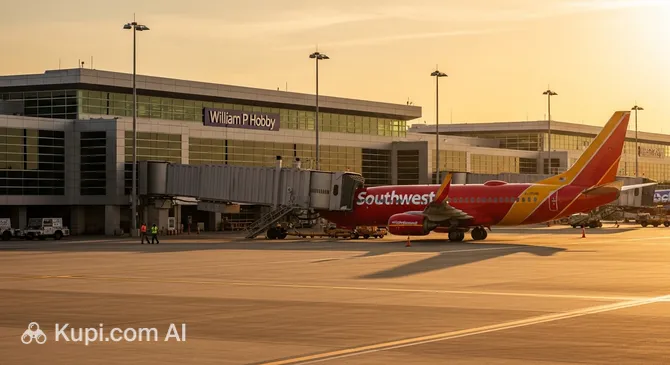
William P. Hobby Airport. Source: Kupi.com Binoculars

Real aviation gems are often hidden in the shadow of giant international hubs, and William P. Hobby Airport is exactly such a case. It is Houston's oldest air harbour, currently experiencing a second "golden age" by offering travellers a cosy and peaceful alternative to its noisy "big brother" — George Bush Intercontinental Airport. Located just a few minutes' drive from the skyscrapers of Downtown, this airport is famous for its compactness, speed of service, and special Texan atmosphere of hospitality.

IATA Code HOU
ICAO Code KHOU
City Houston
Distance to Centre ~11 km
Status International
Annual Passengers ~14 million
Schedule See official website

Airport Features and Advantages:

The main advantage of Hobby Airport is its convenient location. It is located much closer to the city's business centre than Houston's main international airport, allowing for significant time savings on the road and avoiding unnecessary traffic jams. Thanks to the compact terminal, navigation here is intuitive: the walk from the entrance to the gate takes mere minutes, and security queues generally move very quickly.

Despite its modest size, the airport offers world-class service, confirmed by a prestigious Skytrax rating. Passengers can enjoy live music as part of the "Harmony in the Air" programme, utilise free high-speed Wi-Fi, and relax in comfortable waiting lounges. The airport is a key hub for low-cost carriers, making it an ideal choice for budget travel across the USA, as well as to countries in Latin America and the Caribbean.

Contact Information

  • Official Website: www.fly2houston.com/hou
  • Information Service Phone: +1 713-640-3000
  • Address: 7800 Airport Blvd, Houston, TX 77061, USA
  • Email: For most enquiries, it is recommended to use the contact forms available on the airport's official website.
  • Social Media: The airport maintains active pages on social networks such as Facebook and Twitter (@HobbyAirport), where you can find the latest news and updates.
  • Lost Luggage Information: If you have left items in the terminal, please contact the airport's Lost and Found service at +1 713-845-6673. If your belongings or luggage were lost during a flight, you must contact your airline's representative directly.
  • Passenger Support Service: For assistance directly at the airport, please visit the information desks located in the terminal or use the internal courtesy phones.

How to Get to the Airport

William P. Hobby Airport (HOU) is located approximately 18 km southeast of the business centre of Houston. As the city's second most significant airport, it specialises in domestic flights across the USA and serves as a convenient alternative to the main international hub — George Bush Intercontinental Airport. There are several ways to travel from Hobby Airport to the city.

By Public Transport. The most affordable option is the METRO Bus. Route No. 40 runs from the airport directly to the centre; the journey takes about 50–60 minutes. This is an excellent choice for travellers without bulky luggage who prioritise saving money.

By Taxi or Ride-sharing. To reach your destination quickly and comfortably, use a taxi or one of the car-hailing apps (Uber, Lyft). Depending on traffic, the trip to the centre of Houston will take 20–40 minutes, and the estimated cost will be $30–$40. This method is optimal for those travelling with family, a large group, or heavy suitcases.

By Rental Car. Renting a car is the ideal solution for those who wish to move freely around Houston and its extensive suburbs. Counters for all major rental agencies are located directly at the airport. To guarantee the availability of the desired car and secure a more favourable rate, it is worth booking it online in advance.

Parking for Personal Vehicles. If you are driving to the airport, several parking options are at your service. You can leave your car in the covered Terminal Garages, located a few steps from the terminals, or choose a more budget-friendly option — the Ecopark long-term lots, from where a complimentary shuttle will take you to the terminal.

Terminals and Map

William P. Hobby Airport (HOU) in Houston is distinguished by a well-thought-out structure convenient for passengers. It consists of one main terminal, which significantly simplifies navigation and movement. The entire passenger flow is serviced within this single building, which is divided into two main halls (concourses): West and Central.

The airport layout is extremely logical. The terminal has two levels. The first level is intended for arriving passengers: baggage claim areas and exits to ground transport (taxis, shuttles, buses) are located here. The second level is the departure zone. Here you will find airline check-in counters, security checkpoints, and boarding gates.

Moving between concourses causes no difficulties. After passing security control, passengers enter a common secure area (airside), from where one can freely walk from one hall to the other. This is especially convenient for those who have time before their flight for shopping or visiting a café. The primary designation of the concourses is as follows:

  • West Concourse serves the majority of domestic flights.
  • Central Concourse specialises in international destinations and is equipped with its own customs and border control services.

The time required to complete formalities may vary. On average, it is recommended to arrive at the airport 2 hours before the departure of a domestic flight and no less than 3 hours before an international one. During peak hours (morning and evening), as well as on public holidays, queues for check-in and security screening may be longer, so it is worth allowing extra time.

To navigate Hobby Airport comfortably, simply follow the signs. Check your boarding gate number in advance to understand which of the two concourses you need to head to after security. Thanks to the compactness and unified structure of the terminal, it is practically impossible to get lost here, and all necessary services — from restaurants to shops — are within walking distance for all passengers who have passed into the departure zone.

Airport History

The history of William P. Hobby Airport (HOU) is closely linked to the development of Houston itself. Its journey began in 1927, when it opened as a private airfield called W.T. Carter Field. Understanding the importance of air travel, the city authorities purchased it in 1937 and renamed it Houston Municipal Airport. As early as the 1930s, airlines such as Braniff Airways and Eastern Air Lines began operating flights from here, laying the foundation for future growth.

During World War II, the airport played a vital role, serving as a base for the US Army Air Forces. After the war, with the advent of the golden age of aviation, a period of rapid development began. A new terminal and runways were built to cope with the constantly growing passenger flow. In 1954, a new terminal building opened, which at that time was one of the most modern in the country. For decades, Hobby was the city's main airport.

In 1967, the airport received its current name in honour of William P. Hobby, a former Governor of Texas. However, its status changed in 1969 with the opening of the new Houston Intercontinental Airport (now IAH). Most major airlines moved their flights there, and the future of Hobby Airport came into question. It seemed it would turn into an airfield for private and business aviation.

The revival of Hobby Airport is largely the success story of Southwest Airlines. Founded in 1971, it decided to make Hobby its main hub and not move to the new airport. This bold decision not only saved the airport from decline but also marked the beginning of its new era. Thanks to Southwest, Hobby transformed into one of the country's largest centres for budget air travel.

A significant event in recent history was the massive reconstruction and opening of a new international terminal in 2015. This allowed international flights to return to Hobby, which had been absent for almost 50 years, and established connections with countries in Latin America and the Caribbean. Among the airport's achievements, it is worth noting the receipt of a five-star rating from Skytrax in 2016 — it became the first airport in North America to be awarded such a high score for service quality and infrastructure. The historic 1940 terminal building was preserved, and today it houses the interesting 1940 Air Terminal Museum.

Services and Amenities

Passengers at William P. Hobby Airport (HOU) will find many ways to spend their time comfortably while waiting for a flight. At your service is a wide selection of dining establishments: from coffee shops and quick-service points for those in a hurry to restaurants and lounges where you can have a full lunch or dinner. In numerous shops, you can purchase souvenirs, newspapers, essential goods, and products in the duty-free zone.

For those who need to stay connected or work, free Wi-Fi is available throughout the terminals. Numerous charging stations for electronic devices are located in waiting areas and near boarding gates. For business travellers, business centre services and conference rooms for meetings may be available.

You can take a break from the hustle and bustle of the main hall in the lounges and VIP rooms. They offer a calmer atmosphere, comfortable seating, and complimentary snacks and beverages. If you have a long layover or an early flight, there are several hotels located near the airport, serviced by shuttles. Some of them are within walking distance of the terminal, which is especially convenient.

The airport provides all necessary practical services. You will easily find ATMs and currency exchange points. In case of unforeseen situations or feeling unwell, there is a medical station at the airport ready to provide first aid.

Hobby Airport is well-equipped for passengers with special needs. A barrier-free environment has been created for travellers with limited mobility, including ramps, lifts, and specially equipped restrooms. Families with small children can use the nursing rooms, where they can feed and change their baby in a quiet environment.

Where to Eat

When planning a flight through William P. Hobby Airport (HOU), you can be sure that you won't go hungry. Unlike many airports where food choices are limited to standard fast food, HOU offers guests a taste of authentic dishes from Houston and the southern USA. Here you will find options for every taste and budget — from a quick snack on the run to a leisurely dinner in a full-service restaurant.

Most dining establishments are located in the so-called "clean" zone (airside), that is, after passing security control. Before screening (landside), the choice is usually limited to a few coffee shops and ready-to-eat food points. Therefore, if you have time, it is better to eat in the departure zone, where the main restaurants and cafés are concentrated in the central food court and near the boarding gates.

To experience the true taste of Houston, pay attention to the Pappas chain restaurants. At Pappadeaux Seafood Kitchen, you can enjoy Cajun cuisine and fresh seafood; at Pappasito's Cantina, you can try classic Tex-Mex dishes such as fajitas and enchiladas; and at Pappas Bar-B-Q, you can appreciate famous Texan barbecue. These establishments offer full service and are excellent for lunch or dinner. The price range here is medium to above average, but the quality of the dishes justifies expectations.

For those in a hurry, Hobby Airport has many familiar and reliable options. You can grab a quick bite at Chick-fil-A, Wendy's, or pick up a coffee and sandwich at Starbucks. Also scattered throughout the terminal are small markets selling salads, yoghurts, snacks, and beverages. This is a great choice for a light and quick breakfast or lunch that you can take on board.

Passengers with special dietary preferences also need not worry. Many restaurants, including Pappadeaux and Pappasito's, feature vegetarian and gluten-free options on the menu, or dishes can be adapted upon request. Opening hours for most establishments correspond to the flight schedule, but some restaurants may close earlier in the evening. We recommend checking current information on the official airport website before your flight.

Tips for Travellers

To ensure your journey through William P. Hobby Airport goes as smoothly as possible, take advantage of our tips. We recommend arriving at the airport at least 2 hours before domestic flights and 3 hours before international ones. This will give you enough time for check-in, baggage drop, and passing security control. To save time, complete online check-in for your flight and save the boarding pass on your phone. TSA (Transportation Security Administration) checkpoints in Houston work efficiently, but queues can be long during peak hours.

When packing hand luggage, remember the rules. All liquids, gels, and aerosols must be in containers of no more than 100 ml and packed in a single transparent resealable bag. Large electronics, such as laptops, will need to be removed from your bag for separate scanning. Regarding seat selection on the plane, window seats will offer you beautiful views during takeoff and landing, whilst aisle seats provide more legroom and the ability to stand up freely.

If you have a layover at Hobby Airport, find your next boarding gate number on the information screens immediately upon arrival. The airport has convenient navigation, but it is always better to have a time buffer. Passengers arriving in the USA on international flights will have to pass customs and border control. Have your passport and all necessary documents ready. Be prepared to answer the officer's standard questions about the purpose of your trip and the duration of your stay.

There are several ways to save a little money at the airport. For example, it is cheaper to book parking online in advance. Instead of buying expensive water in shops, bring an empty reusable bottle and fill it at drinking fountains after passing security control. Free Wi-Fi is also available at the airport, which will help you stay connected without extra costs.

In case of a flight delay or cancellation, first check the information in your airline's mobile app — the freshest updates appear there. Then contact an airline representative at the check-in counter or at the boarding gate. Enquire about available options: rebooking on another flight, and in case of long delays — the provision of vouchers for meals or hotel accommodation. Remain calm and clearly explain your situation.

Reached the end of the page?

That means the route is fully explored